There is a word that has quietly stolen more dreams than failure ever has. The word is someday.
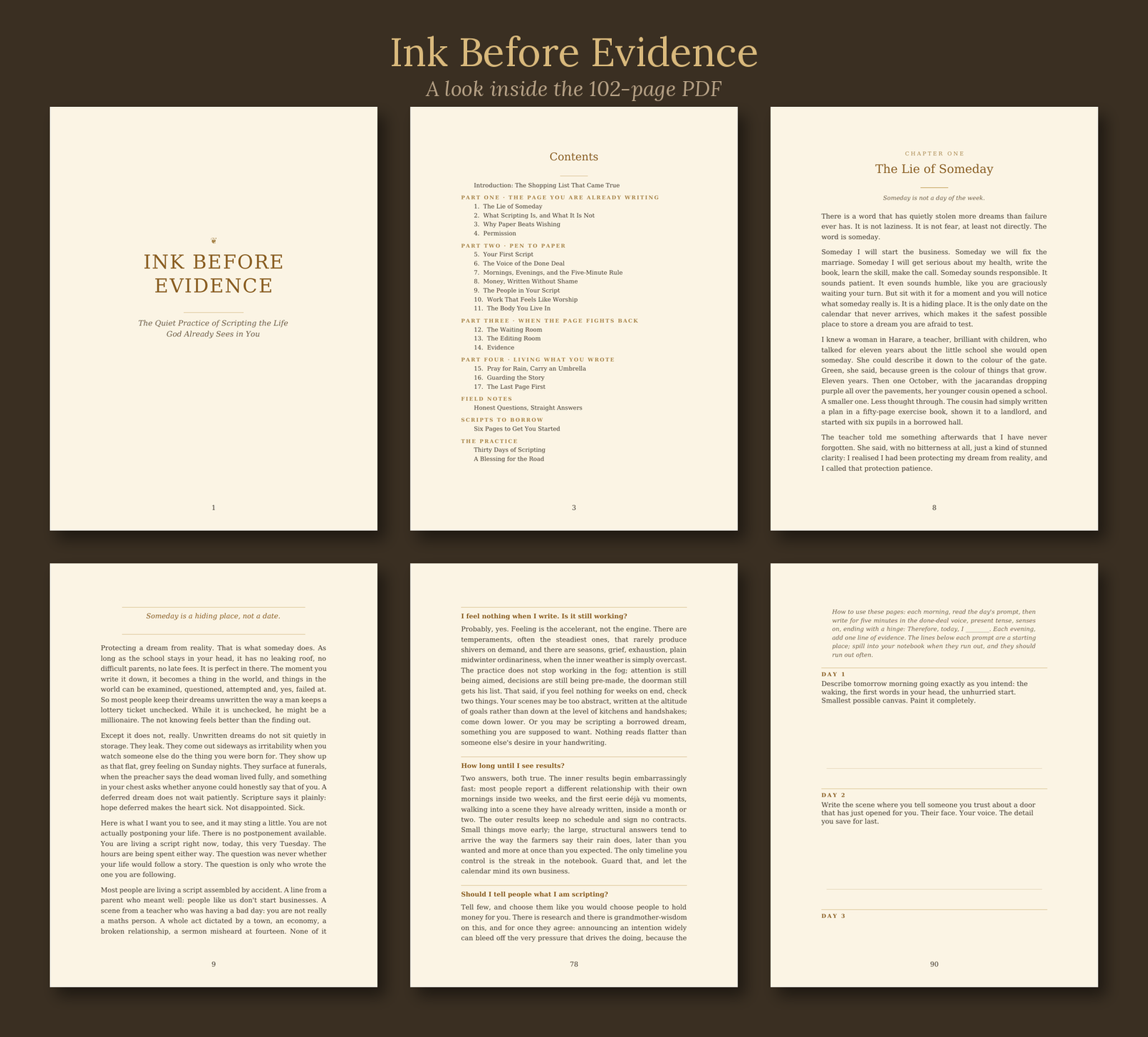
Ink Before Evidence is a book about getting your future out of your head and onto paper, written for people who believe in God and are tired of manifestation books that ask them to thank the universe. You will not find the universe in these pages. You will find a practical, warm, occasionally blunt guide to scripting: the practice of writing your life in present tense, in detail, before there is any evidence for it. Habakkuk put it plainly more than two and a half thousand years ago. Write the vision. Make it plain. This book shows you how, line by line, morning by morning.
It is not a book you skim. It was built to be an experience. The pages themselves are a warm cream rather than white, set in a readable serif, because ten quiet minutes with this book should feel like late afternoon light, not a screen. Every chapter ends with something to do that same evening, and there is space designed into the layout for your own pen.
What’s inside the 102 pages:
Part One dismantles the lie of someday and explains what scripting actually is, what it is not, and why writing beats wishing. The why matters here. Your attention is already being aimed at something; the only question is who wrote the script.
Part Two is the workshop. Your first script. The voice of the done deal. A five-minute morning routine that survives real life. Then the chapters people turn to first: money written without shame, the people in your life, work, and the body you live in.
Part Three is for the hard weeks. The waiting room, when nothing visible moves. The editing room, for scripts that need to change. And evidence, the habit that keeps faith fed when the calendar is being slow.
Part Four takes the practice off the page and into footsteps, because a script without action is just a beautifully tended diary.
Then the back matter most books skip. Field Notes answers twelve questions readers actually ask: handwriting or typing, what to do after a missed fortnight, whether you can script for your children, how this differs from prayer, and when the practice tips into something unhealthy. Scripts to Borrow gives you six complete sample scripts, from an ordinary working morning to a money script for the fifteenth of the month, so you have somewhere to stand until your own voice arrives. The book closes with The Practice: thirty daily prompts, one rest day a week, that carry you from reader to writer in a month.
Who this is for: believers curious about scripting but wary of where most of it points; journal keepers who want their pages to do more; anyone standing in front of a closed gate, holding a dream that keeps getting postponed.
What you receive: one PDF, 102 pages, US Letter, instant download after checkout. Read it on a phone, tablet or laptop, or print the 30-day section and fill it in by hand. No subscription, no upsell, yours to keep.
The vision is already in you. This book hands you the pen.
Reviews
There are no reviews yet.