In manga, the eyes do the talking. A character can stand perfectly still, and you still know if they are furious, heartbroken or about to laugh, all from a few shapes inside the eye and the way the hair falls around the face. Get those two areas right and the whole page comes alive. Get them wrong and even perfect clothes cannot save it.
This manga coloring book guide focuses on just those two things: expressive eyes and hairstyles. You will learn how different eye shapes call for different coloring, how to make eyes sparkle or go cold, and how to shade long, spiky, curly, braided and covered hair. It is written for teens and adults who already enjoy coloring and want their manga pages to feel more alive. Three Taskdale books are featured for practice.
Quick picks for eye and hair practice
| Product | Best for | Price | Link |
|---|---|---|---|
| Ink and Glint Manga Coloring Book | Eye styles, hairstyle and expression practice sheets | $4.99 | View |
| Swish and Shade Digital Coloring Pages | Trying eye colors on a tablet with undo | $4.99 | View |
| Friendship Fun Coloring Book | Simple faces for younger siblings who want to join in | $2.99 | View |
Before you start: tools for small, important areas
Eyes are tiny. A blunt pencil or a fat marker tip will flood the iris and wipe out the catchlights in one stroke. So set yourself up first.
- Sharp colored pencils. Sharpen between every eye. It sounds fussy, but it is the difference between crisp and blurry.
- Fine marker tips. If you use alcohol markers, use the brush or fine end only, and press lightly.
- A white gel pen. This is your safety net. Lost a catchlight? Put it back.
- A scrap sheet. Test every color on the same paper before it goes near a face.
- Good light. Daylight or a daylight bulb. Warm lamps make it hard to judge blues and greens.
If you print your own pages, paper choice matters too. Our guide to printing a coloring book PDF covers paper weight and printer settings, and our roundup of the best markers for adult coloring books helps if you are choosing between alcohol and water-based pens.
The anatomy of a manga eye
Every manga eye, from huge and sparkly to thin and narrow, is built from the same parts. Know them and you can color any style.
- Upper lash line: the thick, dark line at the top. Usually left black or very dark.
- Iris: the colored part. This is where all the emotion lives.
- Pupil: the dark center. Bigger pupils read as softer and more innocent. Small pupils read as shock or coldness.
- Catchlights: the white shapes that reflect light. Usually one large and one or two small.
- Eye white: often left bare, with a faint gray-blue shadow under the upper lid.
The five-step eye method
- Shadow the eye white. A thin strip of pale blue-gray right under the upper lash line. This makes the eye look round, not flat.
- Base the iris. Fill with your lightest iris color, working around the catchlights.
- Darken the top. Add a darker tone to the top third or half of the iris, blending down.
- Pupil and ring. Color the pupil in the deepest tone, and add a thin darker ring around the edge of the iris.
- Glow the bottom. A brighter, lighter shade near the bottom edge, opposite the shadow. This is the reflected light that makes manga eyes look wet and alive.
Coloring different eye types
Manga uses eye shape to show personality. Your coloring should match.
Big sparkly eyes
Usually for cheerful, kind or young characters. Go bright and clear: sky blue, emerald, warm amber. Use lots of contrast between the dark top and the glowing bottom. Leave every catchlight crisp white, and consider adding a tiny extra sparkle with your gel pen. These eyes should feel almost too bright.
Sharp, narrow eyes
Often for serious, cool or mysterious characters. There is less iris visible, so every color counts. Pick deeper, cooler shades: steel blue, dark violet, cold gray-green. Keep the glow at the bottom small and subtle. One small catchlight instead of three makes the gaze feel intense.
Sleepy or relaxed eyes
Half-closed lids cover the top of the iris, so you mainly see the lower half. Warm, soft colors suit them: honey brown, soft olive, muted rose. Blend gently with pencils. Hard edges fight the lazy mood.
Determined or angry eyes
Brows drop low, and the iris often has a smaller pupil. Push the contrast high. A dark iris with a sharp, bright rim near the bottom reads as fire. Reds, oranges and golds work, but so does a cold, pale blue for icy fury.
Teary or emotional eyes
Add extra catchlights along the bottom of the iris and keep some white paper along the lower lid to suggest water. A soft pink tint around the edges of the eye and on the cheeks finishes the look.
Using color to change the mood of the eyes
The same character can look very different with different eye colors. Try this: print one face three times and color the eyes in a warm, a cool and an unusual palette.
- Warm (amber, honey, hazel): friendly, trustworthy, approachable.
- Cool (ice blue, gray, deep teal): calm, distant, clever.
- Unusual (violet, gold, red): magical, dangerous, otherworldly.
Put them side by side. Most people are surprised at how much the eye color alone changes who the character seems to be. It is one of the best exercises for understanding manga coloring, and it only takes an evening.
A book with dedicated eye style and expression sheets makes this exercise much easier to repeat.
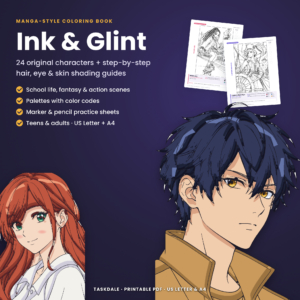
Ink and Glint Manga Coloring Book
Price: $4.99 | Best for: teens and adults improving eyes and hair
Twenty-four original manga-style characters plus practice pages built for exactly this: an eye styles sheet, a hairstyle sheet, an expression sheet with twelve moods, and hair and eye practice portraits. Shading guides walk through big sparkly eyes, sharp narrow eyes, long flowing hair and dark hair with cool highlights in four stages. There are eight eye-color palettes and sixteen hair palettes with light, base, shadow and deep tones. Start with the expression sheet and color the same eyes in three moods.
How hair frames the face
Hair is more than a hairstyle in manga. It sets the silhouette, tells you about personality, and frames the eyes. A fringe falling over one eye adds mystery. Wild spikes say energy. Neat braids say care and patience.
When you color hair, remember the face it surrounds. Put your darkest hair shadow right where the hair meets the face: under the fringe, beside the cheeks, at the nape. That dark frame pushes the face forward and makes the eyes pop. It is a simple trick that makes a huge difference.
Coloring hairstyles step by step
Long, flowing hair
Long hair moves in big S-curves. Color the base in long strokes that follow those curves from root to tip. Add shadow where a strand tucks under another and along the inside of each curve. Add a highlight band across the crown and a second, smaller one where the hair bends over the shoulder. Ends can fade slightly lighter or darker, depending on the mood.
Spiky hair
Treat each spike as a little cone. Shadow one side of every spike (the side away from your light source) and leave the other side lighter. Keep the shadow edges sharp. Spiky hair looks best with crisp cel shading, so markers are ideal.
Short, neat cuts
Short hair hugs the skull, so your shading follows the shape of the head. A smooth highlight on the top, a soft shadow around the back and sides. Keep it simple, or it looks messy.
Curls and coils
Do not try to shade every single curl. Group them into clusters. Shade the bottom and inner side of each cluster, and leave small highlights on the tops where light catches. Rich browns with copper highlights, or deep black-browns with soft blue or purple shine, look gorgeous.
Braids, box braids and locs
Each section of a braid or loc is its own small shape. Shade each one where it tucks under the next, and add a small highlight on the top of each section. Work slowly from top to bottom. The pattern builds itself and it is satisfying to watch.
Covered hair
Headscarves, hoods and hijabs follow the same rules as fabric. Find the folds, put shadow inside them, and add a soft highlight where the fabric curves over the head. Choose a color that suits the character’s palette, and let the fabric frame the face just as hair would.
A 20-minute eyes and hair drill
Short, regular practice beats one long weekend session. Try this drill three times a week for a month.
- Minutes 1 to 3: Swatch three tones for one eye color on scrap paper.
- Minutes 4 to 10: Color one pair of eyes using the five-step method. Check the catchlights are still white.
- Minutes 11 to 18: Color one hairstyle around a face. Put the darkest shadow where hair meets skin.
- Minutes 19 to 20: Write the date and one note on the back, such as “glow too pale” or “good spikes”.
After four weeks, lay the first and last pages side by side. The jump is usually obvious, and it is a lovely boost on a day when you feel stuck.
Practice on a screen, then on paper
Eye colors are a great thing to test digitally. On a tablet, you can try amber, violet and teal on the same eye in a minute and undo the ones you do not like. Then you go to paper knowing exactly what you want.
Even if a page is not manga, any line art with faces and hair lets you practice the layering order: base, shadow, deep, highlight. Your hands learn it, and it transfers straight to paper.

Swish and Shade Digital Coloring Pages
Price: $4.99 | Best for: tablet users who want quick experiments
Sixty digital coloring pages as transparent PNGs and a hyperlinked PDF for GoodNotes, Notability and Xodo, ready for Procreate or Ibis Paint. It is made for kids, with toddler, kids, detailed and phone travel sets, plus velvet textures and brush stamps. Older fans can use the detailed set to rehearse layering and test color combinations before committing on paper.
Common eye and hair mistakes
Coloring over the catchlights. The number one mistake. Plan around them before you start, or add them back with white gel pen.
One flat color in the iris. Eyes need at least three tones to look round. Dark at the top, base in the middle, glow at the bottom.
Pure black hair. It looks like a hole on the page. Use a very dark navy, brown or purple base with cooler highlights.
Shading every strand. Manga hair is shaded in clumps, not threads. Group strands together.
Highlights in random places. Every highlight on hair and eyes should face the same light source. Pick one and stick to it.
Forgetting the face shadow. Without a shadow under the fringe, the hair looks pasted on. Add a soft skin shadow across the forehead.
Coloring alongside a younger fan
A lot of manga fans have a little brother or sister who wants to color “the same thing”. Detailed manga pages will frustrate a six-year-old fast. A simpler book of friendly kids with clear faces and hair lets them sit beside you and copy your method in an easier form.
Teach them the easiest version: one color for the hair, a darker one underneath, and leave a white stripe for shine. They will feel like they are learning your secrets, and you get company at the table.
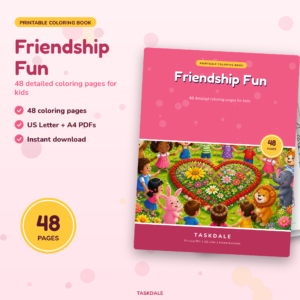
Friendship Fun Coloring Book
Price: $2.99 | Best for: younger kids coloring beside you
Forty-eight scenes of friends doing things together, such as holding hands in a meadow, sharing a picnic, building a block tower and splashing in puddles. Big shapes give little ones quick wins, and patterned dresses and borders keep older kids busy. Each page has a short, kind line at the top. Print one with two characters, and let the younger child color the hair with a simple shine stripe.
Frequently asked questions
How do you color manga eyes with colored pencils?
Work light to dark: shadow the eye white, base the iris, darken the top third, add the pupil, then brighten the bottom. Keep your pencil sharp and leave the catchlights white.
What colors make manga eyes look shiny?
Strong contrast is the key: a dark top, a bright glow at the bottom and clean white catchlights. A white gel pen sparkle on top finishes the shine.
How do I shade manga hair?
Base the whole area, add shadow under each clump and the fringe, a deeper tone in the darkest gaps, and a curved highlight band across the crown.
How do I color curly or braided hair?
Group curls into clusters and shade each cluster, rather than every curl. For braids and locs, shade where each section tucks under the next and add a small highlight on top.
What is the best paper for printing manga coloring pages?
Smooth, bright white paper works best. Heavier sheets handle markers without bleeding, and pencils blend well on a smooth surface.
Your next step
Print one face three times and color the eyes warm, cool and unusual. Lay them side by side and pick the one that feels most like the character. For a full set of eye, hair and expression practice pages built around original characters, try the Ink and Glint Manga Coloring Book.