Kids care about animals, and they care even more once they learn an animal might need help. Endangered animal coloring pages turn that feeling into learning. While a child colors a rhino or a sea turtle, you can talk about where it lives, what it needs, and what people are doing to protect it. The page keeps their hands busy. The conversation does the teaching.
This guide is for parents, teachers and homeschoolers who want to teach kids about wildlife without making them anxious. You will find a kid-friendly explanation of what endangered means, how to talk about it in a hopeful way, real conservation success stories, activity ideas for ages four to twelve, and three printable animal books from Taskdale with animals that make great starting points.
Quick picks: animal books for wildlife lessons
| Product | Best for | Price | Link |
|---|---|---|---|
| Safari Animals Coloring Book | Elephants, rhinos, cheetahs and lions | $3.49 | View |
| Ocean Life Coloring Book | Sea turtles, whales and reef life | $3.49 | View |
| Moonlit Wildlife Coloring Book | Owls, wolves, bats and other night animals for older kids | $3.49 | View |
What endangered means, in words kids understand
Scientists around the world keep a big list of animals and how they are doing. It is called the IUCN Red List. Each animal gets a label that shows how much danger it is in. Here is a simple version you can share with a child.
| Label | What it means for kids |
|---|---|
| Least Concern | Doing fine for now. Lots of them around. |
| Near Threatened | Okay at the moment, but could be in trouble soon. |
| Vulnerable | Numbers are dropping. They need some help. |
| Endangered | Very few left in the wild. They need a lot of help. |
| Critically Endangered | The most danger. Without help, they could disappear. |
| Extinct in the Wild | Only living in zoos or protected centers now. |
| Extinct | Gone forever. None left anywhere. |
For younger children, three words are enough: safe, in danger and gone. For older ones, the full list makes a great poster to color, with each label in a different color from green to black.
Animals move up and down this list over time. That is the hopeful part. When people help, some animals move back toward safe.
Talking about endangered animals without scaring kids
Children can feel sad or worried when they learn that animals are in danger. A few simple habits keep the lesson caring rather than frightening.
- Lead with wonder. Start with what is amazing about the animal before you mention any danger. Elephants live in close family groups led by the oldest female, who remembers where to find water in dry seasons. Begin there.
- Keep reasons simple. Losing homes, too much hunting, plastic in the sea. Skip upsetting details for young kids.
- Always add a helper. For every problem, name the people helping: rangers, scientists, vets, volunteers.
- Share a success story. Every lesson should include at least one animal that has bounced back.
- End with an action. Something small your child can do this week.
A child who finishes coloring a turtle and then picks up three pieces of litter on the walk to school has learned more than any worksheet could teach.
Safari animals: big, bold and in need of help
Many of the most loved safari animals are on the Red List. That makes a safari book a natural place to start. Kids already know these animals from books and zoo trips, and the big, bold shapes are easy to color while you talk.
Facts to share while coloring
- African elephants. There are two kinds, the savanna elephant and the forest elephant. Both are listed as in danger, mainly from losing land and from poaching for their tusks.
- Rhinos. The black rhino is critically endangered. Rangers guard rhinos day and night in many parks.
- Cheetahs. The fastest land animal is listed as vulnerable. Cheetahs need huge open spaces to hunt.
- Lions. Also listed as vulnerable. Lions have lost much of the land they once roamed.
- Giraffes. Many people are surprised to learn giraffes are vulnerable too.
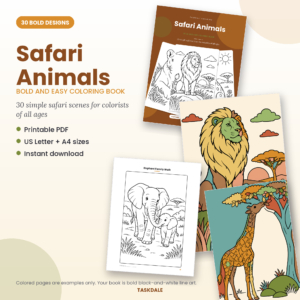
Safari Animals Coloring Book
Price: $3.49 | Best for: kids learning about African wildlife
Safari Animals has 30 bold, easy scenes including Elephant Family Walk, Resting Rhino, Cheetah on the Plains, Lion at Sunrise and Giraffe and Acacia. Thick outlines and large shapes suit kids from about four. It comes as US Letter and A4 PDFs, one design per page. Start with Resting Rhino and talk about the rangers who guard them.
For more animal sets sorted by habitat, see our roundup of animal coloring pages.
Ocean animals: plastic, nets and a big comeback
The ocean is full of animals that need help, and full of stories about people helping. Sea turtles are a perfect example. Most sea turtle species are listed as threatened, partly because they get caught in fishing nets and can mistake plastic bags for jellyfish. Volunteers on many beaches now guard turtle nests and help hatchlings reach the sea.
A success story kids love
Humpback whales were hunted so heavily that their numbers fell very low. After most countries stopped commercial whaling, humpbacks slowly recovered. Today the humpback whale is listed as Least Concern. Color a humpback and tell this story. It shows children that when people change what they do, animals can come back.
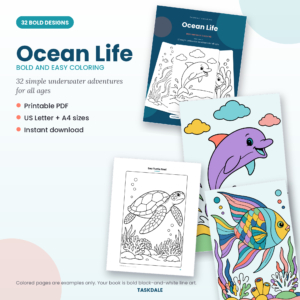
Ocean Life Coloring Book
Price: $3.49 | Best for: kids who love sea turtles and whales
Ocean Life has 32 bold, easy underwater pages, including Sea Turtle Reef, Humpback Whale, Friendly Dolphin, Curious Seahorse and Playful Seal. Thick outlines make it easy for younger kids, and full reef scenes give older ones more to color. It comes as US Letter and A4 PDFs. Pair the Humpback Whale page with the comeback story above.
Younger kids can count the sections of the sea turtle’s shell while they color. Then explain that a turtle’s shell grows with it, like a house that gets bigger as you do. Our guide to ocean coloring pages for kids and adults has more sea creatures for a full ocean week.
Night animals: owls, bats and wolves
Night animals are often forgotten in wildlife lessons, but many of them face real problems. Owls and bats lose homes when old trees and barns disappear. Bright lights at night can confuse moths and the animals that eat them. Some wolf populations shrank badly in the past and have returned to parts of their old range with protection.
Night animals also make a fun lesson for older kids, because the pages invite moody colors: deep blues, silver moonlight and glowing eyes. Detailed scenes like these suit children around nine and up, who want more of a challenge.
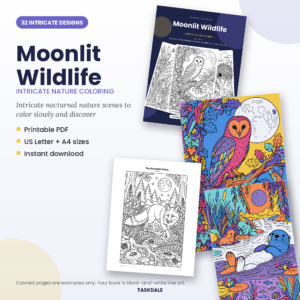
Moonlit Wildlife Coloring Book
Price: $3.49 | Best for: older kids and teens who like detail
Moonlit Wildlife has 32 intricate night scenes, such as Barn Owl and Moonlit Oak, Fox Beneath Ferns, Wolf on a Rocky Ridge, Bat Flight Through Pine Canopy, Otter Family at the Riverbank and a sea turtle at night. Small hidden objects are tucked into each page. It comes as US Letter and A4 PDFs. Use the bat page to talk about why bats need dark skies.
For a simple night walk activity, take a flashlight into the garden or a park after dark. Listen for owls, look for moths around a porch light, and count how many lights you can see from one spot. Back home, color the owl page and talk about how many of those lights were really needed.
More success stories to share
Hope is the most important part of any lesson about endangered animals. These real comebacks are great to share while children color.
- Giant panda. In 2016, the giant panda moved from Endangered to Vulnerable after years of protecting bamboo forests.
- Bald eagle. Once rare across much of the United States, bald eagles recovered after a harmful pesticide was banned and the birds were protected.
- Humpback whale. Now listed as Least Concern after the end of most commercial whaling.
- Sea otters. Hunted almost to nothing for their fur, they have returned to many coasts with protection, though some groups still need help.
Ask your child to color one success-story animal in the brightest colors they have. Pin it up as the “comeback board”.
Activities that go beyond the page
Coloring opens the lesson. These activities help the learning stick.
- Animal fact cards. Color an animal, cut it out and glue it to an index card. Write its name, home, food and Red List label on the back.
- Habitat map. Glue colored animals onto a world map where they live. Older kids can color the map by continent.
- Red List ladder. Draw seven steps from Least Concern to Extinct. Place animal cards on the right step. Move them if you learn something new.
- Protect it poster. Color an animal in the middle of a big sheet and draw three ways to help it around the edges.
- Research question. Each child picks one animal and finds one thing scientists are doing to help it. They share it at dinner.
- Wildlife journal. One colored animal per page, with a fact and a feeling: “I liked learning that…”
A five-day wildlife week
If you want a ready plan, this one fits into about thirty minutes a day and works at home or in a classroom.
| Day | Animal | Talk | Do |
|---|---|---|---|
| Monday | Elephant | Family groups, why they need space | Start the Red List ladder |
| Tuesday | Rhino | Rangers who protect them | Make a fact card |
| Wednesday | Sea turtle | Nets, plastic and beach volunteers | Plan a plastic-free lunch |
| Thursday | Humpback whale | A comeback story | Start the comeback board |
| Friday | Owl or bat | Why night animals need dark skies | Turn off outdoor lights tonight |
On Friday afternoon, lay out the week’s colored pages and fact cards and let your child explain each animal to someone else in the family. Hearing a seven-year-old explain why rangers guard rhinos is a proud moment for everyone at the table.
Setting up for a classroom or group
Endangered animals make a strong theme for a class project, a scout badge or a library session. A few tips keep it running smoothly with a group.
- Assign one animal per table. Each table becomes the expert team for its animal and presents it at the end.
- Print one extra page per table. Someone always wants to start again.
- Build a wall display. Arrange every colored animal along a long Red List strip on the wall, from green to black.
- Finish with a pledge. Each child writes one small action on a paper leaf and sticks it to a class tree.
- Check the license. Read the product page before printing a book’s pages for a whole class.
Matching the lesson to your child’s age
| Age | Page style | What to talk about | Activity |
|---|---|---|---|
| 4 to 5 | Bold, one animal | Where it lives, what it eats, people who help | Color and name it, place on a simple map |
| 6 to 8 | Animal in a scene | Safe, in danger, gone. One reason and one helper. | Fact cards, comeback board |
| 9 to 12 | Detailed scenes | Full Red List labels, causes and solutions | Research question, protect it poster, journal |
Small actions kids can take at home
Children feel better about hard topics when they can do something. These actions are small, real and right-sized for kids.
- Use less plastic. A reusable water bottle and lunch box keep plastic out of the ocean.
- Put out water for birds. A shallow dish in the garden helps on hot days.
- Turn off outdoor lights. Darker nights help moths, bats and owls.
- Plant flowers for bees. Even one pot on a balcony counts.
- Pick up litter. Three pieces on every walk. Gloves on.
- Share what you learn. Kids who teach a grandparent about rhinos remember it twice as well.
Frequently asked questions
How do I explain endangered animals to a young child?
Use three simple words: safe, in danger and gone. Explain that some animals are in danger because they are losing their homes, and that many people are working to help them.
What are some endangered animals kids can color?
Elephants, rhinos, sea turtles, cheetahs, giraffes and many owls and bats are popular choices. Pair them with success stories like the humpback whale and giant panda.
Will learning about endangered animals upset my child?
It can if the focus is only on danger. Start with what makes the animal amazing, name the helpers, share a comeback story and end with a small action.
What age is right for an endangered animals lesson?
Children from about four can learn the basics with bold pages and simple words. From about nine, they can handle the full Red List and research projects.
Can an animal come off the endangered list?
Yes. When protection works and numbers grow, animals can move to a safer label. The giant panda and humpback whale are well-known examples.
Where does the endangered list come from?
The IUCN Red List is kept by the International Union for Conservation of Nature, which works with scientists around the world to check how animals are doing.
Your next step
This week, print one safari animal and one ocean animal, color them with your child, and share one danger, one helper and one success story for each. To start with the biggest favorites, download the Safari Animals Coloring Book and begin with the rhino.