Toddlers do not color the way the picture on the box suggests. They grip the crayon in a fist, scrub back and forth across a duck’s head and the table beside it, announce ‘done’ after 40 seconds and want the next page. That is exactly how it should go.
So the sheets you give a toddler matter. A page built for a seven-year-old, with small shapes and busy backgrounds, gives a two-year-old nothing to grab onto. A page with one big, friendly shape and a thick outline gives them a clear target and a quick win.
This guide is for parents, grandparents, nannies and daycare staff looking after children from about 18 months to 4 years. You will learn what a good toddler coloring sheet looks like, where free ones come from, which crayons and paper hold up to small hands, how to set up a calm five-minute routine, and when a printable toddler set is worth having on hand.
Quick picks for toddler coloring
| Product | Best for | Price | Link |
|---|---|---|---|
| Little Explorers Preschool Coloring Book | Ages 2 to 5, animals, vehicles and early learning | $3.49 | View |
| Letter Parade Alphabet Coloring Book A to Z | Toddler Edition with one giant letter per page | $3.99 | View |
| Kettle and Quilt: Bold and Easy Coloring Book | A grown-up page to color beside your toddler | $6.99 | View |
What makes a coloring sheet right for a toddler
A toddler coloring sheet is less about the picture and more about the space. Little hands are still learning to hold a crayon, and their arm moves from the shoulder, not the wrist. They need room to swing.
The five signs of a good toddler page
- One subject. A single ball, a single cat, a single truck. No background scenery.
- Very thick outlines. Around a quarter of an inch, so even wild scribbles look like they belong to the shape.
- Big open spaces. Each area should be at least the size of a toddler’s palm.
- Familiar things. Dogs, ducks, apples, cars, the moon. Things they can name, or almost name.
- Plenty of white margin. Space around the edges catches strokes that fly off the shape.
Hold a sheet at arm’s length before you print it. If you cannot tell what it is in two seconds, it is too busy for a two-year-old. A clean outline of a fish passes. An underwater scene with coral, bubbles and six fish does not.
What toddlers actually get from coloring
At this age, coloring is mostly about the doing. Gripping a crayon builds hand strength. Making a mark and seeing color appear is a small thrill. Naming the picture builds words: ‘duck’, ‘yellow’, ‘quack’. Nobody needs a finished, inside-the-lines result, and a page that is 80% scribbled in one color is a success.
Where to find free toddler coloring sheets
Free sheets for toddlers are easy to find, but good ones take a bit of sorting. Most sites lump toddler, preschool and early school pages together, and many ‘easy’ pages are still too detailed for little hands.
- Public library story times. Many libraries hand out one simple page after toddler story time, usually matched to the book they just read.
- Daycare and nursery take-home pages. Ask the staff where they get theirs. They often have a favorite site.
- Shop and artist sample pages. Printable shops often share one or two toddler pages free. These tend to have the cleanest, thickest lines.
- Draw your own. A thick black marker, a sheet of paper and a circle with two ears is a bear. Toddlers do not judge.
If you want pages pitched a little older, around ages 3 to 5, our guide to preschool coloring pages in PDF covers the next step up.
When free sheets start to run thin
Free pages are perfect for trying coloring out. The trouble comes when your toddler loves it and wants three pages every morning. Hunting for one more truck page each day gets old fast, and a random mix from five sites means some pages are too hard and end in tears. A ready-made toddler set gives you a stack that is all the right size, sorted by theme, and you can reprint favorites forever.
A ready stack of big, simple pages
If you want one set that covers the classic toddler loves, look for animals, vehicles and a few early learning pages. Those three themes hold most two-year-olds for months. Diggers and fire engines for one day, puppies and ducks for the next, then a page about big and small animals that turns into a counting game.
Early learning pages are a nice bonus. A page of balloons with different faces opens a little chat about feelings. A row of ducks invites counting to three. None of it feels like a lesson.
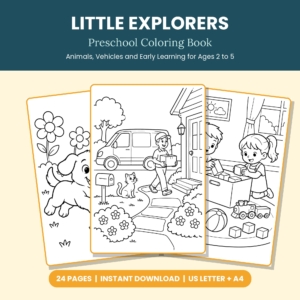
Little Explorers Preschool Coloring Book
Price: $3.49 | Best for: toddlers and preschoolers aged 2 to 5
Little Explorers has 24 pages with thick outlines and open spaces, split into Friendly Animals, Busy Vehicles and Early Learning, including a garden puppy, a duck family parade, a digger, a fire engine, counting ducks and feelings balloons. You get US Letter and A4 PDFs, every page as a 300 DPI PNG, and a short user guide with print and paper tips. Print the digger and the puppy first, then see which theme your child reaches for.
Keep the pages in a box at child height. Toddlers love choosing, and pulling out ‘my puppy page’ gives them a little control in a day full of grown-up decisions.
Crayons, paper and setup for little hands
The right tools turn coloring from a frustrating tug-of-war into a calm few minutes. You do not need much.
Crayons
- Chunky or egg-shaped crayons fit a fist grip and do not snap.
- Washable crayons come off walls and tables with a damp cloth.
- Four colors at a time. Red, blue, yellow and green. A box of 24 just gets tipped out.
- Supervise with small pieces. Broken crayon bits are a choking risk for under-threes, so swap out stubs.
Paper
Plain printer paper tears under a hard-pressing toddler. A slightly heavier paper, around 24 to 28 lb, holds up much better. For the roughest scribblers, print on light cardstock. A torn page in the middle of a coloring session is the fastest way to a meltdown.
Setup
- Tape the corners of the page to the table. It stops the sheet sliding while they scrub.
- Seat them at a table where their elbows rest at table height. A booster seat helps.
- Put a placemat or a sheet of kraft paper underneath. Edges always get colored.
- Try an easel or a page taped to the wall. Standing and coloring uses the whole arm, which many toddlers prefer.
A five-minute toddler coloring routine
Toddler attention is short, so keep sessions short. Five minutes is plenty. The aim is a happy habit, not a finished page.
- Offer two pages. ‘Duck or truck?’ A choice of two gets a fast answer. A choice of ten gets a pile on the floor.
- Name the picture together. ‘That’s a duck. What does a duck say?’
- Hand over two crayons. Add more only if they ask.
- Color beside them. Your own page next to theirs, quiet and relaxed. They copy what you do.
- Stop on a high. When they say ‘done’, it is done. Write their name and the date on it.
- Display it. Fridge, door, wall. Point it out to whoever comes home next.
That last step matters more than it seems. A two-year-old who hears ‘look what you made!’ at dinner beams like they have won a medal. Their next coloring session starts with more confidence.
Good times of day for coloring
Right after breakfast, before the day gets busy. After a nap, when they are slow to wake up. While you cook dinner, with a page and crayons at the kitchen table. Coloring also works well in waiting rooms, so keep two folded pages and a few crayons in the diaper bag.
Letters as toddler coloring pages
Big letters make surprisingly good toddler coloring pages. A giant hollow ‘B’ is just a fat shape with two bumps, easy to fill. Add a picture of a bear beside it and you have a page that also gently introduces letters and sounds.
Start with the letters in your child’s name. Coloring the ‘M’ for Mia, three or four times over a week, is how many toddlers first spot their own initial on a sign or a cereal box. That moment of recognition is pure joy.
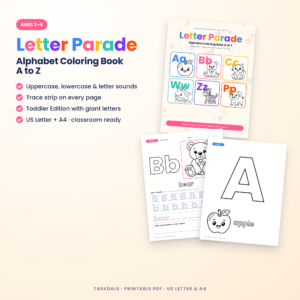
Letter Parade Alphabet Coloring Book
Price: $3.99 | Best for: toddlers meeting their first letters
Letter Parade includes a separate Toddler Edition with one extra-large letter, a picture and the word on each page, made for ages 2 to 4. The main book adds lowercase letters, sounds and tracing for ages 3 to 6, so it grows with your child. It prints on US Letter or A4. Print your child’s first initial from the Toddler Edition and color it together this week.
Do not worry about letter names at first. Saying ‘B, bear, buh’ while they color is enough. Some toddlers will repeat it, some will not, and both are completely fine.
Color alongside them
The single best way to get a toddler to sit and color is to sit and color yourself. They watch everything you do. If you grab a page and a few pencils, they will want to join in, and you get five quiet minutes too.
Pick a grown-up page with bold lines and simple shapes, so you can color it calmly while keeping an eye on little hands. Detailed adult books are hard to enjoy with a toddler tugging your sleeve every 30 seconds. A bold, cozy picture lets you color in short bursts and still finish something.

Kettle and Quilt Bold and Easy
Price: $6.99 | Best for: parents and grandparents coloring beside toddlers
Kettle and Quilt is a grown-up book of 30 large print cozy pages with thick outlines, such as a mug of cocoa, a cat asleep in an armchair, a mushroom cottage and a snowy cabin. Each page has a detail guide marked Simple, Medium or Rich, and it prints on US Letter or A4. Keep a Simple page next to your toddler’s sheet so you can both color at the same table.
Grandparents love this too. A grandmother coloring a teapot while her granddaughter scribbles a duck is a gentle, easy visit that needs no planning, and the two finished pages look sweet side by side on the fridge.
Common toddler coloring problems and fixes
‘They just eat the crayons’
Normal for younger toddlers. Use chunky, non-toxic crayons, sit right beside them and try again in a few weeks. A taped-down page and a single crayon often helps them focus on making marks.
‘They color for ten seconds and leave’
That is a toddler session. Leave the page out and they may come back three times in an hour. Short visits still count.
‘They only use black’
Many toddlers love a strong color because they can see their marks clearly. Offer bright colors alongside, but let them choose.
‘They get upset when they go outside the lines’
Tell them there are no rules on this page. Color outside the lines yourself on your page, on purpose. It takes the pressure off.
Frequently asked questions
What age can toddlers start coloring?
Many children start making crayon marks around 15 to 18 months. Simple coloring sheets with one big shape usually work from about age 2.
What should a coloring page for a 2-year-old look like?
One familiar subject, very thick outlines, big open spaces and no background. Think one duck, one ball or one car on a white page.
Are free toddler coloring sheets good enough?
Yes, for getting started. Check that lines are thick and dark before printing. A paid set is handy once your toddler wants several pages a day and you want a stack that is all the right level.
What crayons are best for toddlers?
Chunky, washable crayons in a few bright colors. They suit a fist grip, resist breaking and wipe off tables easily.
How long should a toddler coloring session last?
Two to ten minutes is normal. Stop when they lose interest, and leave the page out in case they come back.
For older siblings who want harder pages at the same table, our guide to printable coloring books kids will finish has picks for ages 5 and up.
Your next step
Tonight, print two pages your toddler can name, tape them to the table and set out two chunky crayons for the morning. If coloring becomes a daily favorite, the Little Explorers Preschool Coloring Book gives you 24 big, simple pages ready to reprint whenever they ask for ‘the digger one’ again.