Best Therapist Resources: Worksheets, Toolkits and Guides
The best therapist resources are the ones that match how you already work. For CBT, DBT or ACT techniques at a glance, choose the Sessionwise cheat sheet. For client handouts, choose Calm Cortex. For one modality in depth, choose Steady Ground. For grief work or habit change, choose Tender Tides or BrainBloom.
Choosing can feel harder than it should. Every listing promises worksheets, and the differences sit in the detail. We'll go through what to check, how the five resources on this page compare, and where people tend to go wrong, so you can decide without opening every file.
Key facts at a glance
- The Sessionwise cheat sheet covers 2,100 techniques across 70 approaches, and is the only one here aimed at the clinician rather than the client.
- Steady Ground is the largest client-facing set, with 320 pages across 10 workbooks and 48 metaphor cards, all for Acceptance and Commitment Therapy.
- Tender Tides is the only grief-specific resource, with 77 pages, 60 journal prompts and an 8-session guide for counsellors.
- Calm Cortex is the only one that includes screen-share images for telehealth.
- Every resource here comes in US Letter and A4, so paper size should not decide your purchase.
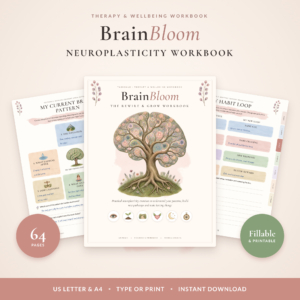 BrainBloom Neuroplasticity Workbook: 64-Page Fillable Therapy Worksheets for Habits, Thoughts and Emotions
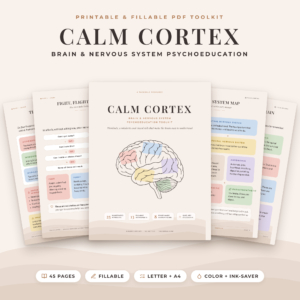 Brain Psychoeducation Worksheets & Handouts | Calm Cortex Neuroscience Therapy Toolkit: Nervous System, Window of Tolerance, Hand Model | Fillable PDF, US Letter & A4
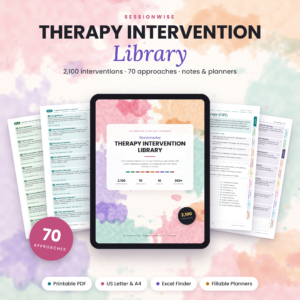 Therapy Interventions Cheat Sheet | Sessionwise 2,100 Mental Health Techniques for CBT, DBT, ACT & 70 Approaches | Progress Note Phrases, Fillable Planners & Excel Finder | US Letter & A4 PDF
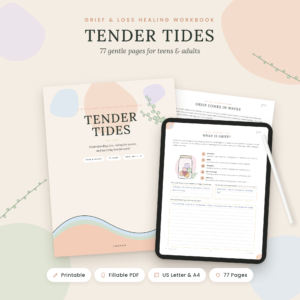
Table of Contents
Toggle
- What should you look for in therapist resources?
- How do the best therapist resources compare?
- Which therapist resource suits which practitioner?
- How do you use therapist resources in a session?
- What mistakes should you avoid?
- What affects the cost of therapist resources?
- Common questions
- How to decide which therapist resource to buy
What should you look for in therapist resources?
Good therapist resources fit your modality, your session format and your client group, and they save preparation time rather than adding to it. Five factors separate one product from another, and each one is easy to check before you buy.
Modality fit
A therapist resource is a ready-made worksheet, handout, guide or reference that a practitioner uses with or for clients. Start with the approach you actually deliver. Steady Ground is built entirely around ACT: values, defusion, acceptance and mindfulness. The Sessionwise cheat sheet spans 70 approaches, including CBT, DBT, ACT, trauma-focused, family and play therapy, so it suits a practitioner who moves between methods.
A single-modality bundle gives depth. A multi-approach reference gives breadth. Decide which one you are short of.
Who the pages are written for
Some resources are handed to clients, and some stay on your desk. Calm Cortex, Tender Tides, BrainBloom and Steady Ground contain pages a client reads or fills in. Sessionwise is a clinician reference, with one-page clinical briefs, questions to ask and progress-note language.
If you need something to hand over at the end of a session, pick a client-facing set. If you need to plan the session itself, pick the reference.
Fillable, printable or both
All five work as PDFs you can print, and the listings describe typing into the pages on a device as well. Steady Ground says you can type, tick and save in a free PDF reader. Calm Cortex offers Colour and Ink-Saver editions, which matters if you print often. Tender Tides and BrainBloom both include printable and fillable pages.
Check this against how your clients work. A teenager may prefer typing on a phone, while an older client may prefer a pen.
Session structure included
Several products come with a session guide, and it saves real planning time. BrainBloom and Tender Tides each include an 8-session guide. Calm Cortex includes 8 ready-made session plans. Steady Ground includes a practitioner toolkit and a step-by-step DOCX user guide.
Sessionwise takes a different route, with a fillable session planner, treatment plan, tracker and DAP note.
Telehealth readiness
Telehealth readiness means you can use the material on a shared screen without awkward workarounds. Calm Cortex is the one listing that supplies screen-share images. Others can work on screen as fillable PDFs, but you would need to share the file yourself and ask the client to type into it.
If most of your sessions are online, this factor deserves more weight.
How do the best therapist resources compare?
The five resources differ mainly in scope and audience. The table below sets out what each one contains and what it is best for.
| Product | What you get | Main focus | Best for |
|---|---|---|---|
| BrainBloom Neuroplasticity Workbook: 64-Page Fillable Therapy Worksheets for Habits, Thoughts and Emotions | 64 pages, 40+ exercises, 21- and 66-day trackers, 8-session guide | Habits, thoughts and emotions | Habit and thought-pattern work with a clear structure |
| Brain Psychoeducation Worksheets & Handouts | Calm Cortex Neuroscience Therapy Toolkit: Nervous System, Window of Tolerance, Hand Model | Fillable PDF, US Letter & A4 | 25 handouts, 13 worksheets, 8 session plans, brain quiz with answer key | Explaining the brain and nervous system | Psychoeducation, trauma-informed practise, telehealth |
| Therapy Interventions Cheat Sheet | Sessionwise 2,100 Mental Health Techniques for CBT, DBT, ACT & 70 Approaches | Progress Note Phrases, Fillable Planners & Excel Finder | US Letter & A4 PDF | 2,100 techniques, 70 approaches, 30 intervention cards, planners, Excel finder | Clinician reference and documentation | Practitioners who work across several approaches |
| Grief Workbook for Teens & Adults | Tender Tides Printable & Fillable Grief Journal with Loss & Bereavement Worksheets, Coping Skills & Counsellor Session Guide | 77 pages, 9 parts, 60 prompts, 24 cut-out cards, 8-session guide | Loss and bereavement | Grief support for teens and adults |
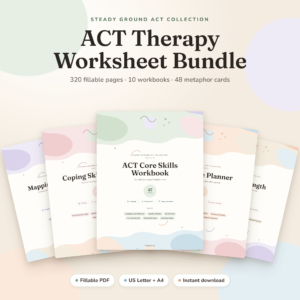 Steady Ground ACT Therapy Worksheets Bundle | 320 Fillable Acceptance and Commitment Therapy Pages, 10 Workbooks + 48 ACT Metaphor Cards | Values, Defusion, Mindfulness & Coping Skills | US Letter & A4 PDF | 320 pages, 10 workbooks, 48 metaphor cards, practitioner toolkit | ACT skills | Practitioners who deliver ACT regularly |
The two largest sets are Steady Ground and Sessionwise, but they do different jobs. One gives your clients pages to complete. The other gives you techniques to choose from.
Which therapist resource suits which practitioner?
Each resource suits a specific working pattern, so match it to the sessions you run most often.
A generalist counsellor who draws on CBT, DBT and ACT will get the most from the Sessionwise cheat sheet. The Issue Finder and the searchable Excel Intervention Finder help you find a technique when a client brings something unexpected. The progress-note phrases and DAP note template also cut down on writing up afterwards.
An ACT practitioner should look at Steady Ground first. With 10 workbooks and 48 metaphor cards, you can build a whole course of sessions from one purchase.
A therapist who explains a lot will find Calm Cortex useful. Hand model, window of tolerance and fight, flight, freeze and fawn are concepts clients often need described several times. The brain quiz with answer key gives you a gentle way to check understanding.
A bereavement counsellor will find Tender Tides the most direct fit. It is built for loss, with sections on feelings, coping skills, support and memories, and it covers both teens and adults.
A coach, teacher or therapist working on habits can use BrainBloom. Its 21- and 66-day trackers suit clients who need to see change build over weeks. The listing says its 8-session guide is for therapists, counsellors and teachers.
How do you use therapist resources in a session?
Therapist resources work best when you choose one page per session and let the client's response guide the rest. A pile of worksheets handed over at once tends to go unread.
- Read the contents page or finder and pick the single page that matches the client's current concern.
- Work through the first example together, on paper or on a shared screen, so the client sees what a finished page looks like.
- Let the client complete the rest between sessions, with a short check-in at the start of the next one.
- Record what you used in your notes. The Sessionwise progress-note phrases and fillable planner are designed for this step.
- Save a clean master copy of each PDF and work from duplicates, so a client's answers never end up in the original.
Print only what you need. The Ink-Saver edition in Calm Cortex is useful for handouts you print in bulk.
What mistakes should you avoid?
The most common mistake is buying the largest bundle when a smaller, targeted resource would be used more often. A big file you never open saves you nothing.
- Buying for a modality you do not practise. Steady Ground is excellent for ACT, but it will sit unused if your work is mostly psychodynamic.
- Confusing reference with handout. The Sessionwise cheat sheet helps you plan. It is not designed as a set of client worksheets.
- Ignoring the age range. Tender Tides covers teens and adults. Check that the tone fits the clients you see before relying on it.
- Skipping the session guide. The 8-session guides in BrainBloom, Calm Cortex and Tender Tides are where much of the time saving sits.
- Overloading a client. Give one worksheet at a time, especially for trauma and grief work.
What affects the cost of therapist resources?
The cost of therapist resources depends mainly on how much material is included and how much of it is ready to use. A single workbook costs less than a 10-workbook bundle, and a bundle with metaphor cards and a practitioner toolkit costs more still.
Other factors add up. Extra formats, such as Colour and Ink-Saver editions, a searchable Excel finder or telehealth images, add to the value of a product. So does the number of included session plans.
For the exact figures, check the live product cards on this page. As a rule, a narrow, single-purpose resource is the cheaper route, and a large reference or a multi-workbook set costs more up front but covers more sessions.
Common questions
Can I use these resources on a tablet or laptop? The listings describe fillable PDFs that you can type into on any device. Steady Ground specifies a free PDF reader. For BrainBloom and Calm Cortex, the listing says you can type on any device or print and write by hand.
Do I need to print everything? No. Printing is optional for the fillable pages. If you do print, choose the right paper size, as all five come in both US Letter and A4. Calm Cortex also offers an Ink-Saver edition to reduce printing.
Is there anything for working with teenagers? Tender Tides is described as a grief workbook for teens and adults, with gentle design and journal prompts. The other resources do not state an age range in their listings, so judge the tone against your own client group.
Which resource helps with progress notes? The Sessionwise cheat sheet includes progress-note phrases and a fillable DAP note, alongside a session planner, treatment plan and tracker. It is the only listing here that focuses on documentation.
Can I mix resources from this page? Yes. Many practitioners pair a reference with a client set, such as Sessionwise with Steady Ground. Calm Cortex also sits alongside any modality, because psychoeducation supports most approaches.
How to decide which therapist resource to buy
Pick the resource that matches your most frequent session type, then add a second only when a gap appears.
- If you plan sessions across several approaches, start with the Sessionwise cheat sheet.
- If you deliver ACT, start with Steady Ground.
- If clients need the brain and nervous system explained, start with Calm Cortex.
- If your caseload includes loss, start with Tender Tides.
- If the focus is habits and thought patterns, start with BrainBloom.
Browse all 5 options on this page, open the product cards for the exact contents, and choose the one you could use in a session this week.