Best Weekly Meal Planner Printable: How to Choose
The best weekly meal planner printable is the one that fits your paper size and your shopping habits. Plate & Plan covers dinners, groceries and pantry stock most fully, Plate & Pantry is the simplest, Root & Ladle suits plant-based households, and The Complete Health & Fitness Planner suits people who track workouts too.
Choosing can feel harder than it should, because the listings look alike. We'll go through the differences that matter, so you can pick one and start planning this week.
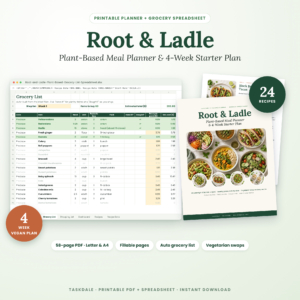 Root & Ladle Plant-Based Meal Planner & 4-Week Vegan Starter Plan | 24 Recipes, Weekly Grocery Lists, Vegetarian Swaps & Grocery List Spreadsheet | Printable PDF, US Letter & A4
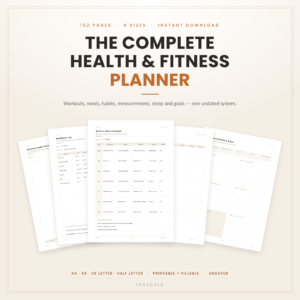 The Complete Health & Fitness Planner | 102-Page Undated Printable Fitness Planner with Workout Log, Meal Planner, Habit & Measurement Trackers | A4, US Letter, A5, Half Letter + Fillable PDF
Key facts at a glance
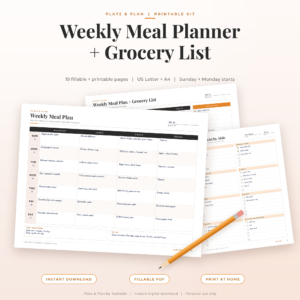
- Plate & Plan has 19 pages and comes as four PDFs: US Letter and A4, each in fillable and print-only versions.
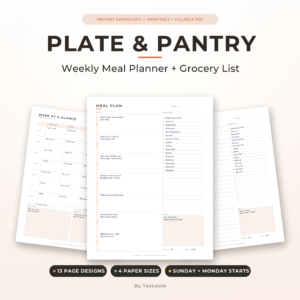
- Plate & Pantry has 13 pages and is the only planner here sold in four sizes (US Letter, A4, A5 and Half Letter) that is built purely around dinners, groceries and budget.
- Root & Ladle includes a 4-week vegan starter plan for two, with 24 written recipes and a grocery list spreadsheet.
- The Complete Health & Fitness Planner runs to 102 undated pages and includes a meal planner alongside workout, habit, measurement and sleep sheets.
- All of these are digital downloads that you print at home, so you can reprint a week whenever you need one.
Table of contents
- What should you look for in a weekly meal planner printable?
- How do these planners compare?
- Who does each planner suit?
- How do you use a weekly meal planner printable?
- What mistakes should you avoid?
- What affects the price of a printable meal planner?
- Which planner should you choose?
- Common questions
What should you look for in a weekly meal planner printable?
A good weekly meal planner printable has the right paper size, a way to turn meals into a shopping list, and enough pages to cover your routine without burying you. Five factors do most of the work.
Paper size
Paper size decides where the planner lives. A4 and US Letter suit a clipboard or folder, while A5 and Half Letter are small enough for a fridge door or a kitchen notebook binder. Plate & Pantry and The Complete Health & Fitness Planner offer all four sizes. Plate & Plan and Root & Ladle offer US Letter and A4 only.
Fillable or print-only
A fillable PDF is a file you can type into on a screen and save, then print or keep digital. A print-only PDF is made for pen. If you plan on a laptop or tablet, choose fillable. Plate & Plan supplies both versions, which helps if you want to type some weeks and write others.
A grocery list built into the plan
A built-in grocery list sits beside the week's meals, so you write the shopping while the menu is fresh. Plate & Plan and Plate & Pantry both do this. Root & Ladle goes further with a grocery list for each week sorted by aisle, plus a spreadsheet for Excel and Google Sheets that adds up your shopping automatically.
Pantry, fridge and budget pages
Pantry and fridge pages record what you already own, which cuts down on duplicate purchases. Plate & Plan includes pantry, fridge, budget and recipe pages. Plate & Pantry focuses on a food budget. Root & Ladle's spreadsheet has a pantry check and budget, and its pack adds a list of pantry staples.
Scope and page count
A larger planner is not automatically a better meal planner. The Complete Health & Fitness Planner has 102 pages because most of them are not about food. If you only want dinners and a shopping list, 13 or 19 pages is plenty.
How do these planners compare?
The four planners differ mainly in size range, page count and what they include beyond the weekly menu. The table sets out the supplied details side by side.
Who does each planner suit?
Each planner suits a different kind of household, and the match matters more than the page count.
Plate & Plan suits people who cook most dinners at home and want a system. The 4 week dinner rotation helps if you repeat meals, and the pantry and fridge pages help if you tend to buy things you already have. It has Sunday or Monday week starts.
Plate & Pantry suits anyone who wants one sheet on the fridge and little else. At 13 pages it is quick to learn. The A5 and Half Letter sizes are the draw if wall or fridge space is tight, and the budget page suits households watching the weekly food spend.
Root & Ladle suits people moving towards plant-based eating who would rather not invent a menu from scratch. The plan is written for two people and covers breakfast, lunch, dinner and a snack every day for four weeks. Every recipe has a vegetarian swap, so it also works if one of you still eats dairy or eggs. If you cook for more than two, you will need to scale quantities yourself.
The Complete Health & Fitness Planner suits people who already keep a workout log or want to start one. The meal planner sits among workout, habit, measurement and sleep pages. Because it is undated, you can begin in any month, and you only print the sheets you use.
How do you use a weekly meal planner printable?
You use a weekly meal planner printable by choosing meals first, building the shopping list from them, and checking your cupboards before you buy. A routine of about 20 minutes once a week is enough for most people.
- Print the week's sheet at the size that suits your space, or open the fillable PDF on screen.
- Check the pantry and fridge for what needs using up, and plan those items into the first few dinners.
- Fill in each dinner, then add lunches or snacks only if you want to plan them.
- Write the grocery list directly from the menu, crossing off anything you already have.
- Put the plan somewhere you pass every day, such as the fridge door.
- At the end of the week, note which meals worked and reuse them.
If you save a fillable PDF, keep a blank copy as well so you can start each week fresh. Every product here is for personal use, so print only for your own household.
What mistakes should you avoid?
The most common mistake is buying a planner that is too big for the habit you actually have. A 102-page workbook that never gets printed saves nothing, while a single weekly sheet used every Sunday does.
- Planning seven dinners when you cook four. Leave room for leftovers and nights out, then shop for fewer meals.
- Ignoring the pantry. If you skip the stock check, you buy a third tin of tomatoes. Plate & Plan's pantry pages and Root & Ladle's pantry check exist for this.
- Choosing a size you can't fit. A4 sheets are awkward on a small fridge. Check the available sizes before you buy.
- Never reviewing the week. A quick note on what the household ate and liked builds a rotation that is easy to repeat.
- Expecting a recipe book from a planner. Plate & Plan and Plate & Pantry give you space for plans, not written recipes. Root & Ladle is the one here with 24 full recipes.
What affects the price of a printable meal planner?
The price of a printable meal planner is shaped mainly by how much content it holds and how much extra work sits behind it. A short planner with a menu and a shopping list generally costs less than one with written recipes or a working spreadsheet.
Three things push the price up: written recipes, spreadsheet tools with dropdowns and automatic totals, and a wide range of paper sizes, each of which has to be laid out separately. A larger bundle such as The Complete Health & Fitness Planner costs more up front but covers other habits too. Because these are digital downloads, you pay once and can reprint as often as you like for personal use, so there is no running cost beyond paper and ink. The live product cards show current prices.
Which planner should you choose?
Choose by the single habit you most want to change, and the right planner usually becomes clear. Use this rule of thumb.
- If you want a complete dinner and grocery system with pantry tracking, choose Plate & Plan.
- If you want one simple page on the fridge, in a small size, choose Plate & Pantry.
- If you are cooking plant-based and want ready-made weeks, choose Root & Ladle.
- If meals are one part of a wider fitness routine, choose The Complete Health & Fitness Planner.
If you are still unsure, start with the shortest one that matches your paper size. You can always add a pantry sheet or a rotation later.
Common questions
Can I use a fillable PDF on a tablet?
Yes, if your tablet has a PDF app that supports form fields. You can then type into the lines and tick boxes and save the file. Plate & Plan, Plate & Pantry and The Complete Health & Fitness Planner all include fillable PDFs, as does Root & Ladle.
Do these planners start on a Monday or a Sunday?
Plate & Plan and Plate & Pantry both offer Sunday and Monday starts, so you can match the way you shop. The supplied details for the other two planners do not specify a week start, so check the product description before buying.
What is a 4 week dinner rotation?
A 4 week dinner rotation is a set of dinner plans that repeat every four weeks, so you do not have to decide from nothing each time. Plate & Plan includes one, and you fill in your own meals to build a rotation your household likes.
Can I print only some pages of a planner?
Yes. These are digital files, so you can print just the pages you need and reprint them later. The Complete Health & Fitness Planner is built around this idea, with 102 undated pages and a clickable index that lets you find and print one sheet at a time.
Is Root & Ladle only for vegans?
No. It is a plant-based plan, but every recipe has a vegetarian swap, so households that eat dairy or eggs can adapt it. It is written for two people, so you would scale quantities for a larger family or for batch cooking.