Going vegan all at once is how most beginners end up eating toast for dinner by Thursday. A week-by-week plan works better. You change one meal at a time, you learn five or six dinners properly, and by the end of the month you have a routine instead of a resolution.
This guide is for anyone trying plant-based eating for the first time: a curious couple, a student cooking for one, a parent whose teenager just announced they are done with meat. You will get a four-week plan that tells you what to change each week, a starter pantry list, simple ways to get protein in every meal, and the mistakes that send people back to old habits.
There are also three Taskdale planners below if you would like the menus, recipes and grocery lists written out for you.
Quick picks for planning your first vegan month
| Product | Best for | Price | Link |
|---|---|---|---|
| Root & Ladle Plant-Based Meal Planner | A ready-made 4-week vegan starter plan with recipes | $8.99 | View |
| Spoonful Digital Meal Planner | Planning on an iPad or tablet | $4.99 | View |
| Fresh Week Meal Planner (Excel) | Grocery lists that build themselves from your recipes | Original price was: $3.99.$1.99Current price is: $1.99. | View |
What a beginner vegan week really needs
A good vegan week is not a list of exotic ingredients. It is a handful of reliable meals built on the same few building blocks. Get those right and the rest is seasoning.
Protein at every meal
Most beginners worry about protein, and the fix is simple: put one protein food on every plate. Beans, lentils, chickpeas, tofu, tempeh, edamame, peanut butter, nuts and seeds all count. A bowl of oats with a spoon of peanut butter, a lunch of lentil soup, a dinner of tofu stir-fry. That is three protein foods before you have thought about it.
Something filling
Plant meals can feel light the first few times. Rice, potatoes, pasta, bread, oats and tortillas fix that. If you are hungry at 9 pm, the dinner probably needed another scoop of grains or another half can of beans, not a snack.
Flavor you already like
This is the part people skip. If your family loves tacos, start with bean tacos. If Friday is pasta night, keep it and swap the meat sauce for a tomato and white bean sauce. Familiar flavors make the change feel smaller, and small changes stick.
Week 1: Swap your dinners and nothing else
In the first week, only dinners change. Breakfast and lunch stay as they are. That sounds slow, but dinner is the meal you cook most carefully, so it is the best place to learn.
Pick five dinners and repeat them if you like. Here is a simple Week 1 that uses pantry basics:
- Monday: Red lentil soup with crusty bread
- Tuesday: Black bean and sweet potato tacos
- Wednesday: Chickpea coconut curry with rice
- Thursday: Leftover curry, or a quick peanut noodle bowl
- Friday: Tomato and white bean pasta
- Saturday: Clean-out bowl: rice, any leftover beans, roasted veg, a sauce
- Sunday: A big pot of chili for the week ahead
Cook four servings each night even if there are two of you. Tomorrow’s lunch is now sorted, and that tiny bit of planning is what makes Week 2 easy. The Sunday chili does the same job for Monday.
If you would rather not build that first month yourself, a ready-made plan saves a lot of evenings spent scrolling recipe sites.
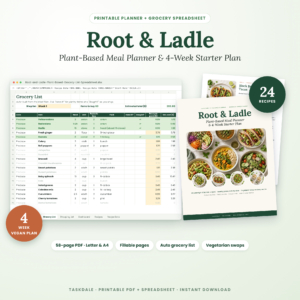
Root and Ladle Plant-Based Meal Planner
Price: $8.99 | Best for: beginners who want the month planned
Root and Ladle gives you a full 4-week vegan starter menu with breakfast, lunch, dinner and a snack for every day, plus 24 written recipes such as red lentil dal, three-bean chili and crispy tofu stir-fry. Each week has its own grocery list sorted by aisle, and every recipe has a vegetarian swap for mixed households. You get 58 fillable pages in US Letter and A4, plus a grocery list spreadsheet. Print Week 1, shop from its list and cook the Sunday pot first.
Week 2: Lunches come from last night’s dinner
Week 2 adds lunch, and you barely have to cook for it. The rule is cook once, eat twice. Tuesday’s tacos turn into a Wednesday burrito bowl. Wednesday’s curry goes into a lunch box with rice.
A few things make leftover lunches work:
- Pack it the same night. Spoon lunch into a box before the pot goes in the sink. Morning you will thank evening you.
- Keep two backup lunches. A can of lentil soup and a hummus wrap kit cover the days when dinner was all eaten.
- Add one fresh thing. A handful of spinach, a sliced cucumber, an apple. It keeps day-old food from feeling tired.
By Friday of Week 2, ten of your fourteen main meals are plant-based. That is a real change, and most people are surprised how little extra effort it took. If batch cooking is new to you, our meal prep guide for beginners walks through a first Sunday hour by hour.
Week 3: Breakfasts and snacks
Breakfast is usually the easiest meal to switch, which is why it waits until Week 3. You have built confidence with dinners, and now the morning swaps feel like small tweaks.
Five breakfasts to rotate
- Oats made with soy or oat milk, topped with banana and peanut butter
- Toast with mashed avocado and white beans, salt and lemon
- Tofu scramble with spinach and a pinch of turmeric
- A smoothie with frozen berries, oats, soy milk and a spoon of nut butter
- Overnight chia pudding made on Sunday for three mornings
Snacks that hold you until dinner
Roasted chickpeas, a handful of almonds, hummus with carrot sticks, edamame in the pod, or an apple with peanut butter. Keep two of these at work. The 3 pm vending machine is where a lot of good weeks fall apart.
Check your milk swap here too. Soy milk has the most protein of the common plant milks, so it is a sensible default for oats and smoothies. Pick a fortified one, and look at the label for calcium and B12.
Week 4: Make the plan your own
By Week 4 you know which meals your household loved and which ones got pushed around the plate. Now you build your own rotation.
- List your keepers. Write down every dinner from the last three weeks that someone asked for again. Most people end up with six to eight.
- Add one new recipe a week. Only one. A Moroccan chickpea stew or a lentil shepherd’s pie is plenty of adventure for a Tuesday.
- Set a theme night or two. Taco Tuesday and Friday pasta take decisions off the table.
- Plan the shop from the plan. Write the week’s menu first, then the grocery list from it, ingredient by ingredient.
That last step is where a spreadsheet earns its keep. Once your recipes are entered, picking Monday’s dinner can add its lentils, onions and canned tomatoes to the shopping list for you.
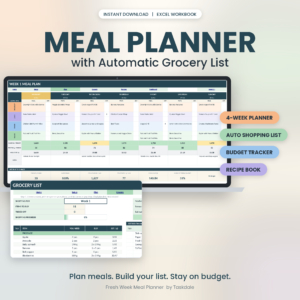
Fresh Week Meal Planner Excel
Price: Original price was: $3.99.$1.99Current price is: $1.99. | Best for: people who like spreadsheets and totals
Fresh Week is an Excel workbook with 13 sheets: four weekly planners, a recipe list that holds up to 60 recipes and 200 ingredients, a dashboard and a grocery list sorted into 12 aisles. Choose a dinner from the dropdown and the shopping list fills in, takes off what is already in your pantry and estimates the cost of the trip. An example file with four planned weeks and a step by step user guide are included. Enter your six or eight vegan keepers first, then plan Week 5 from them.
A starter vegan pantry, and what it costs to set up
A stocked pantry is what makes a Tuesday dinner possible when you are tired. You do not need everything on day one. Buy these over the first two shops and you can cook almost every meal in this plan.
- Cans and jars: chickpeas, black beans, white beans, crushed tomatoes, coconut milk, peanut butter
- Dry goods: red lentils, rice, pasta, rolled oats, a bag of frozen edamame
- Fridge: firm tofu, a fortified plant milk, hummus
- Flavor: soy sauce, curry paste or powder, cumin, smoked paprika, garlic, onions, lemons
- Freezer: mixed vegetables, spinach, berries
Here is a worked example of how the money can play out. Say the spices and sauces cost around $25 the first time. That feels like a lot for one shop, but a jar of cumin lasts months. Spread across eight weeks, it is about $3 a week. Beans and lentils are among the cheapest proteins in any store, so many households find the weekly bill drops once the pantry is built.
Shopping by aisle keeps the first few trips quick. Group your list into produce, cans, dry goods and fridge, and you will not double back for the coconut milk you forgot.
Mistakes that make beginners quit
Most people do not give up on vegan eating because they miss meat. They give up because the plan was too hard to keep. Watch for these.
Replacing meat with nothing
Taking the chicken off a plate of chicken, rice and broccoli leaves rice and broccoli. That is a side dish, not dinner. Always put something back: a cup of chickpeas, a block of tofu, a scoop of lentils.
Too many new recipes at once
Seven brand new recipes in one week means seven nights of reading instructions and buying single-use ingredients. Two or three new ones a week, padded with repeats, is far kinder.
No plan for busy nights
The night you work late is the night you order a pizza. Keep one 10-minute meal in the plan every week. Peanut noodles, a bean quesadilla or a can of soup with toast all count.
Chasing perfect
Cheese on a work pizza does not undo a month. If you slip, the next meal is a fresh start. People who stay flexible early on are often the ones still cooking plant-based a year later.
Paper, tablet or spreadsheet: picking how you plan
The plan only works if you look at it. So pick the format you already reach for.
- Paper suits people who like a page on the fridge where everyone can see dinner. It is also the easiest for kids to follow.
- A tablet suits people who already plan in an app like GoodNotes and want the grocery list in their hand at the store.
- A spreadsheet suits people who like numbers: totals, pack sizes, what the shop will cost.
If you do a lot of things on an iPad, a hyperlinked planner keeps the week and the shopping list one tap apart.
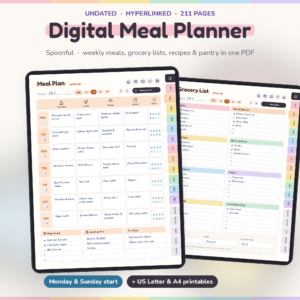
Spoonful Digital Meal Planner
Price: $4.99 | Best for: tablet users who shop from their device
Spoonful is an undated, hyperlinked PDF for GoodNotes and similar apps. It has 52 weekly meal plans, each linked to its own grocery list split into eight store sections, plus a recipe book, 60 dinner ideas, pantry inventories and a yearly grocery budget. Monday and Sunday start editions are included, along with printable pages in US Letter and A4. Copy your Week 1 vegan dinners into the first plan and tap through to the list before you shop.
For a general walk-through of planning any week from a blank page, see how to meal plan for the week when you have never done it.
A 20-minute Sunday routine to keep it going
Habits last when they have a time slot. Here is a short one that fits after Sunday lunch.
- Minutes 1 to 5: Look at last week’s plan. Circle the meals people liked. Cross out the one nobody finished.
- Minutes 6 to 10: Write next week’s dinners. Five keepers, one new recipe, one clean-out night.
- Minutes 11 to 15: Check the pantry and write the grocery list from the menu.
- Minutes 16 to 20: Start something easy: rinse a pot of lentils, chop onions, or cook a tray of rice.
Twenty minutes. That is all it takes to walk into Monday with a plan, and there is a quiet pride in opening the fridge and knowing exactly what is for dinner.
Frequently asked questions
How do I start a vegan meal plan as a beginner?
Change one meal type at a time. Start with five plant-based dinners in Week 1, add leftover lunches in Week 2, then switch breakfasts and snacks in Week 3. Week 4 is for building your own rotation from the meals you liked.
How do vegans get enough protein each day?
Put one protein food on every plate: beans, lentils, chickpeas, tofu, tempeh, edamame, nuts, seeds or peanut butter. Soy milk in oats and a handful of nuts as a snack add more without any extra cooking.
Is a vegan meal plan expensive?
The first shop can feel bigger because of spices and sauces. After that, beans, lentils, rice and oats are cheap, so many people spend less per week once the pantry is stocked.
What should a beginner vegan eat for breakfast?
Oats with plant milk and peanut butter, tofu scramble, avocado and bean toast, smoothies with oats and nut butter, or overnight chia pudding. Rotate three or four so mornings stay quick.
Can I follow a vegan plan if the rest of my family eats meat or dairy?
Yes. Cook a plant-based base, such as chili or curry, and let others add cheese, yogurt or an egg on the side. Root and Ladle includes a vegetarian swap with every recipe for exactly this situation.
Your next step
Tonight, write down five dinners you already enjoy and the plant swap for each one: beans in the tacos, lentils in the bolognese, chickpeas in the curry. That is your Week 1. If you would like the whole first month mapped out with recipes and aisle-sorted lists, start with the Root and Ladle Plant-Based Meal Planner and print Week 1 before your next shop.