


A CBT game for kids who take rejection hard
Some kids shrug off being picked last. Others carry it home and replay it all night. Ouch Bug Clinic is a printable CBT game for kids ages 7 to 12 that teaches them what to do with that sting. It was built for counselors, therapists, teachers and parents who work with kids with ADHD, rejection sensitivity, autism, anxiety or perfectionism.
The idea is simple. When an ouch happens, Ouch Bugs show up. Kids play the doctor, and every turn follows the same three steps:
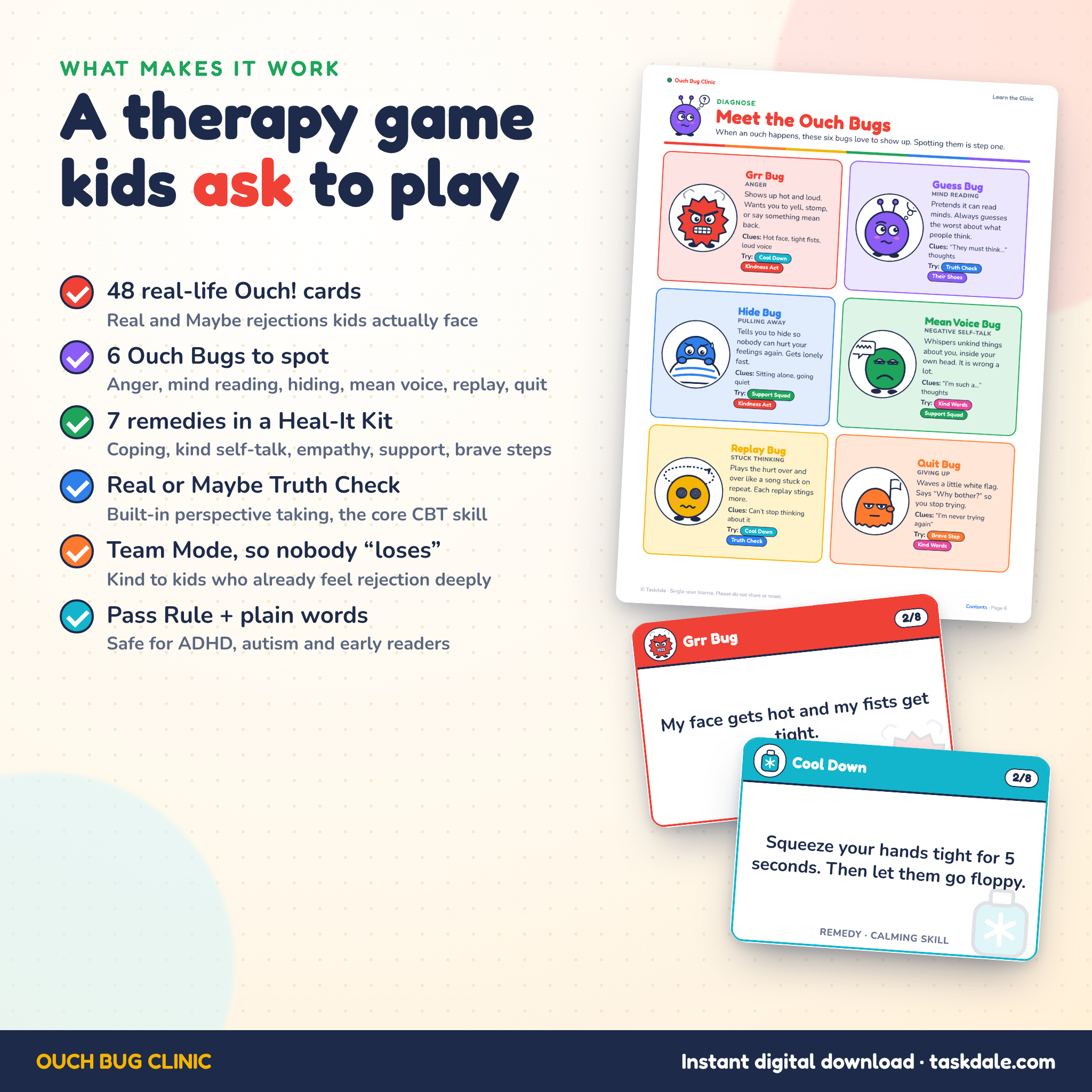
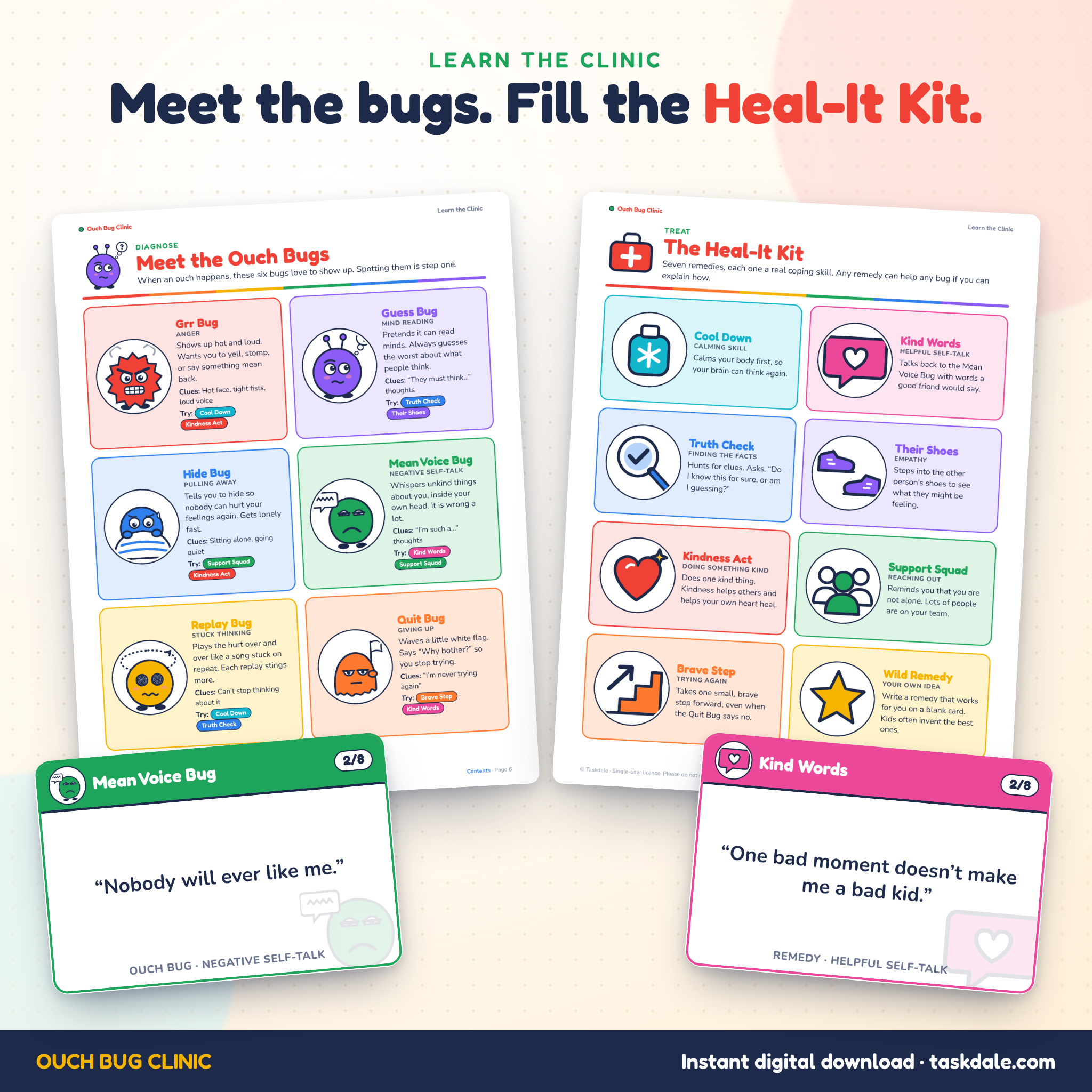
- Diagnose. Which bug showed up? The Grr Bug (anger), Guess Bug (mind reading), Hide Bug (pulling away), Mean Voice Bug (negative self-talk), Replay Bug (stuck thinking) or Quit Bug (giving up).
- Truth Check. Was it a Real ouch, or a Maybe ouch that could be a misread?
- Treat. Pick a remedy from the Heal-It Kit and explain how it helps.
That is the core CBT loop, in kid-sized pieces. Played a few times, it turns into a habit kids can use at recess.
Why this rejection sensitivity game is different
Most counseling card games have one deck and one way to play. This one gives you three decks, a board game, sorting mats and six game modes, so the same skills stay fresh for a whole term.
It also takes the child’s feelings seriously. About 20 of the 48 Ouch! cards describe a real rejection, and the guide reminds you to lead with comfort on those, not reframing. The rest are Maybes, where the Truth Check does the heavy lifting.
And because losing can sting too, the board game has a Team Mode. Everyone fills one Heart Jar together, so nobody walks away the loser of a game about rejection.
What’s included
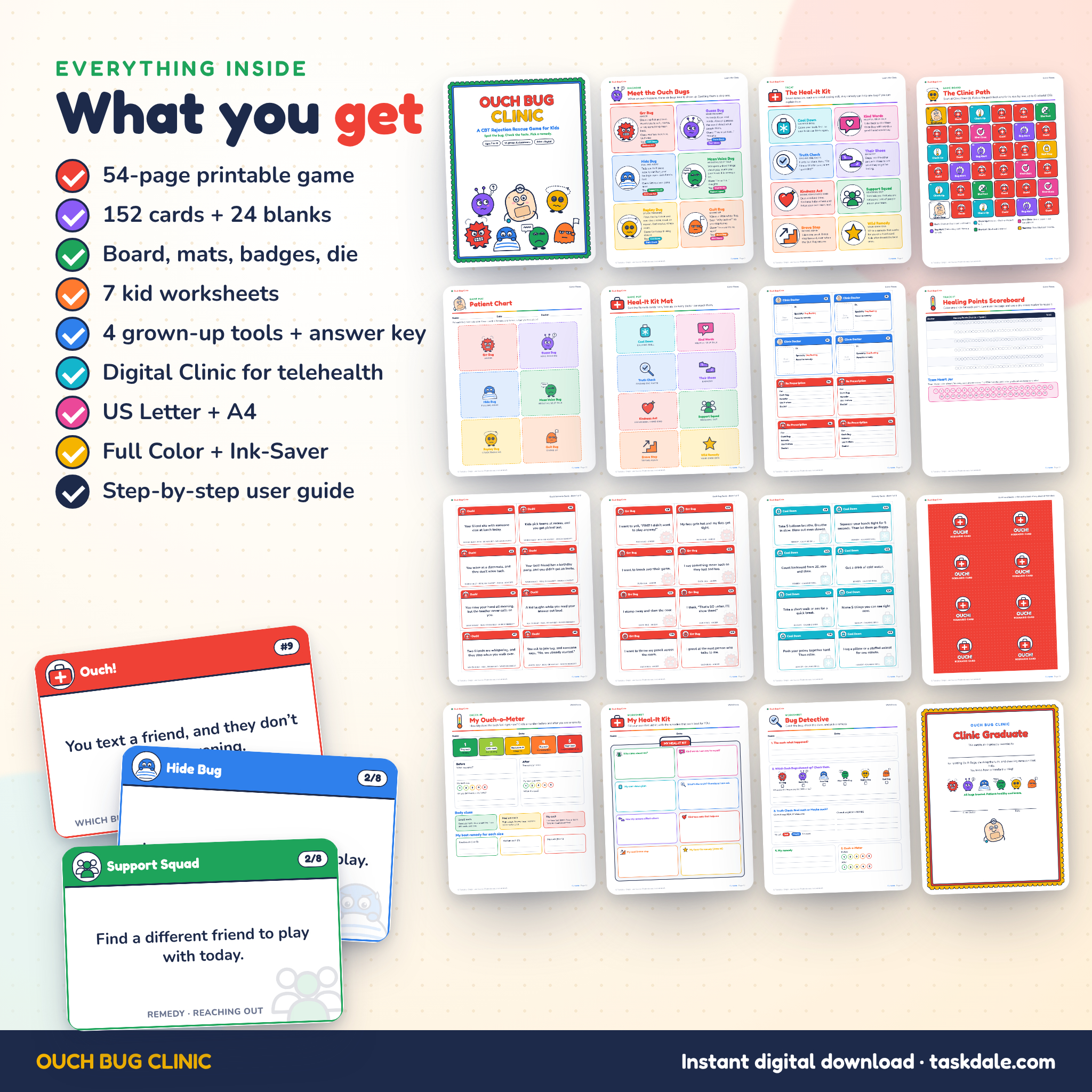
Cards (176 total)
- 48 Ouch! scenario cards, each one a common real-life ouch
- 48 Ouch Bug cards, 8 for each of the 6 bugs
- 56 Remedy cards, 8 for each of the 7 remedies
- 24 blank cards for your own scenarios, Mystery Bugs and Wild Remedies
- Optional card backs, laid out so a small printer shift never shows
Game pieces
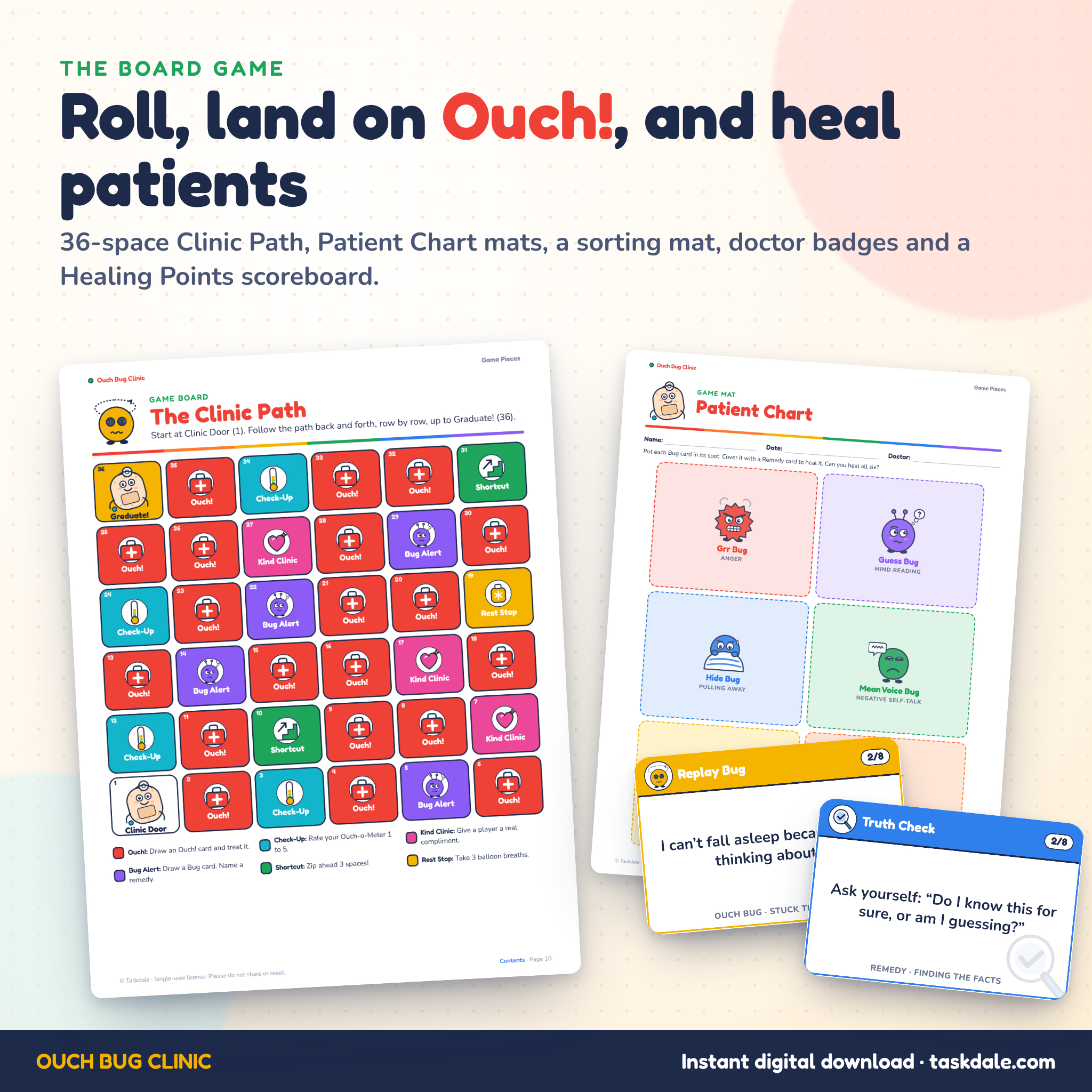
- Clinic Path game board with 36 spaces and 6 space types
- Patient Chart mat with a card-sized spot for each bug
- Heal-It Kit sorting mat for the remedies
- Doctor badges, take-home Rx prescription slips and a fold-up die
- Healing Points scoreboard with a Team Heart Jar
- Clinic cheat sheets, two per page
Worksheets for kids
- My Ouch-o-Meter feelings check-in (1 to 5)
- My Heal-It Kit, a first aid kit of personal coping skills
- Bug Detective thought record
- My Ouch Triggers, Remedy Practice Log, My Clinic Care Plan and Draw the Bug You Beat
Tools for grown-ups
- Notes for grown-ups and a quick start print guide
- Answer key for all 48 scenarios, plus talk prompts
- Home Practice Note for families
- 8-session progress tracker with before and after scores
- A ready-made 6-session plan and a Clinic Graduate certificate
Digital Clinic for telehealth
A single file that opens in Chrome, Edge, Safari or Firefox, with no internet or login. Draw cards, tap the bug, choose Real or Maybe, pick a remedy, and the points are counted for you. It supports up to 6 players, Team or Compete Mode, a Pass button, a dice roller, an Ouch-o-Meter, and your own custom cards.
How it works
Print what you need, cut the cards (one straight cut frees two cards), and pick a mode. Quick Check-Up takes about 5 minutes and works well 1:1. Clinic Rounds, the board game, runs 20 to 30 minutes for 2 to 6 players. You also get Bug Match (a memory game), Role-Play Clinic, Clinic Relay for whole classes, and the Digital Clinic.
Scoring is the same everywhere. Name the bug for 1 point. Make a Real or Maybe call with a reason for 1 more. Choose a remedy and explain how it helps for 2.
Who it’s for
- School counselors and school psychologists running small groups
- Child therapists, play therapists and social workers
- Special education and classroom teachers teaching SEL
- Parents of kids who melt down after being left out
Real ways people use it
- A counselor runs a 6-week friendship group using the built-in session plan.
- A therapist plays the Digital Clinic over Zoom with a 9-year-old client.
- A teacher reads one Ouch! card at morning meeting and the class votes Real or Maybe.
- A parent tapes the cheat sheet to the fridge and asks, “Is that the Guess Bug talking?”
File formats and requirements
- 4 print-ready PDFs: US Letter Full Color, US Letter Ink-Saver, A4 Full Color, A4 Ink-Saver (54 pages each, linked contents)
- Digital Clinic (HTML file) for any modern web browser on a computer or tablet
- User Guide (Word DOCX) with setup steps, troubleshooting and FAQ
- Software: a free PDF reader and a web browser. Nothing else to install.
Customization
Write your own ouches on the blank cards, let kids invent new bugs and remedies, pull cards that feel too close to home, or color the Ink-Saver bugs. In the Digital Clinic you can rename players, hide the grown-up hints, play only Real or only Maybe cards, and add custom cards.
Digital download
This is a digital product. No physical item ships. Your files are ready to download as soon as your order is complete, and the license covers one user: print as often as you need for your own students, clients or family.
FAQ
What age is this CBT game for?
Ages 7 to 12, about grades 2 to 6. Younger kids can play with an adult reading the cards.
Does it help kids with ADHD and rejection sensitivity?
That is who it was built for. It practices noticing the reaction, checking the facts and choosing a coping skill. It is a skills practice tool, not a diagnosis or treatment.
Can I use it for telehealth?
Yes. Open the Digital Clinic, share your browser tab in Zoom, Teams or Meet, and play.
Do I have to print card backs?
No. Every card is labeled on the front. Backs are there if you want them.
How much prep does it take?
About 15 minutes to print and cut. Quick Check-Up needs only the cards and one Patient Chart.
Can I share it with my school?
Each license covers one user. Colleagues need their own copy.
Is it available in A4?
Yes. You get US Letter and A4, each in Full Color and Ink-Saver.
Reviews
There are no reviews yet.