The right coloring book gets finished. The wrong one gets one scribble on page three and lives under the sofa. The difference is rarely the theme. It is almost always the match between the page and the person holding the crayon.
A two-year-old needs a shape the size of their palm. A teenager needs something that does not feel babyish. An adult after a long day needs a page that is calming, not a test of eyesight. If you are shopping for a family, a classroom or a gift, it helps to know what to look for at each stage.
This guide shows you how to choose coloring books for toddlers, kids, teens, and adults, with a simple age chart, a checklist and a few printable picks that suit each group.
Quick picks: one book for each stage
| Product | Best for | Price | Link |
|---|---|---|---|
| Little Explorers Preschool Coloring Book | Toddlers and preschoolers, ages 2 to 5 | $3.49 | View |
| Orbit Pals Printable Coloring Book | Kids from about 7, plus teens and adults | $3.99 | View |
| Gearhead Zoo Printable Coloring Book | Teens who love fiddly detail | $3.99 | View |
| Easy Mandala Coloring Book | Adults, beginners and seniors | $3.49 | View |
Five things to check in any coloring book
Before you look at age, learn to read a page. Five features decide whether a book suits the person you are buying for.
- Line thickness. Thick, dark lines act like little walls. Young children need them. Older colorists often prefer thinner lines that disappear under the color.
- Size of the spaces. Measure with your thumb. If most spaces are smaller than a thumbnail, it is a book for steady hands and sharp pencils.
- Amount on each page. One big subject per page feels doable. A packed scene with forty small objects can feel like homework.
- Theme and tone. Cute, funny, realistic or calm. The theme decides whether the book gets picked up in the first place.
- Format. A bound book is a nice gift. A printable book lets you reprint favorites, choose your paper and hand out single pages.
Flick through a few sample pages with these five in mind and you will rarely buy the wrong book again.
A quick age chart
| Age | Lines | Spaces | Best tools | Typical session |
|---|---|---|---|---|
| Toddlers, 1 to 3 | Very thick | Palm-sized | Chunky crayons | 2 to 5 minutes |
| Preschool, 3 to 5 | Thick | Large | Crayons, washable markers | 5 to 15 minutes |
| Kids, 6 to 9 | Medium | Medium with some detail | Markers, colored pencils | 15 to 30 minutes |
| Tweens, 10 to 12 | Medium to fine | Mixed | Pencils, fine markers, gel pens | 30 to 45 minutes |
| Teens | Fine | Small and detailed | Pencils, fineliners, brush pens | 45 minutes or more |
| Adults | Any | Depends on mood | Whatever they enjoy | One evening or several |
Treat the chart as a starting point. A seven-year-old with very steady hands may love teen-level detail. A tired adult might want something as simple as a preschool page. Watch the person, not the birthday.
Toddlers: big shapes and very short sessions
For children under three, coloring is mostly about holding a crayon and making a mark. Do not expect inside the lines. Expect happy scribbles across a bus, and that is exactly right.
Look for pages with one big, familiar object: a ball, a duck, a fire engine, a cat. Lines should be very thick, and there should be lots of white space around the picture. Thin paper is fine, because toddlers use crayons, not markers.
Keep sessions tiny. Two minutes is a success. Tape the page to the table so it does not slide, hand over two or three chunky crayons, and name the colors as they go. Supervise with crayons and keep any small caps or pieces out of reach.
Preschoolers: friendly subjects with a little learning
Between three and five, children start to aim. They will try to stay inside the lines, and they care more about which color goes where. This is the age where coloring quietly builds hand strength and pencil grip for school.
Pick books with thick outlines, large open spaces and themes they already love, like animals, diggers and dinosaurs. Pages that mix in counting, shapes or big and small turn coloring into chatting. A preschooler coloring three ducks will happily count them out loud.
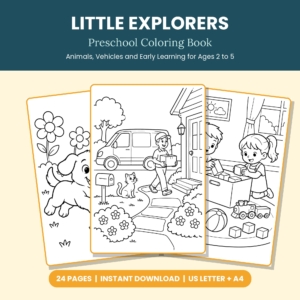
Little Explorers Preschool Coloring Book
Price: $3.49 | Best for: toddlers and preschoolers, ages 2 to 5
Little Explorers has 24 pages with thick outlines and open spaces, split into Friendly Animals, Busy Vehicles and Early Learning themes such as counting ducks and feelings balloons. You get US Letter and A4 PDFs plus every page as its own 300 DPI PNG. Print the digger or the puppy page on plain paper and let your little one choose the crayon.
For more ideas on choosing pages for this stage, our guide to printable coloring books for kids has picks for screen-free afternoons.
Kids, ages 6 to 9: characters and a bit of humor
School-age kids want a page that makes them laugh or makes them curious. A plain cow is fine. A cow in a spacesuit is better. Humor and imagination get a page started, and a clear main character gets it finished.
They can handle more detail now, so look for a mix: a big main shape for quick wins, plus small details like stars, stripes or patterns for when they want to slow down. Colored pencils and markers both work well. This is also the age when they start to compare their work to a sibling’s, so books with many different pages help everyone get their own favorite.
Page count matters here. A child who finishes a page in 20 minutes will burn through a 10-page book in a week. Books with 30 or more pages, or printable books you can reprint, last much longer.
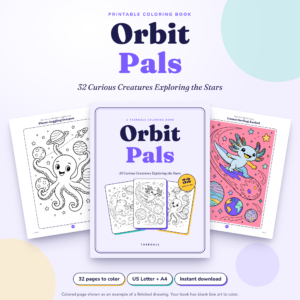
Orbit Pals Printable Coloring Book
Price: $3.99 | Best for: kids from about 7, teens and adults
Orbit Pals has 32 full-page drawings of animals loose in outer space, like an axolotl surfing a comet and an octopus juggling planets. The download includes US Letter and A4 PDFs, a single-page PNG pack and an illustrated user guide. Younger kids can color the big animal first and leave the stars for later, while older ones take on the whole scene.
Tweens and teens: detail, style and nothing babyish
Around ten, many kids quietly drop coloring because the books look too young. Bring it back with pages that look like something a grown-up would color. That means finer lines, more detail and themes that feel cool rather than cute.
Teens tend to like:
- Mechanical and technical designs, such as robots, gears and machines.
- Patterns and mandalas for calm, music-on coloring.
- Funny or weird subjects with a bit of attitude.
- Space, fantasy and nature with room for shading.
Give them good tools. A set of decent colored pencils or fineliners signals that this is a real hobby, not a kids’ activity. And let them choose. A teen who picks the book is far more likely to use it. Our list of coloring pages for teens that don’t feel babyish has more ideas.
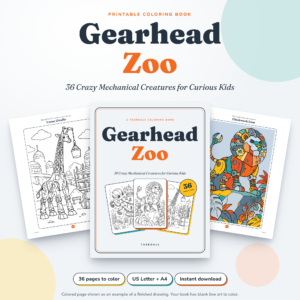
Gearhead Zoo Printable Coloring Book
Price: $3.99 | Best for: teens who like fiddly detail
Gearhead Zoo has 36 robot animal coloring pages, such as a clockwork lion and a rhino with a toaster for a body, full of small bolts, pipes and panels. It comes as US Letter and A4 PDFs plus a PNG pack and a user guide. Hand it over with silver and gold gel pens and let them choose the paint job.
Adults: match the book to the mood
Adults color for different reasons. Some want a calm half hour before bed. Some want a long project to work on over a month. Some just want to laugh. The best adult coloring book is the one that fits the reason.
For relaxing
Choose bold lines, open spaces and repeating shapes. Mandalas, simple florals and cozy scenes let your mind wander while your hand works. You can finish a page in one evening, which feels good.
For a challenge
Choose fine lines and dense detail. Intricate patterns, realistic animals and busy scenes reward sharp pencils and patience. Expect several sessions per page.
For fun
Choose humor, quirky characters or themes from your own life. A funny page is easy to start, which matters more than you might think on a tired Tuesday.
Older adults and seniors usually do best with large, bold designs and good contrast, especially if eyesight or hands are not what they were. Our roundup of the best coloring books for adults sorts picks by style and difficulty.
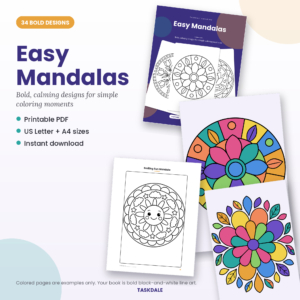
Easy Mandala Coloring Book
Price: $3.49 | Best for: adults who want to unwind
This book has 34 bold mandalas with thick outlines and generous spaces, so one page takes an evening rather than a week. It comes as US Letter and A4 PDFs, with each design on its own page. It suits beginners, seniors and anyone who finds fine-detail mandala books tiring, and it works for a quiet parent and child coloring hour too.
Buying for a mixed-age family
A house with a four-year-old, a nine-year-old and two adults does not need four separate books. A few tricks keep everyone happy.
- Pick books that grow. Some books mix simple pages with detailed ones, so siblings color the same theme at their own level.
- Use the same page, different tools. Print one bold page twice. The preschooler uses crayons. The parent uses fine pencils and adds patterns inside each shape.
- Choose printable. With a printable book you print the right pages for each person and reprint a favorite so nobody fights over it.
- Agree on a theme night. Space on Monday, animals on Wednesday. Everyone colors their own version and you compare at the end.
One family coloring night a week becomes a small ritual that kids remember. The pages are a bonus.
Printable or bound: which format suits each age?
Format matters more than most people expect, and the answer changes with age.
Toddlers and preschoolers do best with printable pages. Little ones tear, crumple and scribble across three pages at once. With a printable book, a ruined page costs nothing but a sheet of paper. You also hand over one page at a time, which keeps a small child from flipping wildly through the whole book.
School-age kids enjoy both. A bound book feels special as a birthday present. A printable one wins on rainy weekends, car trips and play dates, when two children want the same picture.
Teens and adults often prefer printable pages for a practical reason: paper choice. Markers and gel pens look far better on cardstock than on the thin, double-sided paper many bound books use. Printing also means you can test colors on a spare copy before you start the real one.
If you are giving a printable book as a gift, print a few favorite pages, clip them into a folder with a small pack of pencils, and add a note with the download details. It feels just as thoughtful as a wrapped book.
Common mistakes when choosing coloring books
- Buying too detailed, too early. A beautiful intricate book handed to a six-year-old usually ends in frustration.
- Buying too young for a tween. Babyish themes are the fastest way to lose a ten-year-old’s interest.
- Ignoring the paper. A marker-loving child with a thin, double-sided book will ruin every back page.
- Choosing by cover alone. Covers are often more detailed or more colorful than the pages inside. Look at sample pages.
- Forgetting licenses. Many printable books are for personal or household use. If you teach a class, check whether the listing includes a classroom license before you print copies for a group.
A quick buying checklist
Before you click buy, run through this:
- Who is it for, and how long do they usually sit still?
- Are most spaces big enough for their tools?
- Is the theme something they already love?
- Are there enough pages to last a few weeks?
- Can you print on paper that suits their markers or pencils?
- Do the sample pages look like the cover?
Six yeses and you have a winner.
Frequently asked questions
What age can a child start coloring books?
Many children start scribbling with chunky crayons around 18 months to two years. Choose pages with one large object and very thick lines, keep sessions to a few minutes, and supervise with any small parts.
What makes a coloring book good for preschoolers?
Thick outlines, large spaces, one main subject per page and familiar themes like animals and vehicles. Pages with simple counting or shapes add a little learning without feeling like work.
Are coloring books good for teenagers?
Yes, if the book suits their age. Teens tend to enjoy detailed, stylish designs such as robots, mandalas and fantasy scenes, plus good-quality pencils or fineliners to color with.
How do I pick a relaxing coloring book for adults?
Look for bold lines, open spaces and repeating shapes like mandalas or cozy scenes. You should be able to finish a page in one sitting, which feels calming rather than demanding.
Can one coloring book work for kids and adults?
Some can. Books with big main shapes and smaller optional details work for both. Kids color the main shapes, while adults add shading and patterns.
Your next step
Write down the names and ages of the people you are buying for, plus how long each one usually colors. Then match each person to a row in the age chart above and pick one book per row. If you have a preschooler in the house, print a page from Little Explorers Preschool Coloring Book and watch which shapes they reach for first.