Most weeks are not special. Work, school runs, a club on Tuesday, a late finish on Thursday, and a fridge that needs filling. An everyday meal plan for ordinary, busy weeks does not need new recipes or clever themes. It needs a short list of dinners you can cook half asleep, a rhythm that repeats, and a backup for the night everything slips.
This guide is for households that are tired of reinventing dinner every Sunday. You will build a list of 14 reliable dinners, give each weeknight a simple job, see an ordinary week planned out, and set up a 15-minute weekly routine. Then we look at three Taskdale planners that make the rotation almost run itself.
Quick picks: planners for everyday rotations
| Product | Best for | Price | Link |
|---|---|---|---|
| Pantry to Plate Meal Planner Spreadsheet | Suggesting dinner from what you already have | $7.49 | View |
| Plateful Weekly Meal Planner & Grocery List | Planning up to five weeks of rotation | $9.99 | View |
| Fresh Week Meal Planner and Grocery System | A printed 4-week dinner rotation | Original price was: $4.99.$1.99Current price is: $1.99. | View |
| Larkspoon Meal Planner Spreadsheet | Pricing each week before you shop | $12.99 | View |
Why fancy meal plans fail in ordinary weeks
A lot of meal plans online look lovely and collapse by Wednesday. They ask for seven new recipes, three trips to the store and a free hour every evening. Real weeks have none of that.
An ordinary week plan works the other way round. It starts with what you already cook well, then arranges it so the hard nights get the easy meals. A family that eats spaghetti bolognese every Monday is not failing at meal planning. It has solved Monday. That’s the whole idea.
So this plan starts with a list, not a recipe hunt. It assumes you already cook a handful of dinners well and simply need them in the right order on the right nights.
Build your list of 14 dependable dinners
Sit down with a pen for 15 minutes and write the dinners your household eats without complaint. Aim for 14: enough for two weeks without repeats, few enough to remember. Sort them into five groups.
Fifteen-minute dinners (aim for 4)
Omelets, quesadillas, stir-fry with frozen veg, pasta with pesto and peas. These go on your busiest nights.
Oven dinners (aim for 3)
Sheet-pan sausages and vegetables, baked potatoes with toppings, roast chicken thighs. Ten minutes of work, then the oven does the rest while you help with homework.
Slow cooker or big-pot dinners (aim for 3)
Chili, curry, stew. Make double and freeze half.
Pantry dinners (aim for 2)
Meals built from cans and dry goods, like tuna pasta or bean soup. These save you on nights before shopping day.
Family favorites (aim for 2)
The ones that make people cheer. Tacos, homemade pizza, burgers. Put these on the night that needs a lift.
Once the list exists, you never start from a blank page again. You are choosing from 14, not from every recipe on the internet.
Give each night a job
Theme nights sound twee, but they remove most of the deciding. Each night gets a type of meal, and you only pick which one from your list.
| Night | Job | Example choices |
|---|---|---|
| Monday | Pasta night | Bolognese, pesto pasta, tuna pasta bake |
| Tuesday | Fifteen-minute night | Omelets, quesadillas, stir-fry |
| Wednesday | Leftover or freezer night | Last week’s chili, soup and bread |
| Thursday | Oven night | Sheet-pan sausages, baked potatoes |
| Friday | Favorite night | Tacos, pizza, burgers |
| Saturday | Big-pot night | Curry or chili, cook double |
| Sunday | Roast or slow night | Roast chicken, slow-cooker stew |
Change the jobs to suit your week. If Tuesday is swimming and Thursday is a quiet night at home, swap them. The point is that each night already knows roughly what it is.
An ordinary week, planned
Here is how one household of four uses the system. Two parents work, one finishes late on Thursdays, and the kids have football on Tuesday and piano on Wednesday.
| Day | What’s on | Dinner | Backup if it goes wrong |
|---|---|---|---|
| Monday | Normal day | Spaghetti bolognese, freeze extra sauce | Pesto pasta |
| Tuesday | Football until 6:30 | Chicken quesadillas | Cheese on toast and fruit |
| Wednesday | Piano, home at 6 | Frozen chili from last week with rice | Eggs and beans |
| Thursday | One parent home late | Sheet-pan sausages, peppers, potatoes | Freezer bolognese |
| Friday | Everyone tired | Homemade pizza | Shop-bought pizza, no guilt |
| Saturday | Free afternoon | Chicken curry, double batch | Stir-fry |
| Sunday | Shopping and planning | Roast chicken with vegetables | Baked potatoes |
Notice Wednesday and Thursday lean on food cooked earlier. Those are the two most likely nights for a takeaway, so the plan quietly protects them.
The 15-minute Sunday routine
Once your list and jobs exist, weekly planning shrinks to a quarter of an hour.
- Look at the calendar (3 minutes). Write in clubs, late finishes and evenings out.
- Check the freezer and fridge (3 minutes). Anything that needs eating gets a night first.
- Fill the nights (5 minutes). Match each night’s job to a dinner from your list.
- Write the list (4 minutes). Go dinner by dinner, then cross off what you already own.
Pin it to the fridge, and the week is set. The first time it takes 15 minutes instead of an hour of scrolling, you will feel the difference.
Backup meals for the nights it all goes wrong
Every ordinary week has one night that breaks. The car won’t start, a child is sick, the meeting runs 90 minutes over. A backup stash means that night costs you nothing.
- Two frozen portions of something homemade, labeled
- Pasta, a jar of sauce and a bag of frozen peas
- A dozen eggs and a loaf in the freezer
- Two cans of soup or beans
Use a backup and replace it on the next shop. Simple. This is also the cheapest food-waste fix there is, because planned backups get eaten instead of forgotten; our list of ways to reduce food waste at home has more ideas in the same spirit.
When the household eats at different times
In plenty of ordinary weeks, nobody sits down together on Tuesday. One teenager eats at 5 before practice, a parent eats at 8 after work, and the younger kids need food at 6. Planning for that is different from planning one family dinner.
Pick reheatable dinners for split nights
Chili, curry, soup, pasta bake and stew all hold well in the fridge and reheat in a few minutes. Cook once at 5 pm, and everyone serves themselves when they get in.
Avoid dishes that spoil on standing
Stir-fries, omelets and anything crispy are best eaten at once. Put those on nights when everyone is home together.
Label the boxes
A strip of masking tape with a name on it stops the late eater from finding an empty pot. Small thing. Big difference to how the evening feels.
Lunches without extra work
Ordinary weeks also need lunches, and the easiest way to cover them is to make dinner slightly bigger. Bolognese on Monday becomes Tuesday’s pasta lunch. Saturday’s curry fills two Monday lunchboxes. Roast chicken on Sunday turns into sandwiches.
Add a single line under each dinner in your plan: “makes lunch for 2” or “no leftovers”. It takes seconds and tells you how many lunches still need covering. Usually it is only one or two, and a stash of wraps and cheese handles those.
Keeping the rotation from going stale
Even good rotations wear thin. The fix is small, steady changes rather than a big overhaul.
- One new dinner a month. Try it on a calm night. If everyone likes it, swap out the least popular meal on your list.
- Seasonal swaps. Soups and stews in winter, salads and grills in summer, same job on the same night.
- Let someone else choose. Give each family member one pick a month. Children are far keener on a dinner they chose.
- Change the side, not the main. Baked potatoes with chili one week, with tuna and sweetcorn the next.
After six months your list of 14 might look quite different from the one you started with, and that is a good sign. It means the plan grew with your household instead of fighting it.
Let a spreadsheet suggest tonight’s dinner
On a chaotic Tuesday, the hardest question is not what to cook this week. It is what to cook in the next 20 minutes. A meal planner that knows what is in your fridge and pantry can answer that.
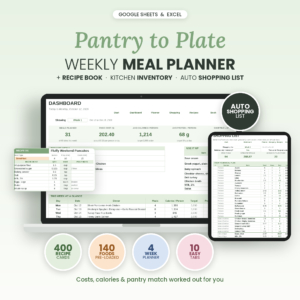
Pantry to Plate Meal Planner Spreadsheet
Price: $7.49 | Best for: busy cooks who plan from what is in stock
A 10-tab Excel and Google Sheets workbook that plans up to four weeks, writes an aisle-sorted shopping list that subtracts what you already have, and shows cost per serving and calories and protein per person. Its Recipe Finder ranks recipes by how many ingredients you already have, and use-by dates turn amber or red as food gets close to spoiling. Add your 14 dependable dinners first, then try the finder on your next busy night.
It comes with 140 common foods already filled in, so building your 14-dinner list is mostly choosing from dropdowns.
Plan a five-week rotation once
If your household is happy eating the same dinners on a cycle, plan the cycle once and reuse it. Five weeks is a good length: long enough that nobody notices the repeat, short enough to fit on one planner.
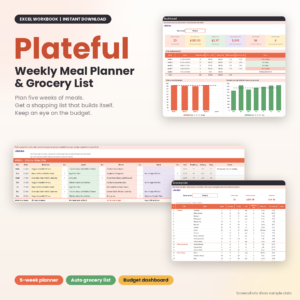
Plateful Weekly Meal Planner & Grocery List
Price: $9.99 | Best for: families who repeat a dinner cycle
An 11-sheet Excel workbook with a user guide that plans up to five weeks with four meal slots a day. Pick meals from dropdowns and it adds up every ingredient, subtracts your pantry stock, rounds up to whole packs and gives you a shopping list grouped by aisle, plus each week’s cost against your budget. Enter your recipes once, fill five weeks, and print week one’s list.
Our article on why a 5 week meal planner beats planning by the month explains the rotation idea in more detail. In short: months have uneven weeks, rotations do not.
A printed rotation for the fridge
Paper people can run a rotation too. Fill a four-week dinner grid once, pin it up, and simply move to the next column each Sunday.

Fresh Week Meal Planner and Grocery System
Price: Original price was: $4.99.$1.99Current price is: $1.99. | Best for: paper planners who like a fixed rotation
18 landscape pages in US Letter, A4 and A5, each as a print version and a fill-in version you can type into. It includes a 4-week dinner rotation page, a meal idea bank with 40 starter ideas, six weekly planner layouts including a Family Dinner Plan with who cooks and how long it takes, a master grocery list and a pantry check. Fill in the rotation with your 14 dependable dinners.
Everyday planning mistakes
- Planning a new recipe every night. One new dish a week is plenty in an ordinary week.
- Ignoring the calendar. A slow roast on football night will not happen. Check the week first.
- No backup. Without a freezer meal or pantry dinner, one bad night becomes a takeaway habit.
- Making the list from memory. Go dinner by dinner, or the onions get forgotten every time.
- Giving up after a bad week. Missed three nights? Move the uncooked dinners to next week and carry on.
Who this approach does not suit
If you love trying a new recipe every night and cooking is your hobby, a fixed rotation will feel like a cage. Use a blank weekly planner instead and keep a short backup list for busy nights. And if someone in your home follows a diet set by a doctor or dietitian, build your 14 dinners around that plan first, then apply the same nightly jobs. The rhythm still works; only the dishes change.
Frequently asked questions
What is an everyday meal plan?
A simple weekly plan built from dinners you already cook well, arranged so the busiest nights get the quickest meals. It repeats from week to week with small changes.
How many meals should I have on rotation?
Around 14 works for most families: two weeks without repeats. Add new favorites slowly and drop the ones nobody misses.
Is it boring to eat the same meals every week?
Less than you would think. Theme nights keep the type of meal fixed but let you choose the dish, so Monday is pasta night but not always the same pasta.
How do I plan meals when my schedule changes every week?
Check the calendar before you choose dinners. Give the busiest nights 15-minute meals or freezer dinners, and save longer recipes for evenings at home.
What should I keep as backup meals?
Two frozen homemade portions, pasta with a jar of sauce, eggs and bread, and a couple of cans of soup or beans. Replace whatever you use on the next shop.
Can I meal plan for a busy week in under 20 minutes?
Yes, once your dinner list and nightly jobs exist. Check the calendar, check the fridge, match dinners to nights and write the list. Most households finish in about 15 minutes.
Your next step
Tonight, write your 14 dependable dinners on a sheet of paper and give each weeknight a job. Then load that list into the Pantry to Plate Meal Planner Spreadsheet and let it write this week’s shopping list.