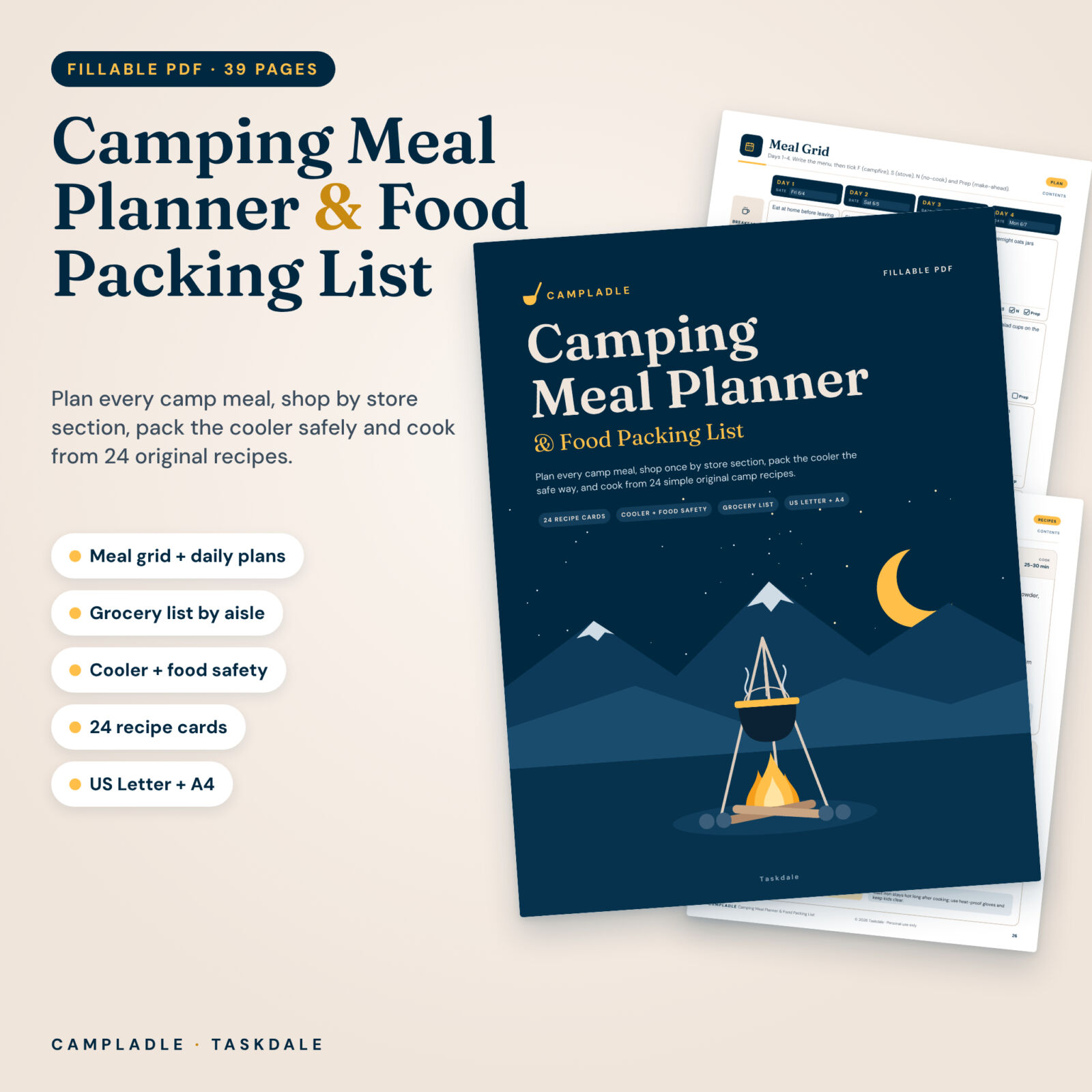
Looking for a free camping meal planner printable that does more than give you a blank menu box? This guide shows you how to plan camping meals step by step, how much food to bring per person, how to pack a cooler so it stays cold, and which food safety rules matter at a campsite. You can download our free Campladle sampler below, a fillable PDF with a meal grid, a grocery list by store section and two original camp recipes.
Free Camping Meal Planner Printable (Fillable PDF)
A 5-page fillable sampler with a 4-day camping meal grid (campfire, stove and no-cook tick boxes), a grocery list by store section and two original camp recipes.
Want everything unlocked?
The free file is a sample. The full version has every page, tab and feature, plus the user guide.
See the full versionThe download is free. You enter your email address to get the file, and free downloads are limited to 3 per day.
What is in the free camping meal planner
The free sampler is a 5-page fillable PDF you can type into with Adobe Acrobat Reader or print at home:
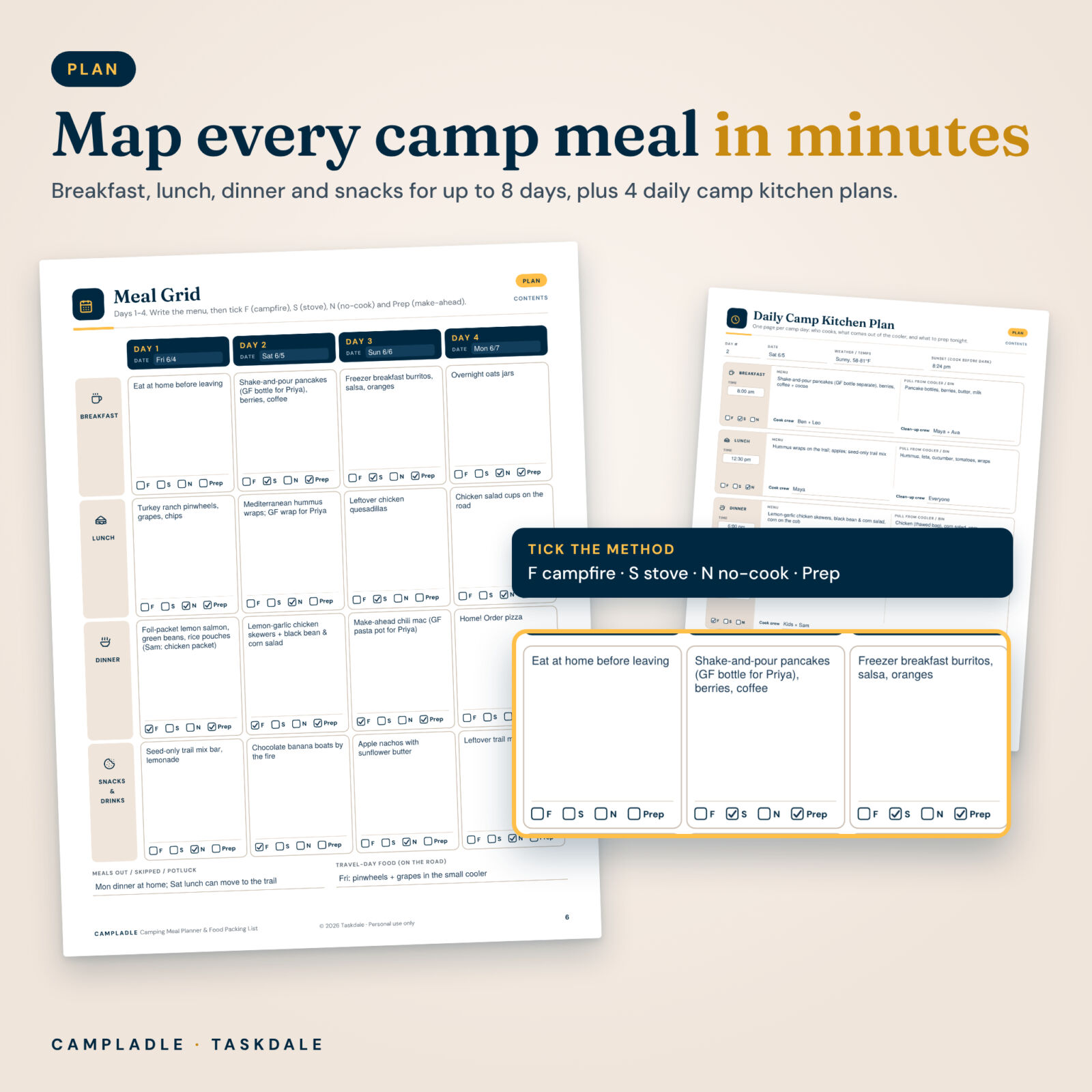
- Meal grid for 4 days with breakfast, lunch, dinner and snacks, plus tick boxes for campfire, camp stove, no-cook and make-ahead
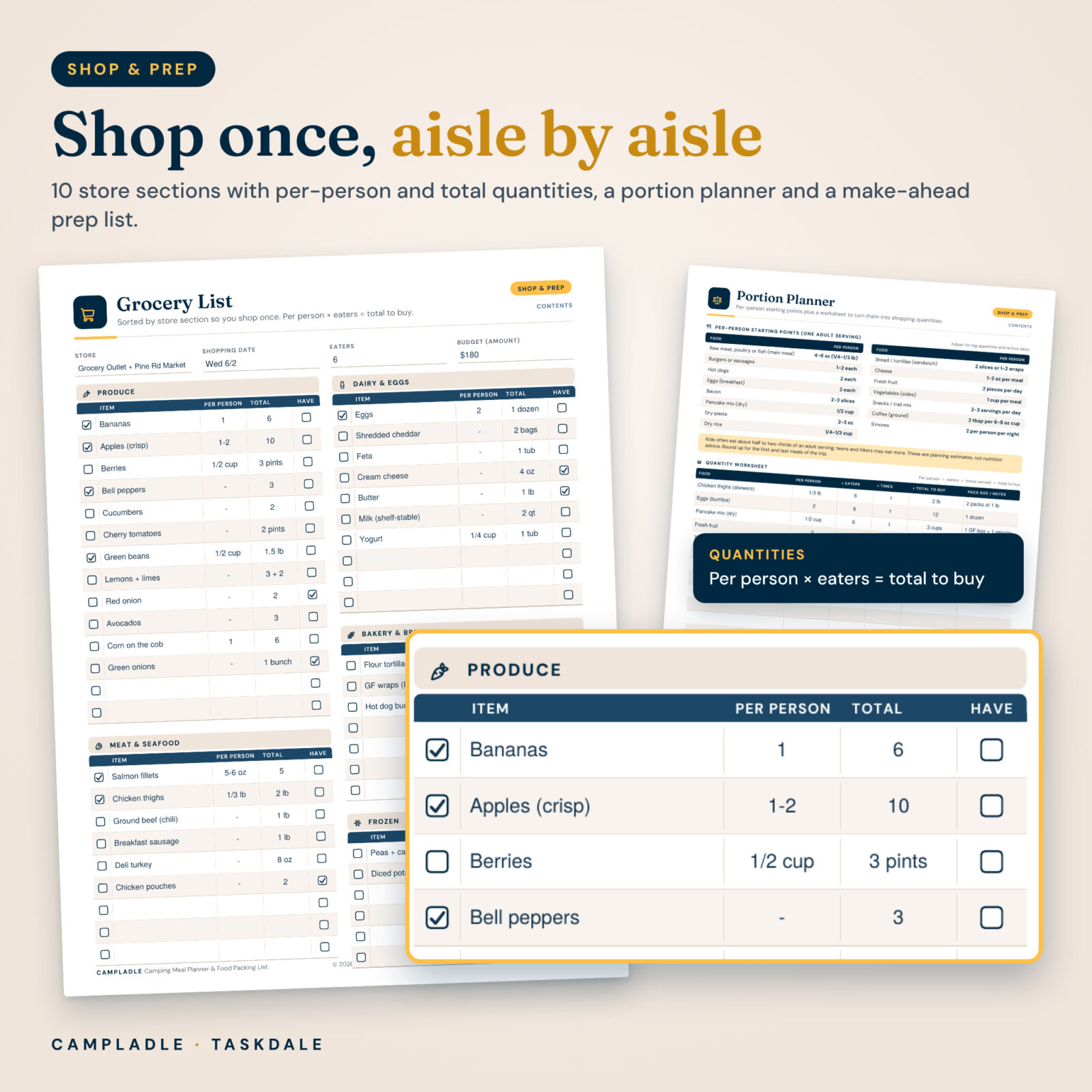
- Camping grocery list sorted by store section, with per-person and total quantity columns
- Two original camp recipes: Foil-Packet Sausage & Potato Hash and Grab-and-Go Overnight Oats
If you want the full system, the Campladle Camping Meal Planner adds 39 pages, including a cooler packing plan, food safety page, bear country storage checklist, water planner and 24 recipe cards.
How to plan camping meals in 6 steps
1. Count your eaters and meals
Start with a headcount: adults, teens and kids. Then count the meals you will actually cook. A Friday-to-Sunday trip is usually not nine meals. You might eat Friday breakfast at home, grab lunch on the road and leave Sunday after brunch. Cross out meals you will skip so you do not overbuy.
2. Check allergies and diet styles first
Ask every camper about allergies and diet styles before you write a single menu. The 9 major food allergens in the US are milk, eggs, fish, shellfish, tree nuts, peanuts, wheat, soybeans and sesame. If one camper has a peanut allergy, plan a seed-only trail mix and sunflower seed butter from the start rather than cooking two versions at camp. The full planner has an allergy check for up to six campers with a cross-contact checklist.
3. Match each meal to a cooking method
This is where most camping menus go wrong. A campfire dinner sounds great until it rains, or a fire ban is posted the day you arrive. Give every meal a method:
- Campfire: foil packets, skewers, Dutch oven desserts and pie-iron sandwiches for evenings with time to spare
- Camp stove: pancakes, pasta, fried rice and burgers when you need dinner fast or fires are restricted
- No-cook: wraps, salads and overnight oats for travel days, hiking days and late arrivals
A good mix for a weekend is one or two campfire dinners, stove breakfasts and at least one no-cook lunch. The free meal grid has an F, S and N box under every meal so you can see the balance at a glance.
4. Move work to your home kitchen
Every job you do at home is one you do not have to do at a dark, windy picnic table. Chop onions and peppers and bag them by meal. Marinate chicken and freeze it flat: it doubles as an ice pack and thaws in time for dinner on day two. Mix dry pancake batter in a bottle so you only add water at camp. Cook chili or breakfast burritos ahead and freeze them.
5. Build the grocery list by store section
Write the shopping list in the order you walk the store: produce, meat and seafood, dairy and eggs, bakery, frozen, pantry, canned goods, snacks and drinks, condiments, and paper goods. Add a per-person column and a total column so the math is done before you shop.
6. Plan the cooler and the leftovers
Decide what goes in which cooler, and in what order you will eat it. Fish and ground meat go first; shelf-stable meals go last. Plan leftovers on purpose: extra grilled chicken becomes tomorrow’s quesadillas.
How much food to bring camping per person
Appetites grow outdoors, but buying too much just fills the cooler and the trash. Use these per-person starting points for one adult serving and adjust for your crew:
| Food | Per adult |
|---|---|
| Raw meat, poultry or fish (main meal) | 4-6 oz (1/4-1/3 lb) |
| Eggs at breakfast | 2 |
| Dry pasta | 2-3 oz |
| Pancake mix (dry) | 1/2 cup |
| Fresh fruit | 2 pieces per day |
| Snacks or trail mix | 2-3 servings per day |
Kids often eat about half to two-thirds of an adult serving, while teens and hikers may eat more. Multiply per person by eaters by the number of times you serve it, and you have your shopping quantity. The full camping meal planner includes a portion planner with 15 foods and a quantity worksheet.
How to pack a cooler for camping
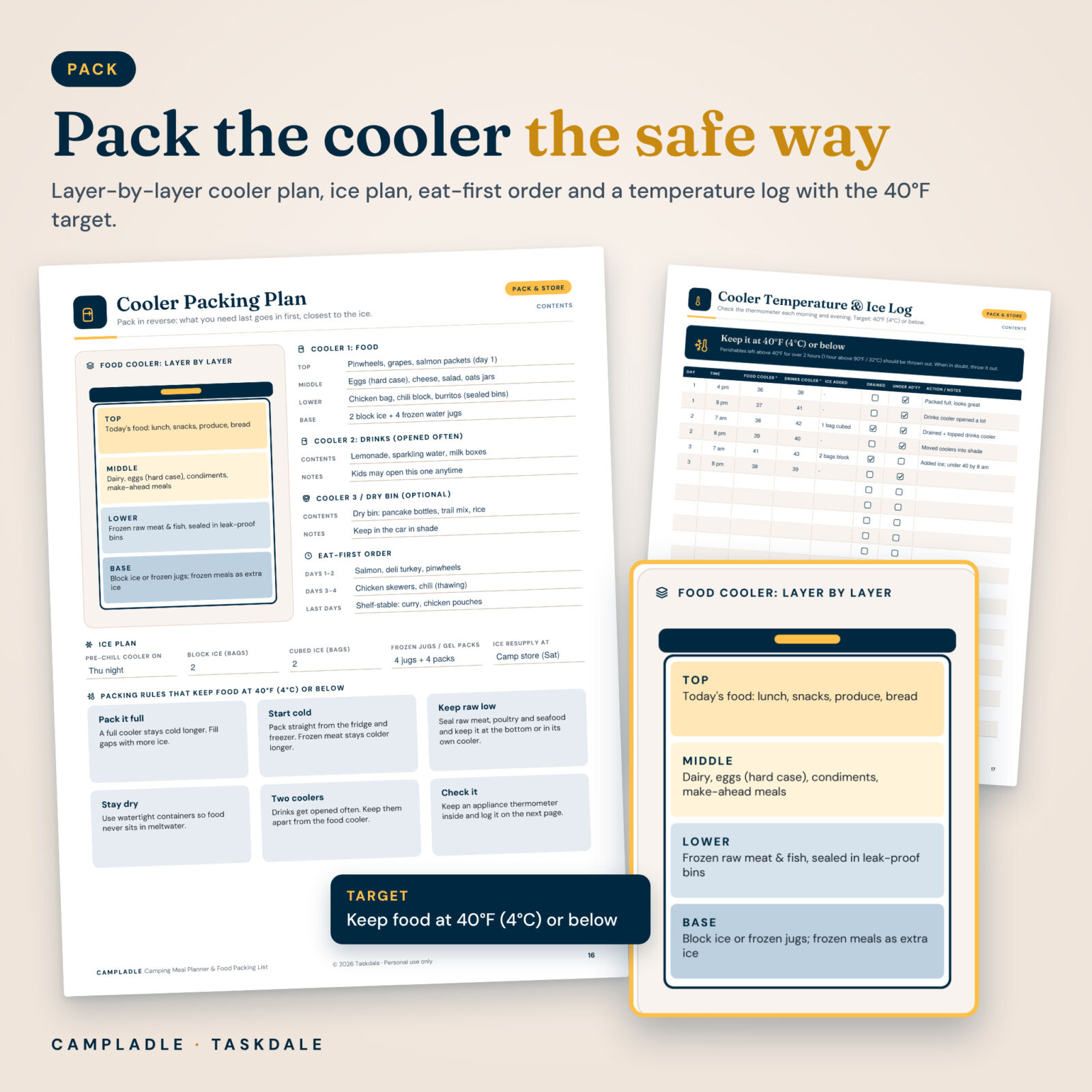
A well-packed cooler can be the difference between fresh food on day three and a sad pile of soggy bread. Pack it in reverse order, with what you need last at the bottom, closest to the ice:
- Base: block ice or frozen water jugs, plus frozen make-ahead meals as extra ice
- Lower layer: frozen raw meat and fish, sealed in leak-proof containers
- Middle: dairy, eggs in a hard case, condiments and make-ahead salads
- Top: today’s food: lunch, snacks, produce and bread
Keep drinks in a separate cooler, because it gets opened all day. A full cooler stays cold longer, so fill gaps with more ice, and use watertight containers so food never sits in meltwater.
Camping food safety rules that actually matter
These come from USDA, FoodSafety.gov and CDC guidance:
- Keep cold food at 40°F (4°C) or below. Put an appliance thermometer in the food cooler and check it morning and evening.
- Follow the 2-hour rule. Put perishables back in the cooler within 2 hours, or within 1 hour when it is above 90°F (32°C).
- Separate raw and ready-to-eat food. Use separate cutting boards, tongs and plates for raw meat.
- Cook to a safe internal temperature. Poultry 165°F, ground meats 160°F, and steaks, chops and fish 145°F (steaks and chops with a 3-minute rest).
- Treat questionable water. Bring it to a rolling boil for 1 minute (3 minutes above 6,500 feet), or filter and then disinfect it following the product label.
In bear country, store all food, coolers, dishes, trash and toiletries in a bear box, a hard-sided vehicle where allowed, or a certified bear-resistant container, and always follow the rules posted at your campground. The full planner includes a bear country storage checklist and a night lock-up list.
Easy camping meal ideas to start with
- Breakfast: shake-and-pour pancakes, freezer breakfast burritos, overnight oats jars
- Lunch: hummus wraps, turkey ranch pinwheels, black bean and corn salad
- Dinner: foil-packet salmon, chicken skewers, make-ahead chili mac, one-pot pasta primavera
- Dessert and snacks: banana boats, Dutch oven peach crumble, apple nachos, a build-your-own trail mix bar
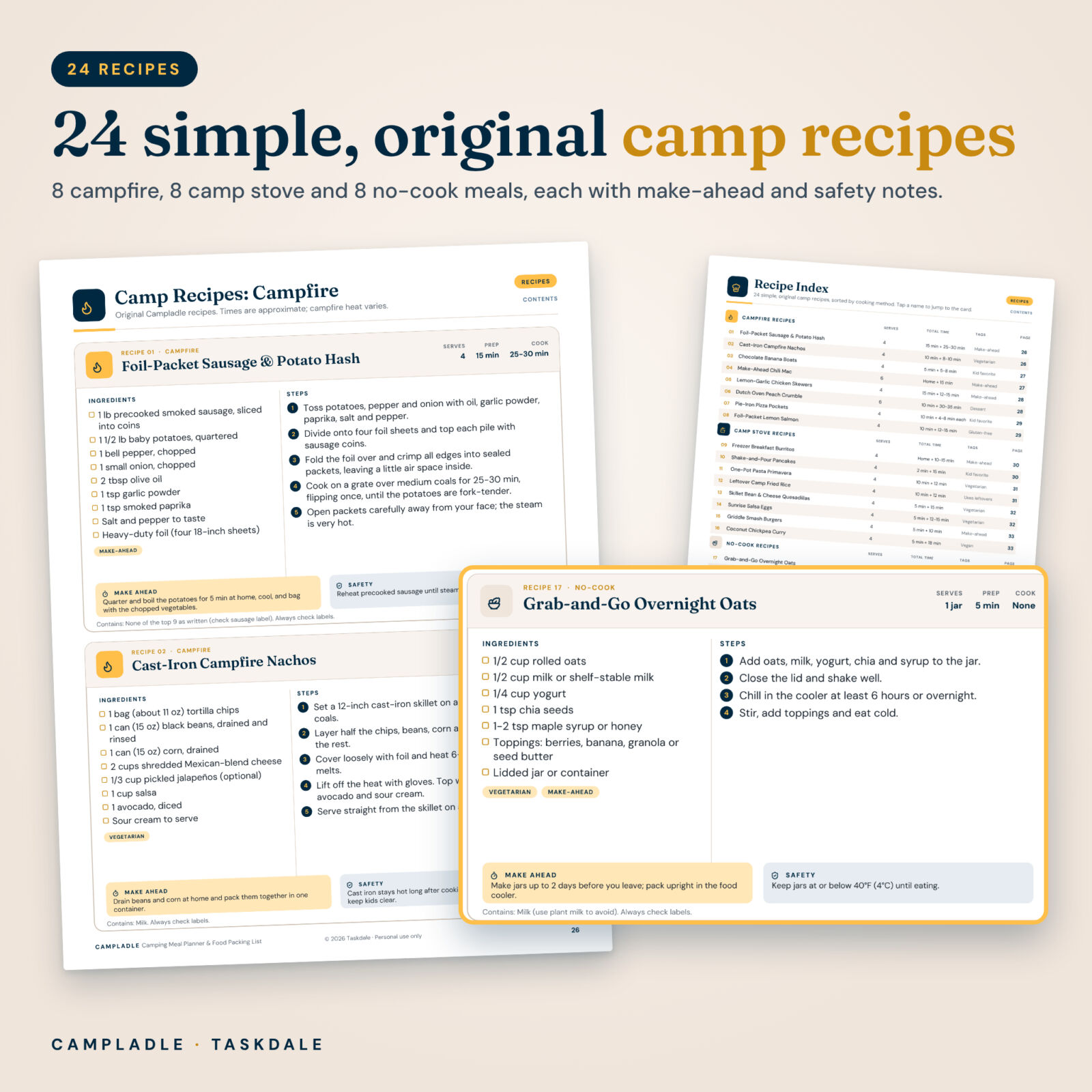
All of these are recipe cards in the full planner, each with a make-ahead tip, a safety note and allergens listed.
Get the full Campladle Camping Meal Planner
- 39 fillable pages in US Letter and A4, plus a Word user guide
- Meal grid for 8 days and 4 daily camp kitchen plans
- Cooler packing plan, temperature log and food safety page
- Bear country storage checklist, water planner and camp kitchen gear list
- 24 original recipe cards with a clickable index
$9.99, instant download.
Download your free camping meal planner
Grab the free sampler below, fill in your first four days of meals and build your grocery list tonight. When you are ready to plan the cooler, water and every recipe too, the Campladle Camping Meal Planner has it all in one file.