Junk journal ephemera is the layered paper bits (tags, labels, pockets, cards, bookmarks and fussy cuts) that give a handmade journal its collected look. The best choice is the kit that matches the journal you plan to make. Rosewater Keepsake suits romantic, cut-out-heavy journals, Sage & Ember Autumn suits no-sew builds, and Attic Letters suits people who want writing pages first.
Key facts at a glance
- Junk journal ephemera sold here is digital, so you print it at home and cut it out yourself.
- All three kits come in US Letter and A4, which covers most home printers in the UK and the US.
- Rosewater Keepsake is the most ephemera-focused, with 12 fussy cuts, 5 tags, 6 labels and 15 transparent PNG elements.
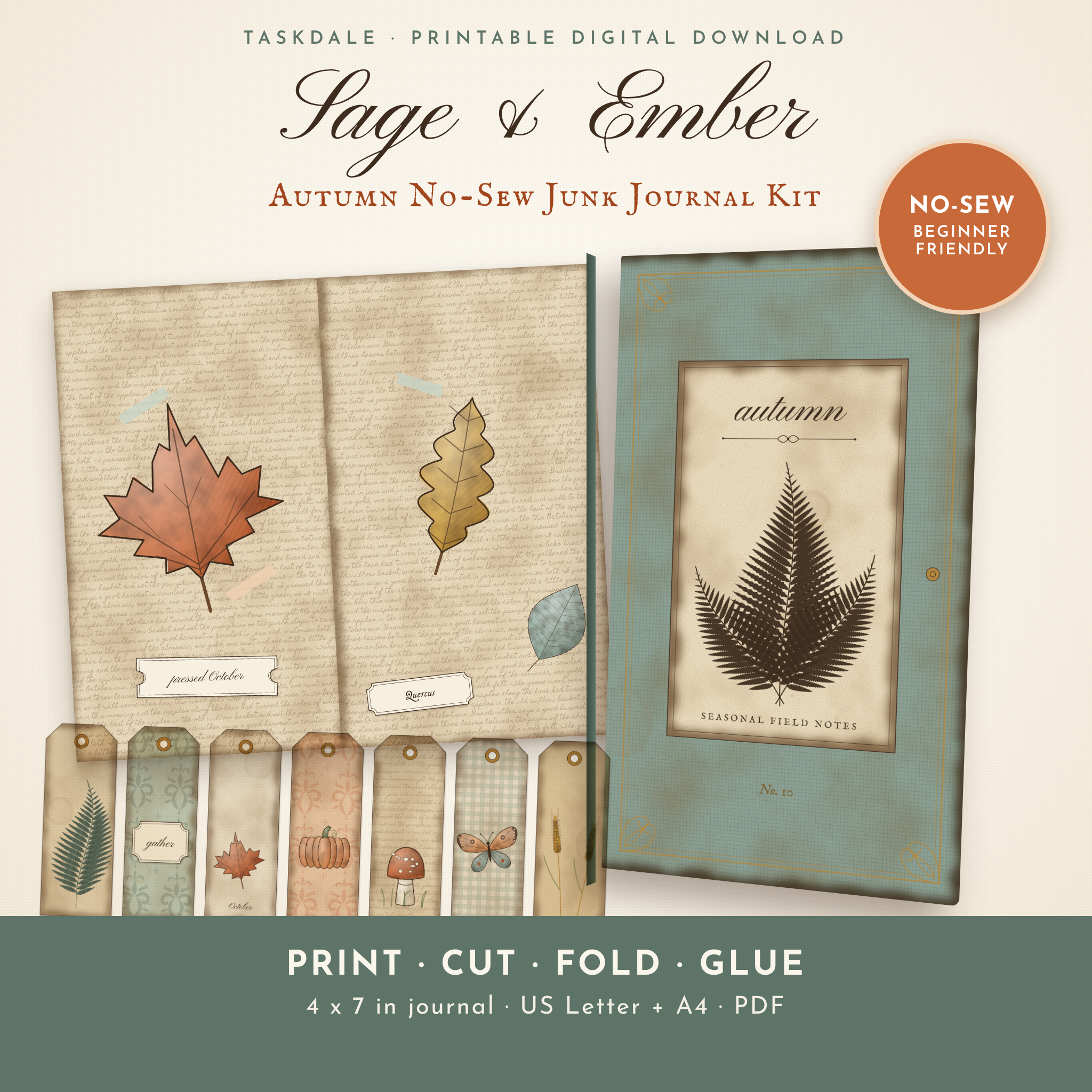
- Sage & Ember Autumn is the only one built to be assembled without sewing, into a 4 x 7 in journal.
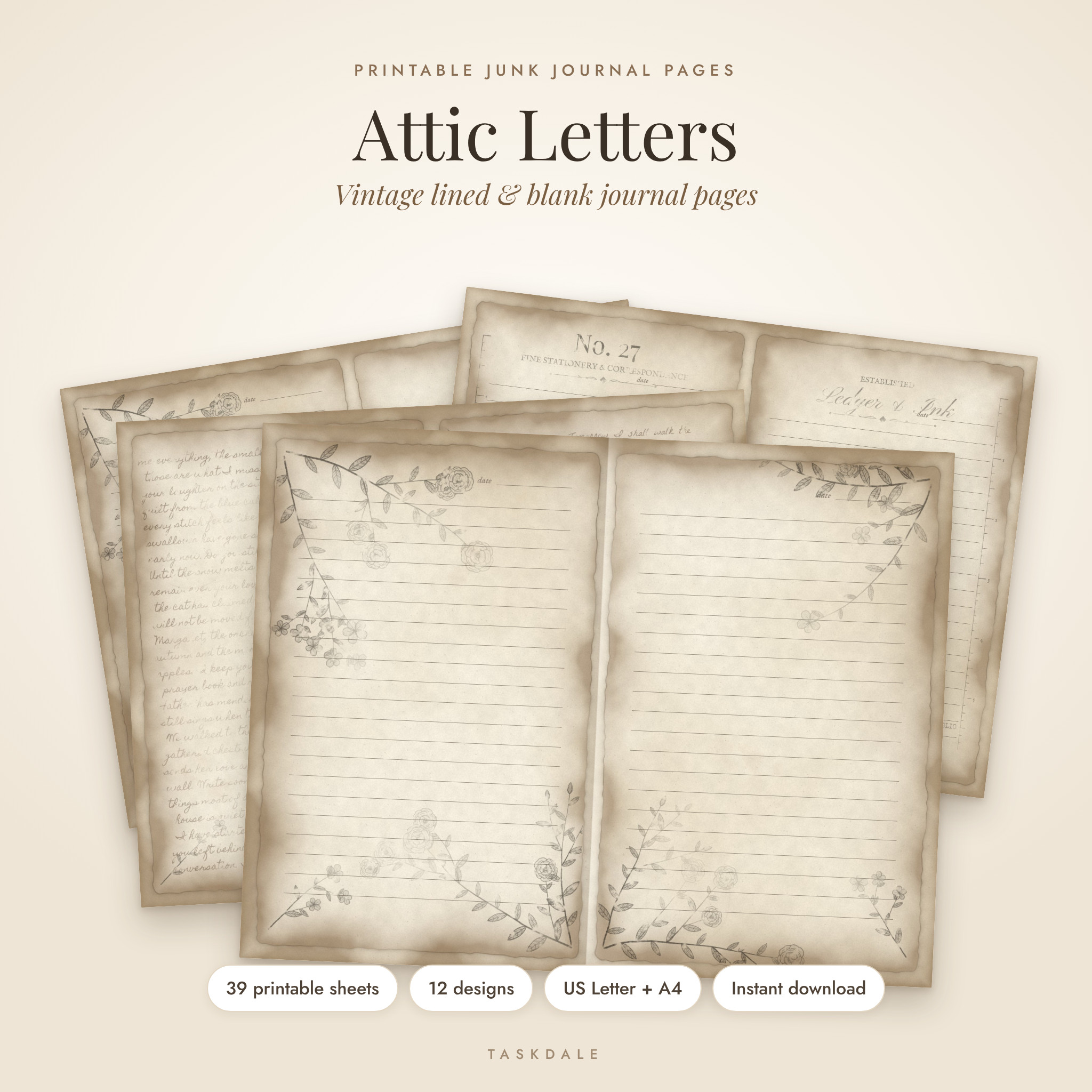
- Attic Letters gives the most pages to write on: 39 sheets that fold into 64 journal pages.
Table of Contents
Toggle
- What should you look for in junk journal ephemera?
- How do the three kits compare?
- Which junk journal ephemera suits which maker?
- How do you print and use junk journal ephemera?
- What mistakes should you avoid?
- What affects the price of printable ephemera?
- Which junk journal ephemera should you choose?
- Common questions
Choosing can feel more complicated than it should. Every listing promises pretty paper, yet the kits differ a good deal in what you actually get to cut, fold and glue. This page sets out the differences in plain terms so you can pick one with confidence and start making.
 Rosewater Keepsake Junk Journal Kit | Printable Vintage Rose Journal Pages, Ephemera, Tags, Bookmarks & Fussy Cuts | US Letter & A4 PDF, JPG, PNG
What should you look for in junk journal ephemera?
Good junk journal ephemera gives you enough variety to layer, prints cleanly at home, and comes with clear guidance on turning sheets into a finished book. Six factors separate one kit from another, and the supplied details for these three show where each one is strong.
Ratio of ephemera to journal pages
Ephemera is the loose decorative material; journal pages are the sheets you bind and write on. Kits lean one way or the other. Rosewater Keepsake gives 26 half pages alongside a long list of small pieces, while Sage & Ember Autumn offers 18 ephemera sheets carrying over 300 tags, pockets, stamps and cut-outs. Attic Letters has just 5 ephemera sheets against 39 journal sheets.
If you love layering, choose a kit with more small pieces. If you mainly want to write, choose more pages.
Print quality and file formats
Print quality depends on resolution. Rosewater Keepsake states 300 DPI, which is the usual standard for sharp home or print-shop output, and includes cut marks to guide scissors. It also supplies PDF, JPG and PNG files. Sage & Ember Autumn comes as PDFs, and Attic Letters includes 50 digital JPG pages.
PNG files with transparent backgrounds matter if you want to place elements in a digital layout. Rosewater Keepsake has 15 of them.
Paper size
Both US Letter and A4 are included in all three kits. That matters because scaling a file to the wrong size can shift margins and cut off edges. Pick the size that matches your paper stock and printer settings, and print at 100 per cent.
Ink use
Junk journal pages are often heavily coloured, and a full set can empty a cartridge quickly. Sage & Ember Autumn includes Ink Saver versions of every spread, and Attic Letters includes an Ink Saver edition. Rosewater Keepsake does not list one in the supplied details.
If you print at home on an inkjet, a lighter version is worth having.
Assembly instructions
Instructions decide whether a kit feels easy or fiddly. Sage & Ember Autumn comes with printed assembly steps and a DOCX user guide, and it needs only glue and scissors. Attic Letters includes an illustrated guide to print, fold and bind. Rosewater Keepsake describes a print-tonight, stitch-tomorrow approach, so it suits someone comfortable with a needle and thread.
Licence and use
Rosewater Keepsake is described as an instant digital download for personal use. For the other two, read the listing for licence terms before you plan to sell anything you make from them.
How do the three kits compare?
The three kits differ mainly in construction method, page count and how much loose ephemera each provides. The table uses only the details supplied in each listing.
| Product | Format | Journal pages | Ephemera and extras | Assembly |
|---|---|---|---|---|
| Rosewater Keepsake Junk Journal Kit | US Letter and A4; PDF, JPG, PNG | 18 sheets with 26 half pages, plus cover and back | 12 journaling cards, 5 tags, 6 labels, 5 bookmarks, 12 fussy cuts, 15 transparent PNG elements | Stitched; cut marks included |
| Sage & Ember Autumn Junk Journal Kit | US Letter and A4; PDF, DOCX guide | 16 spreads (32 pages), 4 x 7 in journal | 18 ephemera sheets with 3 pieces, 3 tuck spots, 30 prompt cards | No-sew; glue and scissors; Ink Saver versions |
| Attic Letters Printable Junk Journal Pages | US Letter and A4; PDF, JPG | 39 sheets folding into 64 pages | 5 ephemera sheets: cards, tags, bookmarks, pockets | Fold and bind; illustrated guide; Ink Saver edition |
Which junk journal ephemera suits which maker?
Each kit fits a different kind of maker, and the right one depends on your skill with binding and how you plan to fill the pages.
Rosewater Keepsake Junk Journal Kit suits anyone making a gift or memory book with a soft, floral look. Watercolour roses, aged paper and lace fit wedding keepsakes, letters and pressed-flower pages. The 12 fussy cuts and 15 transparent PNG elements reward patient cutting and layering.
Sage & Ember Autumn Junk Journal Kit suits beginners and anyone who dislikes sewing. The finished 4 x 7 in journal is small enough to finish in a few sittings, and the 30 journaling prompt cards help if you freeze at a blank page. It also suits seasonal makers who want one themed project.
Attic Letters Printable Junk Journal Pages suits people who write more than they decorate. The 12 original designs come in lined and blank, with mixed, graph and dot grid spreads, so one set can hold diary entries, lists and sketches. The parchment look is warm without competing with your own handwriting.
How do you print and use junk journal ephemera?
Printing junk journal ephemera at home takes six steps, and following them in order avoids most wasted paper.
- Cheque the file size you downloaded, US Letter or A4, and choose the matching paper.
- Print one test page at 100 per cent scale with no "fit to page" setting.
- Use the Ink Saver version for draughts, where the kit includes one, and save full colour for final prints.
- Print the remaining sheets, letting each dry for a few minutes before you stack them.
- Cut out tags, labels and fussy cuts with sharp scissors, following the cut marks where supplied.
- Fold, glue or stitch the pages following the kit's guide, then layer the loose ephemera into pockets and onto pages.
For care, keep unused printed pieces flat in an envelope or folder. Sunlight fades inkjet colours over time, so store finished journals away from bright windows.
What mistakes should you avoid?
The most common mistakes with printable junk journal ephemera are choosing by looks alone, skipping a test print and using paper that is too thin for glue.
- Buying for the design, not the method. If you cannot sew, Rosewater Keepsake's stitched journal may frustrate you. Sage & Ember Autumn is built for glue and scissors.
- Printing everything in full colour at once. One misaligned page wastes a lot of ink. Test first.
- Ignoring the size you print. A kit printed at the wrong scale will not fold or fit pockets properly.
- Overlooking the licence. Personal use is not the same as selling finished journals. Cheque each listing.
- Choosing too little writing space. A kit with few pages and lots of ephemera can leave you with nowhere to write.
- Using thin paper for wet glue. Ordinary copy paper can cockle. A slightly heavier paper handles layering better, if your printer accepts it.
What affects the price of printable ephemera?
The price of printable junk journal ephemera usually rises with the number of sheets, the file formats included and the amount of supporting material such as guides or prompt cards. Nothing here is a fixed rule, so compare the contents of each kit rather than the headline figure.
A kit with 39 sheets and 64 pages, like Attic Letters, gives you volume. A kit with over 3 small pieces, like Sage & Ember Autumn, gives you variety. Rosewater Keepsake adds PNG elements, which are more flexible for digital layouts. Because these are instant downloads, you pay once and have no postage to wait for, but your own costs still include paper and ink.
Which junk journal ephemera should you choose?
Choose by how you like to work. If you want no sewing and a clear route to a finished book, pick Sage & Ember Autumn. If you want delicate floral pieces to cut and layer, pick Rosewater Keepsake. If you want the most room to write, pick Attic Letters.
When two appeal equally, count the extras you will really use: prompt cards, PNG files, Ink Saver versions or lined pages. Browse all 3 options below if you want to compare other junk journal ephemera before deciding.
Common questions
Can I print these kits on a standard home printer?
Yes. Each kit is supplied in US Letter and A4, the standard home printer sizes. Use the Ink Saver versions where included for draughts, and cheque your printer's paper-weight limit before trying heavier stock.
What is a fussy cut?
A fussy cut is a small image or motif cut out precisely along its outline, rather than trimmed into a plain rectangle. Rosewater Keepsake includes 12 of them, which you can glue onto pages, tags and pockets for a layered look.
Do I need sewing skills to make a junk journal?
Not always. Sage & Ember Autumn makes a 4 x 7 in journal with glue and scissors only. Rosewater Keepsake is described as a stitched journal, and Attic Letters comes with an illustrated guide to print, fold and bind.
What is the difference between ephemera and journal pages?
Journal pages are the sheets you bind into the book and write on. Ephemera is the loose decorative material, such as tags, labels, pockets and bookmarks, added on top. Attic Letters leans towards pages, while Sage & Ember Autumn leans towards ephemera.
Can I reuse the digital files to print again?
The files are instant downloads, so you can reprint sheets if a page goes wrong. Rosewater Keepsake states personal use only. For the other two kits, read each listing's licence terms before reprinting for anyone else.