Workout meal plans for training days and rest days differ in one main way: on training days you eat more of the starchy carbs that fuel the session, and on rest days you pull those back a little while keeping protein steady. That is the core of it. The rest is timing, prep and making sure the food is ready when you walk in hungry after the gym.
Lots of people get this backwards. They eat the same salad every day and wonder why Thursday’s leg session felt like wading through mud. Or they eat a training-day amount seven days a week and feel heavy on the sofa on Sunday. Matching food to the day fixes both.
This guide is for regular gym-goers, runners, home-workout fans and anyone following a weekly training plan who wants food that keeps up. You will see how the plate shifts between day types, sample menus for morning and evening trainers, a full week laid out, and the prep habits that make it work. It is practical meal planning, not a diet prescription; if you have a health condition, your own doctor or dietitian is the right person to set targets.
Quick picks for planning workouts and meals together
| Product | Best for | Price | Link |
|---|---|---|---|
| Bloom & Lift Digital Fitness Planner | Logging workouts and meals on the same daily page | $3.96 | View |
| Well Within Fitness & Life Planner | A 12-week training plan beside a weekly meal planner | Original price was: $4.49.$1.19Current price is: $1.19. | View |
| Daily Balance Planner | One printable page for workout, meals and the day | $7.49 | View |
How the plate changes between day types
Think of three parts of a meal: protein, carbs and vegetables. Only one of them really moves.
| Part of the meal | Training day | Rest day |
|---|---|---|
| Protein (chicken, eggs, fish, tofu, beans, yogurt) | A palm-sized portion at each meal | Same as training day |
| Starchy carbs (rice, oats, potatoes, pasta, bread) | A bigger portion, especially before and after the session | A smaller portion, or swap some for extra vegetables |
| Vegetables and fruit | Plenty; fruit makes a handy pre-workout snack | Plenty; fill the space the carbs left |
| Fats (oil, nuts, avocado, cheese) | Moderate, lighter right before training | Moderate |
Why keep protein steady on rest days? Because rest days are when your body does a lot of its repair work after training. Cutting protein on a rest day is a common mistake. Cut the extra rice, not the chicken.
A simple hand-portion guide
No scales needed. On a training day, a dinner might be one palm of protein, two cupped handfuls of rice or potatoes, and a fist or two of vegetables. On a rest day, the same palm of protein, one cupped handful of starch, and two or three fists of vegetables. Same pan, slightly different plate.
When to eat around your session
Timing matters less than total food across the day, but it does change how a workout feels.
Before training
A meal two to three hours before, or a small snack about an hour before. Keep it easy to digest: oats, a banana, toast with honey, yogurt with fruit. A big greasy meal right before a run is a recipe for a stitch.
After training
Aim for a proper meal with protein and carbs within a couple of hours. For most people that is simply the next meal of the day, planned a little bigger. No need for a shake the second you leave the gym, unless that is what you enjoy or the next meal is hours away.
On rest days
Eat at your usual times. Three meals and a snack works for most people. Rest days are a good time to try a new recipe, since you have more energy for cooking and nowhere to be at 6 pm.
Sample menus: morning trainer vs evening trainer
When you train changes which meals carry the extra carbs. Here are two sample training days and one rest day. Adjust portions to your own size and goal.
Morning trainer (gym at 6:30 am)
- 5:45 am: banana and a glass of water.
- 8:00 am breakfast: big bowl of oats with milk, berries and a scoop of Greek yogurt, plus two boiled eggs.
- 12:30 pm lunch: chicken, rice and roasted vegetable bowl.
- 3:30 pm snack: apple and a handful of nuts.
- 7:00 pm dinner: salmon, new potatoes and green beans.
Evening trainer (gym at 6 pm)
- 7:30 am breakfast: eggs on whole-grain toast.
- 12:30 pm lunch: turkey and hummus wrap with a side salad.
- 4:30 pm snack: yogurt with granola and honey, or a bagel with peanut butter.
- 7:45 pm dinner: big plate of chicken stir fry with noodles and plenty of veg.
- 9:30 pm optional: cottage cheese or a glass of milk if still hungry.
Rest day
- Breakfast: veggie omelet with one slice of toast.
- Lunch: lentil soup with a small roll.
- Snack: carrots and hummus, or a pear.
- Dinner: chicken thighs with a big tray of roasted vegetables and a small portion of potatoes.
Notice the rest day still has protein at every meal. The bagel and the big noodle portion are gone. That is the whole difference.
A full training week on one page
The easiest way to plan is to write the workout first, then the food. Here is an example for someone lifting three days, doing cardio two days and resting two.
| Day | Training | Day type | Dinner |
|---|---|---|---|
| Monday | Lower body lift | Training | Beef chili with rice |
| Tuesday | 30-minute run | Light training | Chicken fajitas |
| Wednesday | Upper body lift | Training | Salmon, potatoes, broccoli |
| Thursday | Rest | Rest | Chili leftovers over a baked sweet potato and salad |
| Friday | Full body lift | Training | Homemade burgers with oven wedges |
| Saturday | Long walk or bike ride | Light training | Pasta with turkey meatballs |
| Sunday | Rest | Rest | Roast chicken with lots of veg |
Seeing training and food side by side makes it obvious when something does not fit. A heavy leg day with a light salad dinner jumps off the page. So does a rest day with a pizza and garlic bread. A planner with both on the same page saves you holding two notebooks and trying to line them up.
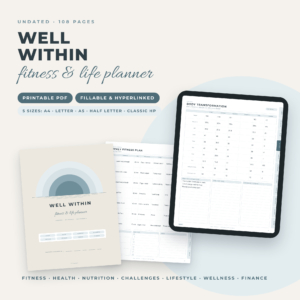
Well Within Fitness and Life Planner
Price: Original price was: $4.49.$1.19Current price is: $1.19. | Best for: planning training and meals together
A 108-page undated fitness planner in a printable version and a fillable, hyperlinked version, both in five paper sizes including A4, Letter, A5, Half Letter and Classic Happy Planner. It has a weekly workout planner, weightlifting log and 12-week training plan alongside a weekly meal planner, grocery list, meal prep page and food diary. Fill in the 12-week plan first, then mark each week’s training days on the meal planner.
Snacks for training days, swaps for rest days
Snacks are where training-day and rest-day eating differ the most in practice. On a training day, the snack before the session is fuel. On a rest day, the same snack out of habit is just extra food you did not need.
Good training-day snacks
- A banana or a couple of dates, 30 to 60 minutes before
- Toast or a rice cake with honey or jam
- A small bowl of cereal with milk
- Yogurt with granola after the session, if dinner is a long way off
Easy rest-day swaps
- Bagel with peanut butter becomes an apple with peanut butter
- Big bowl of pasta becomes half pasta, half roasted vegetables
- Granola becomes a handful of berries on the yogurt
- Second slice of toast becomes a side of sliced tomatoes or cucumber
None of these swaps feels like a sacrifice, and they keep rest days lighter without any counting. Write your favorite three of each on a sticky note inside the cupboard door, so the choice is made before you are standing there hungry at 4 pm.
Prep once for a whole training week
Training uses time you used to spend cooking. So batch the cooking on a rest day, when you have energy to spare.
- Cook two proteins. A tray of chicken thighs and a pot of chili or turkey meatballs.
- Cook one big batch of carbs. Rice or potatoes. Portion out bigger boxes for training days and smaller ones for rest days, and label them.
- Roast two trays of vegetables. Peppers, onions, zucchini, broccoli. These go with everything.
- Prep snacks. Boil six eggs, portion yogurt into pots, wash fruit.
- Pack the gym bag snack. A banana or a small bag of dried fruit, for days the session runs long.
Labeling boxes “T” for training and “R” for rest sounds fussy. It is about ten seconds with a marker, and it means you grab the right box at 7 am without thinking. For a first-timer’s walk-through of a full prep session, see meal prep for beginners.
Tracking what you eat and how you train
After a month of matching food to training, it helps to look back. Did Friday’s lift feel better when Thursday dinner had more carbs? Did you sleep worse on nights you ate late? A food and training log answers those questions with your own notes instead of guesses.
Keep it simple. A line for the workout, a line for each meal, a mood or energy score, maybe water and sleep. Two minutes before bed. If you want to track lifts and personal records in more detail, our guide on tracking workouts in a spreadsheet shows how.
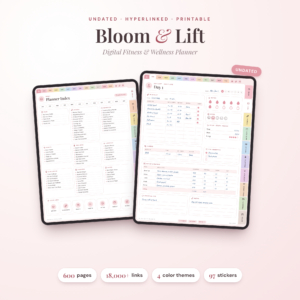
Bloom and Lift Digital Fitness Planner
Price: $3.96 | Best for: tablet users logging gym and food
An undated, hyperlinked digital fitness planner for GoodNotes and Notability, with a printable version too. Its daily page has a 10-row workout log, a meals table with calories and macros, water drops, mood faces and room for notes, and the monthly rhythm runs from goals to daily tracking to weekly plans and a reflection. Set your monthly goals first, then use the daily page for one week.
Common mistakes with training and rest day meals
- Training on empty. A hard session after a skipped lunch often feels much harder. Plan a snack an hour or so before.
- Cutting protein on rest days. Keep it steady. Trim the starches instead.
- Treating every workout as a reason for a huge meal. A 20-minute walk does not need an extra bagel.
- Forgetting water. Keep a bottle in the gym bag and one on your desk. Refill both after lunch.
- No plan for the post-gym hour. Walking in starving to an empty fridge leads straight to takeout. Have a training-day dinner ready, or ready in 15 minutes.
- Copying an athlete’s plan. Someone training twice a day eats very differently from someone who lifts three times a week. Plan for your own schedule.
Keeping it on one printable page
Not everyone wants a separate fitness journal. Some people just want a daily page with the schedule, the workout, the meals and a few habits, all in one place. Print a week of them, clip them to the fridge or put them in a folder, and you have a training and food plan you can read in five seconds.
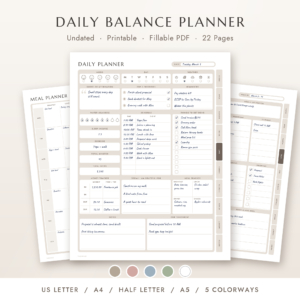
Daily Balance Planner
Price: $7.49 | Best for: people who want one page a day
An undated printable and fillable PDF planner with 22 pages per file, in US Letter, A4, A5 and Half Letter and five colorways including an ink saver. It has a daily page with priorities, schedule, water, workout, meals and gratitude, plus a workout planner, workout log, weekly meal planner and grocery list, with weekly workout minutes adding up on their own in the fillable version. Print seven daily pages and the weekly meal planner to start.
Frequently asked questions
Should I eat less on rest days?
Many people eat a little less on rest days, mainly by cutting back on starchy carbs. Protein stays about the same, because your body still recovers on rest days. Listen to your hunger too; it often drops a bit on its own.
What should I eat before a workout?
Something easy to digest with carbs: a banana, oats, toast with honey or yogurt with fruit. Eat a meal two to three hours before or a small snack about an hour before.
What is a good meal after a workout?
Any meal with protein and carbs: chicken with rice, eggs on toast, a tuna pasta, or Greek yogurt with granola. Eating within a couple of hours is fine for most people.
Do I need protein shakes on training days?
No. Shakes are a convenience, not a must. Eggs, yogurt, milk, chicken, fish, beans and tofu all do the job if they are on your meal plan.
How do I meal prep for training and rest days?
Cook proteins, carbs and vegetables in bulk on a rest day, then portion bigger carb servings into training-day boxes and smaller ones into rest-day boxes. Label them so you grab the right one.
What if I train some days twice?
Treat a double day as a bigger training day: an extra carb-based snack between sessions and a full meal after the second one. Plan it on the page so the food is packed before you leave the house.
Your next step
Write next week’s training days down the side of a page first, then mark each one T or R. Plan dinners to match: bigger carb portions on T days, more vegetables on R days, protein every meal. To keep training and meals on the same pages, start with the Well Within Fitness & Life Planner.