A lean, high-protein week does not need seven new recipes, a food scale on the counter and an app open at every meal. It needs about five proteins you actually like, a short list of vegetables, and a plan simple enough that you still follow it on Thursday when you are tired and the fridge looks thin.
This guide is for anyone who wants more protein and less grease on the plate without turning dinner into a hobby. You will get a plate formula you can use anywhere, a full sample week, a one-hour prep routine, snacks that pull their weight, and a short list of Taskdale planners that handle the ideas and the maths for you.
Nothing here asks you to cook twice a day. That is the whole point.
Quick picks: tools for a lean, high-protein week
| Product | Best for | Price | Link |
|---|---|---|---|
| Small Bites, Big Wins Meal Plan Printable | 150 protein-first meal ideas and a 4-week plan | $6.99 | View |
| Fudge & Flex High Protein Dessert Recipes Book | Sweet treats with macros on every page | $2.49 | View |
| Pantry Bloom Meal Planner Spreadsheet | Daily protein and calories with an automatic grocery list | $18.99 | View |
| Larkspoon Meal Planner Spreadsheet | Households who want cost and nutrition in one file | $12.99 | View |
What “lean” means on an ordinary plate
Lean simply means most of your protein comes from foods that carry little fat with it. Chicken breast instead of chicken thigh with the skin on. Tuna in water instead of tuna in oil. Plain Greek yogurt instead of the full-fat dessert pot with fruit jam at the bottom. You are not banning fat. You are just choosing where it comes from, so a drizzle of olive oil on the salad does not have to compete with a fatty cut of meat underneath it.
Here are rough protein figures for the foods that show up most in a lean week. They vary by brand and cut, so treat them as a guide, not a lab result:
- Cooked chicken breast, 150 g: around 45 g protein
- Canned tuna in water, one drained can: around 25 g
- Plain nonfat Greek yogurt, 170 g pot: around 17 g
- Low-fat cottage cheese, one cup: around 25 g
- Two large eggs: around 12 g
- Cooked lentils, one cup: around 18 g
- Firm tofu, 150 g: around 20 g
- Lean ground turkey, 120 g cooked: around 30 g
Look at that list for a second. Three of those foods need no cooking at all. That is where the low fuss starts.
The plate formula you can use anywhere
Forget counting for now. Build every main meal in the same order and the numbers mostly take care of themselves.
- Protein first. A portion about the size and thickness of your palm, or a full pot of yogurt, or two eggs plus something else.
- Vegetables next. Half the plate. Frozen broccoli counts. So does a bag of salad leaves tipped straight from the packet.
- A modest carb. A cupped handful of rice, potatoes, oats or a wrap. Enough to keep you full and stop the 9 pm cupboard raid.
- A little fat for flavor. A thumb of cheese, a teaspoon of oil, a few slices of avocado.
So a weeknight dinner might be 150 g of chicken, a pile of roasted peppers and onions, half a cup of rice and a spoon of salsa. That plate lands somewhere near 50 g of protein. You did not weigh anything except, maybe, the chicken once, so you know what 150 g looks like in your own pan.
The formula travels well too. At a work canteen, a restaurant or a friend’s barbecue, you just find the protein first and pile the vegetables second.
Five proteins on rotation, cooked two ways each
Most people quit high-protein plans because of boredom, not hunger. The fix is not more recipes. It is a short rotation with two flavor directions for each protein, so one shopping list gives you ten different meals.
A rotation that works for most households
- Chicken breast: lemon, garlic and oregano one week; smoked paprika and cumin for fajita bowls the next.
- Lean ground turkey or beef: taco-spiced lettuce cups, or a quick bolognese over pasta and spinach.
- White fish or tuna: foil-baked cod with tomatoes and capers, or tuna mixed with yogurt, mustard and celery for wraps.
- Eggs and egg whites: a tray-bake frittata cut into six squares, or scrambled with spinach and salsa.
- Dairy and plant protein: Greek yogurt bowls, cottage cheese on toast, or a big pot of lentil and tomato soup.
Pick three of the five each week. Not all five. Three proteins means three packets in the trolley and three things to prep on Sunday, which is the difference between a plan that lasts a month and one that dies by Wednesday.
If you run dry on ideas, a ready-made idea bank saves the Sunday-night staring session. A collection of photo meal cards lets you point and pick instead of inventing.

Small Bites, Big Wins Meal Plan
Price: $6.99 | Best for: protein-first eaters with small appetites
This 49-page printable gives you 150 photo meal ideas with approximate protein and fiber on each, a 206-item food list, a ready-made 4-week meal plan and 13 tracker pages, in US Letter and A4. It was made for people eating smaller portions, including those on GLP-1 medication, so every meal leans hard on protein. Start by circling ten meals from the photo charts that you would happily eat twice, then build your first week from only those.
A sample lean week (with deliberate repeats)
Repeats are not a failure of imagination. They are a strategy. The week below uses three main proteins (chicken, turkey and eggs) plus yogurt and tuna that need zero cooking. Breakfast and lunch barely change, so you only think about dinner.
| Day | Breakfast | Lunch | Dinner |
|---|---|---|---|
| Monday | Greek yogurt, berries, oats | Chicken, rice and roasted veg box | Turkey taco lettuce cups |
| Tuesday | Two frittata squares, fruit | Chicken, rice and roasted veg box | Foil-baked cod, potatoes, green beans |
| Wednesday | Greek yogurt, berries, oats | Tuna and yogurt wrap, salad | Leftover turkey over a baked potato |
| Thursday | Two frittata squares, fruit | Chicken, rice and roasted veg box | Lentil and tomato soup, cottage cheese toast |
| Friday | Greek yogurt, berries, oats | Tuna and yogurt wrap, salad | Chicken fajita bowls |
| Saturday | Scrambled eggs, spinach, toast | Leftover soup | Homemade burgers on lettuce or a thin bun |
| Sunday | Cottage cheese pancakes | Fajita leftovers | Roast chicken, veg, small portion of potatoes |
Count the cooking. Sunday prep covers Monday to Thursday lunches and breakfasts. Weeknight dinners take 20 to 30 minutes each, and Wednesday is literally reheating. That is a high-protein week with maybe four real cooking sessions in it.
If you have never sketched out a week before, our guide on how to meal plan for the week walks through the very first attempt step by step.
The one-hour Sunday that makes the week easy
One hour. Oven on, two pans, a timer. Here is the order that wastes the least time:
- Minute 0: Oven to 200°C (400°F). Two trays of chopped peppers, onions, courgettes and broccoli go in with a spoon of oil.
- Minute 5: Chicken breasts, seasoned two ways, on a third tray. Rice on the hob.
- Minute 15: Whisk eight eggs with spinach, feta and pepper. Pour into a lined tin.
- Minute 25: Brown the turkey with taco spices. Cool it in a shallow dish.
- Minute 40: Frittata into the oven as the vegetables come out.
- Minute 50: Portion lunches into four boxes. Slice the frittata. Label lids with the day.
The first time, it will take you 80 minutes and you will forget the rice. The third time, it fits inside a podcast episode, and there is a small, quiet pride in opening a fridge full of labeled boxes on Monday morning. For a slower, hour-by-hour walkthrough of a first prep day, see meal prep for beginners.
Keep these in the freezer as backup
- A bag of frozen prawns (thaw in cold water in 10 minutes)
- Two portions of the turkey mix
- Frozen mixed vegetables and frozen berries
Backup food is what stops a late Thursday from turning into a takeaway.
Snacks and something sweet that still count
A lean plan falls apart around 3 pm and again after dinner. Not because people are weak. Because they planned meals and forgot the gaps. Fill those gaps with protein and they stop being danger zones.
Easy snacks with real protein in them:
- A pot of Greek yogurt with cinnamon
- Two boiled eggs and a few cherry tomatoes
- Half a cup of cottage cheese with pineapple
- Turkey slices rolled around cucumber sticks
- Edamame, steamed from frozen in four minutes
Then there is dessert. Cutting it out completely works for about nine days for most people. A better plan is a sweet thing that brings protein with it, made in a batch so it is ready when the craving hits.

Fudge & Flex High Protein Desserts
Price: $2.49 | Best for: sweet tooths tracking protein or macros
Fudge & Flex holds 24 high-protein dessert recipes, from brownies and cookies to cheesecake cups and frozen fudge pops, each with calories, protein, carbs and fat per serving. Seventeen of the 24 are no-bake or frozen, which suits a low-fuss week. It comes as a Digital Edition for screens and an Ink-Saver Print Edition, both in US Letter and A4. Pick one frozen recipe, make a full batch on Sunday, and you have a week of after-dinner treats sitting in the freezer.
Track it loosely, not obsessively
You do not need to log every bite to eat lean. But checking your numbers once, at the planning stage, catches problems before they reach your plate. Maybe Tuesday is short on protein because the cod portion was small. Maybe Saturday’s burgers push the day well past where you wanted it. Seeing that on Sunday means you swap one thing. Seeing it on Saturday night means you feel bad about it.
That is why a planner spreadsheet beats a tracking app for a low-fuss approach. You plan the week once, the sheet adds up protein and calories per day, and you adjust before you shop. During the week you just eat what is planned. If you would like to see how that works without an app at all, our piece on calorie and macro tracking in Google Sheets covers the setup.
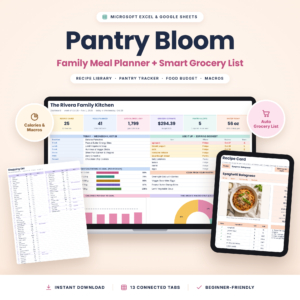
Pantry Bloom Meal Planner Spreadsheet
Price: $18.99 | Best for: planners who check protein before shopping
Pantry Bloom runs in Excel and Google Sheets with 13 connected tabs. Save each recipe once, pick meals from dropdowns, and it shows daily calories, protein, carbs, fat and fiber per person against your goals, then builds a grocery list checked against your pantry. Start with the five recipes from your rotation, plan one week, and look at the Week at a Glance card before you shop.
If cost matters as much as protein, the Larkspoon spreadsheet from the quick picks table does the same nutrition sums and also prices each dish against a weekly budget. Either one beats a notebook full of crossed-out sums.
Where lean, high-protein plans go wrong
Too much variety, too soon
Someone buys six proteins and plans 21 different meals in week one. By Wednesday, half the food is going off and the plan is in the bin. Start with three proteins and repeat lunches. Add variety in week three, once the habit exists.
Protein at dinner only
A plate of toast at breakfast and a sandwich with two slices of ham at lunch, then a huge steak at night. The day ends up lopsided and you are starving by 4 pm. Spread it out: aim for roughly 25 to 40 g at each main meal.
Dry, sad chicken
Lean meat dries out fast. Pull chicken breast out of the oven as soon as it reaches 74°C (165°F) inside and let it rest for five minutes. A cheap meat thermometer fixes more meal plans than any recipe book.
Forgetting fiber and water
High-protein days that skip vegetables leave people feeling heavy and sluggish. Keep the half-plate rule, and keep a water bottle on your desk where you can see it.
Treating one off day as the end
A birthday dinner is one meal. The plan picks up again at breakfast. Nothing was lost except, maybe, a slice of cake you enjoyed.
Frequently asked questions
How much protein should a lean meal plan have per day?
It depends on your body size, activity and goals, so there is no single number. A practical approach is 25 to 40 g at each of three meals plus a protein snack. If you have a health condition or a specific target, agree the number with your doctor or a dietitian.
Can a high-protein meal plan be cheap?
Yes. Eggs, canned tuna, lentils, cottage cheese and frozen chicken are among the cheapest protein sources in most supermarkets. Buying chicken breast in a family pack and freezing portions also brings the cost down.
What is the easiest high-protein breakfast for busy mornings?
Greek yogurt with oats and berries takes about one minute. A frittata baked on Sunday and sliced into squares is the next easiest, because it reheats in 40 seconds.
Do I need protein powder for a lean meal plan?
No. Whole foods can cover it. Powder is handy for a quick shake or for baking protein desserts, but it is optional.
How do I stop getting bored of chicken?
Change the flavor, not the protein. Lemon and herbs one week, fajita spices the next, a peanut and lime sauce the week after. Same chicken, very different dinner.
Your next step
Tonight, write down three proteins you genuinely enjoy and two flavor ideas for each. That is your first week’s rotation. Then plan Monday to Thursday lunches as one repeated box and pick four dinners. If you would like 150 ready-made, protein-first ideas to pick from, start with the Small Bites, Big Wins meal plan printable and circle your first ten meals.