Budget friendly meal plans for the whole month work best when each week is built around one cheap ingredient bought in bulk. A whole chicken stretches to three dinners. A big bag of lentils becomes soup, curry and sloppy joes. Plan the month around those anchors and the grocery bill drops without anyone at the table feeling short-changed.
Below is a full four-week dinner plan for a family of four, with breakfasts and lunches kept simple and cheap. It is written for a real budget: about $600 for the month, or roughly $150 a week. Prices vary a lot by town and store, so treat those figures as a guide, not a promise. The method works at any budget, whether yours is $350 for two or $900 for six.
You will also get a shopping plan for the month, the cheapest foods that still feel like proper meals, ways to adjust the plan for your household, and the habits that keep the last week before payday from turning into toast for dinner.
Quick picks for planning a month of cheap meals
| Product | Best for | Price | Link |
|---|---|---|---|
| Market & Table Meal Planner Spreadsheet | Four weeks planned and priced in one file | $3.99 | View |
| Spoonful Digital Meal Planner | Tablet planning with a year-long grocery budget | $4.99 | View |
| Thymewise Digital Meal Planner | Logging planned and actual spend on every trip | $1.75 | View |
The anchor method: one cheap ingredient per week
Most budget meal plans fail because every dinner needs its own set of ingredients. Seven dinners, seven different proteins, seven half-used jars. The anchor method flips that. Each week has one main ingredient that you buy in a big, cheap pack and use at least three times.
- Week 1 anchor: whole chickens.
- Week 2 anchor: ground beef or turkey, bought in the family pack.
- Week 3 anchor: dried beans and lentils.
- Week 4 anchor: eggs and the pantry, for the week before payday.
Around each anchor sit the same cheap supporting foods: rice, pasta, potatoes, oats, onions, carrots, cabbage, canned tomatoes and frozen vegetables. Buying those in bulk once a month is where a lot of the savings come from.
Why the cheapest week goes last
If you are paid monthly, the money is always tightest in the final week. So plan the month backwards from that: the pantry-and-eggs week sits right before payday, when you need to spend the least. Week one, just after pay, is when you buy the bulk staples and the chickens.
Week 1: whole chicken week
Two whole chickens usually cost less per pound than breasts or thighs, and they give you meat, bones for stock, and a reason to cook a proper Sunday dinner.
| Day | Dinner |
|---|---|
| Sunday | Roast chicken, roast potatoes, carrots and gravy |
| Monday | Chicken fried rice with frozen peas and egg |
| Tuesday | Chicken soup made from the carcass, with noodles |
| Wednesday | Pasta with tomato sauce and a side of garlic bread |
| Thursday | Second chicken, shredded into tacos with cabbage slaw |
| Friday | Homemade pizza on a flour-and-yeast base |
| Saturday | Chicken and vegetable curry with rice |
Roasting both chickens on Sunday saves oven time. Pull all the meat off while it is warm, bag it into portions and freeze what you will not use by Tuesday. That ten-minute job sets up the whole week.
Week 2: ground meat week
A family pack of ground beef or turkey, split into four or five bags, covers most of this week. Stretch every pound with lentils, oats, grated carrot or beans. Kids rarely notice, and a pound of meat turns into enough for six.
| Day | Dinner |
|---|---|
| Sunday | Big pot of bolognese, half frozen for later |
| Monday | Spaghetti bolognese |
| Tuesday | Beef and bean tacos |
| Wednesday | Shepherd’s pie with carrot and pea filling |
| Thursday | Leftover night |
| Friday | Homemade burgers with oven wedges |
| Saturday | Stuffed baked potatoes with chili |
Seeing a whole month laid out with costs makes it much easier to spot a week that runs over. A spreadsheet that plans four weeks at once, prices each meal and builds the list from your recipes saves you doing that maths on the back of an envelope.
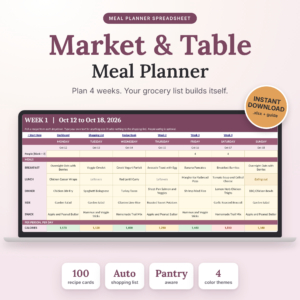
Market and Table Meal Planner Spreadsheet
Price: $3.99 | Best for: families planning four weeks at once
An Excel workbook that plans four full weeks with five meals a day. Type your recipes in once, pick meals from dropdowns, and it writes an aisle-sorted grocery list, takes off what is in your pantry and shows cost per meal, per day and per trip against your weekly budget. A 16-page user guide is included. Enter your ten cheapest family dinners first, then fill week one.
Week 3: beans and lentils week
This is the week that saves the most. A bag of dried lentils and two bags of dried beans cost very little and fill a lot of bowls. Soak beans the night before, or cook a big pot on Sunday and keep it in the fridge.
| Day | Dinner |
|---|---|
| Sunday | Red lentil and carrot soup with bread |
| Monday | Black bean quesadillas with salsa |
| Tuesday | Lentil sloppy joes on buns with slaw |
| Wednesday | Chickpea and spinach curry with rice |
| Thursday | Leftover night |
| Friday | Bean and cheese nachos |
| Saturday | Frozen bolognese from week 2, over pasta |
Saturday is a small reward: the bolognese you froze two weeks ago. It feels like a free dinner. Plenty of families find meat-free weeks easier than expected when the food is filling and has good flavor, so do not be shy with garlic, cumin and smoked paprika.
Week 4: eggs and pantry week
The last week before pay. The goal is to spend as little as possible and use up what is in the cupboards and freezer. Buy eggs, milk, bread and a bit of fresh fruit. Everything else comes from home.
| Day | Dinner |
|---|---|
| Sunday | Big frittata with potatoes and onion |
| Monday | Pasta with canned tuna, peas and lemon |
| Tuesday | Egg fried rice with whatever veg is left |
| Wednesday | Pancakes for dinner with fruit |
| Thursday | Freezer clear-out: any frozen chicken, soup or chili |
| Friday | Cheese and tomato toasties with tomato soup |
| Saturday | Shakshuka with bread for dipping |
There is something satisfying about reaching payday with a nearly empty freezer and money still in the account. That is the plan doing its job.
Cheap breakfasts and lunches that repeat all month
Dinners get the attention, but breakfast and lunch can quietly eat a third of the food money. Keep them on repeat and they cost very little.
Breakfasts
- Oats with banana or a spoon of jam
- Toast with peanut butter
- Scrambled eggs on weekends
- Homemade granola, made once a fortnight from oats and a little honey
Lunches
- Last night’s leftovers, packed while you clear the table
- Egg or tuna sandwiches
- A big pot of soup on Sunday, portioned for weekday lunches
- Pasta salad with frozen peas, corn and a little cheese
A monthly plan that covers breakfasts and lunches as lists, not as fixed daily meals, gives the family choice without blowing the budget.
Adjusting the plan for your household
The four weeks above are written for two adults and two school-age kids. Very few households match that exactly, so here is how to bend it.
Cooking for one or two
Keep the anchors but halve the packs. One chicken instead of two. A small pack of ground meat split into two bags. The real trick for small households is the freezer: cook the full recipe anyway, eat it twice, and freeze two portions. By week three you have a stash of ready dinners that cost nothing extra to make.
Teenagers and big eaters
A pair of sixteen-year-olds can eat like four adults. Bulk up the cheap parts of each meal, not the meat. Extra rice with the curry, another tray of wedges with the burgers, a second loaf on soup night. Keep a big pot of cooked rice or pasta in the fridge for after-school hunger, so the snack cupboard survives the week.
Picky eaters
Serve meals in parts. Tacos, nachos, baked potatoes and fried rice all let a fussy six-year-old pick plain bits while everyone else loads up. Making a separate kids’ dinner every night doubles the work and quietly doubles the cost too.
Paid weekly or every two weeks
Swap the order. Put the bean week right after a smaller paycheck and the chicken week after a bigger one. The four anchors stay the same; only the order moves.
How to shop for a whole month on a budget
Split the month into one big trip and three short ones. The big trip, right after payday, covers anything that keeps for four weeks. The short weekly trips cover fresh food only.
The big trip list
- Rice, pasta, oats and flour in the largest bags you can store
- Dried lentils, beans and chickpeas
- Canned tomatoes, tuna and beans
- Onions, potatoes and carrots in sacks
- Frozen peas, corn, spinach and mixed vegetables
- Two whole chickens and a family pack of ground meat, portioned and frozen
- Spices, stock cubes, oil and baking basics
The weekly top-up
Milk, bread, eggs, fruit, cabbage and anything leafy. Write the list from the plan and stick to it. A store visit with a short list and a set amount in mind tends to come in under budget.
Want to know the total before you get to the checkout? Write the usual price next to each item on your list. Our guide to a grocery list with prices shows how to set one up, and the tips in how to lower your grocery bill cover store brands, unit prices and the other small wins.
Tracking the money as the month goes
A plan only saves money if you can see whether it is working. Keep a simple running total: what you planned to spend each week, what you actually spent, and the difference. If week two ran $20 over, week three’s bean menu can absorb it.
Keeping the plan and the grocery budget in the same place helps a lot. On a tablet, you can plan the week on the couch and tap straight to that week’s list in the store.
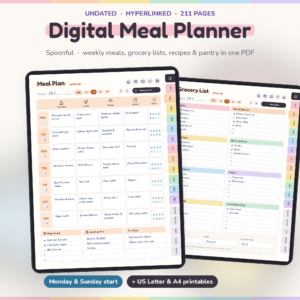
Spoonful Digital Meal Planner
Price: $4.99 | Best for: tablet users watching the grocery budget
An undated, hyperlinked PDF for tablet note apps, in Monday and Sunday start editions, with printable US Letter and A4 pages. Each week has a meal plan page with a use-it-up-first list for leftovers and its own linked grocery list in eight store sections. It also has a recipe book, 60 dinner ideas, kitchen inventories and a grocery budget that shows the whole year. Start on the budget page and set your monthly figure.
Budget mistakes that creep in by week two
- Buying “just in case” food. If it is not on the plan, it probably goes to waste.
- Skipping the leftover night. Thursday leftovers save about one dinner a week, four a month.
- Too many snacks. Chips, cookies and juice add up fast. Pick two snack items per week and stop there.
- Shopping hungry. Eat before you go. It sounds silly. It works.
- Not checking the freezer. Food you already paid for is the cheapest dinner there is.
Logging each trip, even roughly, shows where the leaks are. After one month you will know if it is snacks, takeout or the midweek “just popping in” trips.
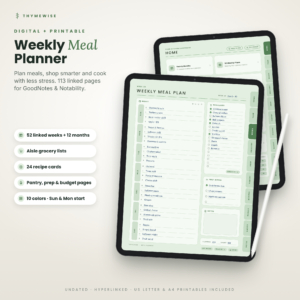
Thymewise Digital Meal Planner
Price: $1.75 | Best for: anyone who wants to see every grocery trip
A 113-page undated, hyperlinked planner for GoodNotes, Notability and similar apps, with printable US Letter and A4 versions. You get 52 weekly meal plans, 12 monthly meal calendars, aisle-sorted grocery lists, pantry and fridge inventories, recipe cards and a grocery budget tracker where you log planned and actual spending on every trip. Fill in the monthly calendar first, then log your first shop.
Frequently asked questions
How much should a family of four spend on food a month?
It depends heavily on where you live and what you eat. The best starting point is your own spending: add up the last two months of grocery and takeout costs, then plan to cut 10 to 15 percent with a written plan.
What are the cheapest meals to make for a month?
Lentil soup, bean chili, egg fried rice, pasta with tomato sauce, frittatas, homemade pizza and roast chicken stretched into several meals. These use cheap staples that keep for weeks.
Is it cheaper to shop once a month?
Buying long-life staples once a month usually saves money, because you buy bigger packs and make fewer extra trips. Fresh food still needs a short weekly shop, or it spoils.
How do I make a monthly meal plan on a tight budget?
Pick one cheap anchor ingredient for each week, plan three or more dinners around it, add one leftover night, and put the cheapest week right before payday. Then shop for staples once and fresh food weekly.
Can I repeat the same monthly meal plan?
Yes. Repeating a plan that worked is one of the easiest ways to save time and money. Swap two or three dinners each month for variety. For a longer walkthrough, see how to make a monthly meal plan you will actually follow.
Your next step
Look at your next payday and count back four weeks. Write the four anchors on a sheet of paper, one per week, with the pantry week last. Then fill in week one’s dinners and write the big-trip list from it. To plan and price all four weeks in one go, try the Market & Table Meal Planner Spreadsheet.