Some people love numbers. They enjoy logging a sandwich and watching the pie chart move. If you are reading this, you are probably not one of them. You tried an app, lasted four days, and felt like you were doing your taxes three times a day.
Good news: you can eat well without counting a single calorie, gram or point. You need a few simple rules that live in your head, a handful of default meals, and a weekly plan written on paper. That is it. This guide gives you the rules, a full sample week, a way to handle treats without guilt, and some ways to tell whether it is working without stepping into a spreadsheet you hate.
No food is off limits. The aim is a calmer, steadier way of eating that still fits around birthdays, takeaways and the odd bad day.
Quick picks: tools that skip the counting
| Product | Best for | Price | Link |
|---|---|---|---|
| Plate & Plan Weekly Meal Planner Printable | Planning the week, shop and prep on paper | $1.69 | View |
| Plate & Pantry Weekly Meal Planner Printable | A color-coded week on the fridge door | $1.69 | View |
| Fudge & Flex High Protein Dessert Recipes Book | Sweet treats that keep you full | $2.49 | View |
| Larkspoon Meal Planner Spreadsheet | Spreadsheet fans who want nutrition switched off | $12.99 | View |
Why counting does not suit everyone
Counting works for some people because it gives them feedback. For others, it turns food into a constant test. Every meal becomes a sum you might get wrong. You start choosing foods because they are easy to log, not because they are good or because you want them. A homemade stew becomes a problem because nobody knows how many calories are in it, while a packaged bar with a barcode feels “safe.” That is backwards.
There is also the time. Weighing, scanning and searching can easily take 20 minutes a day. That is more than two hours a week spent on data entry about food you have already eaten.
So if counting made you miserable, it is not a sign you lack willpower. It is a sign you need a different tool. Rules and routines are a different tool, and for plenty of people they work better.
Four rules that replace the numbers
Rule 1: build the plate in quarters
Half the plate vegetables or salad. A quarter protein: meat, fish, eggs, beans, tofu. A quarter starchy carbs: rice, potatoes, pasta, bread. Add a little fat for flavor, like a drizzle of oil or a sprinkle of cheese. No weighing. Just look at the plate before you sit down.
Rule 2: use your hand as the measuring cup
Your hand comes everywhere with you and it scales to your size. A palm-sized portion of protein. A fist of carbs. Two fists of vegetables. A thumb of fat (oil, butter, nut butter, cheese). Bigger, more active people tend to have bigger hands, so the portions adjust themselves a little. Clever, really.
Rule 3: add before you take away
Instead of starting with “no more biscuits,” start with “one more vegetable at dinner” and “protein at breakfast.” Adding food feels generous rather than strict. And once the plate is fuller of good things, there is naturally less room and less appetite for the rest.
Rule 4: eat at regular times
Three meals, roughly the same times each day, plus one or two planned snacks if you get hungry. Grazing all afternoon is where a lot of uncounted eating hides. A regular rhythm keeps hunger predictable, which makes everything else easier.
Write the four rules on a sticky note and put it inside a kitchen cupboard. That is your whole “counting system” now.
Default meals: the secret weapon
A default meal is the one you eat when you cannot be bothered to think. Everyone already has defaults. The trick is to choose good ones on purpose.
Pick three of each:
- Breakfasts: porridge with banana and a spoon of peanut butter; two eggs on wholegrain toast with tomatoes; yogurt with berries and a handful of granola.
- Lunches: a big salad with tuna or chicken and a roll; soup with a cheese sandwich; leftovers from last night.
- Snacks: an apple and a few nuts; hummus with carrots; a boiled egg and a piece of fruit.
These nine meals cover most of your week without you having to decide anything. Dinners can change more often, because that is usually the meal people enjoy planning. But on a frantic Wednesday, a default breakfast and default lunch mean only one decision is left.
Defaults also make shopping easy. The same oats, eggs, yogurt, fruit, tuna and salad go in the trolley every week, so the grocery list almost writes itself.
A no-count week you can copy
Here is a full week built from the four rules and the default meals. No numbers anywhere. Each dinner follows the quarter-plate rule.
| Day | Breakfast | Lunch | Dinner |
|---|---|---|---|
| Monday | Porridge, banana, peanut butter | Chicken salad, wholegrain roll | Salmon, new potatoes, peas and broccoli |
| Tuesday | Eggs on toast, tomatoes | Leftover salmon and potato salad | Turkey chili, rice, side salad |
| Wednesday | Yogurt, berries, granola | Lentil soup, cheese sandwich | Leftover chili in baked potatoes, green beans |
| Thursday | Porridge, banana, peanut butter | Tuna and bean salad | Chicken and vegetable stir-fry, noodles |
| Friday | Eggs on toast, mushrooms | Leftover stir-fry | Takeaway, enjoyed slowly, with a side salad at home |
| Saturday | Pancakes with fruit and yogurt | Soup and crusty bread | Homemade burgers, oven wedges, coleslaw |
| Sunday | Big cooked breakfast with beans and grilled tomatoes | Light lunch, fruit | Roast chicken, roast vegetables, gravy |
Notice the takeaway on Friday, the pancakes and the burgers. A healthy eating plan that bans the things you love will not last. One that builds them in, on purpose, quite often does.
Put the plan on paper, not in an app
If you hate counting, you probably do not want another screen telling you what to do. Paper is quieter. You plan the week once, on Sunday, with a cup of tea, and stick the page somewhere you will see it. Then you just follow it.
A good printable planner gives you the week, a grocery list and some space for prep notes on the same page, so one short sitting covers everything. For a look at a few different kits, our roundup of printable meal planner kits worth sticking on your fridge compares four.
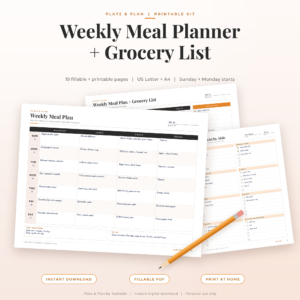
Plate and Plan Weekly Meal Planner
Price: $1.69 | Best for: pen-and-paper planners who hate apps
Plate & Plan is a printable weekly meal planner with 19 pages, supplied as fillable and print-only PDFs in US Letter and A4. It includes weekly plans with and without a 21-line grocery list, a meal prep planner that groups your cooking into proteins, grains, vegetables and sauces, pantry, fridge and freezer pages, and a weekly spending tracker. There are no nutrition fields at all. Print the weekly plan with grocery list and fill it in with your three default breakfasts and lunches first.
If you have never planned a week before at all, our guide on how to meal plan for the week covers the very first attempt.
A fridge page the whole house can read
Plans fail quietly when only one person knows them. A partner eats the chicken meant for Thursday. A teenager finishes the yogurt that was Wednesday’s breakfast. Put the week on the fridge door and these little collisions mostly stop.
Color helps more than you might expect. If breakfast, lunch, dinner and snacks each have their own color, a quick glance shows the gaps: “there’s no lunch planned for Thursday.” Nobody has to read every line.
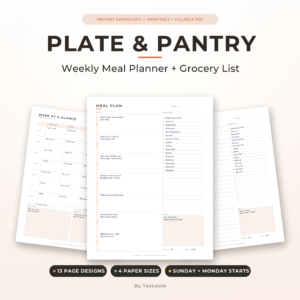
Plate and Pantry Meal Planner Printable
Price: $1.69 | Best for: households sharing one fridge plan
This Plate & Pantry printable has 13 planning pages in US Letter, A4, A5 and Half Letter, with Sunday and Monday start versions and fillable PDFs. You get five weekly layouts, including a color-coded week at a glance, plus a grocery list by aisle, pantry and fridge inventories, a recipe page, a meal prep plan, a grocery budget log and a favorite meals page. Fill in the favorite meals page with your nine default meals, then print a weekly layout for the fridge.
Treats, planned rather than resisted
People who hate counting often swing between “being good” and “giving up.” Treats are where that swing happens. A simple fix: plan two or three treats a week and write them on the plan. Friday takeaway. Sunday crumble. A square of chocolate after dinner most nights if that is what you enjoy.
When a treat is on the plan, eating it is not a failure. It is following the plan. That small mental shift takes a surprising amount of guilt out of the week.
It also helps to have a few sweet things that are more filling, so one portion feels like enough. Desserts with some protein in them, like a yogurt-based cheesecake cup, tend to hold you better than a packet of biscuits.

Fudge and Flex Protein Desserts
Price: $2.49 | Best for: sweet tooths who want treats that satisfy
Fudge & Flex is a book of 24 high-protein desserts, built around protein powder, Greek yogurt or cottage cheese, from brownies and cookies to cheesecake cups and frozen fudge pops. Each recipe shows macros, but you are free to ignore the numbers and just enjoy the food. 17 of the 24 are no-bake or frozen. It comes as a Digital Edition and an Ink-Saver Print Edition in US Letter and A4. Pick one frozen recipe and make a batch for the week’s planned treats.
How to tell it is working, without numbers
You can still check progress. You just use signs that do not need a calculator.
- Energy: are afternoons less of a slump than they were a month ago?
- Hunger: do you reach dinner hungry but not ravenous?
- Clothes: does your favorite pair of jeans fit differently?
- Cooking: how many nights did you cook at home this week compared with last month?
- Plates: on how many dinners was half the plate vegetables?
Pick two of those and jot a quick tick or cross on your weekly plan each day. After four weeks, the pattern is easy to see. It is a gentle kind of feedback, and it tends to feel encouraging rather than judgmental.
If you like spreadsheets but hate counting
Some people enjoy spreadsheets for shopping lists and budgets, but not for nutrition. That is a perfectly good combination. Use a planner that builds the grocery list and prices the week, and simply never look at the nutrition columns.
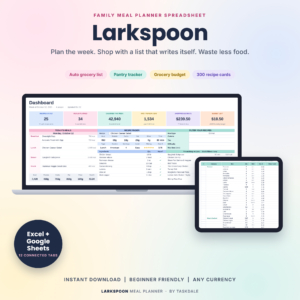
Larkspoon Meal Planner Spreadsheet
Price: $12.99 | Best for: list makers who skip nutrition tracking
Larkspoon works in Excel and Google Sheets with twelve connected tabs. You pick meals for the week and it writes an aisle-sorted grocery list, subtracts what is already in your pantry, prices each dish against a budget and prints a one-page menu for the fridge. Nutrition tracking is optional: track it if you want to, skip it if you don’t. Add your nine default meals as recipes first and let it build your first shopping list.
Who this plan is not for
A no-counting plan suits most people who want steadier, healthier everyday eating. It is not the best fit if you are training for a specific sporting event with precise fuel needs, or if you have a goal that needs exact numbers set by someone who knows your situation. In those cases, a structured tracking plan may be more useful, at least for a while.
For everyone else, rules, defaults and a weekly page usually cover it.
Frequently asked questions
Can you eat healthy without counting calories?
Yes. Plate rules, hand-sized portions, regular meal times and a few default meals give most people a balanced diet without any logging.
What is the hand portion method?
It uses your hand as a guide: a palm of protein, a fist of carbs, two fists of vegetables and a thumb of fat at each main meal.
How do I stop overeating if I am not counting?
Eat at regular times, fill half your plate with vegetables, start with protein, and plan your treats so they do not turn into all-afternoon grazing.
Is meal planning the same as dieting?
No. Meal planning simply decides what you will eat ahead of time. It can include pizza, cake and takeaways. It just makes them planned.
What should I write on a weekly meal plan?
Breakfast, lunch, dinner and any planned snacks or treats for each day, plus a grocery list and one or two prep notes.
Your next step
Write the four rules on a sticky note today. Then choose three default breakfasts, three default lunches and three snacks, and plan next week’s dinners around the quarter plate. Print a page, fill it in on Sunday and stick it on the fridge. The Plate & Plan weekly meal planner printable is a simple place to start.