Balanced eating sounds vague until you put it on a plate. In practice it means most meals carry some protein, some vegetables or fruit, some starch or grains and a little fat, and that across a week you rotate what those are. Fish on Monday, beans on Tuesday, chicken on Wednesday. Broccoli one night, peppers and carrots the next. Nothing fancy. Just variety with a pattern.
This guide turns that idea into a nutrition meal plan for balanced daily eating you can actually follow. You will get the plate model in plain words, a full sample day, a weekly rotation grid that keeps variety without extra effort, ways to check the numbers if you like numbers, and three Taskdale planners that do the adding up. It is practical meal planning help, not a medical diet.
Quick picks: planners for balanced eating
| Product | Best for | Price | Link |
|---|---|---|---|
| Platewell Calorie & Macro Tracker Spreadsheet | Seeing calories, macros, fiber and water against your own targets | $9.99 | View |
| Pantry Bloom Meal Planner Spreadsheet | Family meal plans with nutrition per person and a smart grocery list | $18.99 | View |
| Thymewise Digital Meal Planner | Handwritten weekly plans with a healthy habits tracker | $1.75 | View |
| Larkspoon Meal Planner Spreadsheet | Weekly plans with nutrition per meal and cost per serving | $12.99 | View |
What balanced daily eating looks like on a plate
Many public health guides use a simple plate picture, and it is still the easiest tool around. Picture a dinner plate split into rough sections:
- About half: vegetables and fruit. Mostly vegetables at lunch and dinner. Fresh, frozen or canned all count.
- About a quarter: protein. Fish, eggs, poultry, beans, lentils, tofu, lean meat, dairy.
- About a quarter: starch or grains. Rice, pasta, potatoes, bread, oats, ideally whole grain some of the time.
- A little fat. Olive oil for cooking, a few nuts, some avocado or cheese.
- A drink, mostly water, milk or unsweetened tea or coffee.
You do not have to hit this at every meal. Breakfast often skews toward grains. A soup or stew mixes everything in one pot. The aim is that most meals lean this way most days.
That’s the whole idea behind balance. No food is banned, and no single meal has to be perfect. A Saturday burger with fries is fine. Add a side salad and it is closer to the plate.
A sample balanced day
Here is one ordinary day for an adult who works at a desk and walks for half an hour. Swap foods freely. The structure is what matters.
| Meal | What you eat | How it balances |
|---|---|---|
| Breakfast | Porridge with milk, a sliced pear and a spoon of chopped walnuts | Grains, dairy protein, fruit, a little fat |
| Snack | Plain yogurt with a few berries | Protein and fruit |
| Lunch | Whole grain wrap with hummus, grated carrot, spinach and chicken | Grains, two protein sources, vegetables |
| Snack | Apple and a small piece of cheese | Fruit and protein |
| Dinner | Baked salmon, roasted sweet potato, broccoli and green beans | Protein, starch, two vegetables, healthy fat from the fish |
Count the colors on that day: pear, berries, carrot, spinach, apple, sweet potato, broccoli, green beans. Eight different fruits and vegetables without trying very hard. That is the sort of quiet win that balanced planning brings.
Now compare a common rushed day: a coffee and a croissant, a white bread sandwich with ham, a bag of chips at 3 pm and pasta with jarred sauce for dinner. Nothing in it is terrible. It is just short on vegetables, fruit and fiber, and heavy on the same few foods. Planning the balanced version takes maybe ten extra minutes on Sunday and a slightly different shopping list. The difference shows up in how full you feel between meals, and in how often you find yourself hunting for something sweet at 4 pm.
A weekly rotation that keeps variety easy
Variety is where most plans slip. People find three dinners they like and repeat them forever. A rotation grid fixes that with almost no effort. Assign a protein theme to each night and swap the vegetables weekly.
| Night | Protein theme | Example dinner |
|---|---|---|
| Monday | Beans or lentils | Lentil and vegetable curry with rice |
| Tuesday | Poultry | Chicken stir-fry with peppers, snap peas and noodles |
| Wednesday | Eggs | Vegetable frittata with a side salad and crusty bread |
| Thursday | Fish | Fish tacos with cabbage slaw |
| Friday | Free choice | Homemade pizza with extra vegetables |
| Saturday | Red meat or tofu | Beef or tofu chili with corn and beans |
| Sunday | Roast | Roast chicken or chickpeas with root vegetables |
Then rotate one thing each week: a different vegetable, a different grain, a different sauce. Over a month that adds up to a wide spread of foods without you ever sitting down to “plan for variety”. If you want a month mapped out at once, our guide on how to make a monthly meal plan you will actually follow shows how to build a four-week rotation.
Balanced breakfasts and lunches for busy days
Dinner gets most of the planning attention. Breakfast and lunch are where balance quietly slips, because they happen in a rush. A short list of go-to options solves it.
Five breakfasts that cover the plate
- Porridge with milk, fruit and seeds
- Two eggs on whole grain toast with tomato
- Greek yogurt, granola and berries
- Peanut butter on toast with a banana
- A smoothie with milk or yogurt, frozen fruit, oats and a handful of spinach
Five lunches that travel well
- Leftover dinner in a lunch box, with a piece of fruit
- A grain bowl: rice or couscous, chickpeas, roast vegetables, a spoon of dressing
- Lentil or bean soup in a flask with a bread roll
- Tuna or egg salad sandwich on whole grain bread, plus carrot sticks
- A pasta salad with peas, sweetcorn, cherry tomatoes and cheese
Pick two breakfasts and two lunches for the week and repeat them. That is not boring, it is efficient. You buy fewer ingredients, waste less and still eat well before dinner even begins. Rotate the list each fortnight if you get tired of a favorite, and the variety takes care of itself over a month.
Checking the numbers if you like numbers
Some people are happy eyeballing the plate. Others want to see the totals: calories, protein, carbs, fat, fiber. Neither approach is wrong. Numbers can be useful for a few weeks, especially if you suspect you are low on protein or fiber, or you are not sure how big your portions really are.
Doing the sums by hand is tedious. A spreadsheet with a food library and recipe nutrition built in does it in the background while you plan. You pick a food or recipe from a dropdown and the totals appear, set against targets for each person in the house.
A practical way to use numbers without obsessing: track fully for two weeks, look at the averages, adjust one or two habits (more beans at lunch, a piece of fruit at breakfast), then switch to planning by the plate and check again a month later.
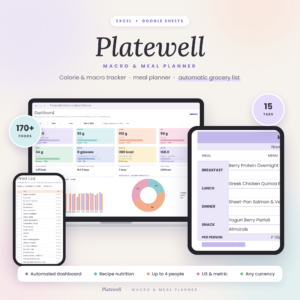
Platewell Calorie & Macro Tracker Spreadsheet
Price: $9.99 | Best for: people who want to see the totals
Platewell is an Excel and Google Sheets workbook with 170+ foods pre-loaded and room for 400. A goals calculator sets calorie, macro, fiber and water targets for up to 4 people, with six diet styles including balanced. The weekly meal planner has two slots each for breakfast, lunch, dinner and snacks, 40 recipe cards calculate nutrition and cost per serving, and an automatic shopping list sorts by aisle and deducts pantry stock. Set up the goals tab first, then plan one week.
Building balance into a family plan
Families add a twist: different ages, appetites and tastes. A 6-year-old, a teenager who plays sport and two adults will not eat the same portions. The good news is that they can eat the same meals.
Cook one meal, serve different amounts
The same chicken stir-fry works for everyone. The teenager gets a bigger scoop of noodles, the 6-year-old gets the vegetables separated if that helps. The plate still balances for each of them.
Let protein and vegetables be the stars
Plan the protein and two vegetables first. The starch is easy to add on the night.
Put fruit on the table
A bowl of cut fruit after dinner gets eaten far more often than a whole apple left in the fruit bowl.
Track per person, not per family
A spreadsheet that shows nutrition per person, not for the whole pot, tells you more. You might find dinner is well balanced for adults but light on protein for the child who skips the meat.
For families who want a sample plan to copy before building their own, a planner that comes with a filled example week is a real time saver.
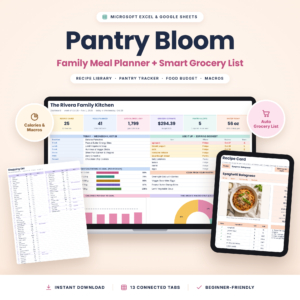
Pantry Bloom Meal Planner Spreadsheet
Price: $18.99 | Best for: families tracking nutrition per person
Pantry Bloom is a 13-tab Excel and Google Sheets planner that comes with a blank file and a SAMPLE file filled with a family week and 25 recipes. You save each recipe once, pick meals from dropdowns, and it shows daily calories, protein, carbs, fat and fiber per person against your goals, plus cost per serving and a grocery list scaled to servings and checked against the pantry. An 18-page Word guide is included. Look through the sample week to see how a balanced week is laid out.
Shopping for a balanced week
A balanced plan only works if the fridge matches it. Shop with a list grouped by section, and check each section covers the plate:
- Produce: at least five different vegetables and three fruits for the week. Mix fresh with frozen so nothing wilts.
- Protein: one item for each protein theme in your rotation. Canned beans and eggs keep well.
- Grains and starches: one whole grain (oats, brown rice, whole wheat pasta) plus your usual favorites.
- Dairy or alternatives: milk, yogurt, cheese, or fortified plant versions.
- Fats and flavor: olive oil, a bag of nuts or seeds, herbs and spices.
Looking at the cart before you check out is a fun habit. If it is mostly beige, add a bag of frozen peas and a few carrots. Those two items alone lift a week. A list sorted by aisle makes this check quick; our guide to a grocery list by aisle shows how to set one up.
Planning by hand on a tablet
Not everyone wants dropdowns and totals. If you would rather write the week by hand and tick a few healthy habits, a digital planner on a tablet gives you that without paper piling up. Some include a habits page where you can tick off water, fruit, vegetables and movement each day, which is a gentler way to keep balance in view than counting grams.
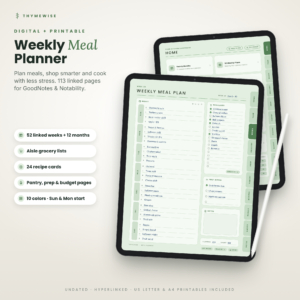
Thymewise Digital Meal Planner
Price: $1.75 | Best for: handwriters who prefer habits to numbers
Thymewise is an undated, hyperlinked 113-page planner for GoodNotes, Notability and other PDF apps, with printable US Letter and A4 versions. It has 52 weekly meal plans with breakfast, lunch, dinner and snacks, 12 monthly meal calendars, aisle-sorted grocery lists, a meal prep planner, pantry and fridge inventories, 24 recipe cards, a grocery budget tracker and a healthy habits tracker. Start by writing your protein theme for each night across the first weekly page.
Mistakes that tip the balance
- Same three vegetables every week. Rotate one new vegetable in each week, even if it is just swapping green beans for zucchini.
- Protein only at dinner. Spread it out. Eggs or yogurt at breakfast, beans or chicken at lunch.
- Cutting whole food groups for no reason. Unless you have a medical reason or a firm preference, keeping all groups in makes balance easier.
- Liquid calories nobody counted. Juice and sweet coffees can crowd out real food. Note them on the plan.
- Chasing the perfect day. Balance happens over the week. A pizza night does not need fixing.
- Not writing anything down. A week or two in a simple food journal shows gaps you would never notice from memory.
Frequently asked questions
What is a balanced meal plan?
A plan where most meals include protein, vegetables or fruit, a starch or grain and a little fat, with different foods rotated across the week for variety.
How do I make a balanced meal plan for the week?
Give each night a protein theme (beans, poultry, eggs, fish and so on), add two vegetables and a grain to each dinner, then plan simple breakfasts and lunches that follow the same plate pattern.
Do I need to count macros to eat a balanced diet?
No. The plate model works well on its own. Counting for a couple of weeks can be useful if you want to check protein or fiber, but it is optional.
How many fruits and vegetables should be in a balanced day?
Many public health guides suggest at least five portions a day, and more is generally welcome. A practical aim is fruit or vegetables at every meal and snack.
Can a vegetarian meal plan be balanced?
Yes. Use beans, lentils, eggs, dairy, tofu and nuts as protein sources and rotate them across the week the same way you would rotate meat and fish.
Your next step
Write a protein theme beside each night of next week, then add two vegetables to every dinner before you add anything else. Shop with a list sorted by section and check each section covers the plate. If you want the totals worked out for each person in your house, set up the Platewell Calorie & Macro Tracker Spreadsheet and plan your first balanced week in it.