The simplest rule for a diabetic diet meal plan with balanced carbs and protein is this: never let a carb eat alone. Toast gets an egg. Fruit gets a handful of nuts or some yogurt. Rice comes with chicken, fish or beans. Pairing every portion of carbohydrate with a portion of protein makes meals more filling, keeps portions in check, and gives each plate a shape you can repeat all week.
This article is for adults managing type 2 diabetes or prediabetes, and for anyone who cooks for them. It is about practical meal building, not medical treatment, so agree any change to how you eat with your doctor or dietitian. You will get a hand-sized portion guide, a four-part formula for building any meal, a week of balanced dinners, carb-plus-protein snack pairs and a look at the planners that make it easy to keep going.
Quick picks: planners for balanced carb and protein meals
| Product | Best for | Price | Link |
|---|---|---|---|
| Even Keel Kitchen Diabetes-Friendly Meal Planner & Carb Log | A 7-day menu balanced for carbs and protein | $7.99 | View |
| Small Bites, Big Wins GLP-1 Meal Plan Printable | Protein-first meals for a smaller appetite | $6.99 | View |
| Fudge & Flex High Protein Dessert Recipes Book | Treats with carbs and protein listed per serving | $2.49 | View |
| Larkspoon Meal Planner Spreadsheet | Totaling carbs and protein across the week | $12.99 | View |
Why carbs and protein belong on the same plate
Carbohydrate is the nutrient your care team will usually ask you to watch most closely. Protein has a quieter job. It makes a meal more satisfying, so a modest portion of rice or bread feels like enough. A bowl of plain cereal at 7am often leaves people hungry by 9.30. The same cereal portion with a boiled egg or a pot of Greek yogurt tends to carry them to lunch.
That fullness matters for planning. When every meal has real protein in it, there is less pull toward an extra slice of toast or a mid-morning muffin. The carb portion you planned is the carb portion you eat. That is the whole point of a balanced plan: fewer surprises, more meals that go the way you meant them to.
Balance also helps with variety. Once you think in pairs, you stop worrying about which foods are “allowed” and start mixing and matching. Potato and fish. Lentils and spinach. Tortilla and chicken. Same structure, endless combinations.
Portion sizes you can measure with your hand
Scales and apps are useful, but your hand is always with you. Use it as a rough guide when cooking or eating out:
| Food group | Hand guide | Rough example |
|---|---|---|
| Protein | The size and thickness of your palm | 3 to 4 oz cooked chicken, fish or tofu |
| Carb foods | One cupped hand or a closed fist | About 1/2 to 2/3 cup cooked rice or pasta |
| Non-starchy vegetables | Two open hands | A big pile of salad or roasted vegetables |
| Fats | The tip of your thumb | About 1 tbsp oil, nut butter or cheese spread |
A palm of cooked chicken breast carries somewhere around 25 grams of protein. A cupped hand of brown rice carries roughly 25 to 30 grams of carbs. Put those two on a plate with two hands of vegetables and you have a balanced dinner without measuring a thing. Your own carb and protein targets may differ, so adjust the portions once you know them.
The four-part formula for any balanced meal
Every meal in a balanced diabetic diet meal plan can be built from the same four parts. Pick one from each column and you are done.
- A protein: eggs, chicken, turkey, fish, shrimp, lean beef, pork loin, tofu, tempeh, cottage cheese, Greek yogurt.
- A measured carb: whole-grain bread, brown rice, quinoa, oats, whole-wheat pasta, potato, sweet potato, beans, lentils, fruit.
- Vegetables: as much non-starchy veg as you like. Leafy greens, broccoli, peppers, cauliflower, green beans, cabbage.
- A little fat: olive oil, avocado, nuts, seeds or a sprinkle of cheese.
Here is the formula in action across one ordinary Tuesday. Breakfast: two scrambled eggs (protein), one slice of whole-grain toast (carb), sautéed spinach (veg), a little butter (fat). Lunch: tuna mixed with olive oil and lemon (protein, fat), a whole-wheat pita (carb), cucumber and tomato salad (veg). Dinner: pork loin (protein), half a baked sweet potato (carb), roasted Brussels sprouts with olive oil (veg, fat). Three meals, no special products, and each one balanced.
If you want your carbs to stay level from meal to meal as well, our guide to a diabetic meal plan with steady carbs at every meal goes deeper into carb counting and timing.
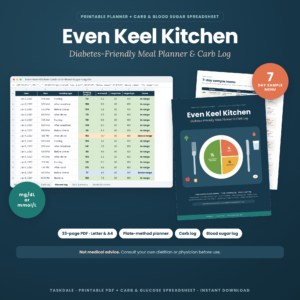
Even Keel Kitchen Diabetes Meal Planner and Carb Log
Price: $7.99 | Best for: people new to diabetes meal planning
A printable and fillable planner in US Letter and A4 that brings the plate method, carb counting, a blood sugar log and a weekly review into one system. It includes a 7-day sample menu with balanced carbs and protein, simple recipes and a grocery list, plus a spreadsheet that totals carbs by meal and day and shows weekly averages with charts. Cook a few meals from the sample menu in your first week.
Breakfast: where protein usually goes missing
Lunch and dinner tend to have protein by default. Breakfast is the meal where it quietly disappears. Toast and jam, cereal and milk, a muffin with coffee. All carb, very little protein. Fixing breakfast is often the single biggest win in a balanced plan.
Some easy balanced breakfasts:
- Greek yogurt bowl: 3/4 cup plain Greek yogurt, 1/2 cup berries, a spoon of chopped nuts.
- Eggs on toast: two eggs any style, one slice of whole-grain toast, sliced tomato.
- Protein oats: 1/2 cup dry oats cooked in milk, with a spoon of peanut butter stirred in.
- Cottage cheese plate: 1/2 cup cottage cheese, a small sliced peach, a handful of almonds.
- Breakfast wrap: scrambled egg and black beans in a small whole-wheat tortilla with salsa.
Pick two or three and rotate them. Breakfast is the one meal most people are happy to repeat, which makes it the easiest place to build a habit.
A week of balanced dinners
Dinner is where planning pays off most, because it is the meal most likely to turn into takeout when nothing is ready. Here is a seven-night rotation built on the four-part formula.
| Night | Protein | Carb | Vegetables |
|---|---|---|---|
| Monday | Lemon herb chicken thighs | 2/3 cup brown rice | Roasted broccoli |
| Tuesday | Pork loin | Half a baked sweet potato | Brussels sprouts |
| Wednesday | Turkey chili with beans | Beans count as the carb | Peppers, onions, side salad |
| Thursday | Baked salmon | Small new potatoes | Green beans |
| Friday | Shrimp stir-fry | 2/3 cup cooked noodles | Bok choy, snap peas, carrots |
| Saturday | Lean beef burger | Whole-wheat bun | Big salad, sliced tomato |
| Sunday | Tofu and vegetable curry | Small portion of rice | Cauliflower, spinach |
Cook extra on Monday, Wednesday and Sunday and you have lunches covered for most of the week. If batch cooking is new to you, our guide to meal prep for beginners shows how to fit it into one afternoon.
The shopping list for that week
One shop covers all seven nights plus breakfasts. Proteins: chicken thighs, pork loin, ground turkey, salmon fillets, frozen shrimp, lean ground beef, a block of firm tofu, a dozen eggs and a large tub of plain Greek yogurt. Carbs: brown rice, sweet potatoes, canned kidney beans, new potatoes, whole-wheat noodles, whole-wheat buns, whole-grain bread and oats. Vegetables: broccoli, Brussels sprouts, peppers, onions, salad leaves, green beans, bok choy, snap peas, carrots, cauliflower, spinach and tomatoes. Add olive oil, nuts and berries, and the week is covered. Frozen vegetables work fine for any of these, and they keep the cost down.
A meal planner spreadsheet that totals carbs and protein per day, like the Larkspoon Meal Planner Spreadsheet, is handy here. Enter each recipe once and every week’s totals work themselves out.
Snacks that pair a carb with a protein
A snack is a mini-meal, so the same pairing rule applies. Each of these combines a modest carb with some protein:
- A small apple with 1 tablespoon of peanut butter
- Four whole-grain crackers with 1 oz of cheese
- A small pot of plain Greek yogurt with a few berries
- Carrot and cucumber sticks with 3 tablespoons of hummus
- Half a whole-wheat pita with sliced turkey
- A small pear with a handful of almonds
Notice what is missing from that list: chips on their own, a granola bar alone, a cookie with coffee. None of them are banned. They just leave the carb eating alone, which tends to mean you are hungry again within the hour and reaching for a second one. Add a cheese stick or a few nuts and the same snack works much harder.
Keep two or three of these ready in the fridge or your bag. The 4pm slump is much easier to handle when the answer is already there.
Desserts and treats with the numbers on the page
A balanced plan does not have to mean no dessert ever. It means knowing what is in it. The trouble with most dessert recipes is that the carbs are a mystery until you work them out yourself, which almost nobody does.
Protein-based treats, built on Greek yogurt, cottage cheese or protein powder, often fit more easily alongside a meal because they bring protein with them. They still contain carbohydrate, so count them like anything else. A recipe book that lists carbs and protein per serving on every page saves you the math and lets you plan a treat on purpose rather than as a guilty surprise.

Fudge and Flex High Protein Dessert Recipes
Price: $2.49 | Best for: dessert lovers who track carbs
A printable and digital recipe book with 24 protein treats such as brownies, cookies, cheesecake cups and frozen fudge pops, built around Greek yogurt, cottage cheese or protein powder. Every recipe shows calories, protein, carbs and fat per serving, and 17 of the 24 are no-bake or frozen. It comes as a digital edition and an ink-saving print edition, in US Letter and A4. Pick one recipe and fit it into your plan.
If you take a GLP-1 medication
Some people managing type 2 diabetes take a GLP-1 medication and find their appetite is much smaller than before. A full plate can feel like too much. In that case, the order you eat things in becomes a practical question: many people start with the protein, so it does not get left behind when they feel full.
Drinks are worth a thought too. Large glasses of water right before a meal can fill a small stomach fast, so many people sip between meals instead.
A smaller plate with the same balance helps. Think a half-portion of protein, a few spoonfuls of the carb and some vegetables, eaten slowly. Planning small, protein-first meals ahead also cuts down on standing at the fridge wondering what you could possibly manage to eat.

Small Bites, Big Wins GLP-1 Meal Plan Printable
Price: $6.99 | Best for: people on GLP-1 medications
A 49-page printable meal plan in US Letter and A4 with clickable tabs for tablets. It has 150 high-protein meal ideas with approximate protein and fiber, a 206-item food list, a small-plate method with hand portions, a 4-week starter plan and 13 tracker pages for doses, symptoms, water, protein and habits. Fill in the daily targets worksheet with your care team, then try the first week.
Mistakes that tip the balance
- Protein at dinner only. Spread it across the day, starting with breakfast.
- Letting the carb portion creep. Restaurant pasta portions can be three or four times a measured serving.
- Counting beans as protein only. Beans and lentils carry both protein and carbs, so count the carbs too.
- Relying on processed “protein” snacks. Some protein bars carry as many carbs as a candy bar. Read the label.
- Forgetting vegetables. They fill the plate, add fiber and make modest portions of everything else look generous.
Frequently asked questions
How much protein should a diabetic eat at each meal?
It depends on your body size, activity and health. A palm-sized portion of protein at each meal is a common starting point, but ask your doctor or dietitian for a target that suits you.
What is a good balanced breakfast for diabetics?
Pair a measured carb with protein. Eggs with one slice of whole-grain toast, Greek yogurt with berries and nuts, or oats cooked in milk with peanut butter all work well.
What are good protein foods for a diabetic meal plan?
Eggs, chicken, turkey, fish, shrimp, lean beef and pork, tofu, tempeh, cottage cheese and plain Greek yogurt are all easy to fit in. Beans and lentils add protein too, along with carbs.
Do beans count as protein or carbs?
Both. Beans and lentils give useful protein, but they also carry carbohydrate, so count them toward your carbs.
Can I still have dessert on a diabetic meal plan?
Many people do, by planning it and counting its carbs like any other food. Smaller portions and recipes that list carbs per serving make it easier.
Is a high-protein diet good for diabetes?
Balanced is the safer word. Include protein at each meal alongside measured carbs and plenty of vegetables, and agree the overall mix with your care team.
Your next step
Tomorrow morning, add a protein to whatever breakfast you usually eat. By the weekend, plan five dinners using the four-part formula and write the grocery list from it. For a ready-made 7-day menu with balanced carbs and protein, recipes and a carb log in one place, start with Even Keel Kitchen.