A diabetic meal plan with steady carbs at every meal is built on one simple idea: eat roughly the same amount of carbohydrate at breakfast, lunch and dinner, at roughly the same times each day. No dramatic swings from a tiny breakfast to a huge pasta dinner. Just even, predictable meals that are easier to plan, easier to log and easier to talk through with your care team.
This guide is for adults living with type 2 diabetes or prediabetes, and for the family cooks who plan their meals. You will learn how the plate method and carb counting work together, see a sample day with carbs worked out, get a 30-minute weekly planning routine, and find a few printable and spreadsheet planners that keep the numbers in one place. Your carb targets themselves should come from your doctor or dietitian, and any change to how you eat is worth agreeing with them first.
Quick picks: planners for steady-carb meals
| Product | Best for | Price | Link |
|---|---|---|---|
| Even Keel Kitchen Diabetes-Friendly Meal Planner & Carb Log | Plate method, carb log and blood sugar records | $7.99 | View |
| Larkspoon Meal Planner Spreadsheet | Carbs per meal plus an automatic grocery list | $12.99 | View |
| Thymewise Digital Meal Planner | Planning on an iPad or tablet | $1.75 | View |
| Pantry Bloom Meal Planner Spreadsheet | Family cooks tracking carbs against goals | $18.99 | View |
What “steady carbs” means in practice
Carbohydrate is the part of food that affects blood sugar most directly. Bread, rice, pasta, potatoes, fruit, milk, beans and sweets all carry it. Steady carbs does not mean cutting these out. It means spreading them evenly so each meal carries a similar load.
Picture two days with the same total carbs. On day one: black coffee for breakfast, a sandwich at 2pm, then a big bowl of pasta and garlic bread at 8pm. On day two: oatmeal at 7.30, a sandwich at 12.30, and salmon with rice at 6.30. Same food groups. Very different pattern. Day two is the steady one.
Many care teams suggest a carb range per meal, and sometimes per snack. You might hear “about 45 grams at meals and 15 at snacks”, or a different figure that suits your body, your activity and any medication you take. Whatever your number, the goal of the meal plan is the same: hit it reliably, meal after meal.
The plate method: steady carbs without weighing anything
The plate method is the easiest place to start, because it needs no scale and no app. Take a standard 9-inch dinner plate and fill it like this:
- Half the plate: non-starchy vegetables. Broccoli, green beans, salad leaves, peppers, zucchini, cauliflower, tomatoes, mushrooms.
- A quarter: protein. Chicken, fish, eggs, tofu, lean beef, turkey, or beans if you count them as carbs too.
- A quarter: carb foods. Brown rice, whole-grain bread, potato, pasta, corn, or fruit.
- On the side: water or another zero-sugar drink, and a small portion of fat like olive oil or a few nuts.
Because the carb quarter is the same size every time, your carbs stay roughly level from meal to meal. It is not exact, and it does not need to be. For many people, it is the first time a “diabetes diet” starts to feel like normal food again, and that is a real relief.
Counting carbs without making it a chore
Once the plate method feels natural, carb counting adds precision. The basic unit is 15 grams, often called one carb choice or one carb serving. Learn a handful of common foods and you can estimate most meals in your head.
| Food | Portion with about 15 g carbs |
|---|---|
| Bread | 1 slice (check the label, some are higher) |
| Cooked rice or pasta | About 1/3 cup |
| Potato | About half a medium baked potato |
| Fruit | 1 small apple or orange, or about 1 cup of berries |
| Milk | About 1 cup (around 12 g) |
| Beans or lentils, cooked | About 1/2 cup |
| Crackers | Varies widely, so read the label |
For anything packaged, the Nutrition Facts label is your friend. Look at the serving size first, then total carbohydrate. If the serving is 2 crackers and you ate 6, multiply by three. It sounds obvious, but that one step catches most counting mistakes.
A planner with a carb column for each meal makes this far less tedious. You write the foods, jot the carbs beside them and the day’s pattern is right there on one page.
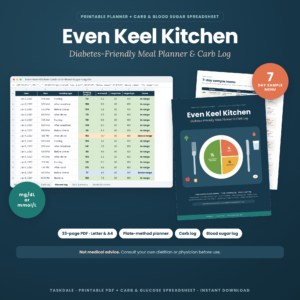
Even Keel Kitchen Diabetes Meal Planner and Carb Log
Price: $7.99 | Best for: adults with type 2 or prediabetes
A printable and fillable planner in US Letter and A4 with a plate-method weekly planner, carb counting pages that explain 15-gram portions and label reading, a blood sugar log, a 7-day sample menu with simple recipes and a grocery list. A companion spreadsheet adds up carbs by meal and day and charts readings against your target ranges for appointments. Start with the carb counting pages, then plan one week.
A sample steady-carb day
Here is what an even day can look like at around 40 to 45 grams per meal and about 15 to 20 at a snack. Treat the numbers as estimates, since brands and portions vary, and swap in your own targets.
| Meal | What is on the plate | Approx. carbs |
|---|---|---|
| Breakfast, 7.30 | 1 cup cooked oatmeal, 1/2 cup blueberries, 2 tbsp walnuts, 1 boiled egg | About 40 g |
| Lunch, 12.30 | Turkey and salad sandwich on 2 slices whole-grain bread, 1 cup baby carrots, 2 tbsp hummus | About 42 g |
| Snack, 3.30 | 1 small apple with 1 tbsp peanut butter | About 18 g |
| Dinner, 6.30 | Baked salmon, 2/3 cup brown rice, roasted broccoli and green beans | About 40 g |
Look at the shape of it. Three main meals within a few grams of each other, spaced five to six hours apart, with a small snack bridging the long afternoon. Every meal has protein and vegetables alongside the carbs. Nothing exotic, nothing expensive.
Plan a steady-carb week in 30 minutes
A sample day is nice. A full week, planned in advance, is what makes it stick. Here is a routine that fits into a Sunday afternoon.
- Write down your targets. Carbs per meal and per snack, as agreed with your care team.
- Pick three breakfasts. Rotate them through the week. Breakfast is the easiest meal to keep the same.
- Plan lunches from leftovers. Cook 50% more at dinner and lunch is half done.
- Choose five dinners. Use the plate method for each, and leave two nights for leftovers or an easy standby like an omelet.
- Add carbs beside each meal. If one day runs high, swap the carb food rather than the whole meal.
- Write the grocery list straight from the plan, grouped by store section.
If you have never planned a week before, our guide on how to meal plan for the week walks through the basics step by step.
A spreadsheet speeds this up a lot. Save each recipe once with its carbs per serving, then pick meals from a list and watch the daily carb totals fill in.
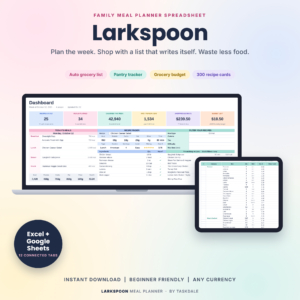
Larkspoon Meal Planner Spreadsheet
Price: $12.99 | Best for: cooks who want carbs counted automatically
A 12-tab meal planner for Excel and Google Sheets. Pick meals for any seven days and it totals calories, protein, carbs, fat and fiber per meal, per day and per person, then writes a grocery list sorted by aisle with pantry items taken off. It also prices each dish against your weekly budget and prints a menu for the fridge. Add your five favorite dinners with their carbs first.
Review the week before you plan the next
Before planning a new week, spend five minutes looking back at the last one. Which meals were easy to hit your number with? Which ran over? Did Thursday’s late dinner throw things off? Keep the meals that worked, fix or drop the ones that did not, and the plan gets a little easier every week. If you cook for a whole household and want carbs per person checked against a goal, the Pantry Bloom Meal Planner Spreadsheet tracks daily carbs, protein and fat for each person alongside the grocery list.
Swaps that keep carbs steady and meals interesting
Steady does not mean boring. The trick is to keep the carb portion fixed while changing everything around it. Some easy rotations:
- Grains: rotate brown rice, quinoa, whole-wheat pasta, farro and barley at the same measured portion.
- Breakfast: oatmeal one day, whole-grain toast with eggs the next, plain Greek yogurt with berries and nuts the day after.
- Proteins: chicken thighs, salmon, shrimp, tofu, lean pork, eggs.
- Flavors: the same chicken and rice plate can be Mexican-spiced, lemon and herb, or soy and ginger.
- Vegetables: roast a big tray on Sunday and mix them into different meals all week.
A family of four can eat the same dinner as the person managing diabetes. Everyone gets the plate method, and the portions of carb food simply scale for growing teenagers. One meal, one pan, no separate cooking.
Shopping and prep for a steady-carb kitchen
A few habits at the store and on prep day make the whole week easier:
- Buy measuring cups and keep one in the rice jar. A 1/3-cup scoop sitting right there means portions stay honest without effort.
- Stock frozen vegetables. Bags of broccoli, green beans and stir-fry mix fill half the plate on nights when fresh food has run out.
- Batch-cook grains. Cook brown rice or quinoa on Sunday and portion it into containers of the right size.
- Pre-portion snacks. Fifteen-gram snack bags of nuts and crackers, ready to grab on the way out.
- Read labels once, then note them. Write the carbs for your usual bread, crackers and yogurt in your planner so you never look them up again.
Planning on a tablet? A digital planner lets you tick off the grocery list in the store and keep recipes and the week’s plan in one place.
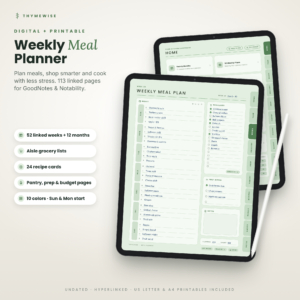
Thymewise Digital Meal Planner
Price: $1.75 | Best for: tablet users who plan weekly
An undated, hyperlinked 113-page planner for GoodNotes, Notability and other PDF note apps, with printable US Letter and A4 versions included. It has 52 weekly meal plans with breakfast, lunch, dinner and snack lines, aisle-sorted grocery lists, a meal prep planner, pantry and freezer inventories, 24 recipe cards and a grocery budget tracker. Use the notes box on each week to jot your carbs per meal.
Busy days, eating out and other curveballs
Real weeks are messy. A late meeting pushes dinner to 8.30. A friend’s birthday lands at a pizza place. You can still keep things roughly steady.
For a delayed meal, a planned 15-gram snack at the usual dinner time bridges the gap. When eating out, use the plate method by eye: ask for extra vegetables, keep the carb food to about a quarter of the plate, and box up the rest for tomorrow’s lunch. At a pizza place, two slices with a big side salad is a steadier choice than four slices alone. And if one meal runs high, simply get back to your usual pattern at the next one. One meal does not undo a week.
For a longer view, some people find it easier to plan a full month of rotating meals once and reuse it. Our guide to building a monthly meal plan shows how.
Common mistakes with a steady-carb plan
- Skipping breakfast, then eating double at lunch. It breaks the pattern the plan is built on.
- Forgetting drinks. Juice, sweet tea and regular soda carry carbs. Count them or swap them.
- Guessing portions of rice and pasta. A heaped serving can easily be double what you meant.
- Treating “sugar-free” as “carb-free”. Sugar-free cookies still contain flour. Check total carbohydrate.
- Not writing anything down. A simple log of meals and carbs is what makes patterns visible to you and your care team.
Frequently asked questions
How many carbs should a diabetic eat per meal?
There is no single number. Many people are given a range per meal by their doctor or dietitian based on their body, activity and medication. Ask your care team for yours and plan around it.
What is the plate method for diabetes?
Fill half a 9-inch plate with non-starchy vegetables, a quarter with protein and a quarter with carb foods like rice, bread or fruit. It keeps carbs fairly even without weighing anything.
Can I eat fruit on a steady-carb meal plan?
Yes. Count it as part of your carbs. A small apple, a small orange or about a cup of berries is roughly 15 grams.
Is it better to eat three meals or smaller meals more often?
Both can work. What matters most for a steady-carb plan is consistency in timing and amount. Agree the pattern that suits you with your care team.
Can the whole family eat the same steady-carb meals?
Yes. Plate-method meals are ordinary, balanced dinners. Everyone eats the same food, and people who need more energy, like active teenagers, simply take a bigger portion of the carb food.
Do I need to count carbs if I use the plate method?
Not always. The plate method alone keeps many people on track. Counting adds precision and is helpful if your care team has given you specific carb targets.
Your next step
This Sunday, write your carb target for each meal at the top of a page, pick three breakfasts and five dinners using the plate method, and note the carbs beside each one. Shop from that list and follow it for one week. For a planner that holds the plate method, carb log and sample menu together, start with Even Keel Kitchen.