The coloring aisle in a big-box store is a wall of bright covers, and they all promise hours of fun. Some deliver. Others are thin paper, three good pages and forty filler ones. Knowing which themes hold up, and how to check a book in sixty seconds, saves money and a disappointed kid in the car on the way home.
This guide is for parents, grandparents and adult colorists standing in that aisle (or about to be). You will learn the best coloring book themes to look for in a big-box store for each age, a quick in-store check for paper and page quality, the honest trade-offs of character books, and when a printable version of the same theme makes more sense.
Quick picks: printable versions of the themes that sell best
| Product | Best for | Price | Link |
|---|---|---|---|
| Roar to Z Dinosaur Coloring Book | Dinosaur fans ages 3 to 10 | $4.49 | View |
| Friendship Fun Coloring Book | Kids who love scenes with people and pets | $2.99 | View |
| Pretend Play Coloring Book | Little role-players | $2.99 | View |
| Indoor Activities Coloring Book Adventure | Rainy days and sick days | $2.99 | View |
The 60-second check before you buy
Many coloring books in big-box stores are not shrink-wrapped, so you can often flip through before you buy. Do it. One minute in the aisle tells you more than the cover ever will.
- Count the real coloring pages. “96 pages” can mean 48 pictures printed back to back, plus covers, ads for other books and blank sheets. Flip and count the actual pictures.
- Feel the paper. Thin, gray-ish paper means markers bleed through and crayons look pale. Thicker, whiter paper is worth a little more.
- Check for single-sided printing. If a picture is on both sides of the sheet, markers will ruin the back page. Single-sided books are better for marker fans.
- Look at the lines. Thick, dark outlines for young kids and beginners. Fine lines for older kids and detail lovers. Mismatched line weight is the top reason a book goes unused.
- Check the binding. Glued spines make it hard to color near the middle. Perforated pages or spiral binding let you pull out a page or lay the book flat.
If a book passes four of those five, it is probably a good buy. If it fails three, put it back no matter how lovely the cover is. For a wider look at what different stores tend to stock, our comparison of where to buy coloring books walks through the options.
Dinosaurs: the theme that never goes out of style
Ask a room of five-year-olds what they want to color and dinosaurs will win, or come very close. They are big, they are a bit scary in a safe way, and kids love learning the long names. A dinosaur book bought in March often still gets used in October.
The best dinosaur books in any store share a few things: big shapes for little hands, real dinosaur names (not just “dino #4”), and some facts. Kids at this age soak up facts. A child who can tell you that an Ankylosaurus had a club on its tail is a very proud child.
What to watch out for: books where every page is the same T. rex in a slightly different pose, and books with tiny jungle backgrounds that a four-year-old cannot handle.
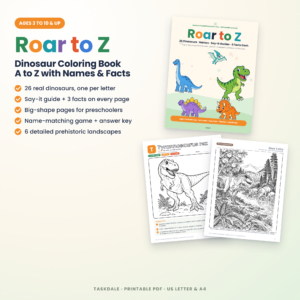
Roar to Z Dinosaur Coloring Book
Price: $4.49 | Best for: dinosaur fans ages 3 to 10
Roar to Z goes from Ankylosaurus to Zuniceratops, one real dinosaur or prehistoric reptile per letter, each with its name in outline letters, an easy say-it guide and three kid-friendly facts. It includes a big-shape section with extra-thick outlines for preschoolers, a name-matching game and six detailed prehistoric landscapes for older kids and adults. It prints on US Letter or A4. Start with the letter of your child’s first name.
Vehicles and animals: the safe bets
If you are buying for a child you do not know well, a niece’s friend or a birthday party guest, vehicles and animals are the two safest themes on any shelf. Most kids between 2 and 7 like one or both. Diggers, fire engines, tractors and trains. Puppies, farm animals, sea creatures and zoo animals.
For toddlers, look for one big vehicle or animal per page and almost no background. For kids around 6 and up, scenes with a road, a farmyard or an ocean full of fish give more to do. Books that mix the two (a farm with a tractor and cows, a harbor with boats and seagulls) cover both camps in one purchase.
One thing to check: some animal books lean heavily on realistic fur and feather detail, which looks beautiful but takes an adult’s patience. Turn to a page in the middle and imagine a six-year-old holding a crayon over it. If your heart sinks, keep looking.
Friends, pets and everyday life
Not every child wants roars and teeth. Plenty of kids, especially between 4 and 8, are happiest coloring scenes that look like their own lives: a picnic, a swing, a sleepy puppy, two friends under an umbrella. These books are less flashy on the shelf, so they are easy to walk past. They often get colored more than the bright ones.
Look for scenes with one clear story per page and a mix of big and small shapes. Big shapes let a younger sibling join in. Small details like a patterned dress or a flower border keep an older child busy.
A short kind message on each page is a nice bonus. Parents find it opens easy conversations about sharing and helping without turning coloring into a lesson.
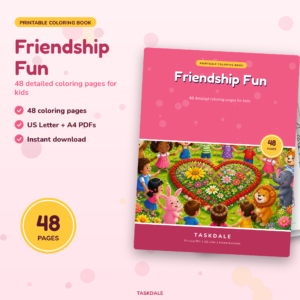
Friendship Fun Coloring Book
Price: $2.99 | Best for: kids aged 4 to 9
This printable has 48 scenes of friends playing and helping each other, such as Sunshine Hand-Hold, Picnic Sharing, Treehouse Helpers and Snowy Mitten Walk, each with a short kind line at the top. Big shapes suit younger kids while small details keep older ones going. It comes as US Letter and A4 PDFs plus a printing guide. Print the picnic page first and color one alongside your child.
Pretend play and grown-up jobs
Doctor, chef, firefighter, pilot, shopkeeper. Kids spend hours playing these roles, so coloring them is a natural next step. In a big-box aisle, job and role-play books are often mixed in with character titles, so you may have to look a little harder.
The best ones put a lot of props in each scene: tools, shelves, uniforms, animals. More props means more to color and more to talk about. “What’s the vet giving the puppy?” “Who ordered that ice cream?” A single page can turn into ten minutes of story.
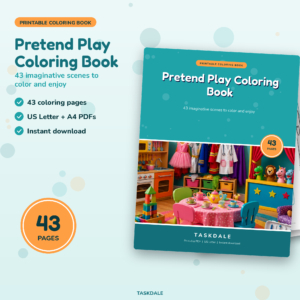
Pretend Play Coloring Book
Price: $2.99 | Best for: kids who love dress-up
This printable has 43 detailed scenes built around jobs and adventures: Toy Kitchen Chef, Doctor Visit, Firefighter Rescue, Supermarket Shopper, Pirate Ship Captain, Airport Pilot and Zoo Keeper among them. Each page holds one large framed picture full of props to color. It comes in US Letter and A4 sizes. Print the job your child plays most often and add a small matching prop.
A tip for grandparents: role-play pages are perfect for a visit. Ask the child to “be” the character while they color. Five minutes in, you will be ordering an imaginary lunch from a very serious chef.
Rainy-day and activity books
Activity books mix coloring with mazes, dot-to-dots, word searches and puzzles. In big-box stores they often sit next to sticker books and are aimed at travel or rainy days. They are handy, but quality swings widely. Some are great. Others are mostly puzzles with a few tiny pictures to color.
If coloring is the main goal, look for a book where most pages are large scenes, with puzzles as extras. And pick themes that match the day: indoor scenes for indoor days.
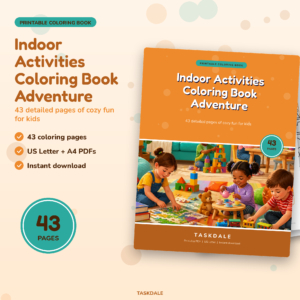
Indoor Activities Coloring Book Adventure
Price: $2.99 | Best for: rainy days and sick days
This book has 43 detailed scenes of things kids do at home: a cozy playroom, a reading nook, puzzle time, board game night, a castle blanket fort, an indoor picnic, a puppet show and a window garden. Large shapes suit younger kids and small details keep older ones busy. It prints on US Letter or A4. After coloring the blanket fort page, build a real one together.
There is a nice side effect here. A child who colors a board game night page often asks to play one afterward. The coloring becomes a doorway to the next activity, and the rainy afternoon fills itself.
Themes for adults in the big-box aisle
Adult coloring books in big-box stores tend to cluster around a few themes. Some hold up much better than others.
- Mandalas and patterns. Always on the shelf. Great for calm, repetitive coloring. Check the detail level: some are so dense they look like lace.
- Florals and gardens. Popular and pretty. Bold-line versions suit beginners best.
- Cozy and cottage scenes. Cafes, reading nooks, kitchens, cats. These have become very popular because they can be finished in one sitting.
- Animals. Cats, dogs, birds, sea life. A safe gift for almost anyone.
- Color by number. A good choice for people who freeze when choosing colors.
- Humor books. Funny phrases surrounded by patterns. Fun as a gag gift, though the novelty can wear off after a few pages.
A quick test for adult books: open to any page and ask yourself whether you could finish it in one evening. If the answer is yes for most pages, the book will get used. If most pages look like a week’s work, it may end up as a nice-looking book on a shelf. Both kinds have their fans, but knowing which you are before you buy is a small relief later.
For grown-ups, paper matters even more, because adults often use markers and gel pens. Single-sided pages and thicker paper are worth paying a bit extra for. If you want a ranked list to compare against what you see on the shelf, our guide to the best coloring books for adults is a good reference.
Character books: the honest trade-off
A big part of any big-box coloring aisle is books featuring characters from popular films, TV shows and toys. Kids often head straight for them, and that is fine. Here is what to weigh before you buy:
- The pro: instant excitement. A child who loves a particular show will happily color its characters.
- The con: many of these books use thin paper, print on both sides, and repeat similar poses. The excitement can fade by page ten.
- The age gap: character books are often drawn for one age, but bought for another. Check the line weight, not just the character.
Older kids, around 10 and up, sometimes outgrow character books faster than parents expect. They may prefer something that looks more grown-up, like patterns, animals in realistic style or detailed cityscapes. Asking them is the simplest way to avoid buying a book they feel embarrassed to color in front of friends.
A good middle ground: let the child choose one character book, and add one book with a theme they love (dinosaurs, animals, vehicles) drawn with original art. Between the two, there is always something to color.
When a printable beats the shelf, and when it does not
Printable coloring books cover many of the same themes, with a few real advantages. You choose your own paper, so markers do not bleed. You can reprint a favorite page as often as you want for personal use. You get the book in minutes, with no trip to the store, and in both US Letter and A4.
The shelf still wins in a few cases:
- you do not have a printer, or ink is running low,
- you want a wrapped, ready-made gift for a party in an hour,
- the child really wants a “proper” book with a shiny cover to hold.
Cost can go either way. A printable is often cheaper than a store book, but printing 40 pages on good paper uses ink and paper of its own. Most people print a few favorite pages at a time, which keeps that cost small.
Many families use both. A store-bought book for the bag and car trips. A printable for home, where a favorite page can be printed again when the first copy is covered in purple.
Frequently asked questions
What coloring book themes are most popular for kids?
Dinosaurs, animals, vehicles, friends and pets, and pretend-play jobs are reliable favorites. Pick the one your child talks about most.
How can I tell if a coloring book has good paper in the store?
Flip through and feel it. Thicker, whiter paper and single-sided pages handle markers better. Thin, gray paper suits crayons only.
Are coloring books with characters worth it?
They are exciting for fans, but check paper quality and line weight first. Pair one with a book in a theme the child loves for longer use.
What coloring book theme is best for adult beginners?
Bold-line cozy scenes, simple florals or color by number. Avoid very dense mandalas until you know you enjoy fine detail.
Is a printable coloring book better than a store-bought one?
It depends. Printables let you choose paper and reprint pages. Store books are better when you have no printer or need a wrapped gift today.
Your next step
Before your next store trip, ask the child (or yourself) one question: “What would you color all day if you could?” Write the answer down and take the 60-second check list with you. If the answer is dinosaurs, you can skip the aisle entirely and print the first page of Roar to Z tonight.