Best Emotional Regulation Tools to Print and Use Today
The best emotional regulation resource depends on who needs the help. Colour My Calm and FeelBright Kids suit younger children, Tender Ground suits parents, Calmabet and Unknot suit adults, and The Calm Atlas suits counsellors. Every one is a printable or fillable download, so you can start the same day.
Emotional regulation can feel like a vague goal, and a search for it brings up everything from toddler posters to 373-page clinical libraries. This guide sorts them by who they are written for, so you can pick one with confidence rather than guess.
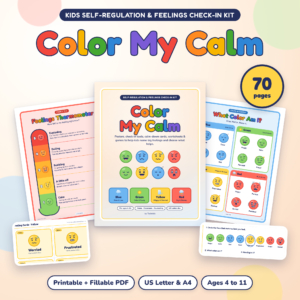 Color My Calm: Feelings Check-In & Self-Regulation Kit for Kids | Printable Calm Down Corner Posters, Cards & Worksheets
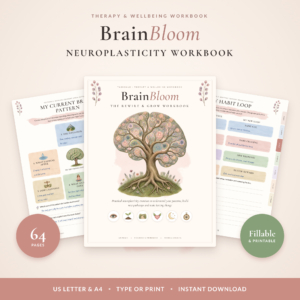 BrainBloom Neuroplasticity Workbook: 64-Page Fillable Therapy Worksheets for Habits, Thoughts and Emotions
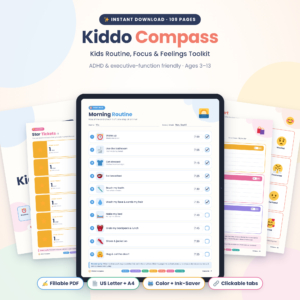 Kiddo Compass: Kids Routine Chart & ADHD Executive Function Toolkit (109-Page Printable & Fillable)
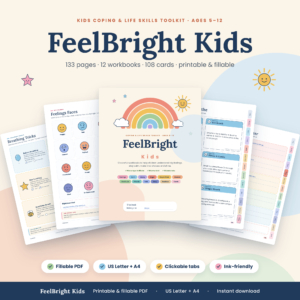 FeelBright Kids Coping Skills Toolkit | Printable & Fillable Kids Therapy Worksheets for Feelings, Anger, Anxiety & Calm | Ages 5-12, US Letter & A4
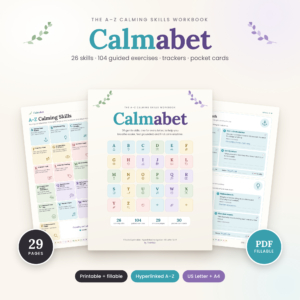 Calmabet – A–Z Calming Skills Workbook | Fillable Anxiety Relief & Coping Skills Printable PDF with Trackers, Calm Plan & Pocket Cards (US Letter + A4)
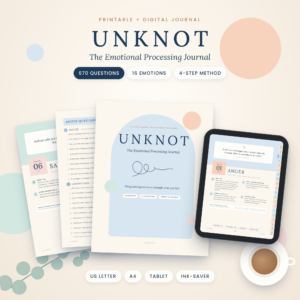 Emotional Processing Journal, Printable & Digital Feelings Journal with 670 Guided Questions, Feelings Wheel, Worksheets & Mood Tracker | Unknot
Key facts at a glance
- Emotional regulation is the ability to notice a feeling, name it and respond in a way that helps rather than harms.
- Every product here is a digital download in US Letter and A4, so it prints on a standard home printer.
- Three are aimed at children or families, two at adults, one at therapists and teachers, and one at adults who want a combined habit and thinking workbook.
- Resources that include a tracker or a personal plan give you something to look back on, which a poster alone does not.
- A bigger bundle is not automatically better: a 29-page workbook you finish beats a 373-page library you never open.
Table of Contents
- What should you look for in an emotional regulation resource?
- How do the products compare?
- Which emotional regulation resource suits which person?
- How do you start using a printable kit?
- What mistakes should you avoid?
- What affects the price?
- How do you make the final choice?
- Common questions
Browse all 8 options below once you know which group you belong to.
What should you look for in an emotional regulation resource?
A good emotional regulation resource matches the age and role of the person using it, teaches a small number of skills clearly, and gives a way to track what works. Four factors do most of the sorting.
Who will actually use it
Emotional regulation tools are written for a specific reader. A feelings thermometer works for a six-year-old, but an adult will find it patronising. A 670-question journal suits an adult, but a child will stall on the first page.
Decide first whether the user is a child, a parent, an adult for themselves, or a professional working with clients. This single choice removes more than half the options.
Whether it teaches, tracks or does both
Some resources mainly help you name a feeling, such as posters, feelings wheels and check-in cards. Others build skills over weeks, with exercises and trackers.
Colour My Calm leans towards naming and choosing a tool in the moment. BrainBloom and Calmabet lean towards practise over time, with 21-day, 66-day and 30-day trackers respectively. If you want change that lasts, look for a tracker or a personal plan, not only visuals.
Whether you want to print, type or both
All seven are fillable or printable. Kiddo Compass has a fillable PDF with 2,300+ fields and a colour or ink-saver print option. Unknot offers hyperlinked tablet editions. The Calm Atlas works in GoodNotes and Notability.
If you print rarely, choose something that works on screen. If you have a child who likes cutting and sticking, choose a kit with cut-out cards.
How much content you will really use
Depth has a cost in attention. Calmabet is 29 hyperlinked pages with 26 skills, one for each letter. The Calm Atlas is 373 pages in 27 modules. Both are good, but they suit different appetites.
Pick the size you can imagine finishing. You can always add a larger resource later.
How do the products compare?
The table below compares the seven resources on audience, scope and main strength, using only the details supplied for each.
| Product | Best for | Scope | Main strength |
|---|---|---|---|
| Colour My Calm: Feelings Check-In & Self-Regulation Kit for Kids | Printable Calm Down Corner Posters, Cards & Worksheets | Young children at home or in class | 70 pages, 17 posters, 120+ cards | Calm-down corner visuals and a personal Calm Plan |
| BrainBloom Neuroplasticity Workbook: 64-Page Fillable Therapy Worksheets for Habits, Thoughts and Emotions | Adults building new habits and responses | 64 pages, 40+ exercises | 21- and 66-day trackers, plus an 8-session guide for professionals |
| Kiddo Compass: Kids Routine Chart & ADHD Executive Function Toolkit (109-Page Printable & Fillable) | Children who need routines and feelings tools together | 109 pages, 80 visual schedule cards | 12 breathing cards and 27 calm-down cards inside a routine system |
| FeelBright Kids Coping Skills Toolkit | Printable & Fillable Kids Therapy Worksheets for Feelings, Anger, Anxiety & Calm | Ages 5-12, US Letter & A4 | Children aged 5 to 12 | 12 workbooks, 133 pages | 72 coping cards and a 30-day plan |
| Calmabet – A–Z Calming Skills Workbook | Fillable Anxiety Relief & Coping Skills Printable PDF with Trackers, Calm Plan & Pocket Cards (US Letter + A4) | Adults wanting short, quick-reference skills | 29 pages, 26 skills | 30 pocket calm cards, before and after ratings |
| Emotional Processing Journal, Printable & Digital Feelings Journal with 670 Guided Questions, Feelings Wheel, Worksheets & Mood Tracker | Unknot | Adults working through specific emotions | 670 questions, 16 emotions | A 4-step method: Notice, Understand, Release, Grow |
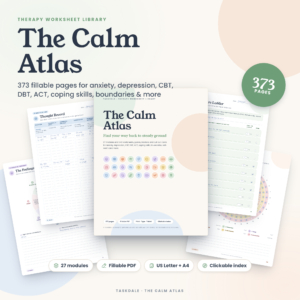
| The Calm Atlas Therapy Worksheets Bundle | 373-Page Fillable PDF for CBT, DBT, ACT, Anxiety, Depression & Coping Skills | Counsellor & Therapist Resources | Counsellors and therapists | 373 pages, 27 modules | 54 individual module PDFs and session notes |
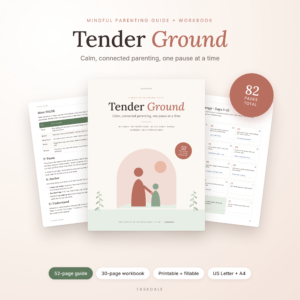 Tender Ground: Mindful Parenting Guide and Workbook, Gentle Parenting Printable and Fillable PDF with Calm Scripts, Trackers and 30-Day Challenge | Parents of children aged 1 to 18 | 52-page guide, 30-page workbook | The five-step PAUSE method and 40 "say this instead" scripts |
Which emotional regulation resource suits which person?
Each resource suits a different reader, and the differences are larger than the titles suggest.
Colour My Calm suits a family or classroom that wants a visible calm-down corner. The feelings thermometer and feelings wheel poster let a child point rather than explain. The 4 Feelings Bingo boards make the vocabulary feel like play.
FeelBright Kids suits a child aged 5 to 12 who needs more than naming. Its 12 workbooks cover anger, worry, impulse control, sleep and friendship, and every workbook carries grown-up tips. It is the broader, more skills-led choice for this age group.
Kiddo Compass suits a child whose difficult moments cluster around transitions, such as mornings, homework and bedtime. The feelings metre and calm-down cards sit beside picture schedules, chore charts and star tickets. It is aimed at ADHD executive function, so it works best when routine itself is part of the problem.
Tender Ground suits the adult who loses their own calm first. The PAUSE method and the 40 scripts give you words for the moment you would otherwise snap. A child's regulation often follows a parent's, which makes this a sensible starting point.
Calmabet suits an adult who wants short, practical anxiety and stress relief. With 26 skills, each with four exercises, you can open it at any letter. The pocket cards are made for carrying.
Unknot suits an adult who wants to understand a particular feeling, such as grief, loneliness or rejection, rather than just soothe it. The 670 questions are the draw, and the body map and 36 ways to cope help when words run out.
BrainBloom suits someone who wants to see how habits and thoughts form before changing them. It is calm and illustrated, and the 8-session guide makes it usable by a teacher or counsellor.
The Calm Atlas suits professionals. With CBT, DBT and ACT modules plus session notes and progress tools, it is a working library. It is rarely the right first purchase for a parent or individual.
How do you start using a printable kit?
A printable emotional regulation kit works best when you introduce one piece at a time and use it when everyone is calm. Follow these steps.
- Read the user guide first. Most of these downloads include one, and it tells you the intended order.
- Print or open only the first few pages, such as a feelings wheel or check-in.
- Practise during a calm moment for a week, so the tool is familiar before it is needed.
- Add one tracker, and record only what happened and what helped.
- Review after 30 days and keep what worked. Drop the rest without guilt.
For children, place posters at eye level and laminate or sleeve the cards if they will be handled daily.
What mistakes should you avoid?
The most common mistake is choosing for the wrong reader. A parent buys a child kit when the parent is the one struggling, or an adult buys a therapist bundle and feels overwhelmed.
Other pitfalls:
- Printing everything at once, then not using any of it.
- Introducing a calm-down tool in the middle of a meltdown, when nobody can learn.
- Treating a workbook as a replacement for professional support when difficulties are severe or persistent.
- Skipping the tracker, then having no evidence of what helps.
- Expecting one tool to suit every feeling. Anger and worry often need different responses.
What affects the price?
Price in this category mostly follows size, audience and extras. A 373-page professional bundle with 54 individual module PDFs costs more than a short workbook of 29 pages. Kits with many cards, posters and editions, such as ink-saver and tablet versions, sit higher than single-format workbooks.
Professional licensing features and therapist guides can also raise the cost. You can check live prices on the product cards. As a rule, buy the smallest resource that covers your need.
How do you make the final choice?
Choose by reader first, then by size. If it is for a child under 12, pick Colour My Calm for visuals or FeelBright Kids for skills. If routines are the trigger, pick Kiddo Compass.
If you are the parent, start with Tender Ground. If it is for you, pick Calmabet for quick relief or Unknot for deeper processing. If you work with clients, pick The Calm Atlas.
Common questions
Are printable emotional regulation worksheets as good as a book?
They can be, because the value lies in the exercises and in using them regularly. A printable lets you reprint pages, share them within a household and fill them in on screen. A bound book suits people who dislike screens or printers.
What age can children start using these tools?
It varies by product. FeelBright Kids is written for ages 5 to 12, and Tender Ground is for parents of children aged 1 to 18. Younger children need an adult beside them to read cards and set up the calm-down corner.
Can a teacher or counsellor use these with a group?
BrainBloom includes an 8-session guide for therapists, counsellors and teachers, and The Calm Atlas is built for professional use. Check each product page for the licence terms before using materials with a class or clients.
How long before a calm-down tool starts to work?
The products here use 21-day, 30-day and 66-day tracking periods, which suggests weeks rather than days. Expect to practise a tool repeatedly while calm before it helps in a hard moment.
Do these replace therapy?
No. They are self-help and teaching materials. If feelings are intense, last for weeks or interfere with daily life, speak to your GP or a qualified professional, and use a workbook alongside that support.