The 3 pm slump usually starts at 7 am. A coffee on the way out the door, a muffin at 10, a rushed sandwich at 1:30, and by mid-afternoon you are staring at the screen and reaching for the vending machine. The fix is rarely one superfood. It is a plan that spaces your food out and puts something filling on the plate each time.
This guide is for people who feel flat by the afternoon and want a healthy food plan for better energy through the day without counting every gram. You will get a simple shape for the day, a full sample day with times, swap ideas for busy mornings, a way to notice what actually works for you, and three printable tools on Taskdale that make the habit easy to keep.
Nothing here is a diet. It is a rhythm. And once it clicks, the afternoon feels very different.
Quick picks: printables for planning steady meals
| Product | Best for | Price | Link |
|---|---|---|---|
| Fresh Week Meal Planner Printable Bundle | Planning meals and tracking water, protein and energy | $2.99 | View |
| Plate & Pantry Weekly Meal Planner Printable | A calm weekly menu with a grocery list, print or type | $1.69 | View |
| Fudge & Flex High Protein Dessert Recipes Book | Sweet snacks with more protein for the afternoon | $2.49 | View |
Why your energy drops (and what food can and cannot do)
Food is one piece of the energy puzzle. Sleep, stress, how much you move and how much water you drink all play their part. A plan cannot fix a four-hour night. What it can do is stop the gaps and the crashes that come from eating at random.
Most people who feel tired by mid-afternoon share a few patterns:
- Long gaps. Breakfast at 7, then nothing proper until 1:30. That is six and a half hours on a coffee.
- Light, quick meals. A plain bagel or a pastry fills you for an hour, then you are hungry again.
- A big lunch eaten fast. A heavy plate wolfed at a desk often leads to a sleepy hour after.
- Too little water. Plenty of people mistake thirst for tiredness or hunger.
So the plan aims at those four things. Regular meals. Something with protein and fiber each time. A sensible lunch. Water you can see.
The simple shape of an energy-friendly day
Think of the day as four or five eating points, three to four hours apart, rather than three big meals with long gaps. A common pattern looks like this:
- Breakfast within an hour or two of waking.
- A mid-morning snack if lunch is more than four hours away.
- Lunch that is filling but not huge.
- An afternoon snack around 3 or 4, planned on purpose.
- Dinner early enough that you are not eating right before bed.
What goes on the plate
Each meal does better with three parts: some protein (eggs, yogurt, beans, chicken, fish, tofu, cheese), some fiber (vegetables, fruit, oats, whole grains, lentils) and a little fat (nuts, olive oil, avocado, seeds). You do not need to measure. Half the plate vegetables, a palm of protein and a fist of grains or potatoes is a fine rule of thumb.
That’s it. No banned foods. A slice of birthday cake at the office party does not wreck anything. It just works better after lunch than instead of lunch.
A sample day with times
Here is one realistic weekday for someone working 9 to 5 with a 30-minute commute. Shift the times to fit your own day.
| Time | What you eat | Why it helps |
|---|---|---|
| 7:00 | Oats made with milk, a spoon of peanut butter, sliced banana | Fiber, protein and fat to carry you past 10 |
| 10:30 | Apple and a small handful of almonds | Bridges the gap to lunch |
| 12:45 | Chicken, chickpea and veg wrap with a side of carrot sticks | Filling without a heavy, sleepy feeling |
| 3:30 | Greek yogurt with berries, or a protein snack bar you made on Sunday | Heads off the vending machine |
| 6:30 | Salmon or tofu, roasted potatoes, green beans | Balanced plate, early enough to settle before bed |
Water fits around all of it: a glass on waking, a bottle on the desk that you refill at lunch, a glass with dinner.
The 3:30 snack is the one most people skip, and it is often the one that makes the biggest difference to how the late afternoon feels. Plan it like a meal. Pack it the night before.
Plan the week on paper so the day takes care of itself
Energy plans fall apart on busy mornings, not on paper. If Tuesday’s breakfast and snacks are already decided and bought, you eat them. If they are not, you grab whatever is nearest.
A weekly planner with rows for breakfast, lunch, dinner and snacks makes the gaps obvious. Seeing an empty snack box on Wednesday tells you to buy fruit or yogurt for Wednesday. For a first-timer, our step-by-step guide on how to meal plan for the week walks through the first plan in detail.
What helps even more is noticing how you feel. Did the oat breakfast carry you further than toast? Did the big pasta lunch make you sleepy? A simple tracker where you jot meals beside a quick energy score shows you the pattern after a week or two.
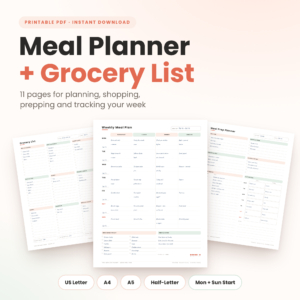
Fresh Week Meal Planner Printable Bundle
Price: $2.99 | Best for: people tracking meals, water and energy
Fresh Week holds 11 printable pages in US Letter, A4, A5 and Half Letter, each with Monday and Sunday start versions. The weekly plan has breakfast, lunch, dinner and snack rows for all seven days, and the Food and Water Tracker logs meals, water, veggie, fruit and protein servings, mood, energy and movement. There is also a grocery list, a 72-item master shopping checklist and a meal prep planner. Print one weekly plan and one tracker page to start, and stick both on the fridge.
Busy mornings, desk lunches and late shifts
Real life does not run on a perfect timetable. Here is how to keep the rhythm when your day is messy.
When you have five minutes for breakfast
Overnight oats made the night before, a boiled egg and a piece of fruit, or yogurt with granola in a jar. Any of these beats a pastry from the coffee shop, and they are cheaper.
When lunch is at your desk
Pack leftovers from dinner. A portion of last night’s chili with rice or a grain bowl with roast vegetables travels well. Step away from the screen for 15 minutes if you can. You will eat slower and feel better for it.
When you work late or on shifts
Shift workers often eat on a different clock. Keep the same idea: eat every three to four hours while you are awake, carry a planned snack, and keep the meal before sleep lighter. A nurse on a 7 pm to 7 am shift might have a full meal at 6 pm, a snack at 11 pm, a light meal at 2 am and a small breakfast before bed.
When you eat out or grab food on the go
Lunch from a cafe or a food court can still fit the plan. Look for the option with a clear protein and some vegetables: a burrito bowl with beans and salsa, a soup with a bread roll and a piece of fruit, a sushi box with edamame on the side. Skip the giant pastry as the whole meal. If the only choice is a sandwich, add a yogurt or an apple from the fridge by the till so lunch has a bit more staying power. Then keep your planned 3:30 snack exactly as it was. One shop-bought lunch does not need to change the rest of the day.
When you train in the morning
A banana or toast before an early workout and a proper breakfast after works well for many people. Plan the post-workout breakfast so it is ready, not improvised.
Snacks that keep you going (sweet ones included)
A planned snack is the backbone of afternoon energy. The trick is to pair something quick with something lasting.
- Apple slices and peanut butter
- Hummus with cucumber and pepper strips
- A boiled egg and a handful of grapes
- Cottage cheese with pineapple
- Trail mix you portion into small bags on Sunday
- Cheese and whole grain crackers
And yes, sweet snacks belong on the list too. Telling yourself you will never eat a brownie at 4 pm usually ends with eating three. A dessert made with Greek yogurt, cottage cheese or protein powder fills you more than a candy bar and still feels like a treat.

Fudge & Flex High Protein Dessert Recipes Book
Price: $2.49 | Best for: sweet tooths who want steadier snacks
Fudge and Flex is a 24-recipe high protein dessert book with brownies, cookies, cheesecake cups and frozen fudge pops built on protein powder, Greek yogurt or cottage cheese. Every recipe lists calories, protein, carbs and fat per serving, and 17 of the 24 are no-bake or frozen. It comes as a Digital Edition and an ink-saver Print Edition, both in US Letter and A4. Make one batch on Sunday and portion it into the week’s afternoon snack boxes.
Mistakes that undo a good food plan
These come up again and again, and every one of them is easy to fix.
- Skipping breakfast, then overeating at lunch. You arrive at 1 pm ravenous, eat too fast and feel heavy by 2:30.
- Relying on coffee to bridge gaps. Coffee is fine. Coffee instead of food is where the crash comes from.
- Salad with no protein. A bowl of leaves looks virtuous and leaves you hungry by 3. Add beans, eggs, chicken or cheese.
- Not planning the afternoon snack. If you have not packed one, the office biscuit tin will choose for you.
- Changing everything at once. Fix breakfast first. Then the snack. Then lunch. One change a week sticks better than a total overhaul.
- Forgetting water. Keep a bottle in sight. Out of sight really is out of mind.
A weekly routine to keep it going
A little prep on Sunday makes every weekday easier. Here is a 60-minute routine that covers most of the week:
- Plan (10 minutes). Fill in breakfasts, lunches, dinners and the two snacks each day. Repeat what worked last week.
- List (5 minutes). Write the grocery list from the plan.
- Shop (30 minutes). One trip, list in hand.
- Prep (15 minutes). Boil eggs, wash fruit, portion nuts, make a jar of overnight oats, cook a pot of grains for lunches.
If you want the prep hour laid out in more detail, our guide to meal prep for beginners covers a first Sunday hour by hour.
A clean, simple weekly page with the grocery list beside it keeps the plan in one spot. Typing it on screen works if you would rather not print every week.
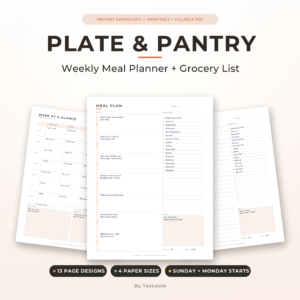
Plate & Pantry Weekly Meal Planner Printable
Price: $1.69 | Best for: anyone wanting a tidy weekly menu
Plate and Pantry includes 13 planning pages in US Letter, A4, A5 and Half Letter, with Sunday and Monday start versions and fillable PDFs in US Letter and A4 for typing. You get five weekly layouts, a grocery list by aisle, a quick grocery list, pantry and freezer inventories, a recipe page, a meal prep plan, a grocery budget log and a favorite meals page. Start with the meal slots layout so every snack has its own box.
Who this approach suits, and who should get extra help
This rhythm works well for office workers, parents running between school runs and work, students with long lecture days and anyone whose afternoons feel heavier than they should. It is a practical way to organize the food you already like.
It is not a fix for ongoing exhaustion. If you feel tired all the time no matter how you eat or sleep, that is worth a conversation with your doctor rather than another tweak to your snacks. Food can help a lot with the ordinary afternoon dip. It cannot replace a checkup when something feels wrong.
Keeping a short food journal for a couple of weeks gives you useful notes to take along either way. Our post on what a food journal template should include shows which columns are worth having.
Frequently asked questions
What should I eat to avoid the afternoon slump?
A lunch with protein, vegetables and some grains, eaten slowly, followed by a planned snack around 3 or 4 pm. Yogurt with fruit, a boiled egg with grapes, or hummus with vegetables all work well.
How often should I eat for steady energy?
Every three to four hours while you are awake suits most people. That usually means three meals and one or two snacks. The exact times matter less than avoiding six-hour gaps.
Is a big breakfast better for energy?
Not necessarily big, but filling. Oats with nuts and fruit, eggs on whole grain toast or yogurt with granola carries most people further than a pastry or a coffee alone.
Do I need to count calories on an energy food plan?
No. Focus on regular meals with protein, fiber and a little fat at each one. Counting is optional. Noticing how you feel after each meal is often more useful.
Can I still have dessert?
Yes. A sweet snack after a proper meal or as a planned afternoon treat fits fine. Desserts made with Greek yogurt or cottage cheese are more filling than candy.
Your next step
Pick one meal to fix this week. For most people that is breakfast or the afternoon snack. Write it into Monday to Friday, buy what you need, and jot an energy score from 1 to 5 each afternoon. To track meals, water and energy on one page, print the Fresh Week Meal Planner Printable Bundle and start with Monday.