

A self-employed tax spreadsheet bundle that does the hard part before April
Nobody becomes a freelancer because they love paperwork. But when you work for yourself, you’re also the bookkeeper, the payroll department and the person who has to explain to the tax office where every deduction came from. Most self-employed people only think about tax a few weeks before the deadline. That’s when the shoebox of receipts comes out, the bank statements get printed and a whole weekend disappears.
There’s a better way, and it isn’t expensive software. It’s logging as you go. The Self-Employed Tax Season Bundle gives you four spreadsheets that make that habit easy. By the time filing season arrives, your deductions are totalled, your home office claim is worked out and your document checklist is ticked off.
What’s inside
1. Rosy Returns Tax Deduction Tracker ($9.99 alone)
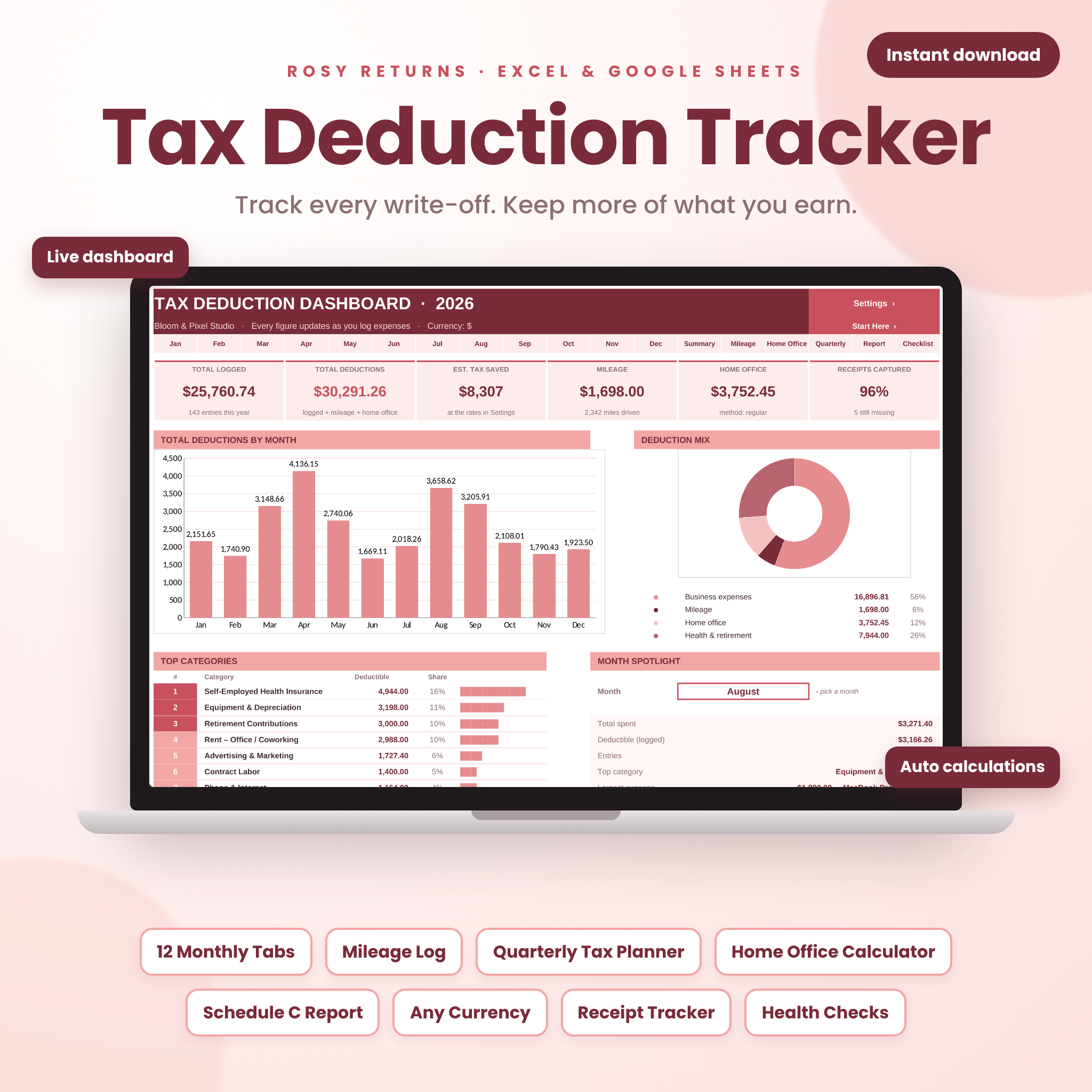
This is your everyday tool. Every time you spend money on the business, it goes into Rosy Returns: software, equipment, phone bills, training, travel, supplies. Each expense is tagged with a category that lines up with common Schedule C lines, so the year-end report practically writes itself.
The live dashboard shows total deductions by category and by month. There’s a mileage log for business driving, a quarterly estimated tax planner so you don’t get hit with one huge bill, and a home office calculator. It comes with a blank file, a sample file full of example entries and a user guide.
2. DeskWorth Home Office Deduction Calculator ($4.99)
If you work from home, the home office deduction can be worth a lot. There are two ways to claim it, and picking the wrong one can cost you. The simplified method is a flat rate per square foot. The actual expense method uses a share of your rent or mortgage interest, utilities, insurance and repairs.
DeskWorth calculates both and shows you which gives the bigger deduction. It includes a worksheet that follows Form 8829, handles depreciation for homeowners and tracks any amount you carry forward to next year. A clean dashboard sums it all up.
3. Slatefile Tax Prep Checklist ($8.75)
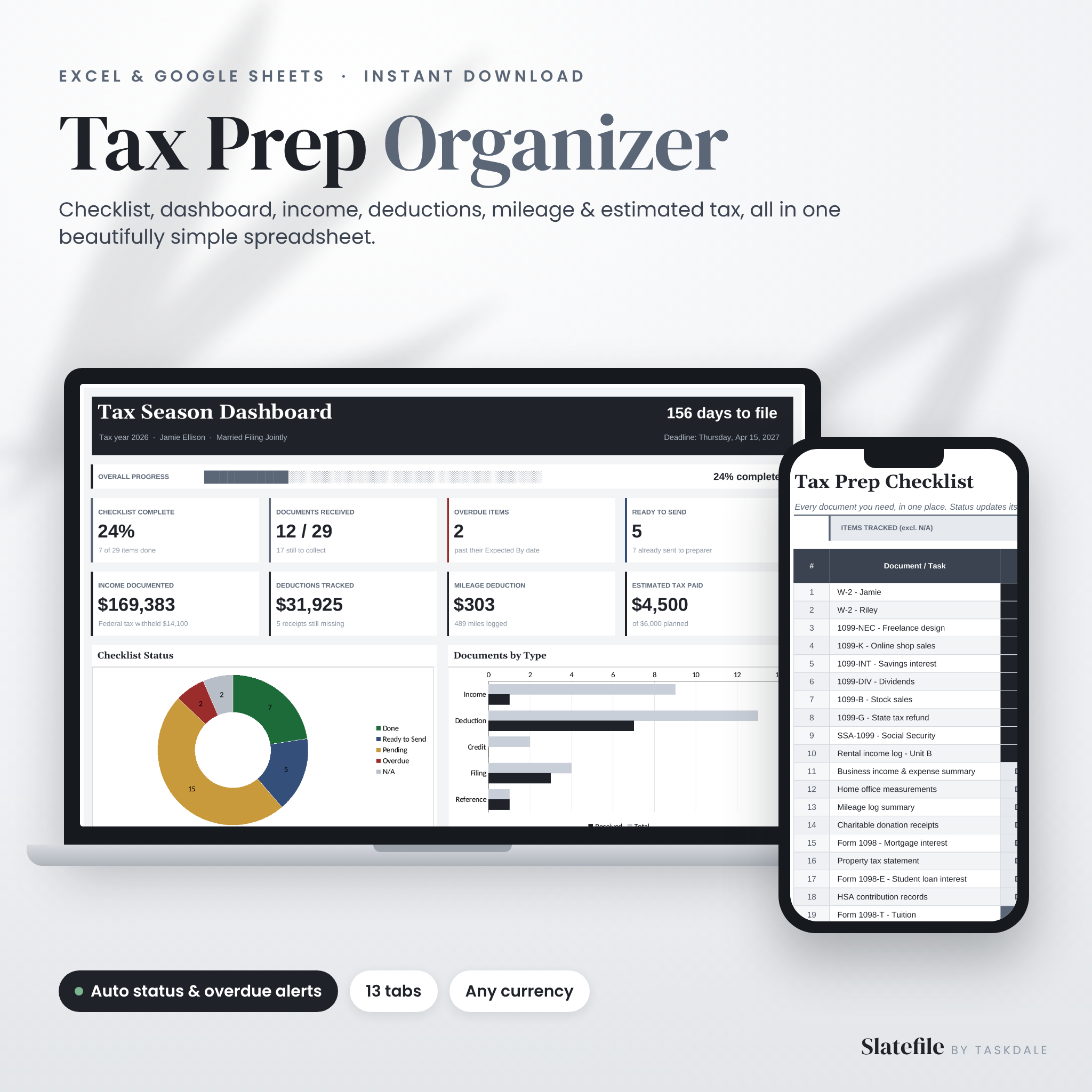
Half of tax stress is not knowing whether you’ve got everything. Slatefile is a tax organizer that lists the documents you’re likely to need, like 1099s, bank interest statements, retirement contributions and health insurance forms, and lets you tick each one off as it arrives. It also tracks deadlines and estimated tax payments and includes a mileage log.
Hand it to your accountant and they’ll thank you. Or use it to file yourself without missing anything. It comes with Google Sheets access links, a sample file and a guide in Word and PDF.
4. Claimbright Expense Report Template ($12.99)
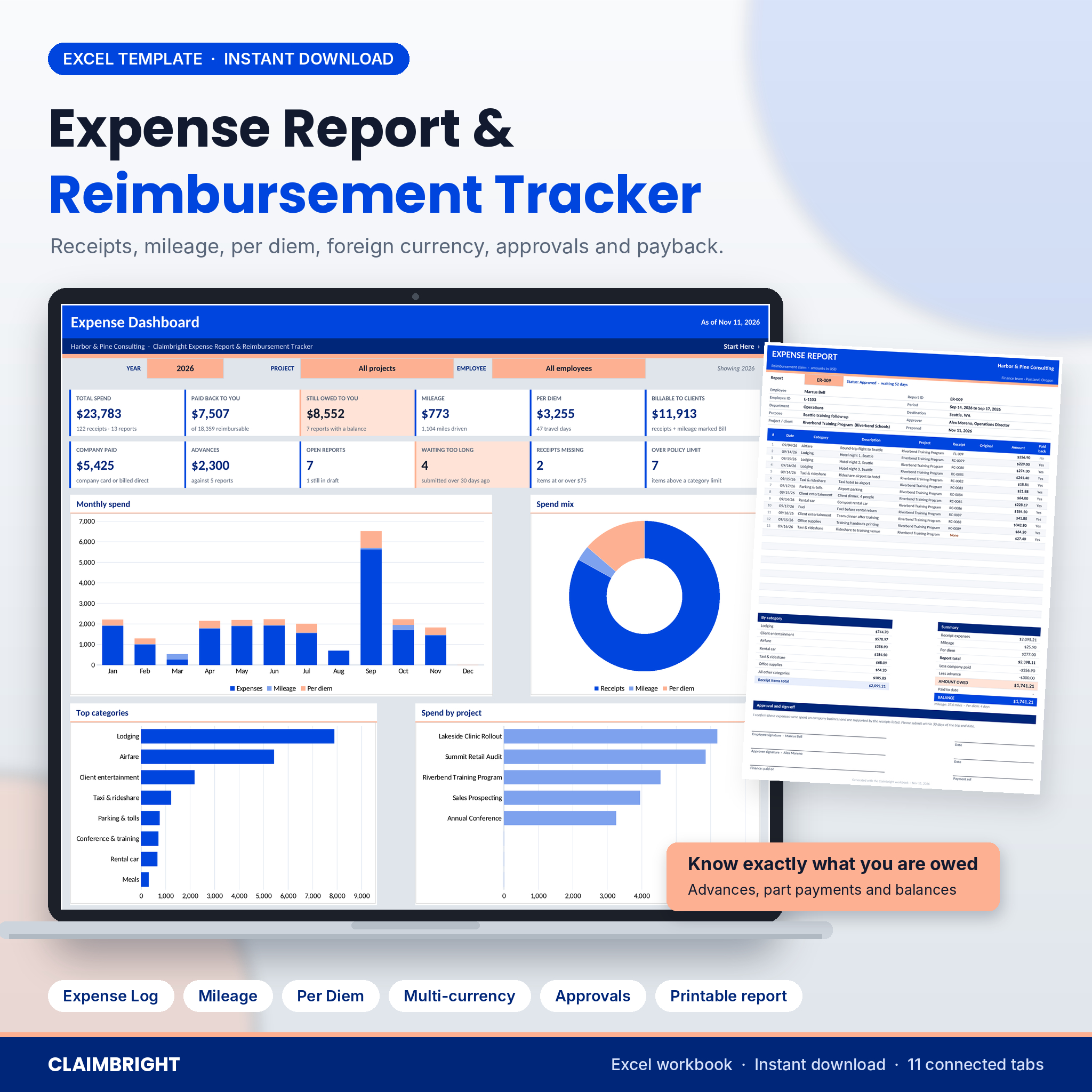
Some freelancers bill expenses back to clients. Some contractors get reimbursed by an agency. Either way, you need a clean expense report. Claimbright builds one from your entries, with mileage, per diem rates, multiple currencies and receipt references. The dashboard shows what’s been claimed, what’s been paid and what’s still outstanding, so you never forget to chase a reimbursement.
A simple tax-ready routine
- Start of year: Set up Rosy Returns and DeskWorth with your business details and home office measurements.
- Every week: Log expenses and business miles in Rosy Returns. Ten minutes, tops.
- Every quarter: Check the estimated tax planner and make your payment.
- As documents arrive: Tick them off in Slatefile.
- Filing time: Pull totals from Rosy Returns and DeskWorth, attach the Slatefile checklist and you’re done.
Who this is for
- Freelancers, contractors and consultants
- Etsy, Amazon and online sellers
- Rideshare and delivery drivers who need a mileage log
- Anyone with a side hustle on top of a day job
- Small business owners who file as sole proprietors
Formats and compatibility
- Excel (.xlsx) workbooks that open in Google Sheets
- Sample files with example data for most tools
- User guides in Word and PDF
This is a digital download. Nothing is shipped.
Frequently asked questions
Is this only for US taxes?
The categories and forms follow US terms like Schedule C and Form 8829. The expense tracking, mileage log and checklist still work well in other countries. You’d just rename a few categories.
Will this file my taxes for me?
No. These are organizing tools. They get your numbers ready for you or your tax professional.
Do I need accounting knowledge?
No. If you can type a number into a cell, you can use these. The guides explain each sheet.
Can I use it for more than one year?
Yes. Save a fresh copy each year.
These templates are for record keeping. They aren’t tax advice, so check your final figures with a qualified professional.
Why logging weekly beats a once-a-year scramble
Think about what a missed deduction costs. A $40 software subscription you forgot to claim might only be worth a few dollars in tax. But self-employed people often miss dozens of small items across a year: phone data, a share of internet, parking, postage, a course, a new keyboard. Added up, that can easily be several hundred dollars of deductions that never made it onto the return.
Memory is the problem. In March you can’t recall what you bought last June. A weekly habit solves it. Every receipt goes into Rosy Returns within days, while you still know what it was for. Every business trip goes into the mileage log the same week. By year end the totals are accurate, backed by dates, and easy to defend if anyone asks questions.
There’s a cash flow benefit too. The quarterly planner shows roughly what you owe as the year goes on, so you can set money aside each month instead of facing one painful bill.
The price
Separately, these four spreadsheets cost $36.72. The bundle is $27.49. You save $9.23, which is 25% off.
Reviews
There are no reviews yet.