Shopping pack sizes rarely match a recipe, so you need a plan for what’s left over. Excel’s CEILING.MATH function rounds up to the nearest whole pack.
Subtract the usable food you already have from what your recipes need, then round the shortfall up to the shopping pack sizes the shop sells. Before committing to one of the shopping pack sizes, give the surplus a meal, a freezer slot or a place in your pantry inventory.
Keep two quantities on your grocery insert: amount needed and amount to buy. If a curry needs another 175 g of spinach and the shop sells 200 g bags, write both figures. The first tells you what to do if that bag is out of stock. The second tells you what to pick up, and the 25 g difference tells you what needs a plan.
Convert Recipe Quantities Into Shopping Pack Sizes
Record the quantities for the meals you’ll actually cook. Scale each recipe to the number of diners before combining ingredients. If Monday’s rice bowls serve two and Wednesday’s curry serves three, enter the scaled quantities against each meal. Keep those meal names beside the figures so you can revise one dinner without rebuilding the whole list. If attendance varies across the week, scale recipe quantities for each day’s number of diners before choosing packs.
Put recipe amounts and shopping pack sizes on the same basis. Combine grams with grams and millilitres with millilitres, but also check what those units describe. A 400 g tin of chickpeas might contain 240 g once drained. Use the drained figure for a recipe that calls for drained chickpeas. Compare dry rice with dry rice, not with the weight of cooked rice. If a recipe needs three lemons for zest and juice, count whole lemons rather than buying a bag by weight and guessing how many it contains.
Subtract stock you can use for those meals. Weigh a part-used pot, or transfer the contents to a bowl on a tared scale. Count only the amount still suitable for the meal date and not reserved elsewhere. If you have 200 g of yoghurt but 120 g is set aside for breakfasts, your dinner allocation is 80 g. An opened pot that needs using on Monday can cover Monday’s sauce, but don’t also count it towards Friday’s marinade. For a longer list, combine shared ingredients and subtract pantry quantities in one pass.
Choose a pack or combination of shopping pack sizes that covers the shortfall. For one pack size, divide the shortfall by the usable quantity in each pack and round up to the next whole pack. If the shopping pack sizes are 200 g, a 550 g shortfall means three packs, giving you 600 g and leaving 50 g.
If shopping pack sizes vary, compare the options that cover the need. Mixing shopping pack sizes, one 500 g pack plus one 100 g pack also gives you 600 g. Two 300 g packs give the same total, but may let you keep the second pack sealed until the later meal. Record the number of packs as well as the total weight, so “600 g” doesn’t get mistaken for a single pack on the shelf.
Assign the remainder before you commit to the pack. Subtract the shortfall from the total usable amount you’ll buy. Give perishable extras a named destination and a date: “50 g yoghurt, Thursday dressing” is an instruction; “use later” isn’t. For a cupboard ingredient, “50 g back into oats jar” is enough. If there’s no realistic destination, look beyond the usual shopping pack sizes: a smaller pack, a loose item or a frozen alternative that lets you take out only what the recipe needs.
Treat leftover ingredients and leftover servings as separate entries. If 150 g of uncooked mince stays out of a recipe, it belongs on the ingredient list. If the cooked dish yields two spare servings, book those on the meal plan. That distinction helps you schedule leftover portions without assigning the same serving twice.
Print and Assemble Planner Inserts in Shopping Order
Set up three working pages: a menu and stock check, a shopping list and a remainder log. Keep the first two facing each other while you plan, with the log directly behind the shopping list. If the list comes out of the binder for the shop, put the shortfall beside each pack choice so you don’t need the menu page to make a substitution.
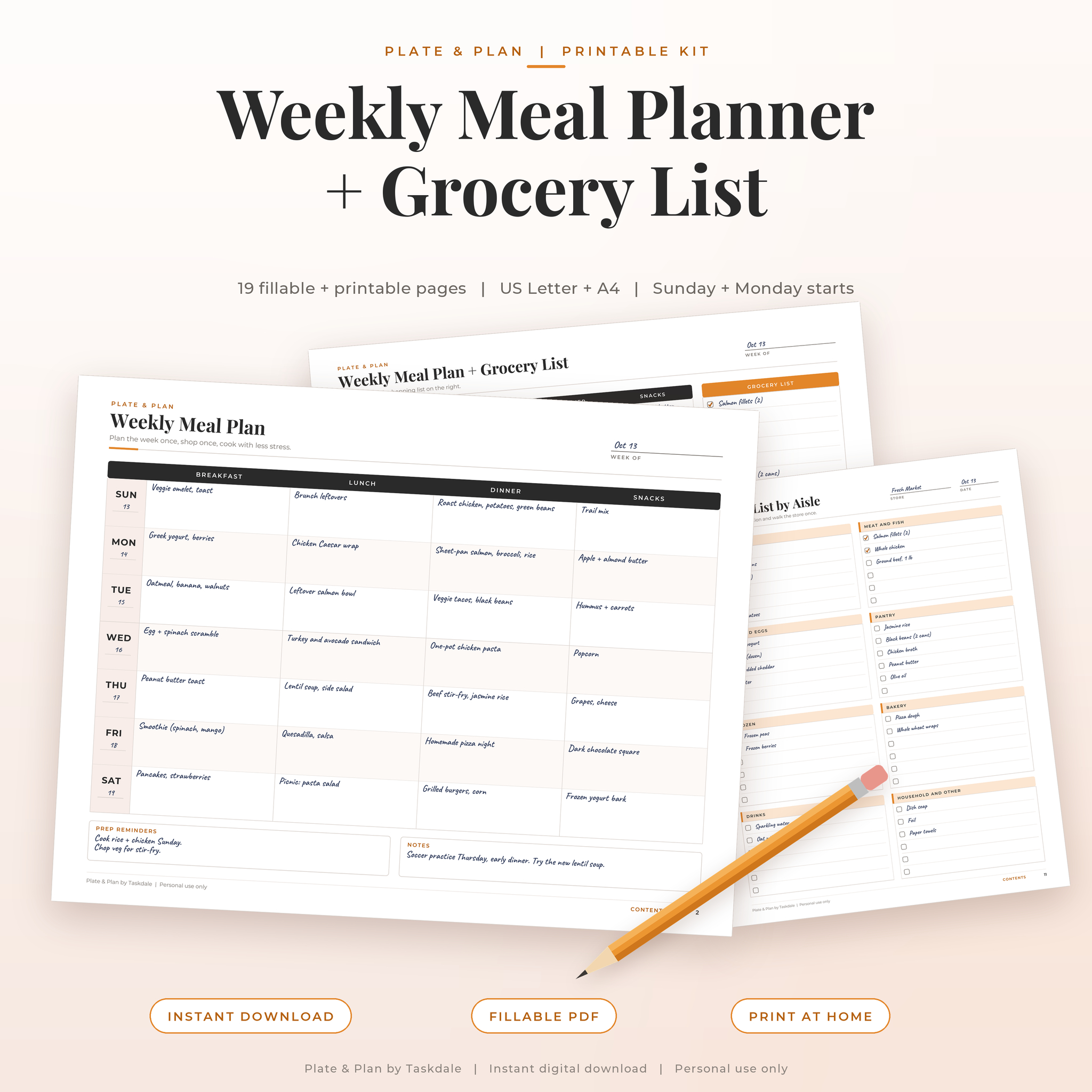
For a full-size binder, the Plate & Plan Weekly Meal Planner Printable includes weekly plans, grocery lists and pantry inventory pages in A4 and US Letter. Print only the pages needed for the current week, or enter the figures in the fillable PDF before printing the shopping page.
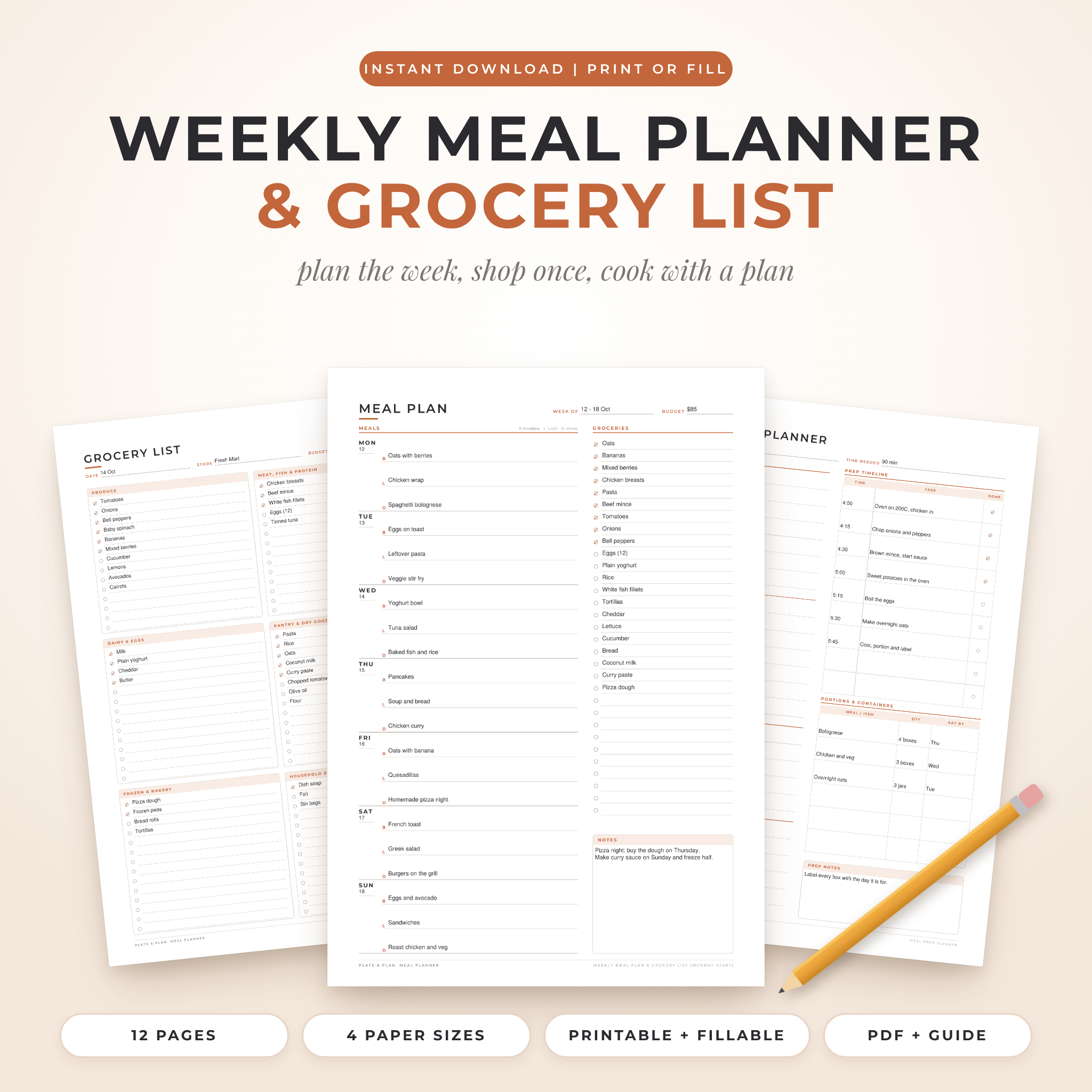
For a smaller binder, the Plate & Plan meal planner bundle has native A5 and Half Letter files as well as A4 and Letter versions. Its aisle-based list works as the page you take to the shop, with the pantry check and meal prep pages left in the binder.
Match the PDF to the binder and paper. A5 is 148 × 210 mm. Half Letter is 5.5 × 8.5 inches. Measure an insert that already fits if the binder size is unclear. If you’re printing onto pre-cut sheets, use the matching PDF and select that paper size in the printer dialogue. For a file designed for the paper you’re feeding, start at Actual Size or 100% rather than letting the printer scale it automatically.
Test the print and punch on one sheet. Check that the outside rules are visible and that the writing area clears the holes. For double-sided inserts, print one front and back, mark the top edge and turn the sheet the way you’ll turn it in the binder. A portrait page bound on the left usually calls for long-edge flipping when printed on its final paper size. If the back is upside down, change the flip setting and test again before printing a batch.
Check the scale again if printing two inserts per sheet. A printer’s two-pages-per-sheet option may shrink the pages to fit its printable area. Measure the test insert after trimming and check it against the binder before committing. If the pages need to be a precise size, printing on pre-cut paper may be simpler than adjusting the larger sheet. Trim first, then punch using a spare insert as an alignment guide.
Test the layout with one real ingredient. A compact shopping line can read
Spinach | need 175 g | buy 1 × 200 g | spare 25 g. Put the destination on the remainder page:25 g spinach | freeze Monday | soup. If your grocery page has only one quantity box, write175 g neededin the item field and put1 × 200 gin the box. Leave a little space for actual shopping pack sizes so you can correct the remainder after shopping.
Print a week or two before making a larger batch. If you keep turning the shopping page over to check pantry deductions, move the stock figure beside the shortfall on the next run. Put any inventory sheet that carries forward from week to week behind a separate divider so it doesn’t get discarded with a finished list.
Worked Example: Two Dinners, Three Packs and No Double Counting
Monday’s chickpea rice bowls need 180 g of drained chickpeas, 125 g of spinach, 90 g of yoghurt and 170 g of dry rice. Wednesday’s curry needs another 120 g of drained chickpeas, 125 g of spinach, 250 g of yoghurt and 170 g of dry rice. The pantry check shows 120 g of drained chickpeas, 75 g of spinach and 90 g of yoghurt, all available for Monday, plus 400 g of dry rice.
| Ingredient | Recipe total | Usable stock | Shortfall | Pack to buy | Remainder from purchase |
|---|---|---|---|---|---|
| Chickpeas, drained | 300 g | 120 g | 180 g | 1 tin, 240 g drained | 60 g |
| Spinach | 250 g | 75 g | 175 g | 1 × 200 g bag | 25 g |
| Yoghurt | 340 g | 90 g | 250 g | 1 × 300 g pot | 50 g |
| Rice, dry | 340 g | 400 g | 0 g | None | 0 g |
Copy only the first three lines to the shopping insert. Rice stays off the list, but 60 g remains in the cupboard after both dinners. Update the inventory once those portions have been taken out.
On Monday, use the 120 g of chickpeas already in stock and take 60 g from the new tin. The tin now has 180 g left, but only 60 g is spare: 120 g is already booked for Wednesday. If the label permits freezing, freeze the two amounts separately on Monday. Mark one container “120 g, Wednesday curry” and the other “60 g, soup”. Defrost the curry portion in the fridge in time to cook it.
Use the existing 75 g of spinach and 50 g from the new bag on Monday. Set aside 125 g for Wednesday if the label and storage instructions allow it, and freeze the other 25 g for soup if suitable. If the bag won’t keep until Wednesday, choose frozen spinach for the later meal rather than counting on the fresh bag to last. Use the existing yoghurt on Monday, open the new pot on Wednesday and assign the final 50 g to Thursday’s dressing, within the label’s storage window.
The remainder log shows 60 g chickpeas for soup, 25 g spinach for soup and 50 g yoghurt for Thursday. The 120 g chickpea portion for Wednesday can appear in the freezer inventory, but mark it as reserved. It’s stock you’re storing, not stock you’re free to spend on another meal.
Fix the Problems That Change the Shopping Decision
The Shelf Pack Doesn’t Match the List
Use the shortfall on the insert to recalculate in the shop. If the 200 g spinach bag is unavailable and the only fresh bag is 300 g, buying it changes the spare amount from 25 g to 125 g. Either assign that extra 100 g to a specific dish or choose a different format. Update the pack line at the shelf and the remainder entry when you unpack, while the label is still in front of you.
The Bigger Pack Is Cheaper per Kilo
Compare the total spend as well as the shelf unit price. If a 500 g pot costs more than a 300 g pot and you can only account for 300 g, the lower price per kilo doesn’t make the bigger pot cheaper for this week. If the remaining 200 g replaces a pot you would have bought for a second meal, the larger size may pay off.
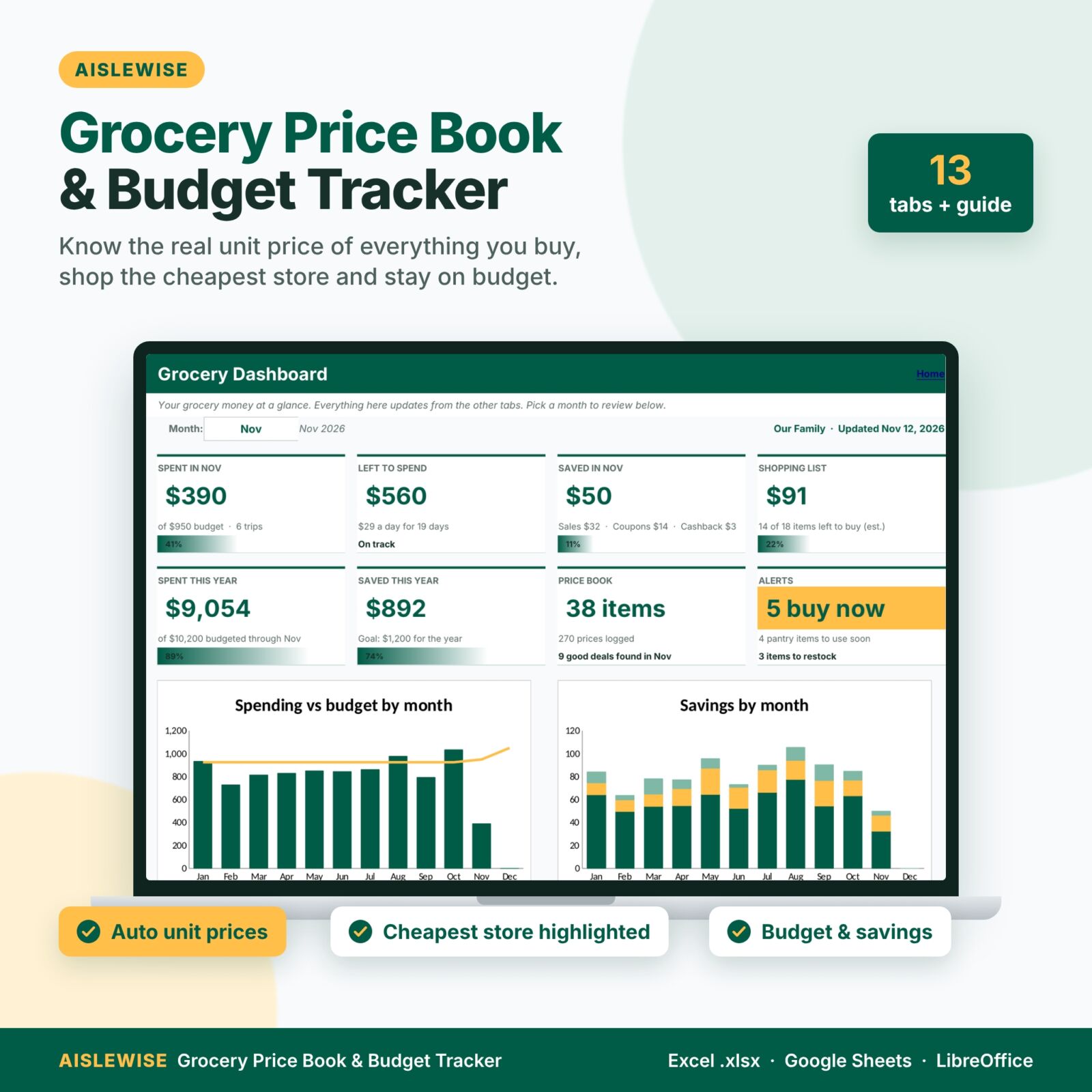
For ingredients bought repeatedly across shops, the Aislewise grocery price book and budget tracker can hold the pack and unit prices, while the paper insert shows the current week’s shortfall and planned use.
The Remainder Keeps Carrying Into Next Week
Record the amount, its location and what’s already booked. “60 g chickpeas, freezer top drawer, unassigned” gives next week’s plan something to work with. If a portion keeps getting rolled forward, build one meal around the ingredients that need using first before you add another tin to the list.
If a paper log gets replaced each week and frozen portions keep dropping off it, the Larderly pantry and freezer inventory spreadsheet gives those entries a standing home in Excel or Google Sheets. Use its Eat First list when starting the next menu, and rely on the food label for storage and use-by instructions rather than treating an estimated alert as an extension.
Before filing the week’s insert, cross off what was eaten and transfer only what still exists. If the last 50 g of yoghurt went into dressing, close the entry. If the 60 g of chickpeas is still frozen, carry it forward with its location and intended meal, then deduct it from the next shopping calculation only when that meal is booked.