Want to reduce food waste at home? Start by looking in the bin, not the fridge. For one week, before anything goes in the trash, write it down: half a bag of spinach, two slimy carrots, the yogurt that expired on Tuesday, a third of a lasagna nobody wanted again.
Most households are surprised. It’s rarely one big thing. It’s a steady trickle of small things, and each one is money. Bin $3 of salad and $4 of chicken thighs every week and you’ve thrown out more than $350 in a year.
The good news is that most waste comes from a few predictable habits, and each has a simple fix.
Why food gets wasted in the first place
Almost all home food waste falls into four buckets:
- Bought too much: no list, or shopping hungry, or a “2 for 1” on something you didn’t need.
- Forgot it was there: pushed to the back of the fridge or buried in the freezer.
- Cooked too much: leftovers nobody planned to eat.
- Plans changed: the chicken was for Wednesday, then Wednesday became pizza.
Every tip below targets one of those.
9 ways to reduce food waste at home
1. Do a two-minute fridge check before planning
Before deciding the week’s meals, open the fridge and note what needs using in the next three days. Build the first two dinners around it. That half tub of cream becomes Monday’s pasta sauce instead of next Sunday’s mystery.
2. Plan meals, then shop from the plan
This is the big one. A shopping list written from a meal plan only includes what you’ll cook. A list written from memory includes what you think you might need. The difference is usually a bag of produce that never gets opened.
3. Keep a pantry, fridge and freezer inventory
It sounds fussy. It takes five minutes a week. A simple list of what’s in the freezer with the date it went in stops you buying mince you already have and finding a “chili, maybe 2024?” container in the back.
4. Make a “use it up” spot
Pick one shelf or basket in the fridge for food that needs eating soon. Everyone in the house knows: snack from here first. On paper, a Use It Up list does the same job.
5. Plan a leftovers night
Give leftovers a slot on the calendar. Thursday is popular. If they’re on the plan, they get eaten. If they’re “for whenever”, they get binned on Saturday.
6. Cook to the right number
Recipes say “serves 4”. Your household might be two adults and a toddler who eats three bites. Scale the recipe down, or scale it up on purpose and freeze half on day one, while it’s still good.
7. Understand date labels
“Use by” is about safety, so take it seriously, especially for meat, fish and dairy. “Best before” is about quality. Plenty of foods (dry pasta, tinned goods, crackers) are fine after it. Check, sniff, then decide.
8. Store food where it lasts
Herbs in a glass of water. Bread in the freezer if you won’t finish it in three days. Bananas away from other fruit. Small storage changes add days to food’s life.
9. Track what you throw out for a month
Write down every item you bin and roughly what it cost. You’ll see patterns fast. Maybe it’s always salad, so you buy smaller bags. Maybe it’s always bread, so you start freezing half the loaf.
Printable planners that help you waste less
All of the above works with a scrap of paper. But a planner with the right pages already laid out makes the habit easier to keep. Three Taskdale printables are built around this loop.
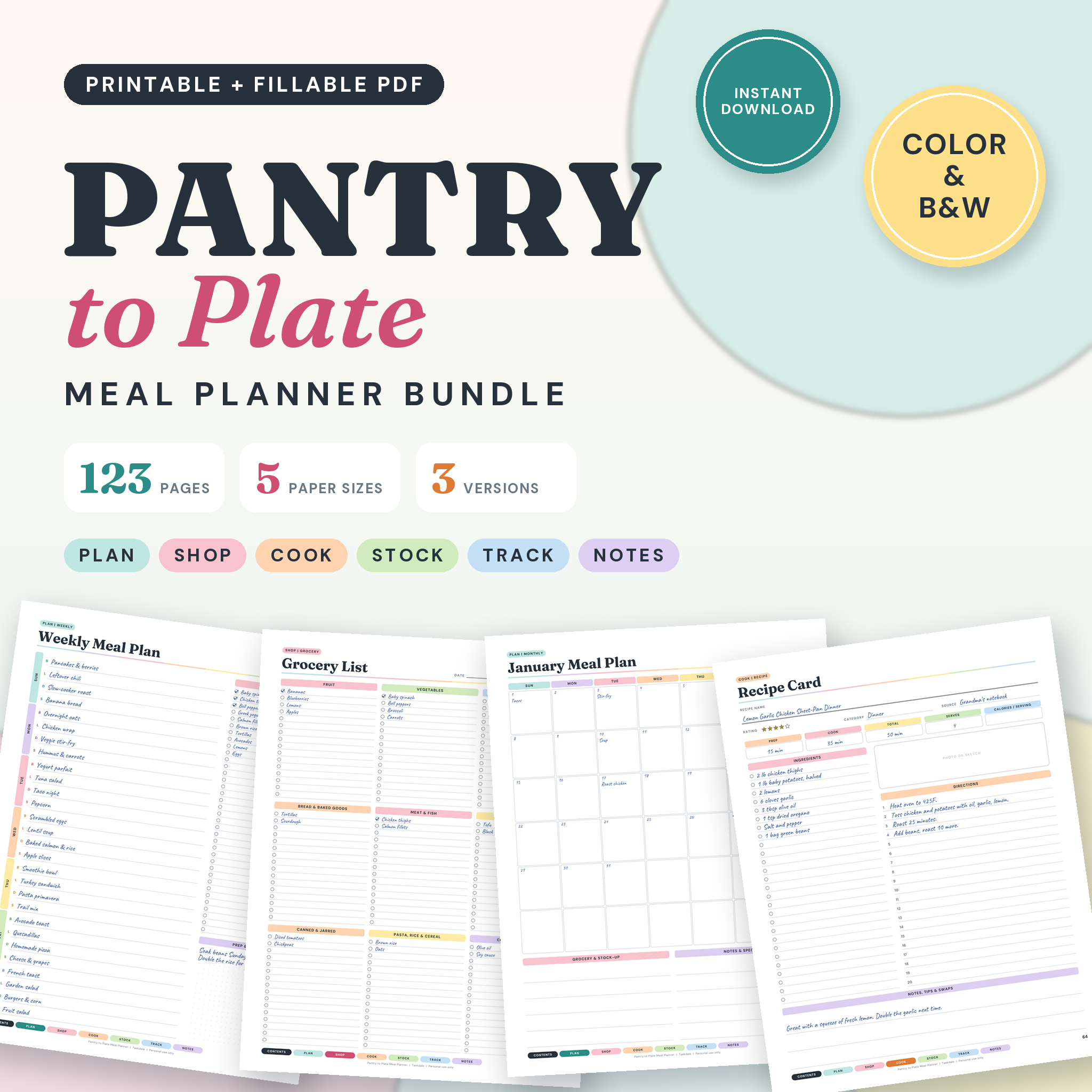
Pantry to Plate printable bundle
The Pantry to Plate Meal Planner Printable Bundle has 123 pages across six sections: Plan, Shop, Cook, Stock, Track and Notes. The Stock section covers pantry, fridge, freezer and spice inventories, a leftovers tracker and a Use It Up page for food about to turn. The Track section includes a food waste tracker, a food budget and a weekly review where you note what got thrown out and what it cost.
It comes in color and black and white, printable and fillable, across five paper sizes. This is the one I’d pick if waste is the main thing you want to fix, because it has a dedicated page for tracking it.
Fresh Week Meal Planner and Grocery System
The Fresh Week meal planner and grocery system is the slim option: 18 landscape pages in US Letter, A4 and A5, each as a print version and a fill-in version. Its Pantry Check page covers the pantry, fridge and freezer with a “use soon” strip. There’s a four-week dinner rotation and a Weekly Review page for what worked and what to change. Good if a 100-plus page planner sounds like too much.
Larder & Ladle printable kit
The Larder & Ladle printable kit sits in the middle at 84 fillable pages in five sizes. Its kitchen stock pages include pantry, fridge and freezer inventories and a use-it-up list, and the weekly section has a leftovers tracker. It also has a running-low list, which helps stop the opposite problem: running out and panic-buying.
A simple weekly routine
Put it together and it looks like this. Saturday morning: check the fridge, update the inventory, plan five dinners starting with what needs using. Write the list from the plan. Shop once. Thursday: leftovers night. End of week: note anything binned.
About 20 minutes all in. Most people see less in the bin within a month.
FAQ about reducing food waste
What is the easiest way to reduce food waste at home?
Plan your meals before you shop and only buy what the plan needs. It cuts over-buying, which is where a lot of waste starts.
How do I keep track of food in my fridge?
Keep a short inventory list on the fridge door or in a planner, with the date each item was opened or bought. Update it after shopping and before planning.
Is it safe to eat food after the best before date?
Often, yes, because best before is about quality rather than safety. Use by dates are different and should be followed, especially for meat, fish and dairy.
How much money can I save by wasting less food?
It depends on your household. Track what you throw away for a month and add up the rough cost. That number is what you stand to keep.