Last spring I cleared out a friend’s cupboard and found four jars of paprika, three unopened bags of brown sugar and a tin of coconut milk that expired before the pandemic. She isn’t disorganised. She just had no pantry inventory list, so every shop started from memory, and memory said “probably out of paprika”.
A pantry inventory is simply a written record of what food you have, where it is and when it needs using. It sounds like admin. In practice it’s the cheapest way to stop buying duplicates and throwing out food you forgot about. This guide covers how to set one up in an afternoon and keep it current in five minutes a week.
Why a pantry inventory list pays for itself
- No more duplicates. You check the list, not the back of the cupboard.
- Less waste. Use-by dates on paper (or screen) get noticed. Use-by dates on the bottom of a tin don’t.
- Faster meal planning. Plan the week around what you already own and the shopping list gets shorter.
- Calmer weeknights. You know there’s a bag of frozen prawns before you decide on dinner.
Step 1: Split the kitchen into zones
Don’t try to list “the kitchen”. List zones, one at a time:
- Pantry or food cupboard
- Fridge
- Freezer
- Spice rack or spice drawer
Some people add a fifth zone for the garage chest freezer or the box of bulk-bought tins under the stairs. Anything you’d forget about deserves its own section.
Step 2: Choose your columns
Keep it lean. More columns means you’ll stop updating it. These five cover almost everything:
| Column | Example | Why it matters |
|---|---|---|
| Item | Chopped tomatoes | Obvious, but be specific |
| Quantity and unit | 3 tins | So you know if you have enough for a recipe |
| Location | Pantry, top shelf | Saves the rummage |
| Use-by date | Mar 2027 | Drives the “use it up” list |
| Minimum to keep | 2 tins | Triggers a restock before you run out |
That last column is the secret weapon. Decide that you always want at least two tins of tomatoes, one bag of rice and a dozen eggs. When stock drops below the minimum, the item goes on the shopping list automatically, or at least obviously.
Step 3: Do the first count
Pick an afternoon when the cupboards are fairly full, usually a day or two after a big shop. Work one shelf at a time, left to right. Pull everything out, wipe the shelf, list each item as it goes back in. Oldest stuff to the front.
Expect this to take one to two hours the first time. A family kitchen might hold 120 to 200 items. Bin anything well past its date as you go and don’t feel guilty about it. That’s what the list is for: making sure it doesn’t happen again.
Step 4: Make a “use it up” list
As you count, flag anything that needs eating in the next week or two. Open jars, soft veg, meat in the fridge, that bag of spinach. Write them on a separate short list, and when you plan meals, start there.
A good habit: build at least two dinners a week around the use-it-up list. Fridge clear-out frittata on Thursday is a classic for a reason.
Step 5: Keep it updated without thinking
An inventory that’s three weeks out of date is worse than none, because you trust it. The fix is tying updates to things you already do:
- After unpacking the shopping: add new items. Two minutes.
- When you finish something: cross it off or set it to zero.
- Before you plan meals: glance at the use-by column.
- Once a month: a quick shelf-by-shelf check to catch drift.
Spreadsheet or printable?
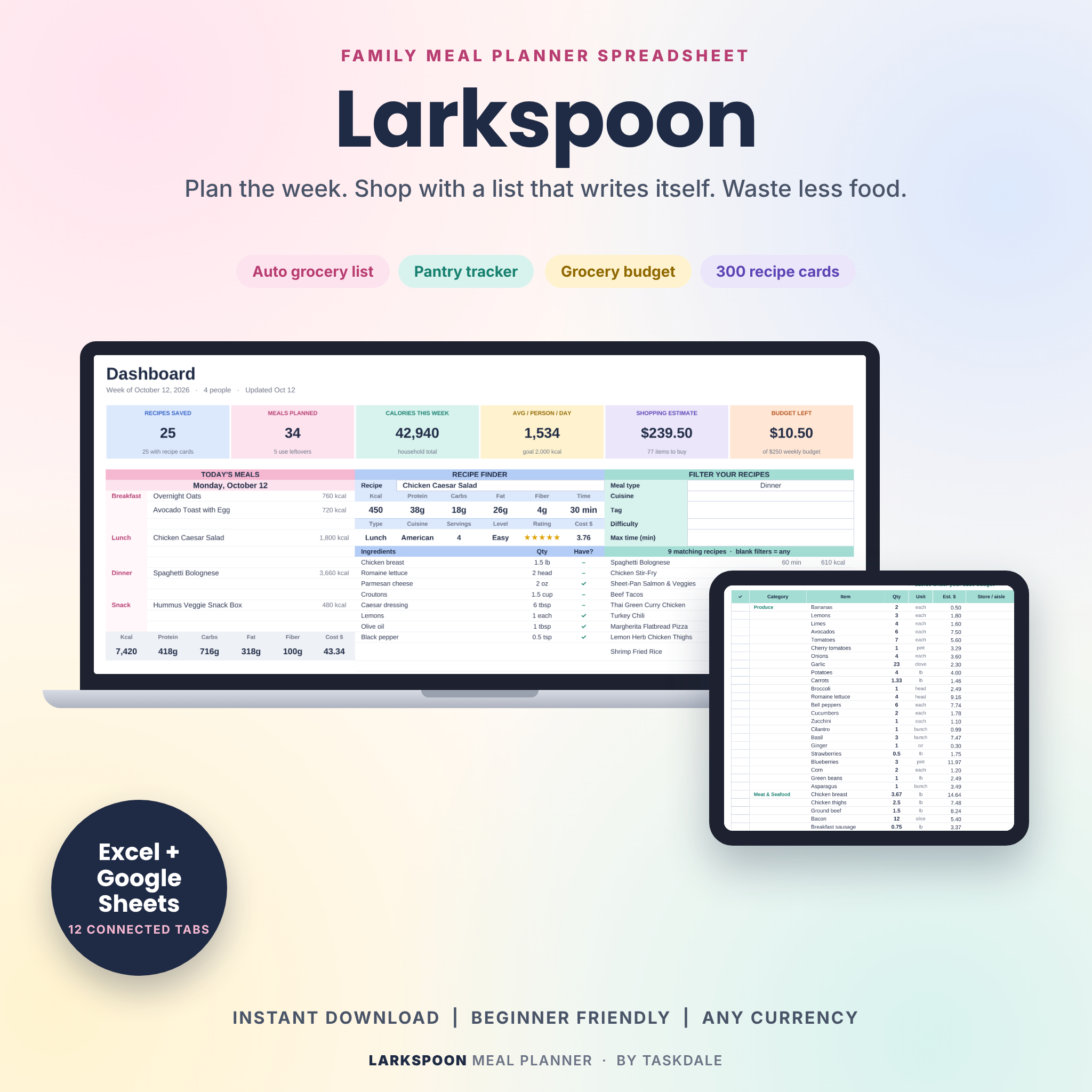
A spreadsheet does the boring parts for you. Larkspoon has a Pantry tab where you log items by location (fridge, freezer, pantry or spice rack) with use-by dates. Status updates daily: expired items turn red, “use soon” items turn yellow. Tick Restock and the item lands on your shopping list, and anything you already have is subtracted from the list before you shop. The dashboard even ranks your recipes by how much of the ingredients you already own, which is a fast way to decide dinner on a low-stock night. It runs in Excel and Google Sheets.
Printables suit people who’d rather keep a clipboard inside the cupboard door. The Pantry to Plate printable bundle has a full Stock section: pantry, fridge, freezer and spice inventories, a leftovers tracker, a Use It Up page for food about to turn and a ready-made staples checklist. It comes in five paper sizes, colour or black and white, and fillable versions you can type into.
The Larder & Ladle kit is a smaller set with the same idea: pantry, fridge and freezer inventories, a use-it-up list, a herbs and spices page and a pantry staples checklist, plus a “running low” shopping list. It also comes in five sizes with fillable fields, and it’s undated so you can reprint pages whenever you need them.
The difference is maths. Paper won’t subtract your stock from the shopping list or warn you about dates. A spreadsheet will. Paper is quicker to grab mid-cooking. Pick based on where you’ll actually update it.
Pantry inventory list FAQ
What should be on a pantry inventory list?
Dry goods (rice, pasta, flour, oats), tins and jars, oils and vinegars, baking supplies, snacks, spices and drinks. List fridge and freezer items separately so use-by dates don’t get lost among long-life food.
How often should I update my pantry inventory?
Add items after each shop and cross them off when finished. Do a quick full check once a month to catch anything that slipped through.
Should I include spices?
Yes. Spices are among the most commonly double-bought items because the jars are small and easy to lose. A separate spice page helps.
Is a pantry inventory worth it for a small household?
Yes, possibly more so. Small households waste a higher share of what they buy because pack sizes are made for families. Knowing what’s open and what needs using matters even more.