Search for the best diet and you will find a hundred confident answers that disagree with each other. Low carb. High protein. Plant-based. Calorie counting. Intermittent fasting. Each has fans, and each has people who tried it and hated it. The truth is less exciting and more useful: the best diet meal plan is the one that fits your goal, your schedule and the people you eat with.
This guide helps you find that fit. First you will pin down your real goal in one sentence. Then you will see how a meal plan should look for six common goals, with a sample day for each, what to watch out for, and which kind of planner makes it easier. By the end you should know exactly what your plan needs to do, and what it does not.
It is for adults planning their own meals or a household’s, whether you have a clear target or simply know that the current way of eating is not working.
Quick picks: planners matched to different goals
| Product | Best for | Price | Link |
|---|---|---|---|
| Pantry Bloom Meal Planner Spreadsheet | Families tracking nutrition, budget and pantry | $18.99 | View |
| Small Bites, Big Wins GLP-1 Meal Plan | Smaller appetites and protein-first meals | $6.99 | View |
| Thymewise Digital Meal Planner | Planning meals and a grocery budget on a tablet | $1.75 | View |
| Larkspoon Meal Planner Spreadsheet | Calories, macros and cost per serving | $12.99 | View |
Start by naming your goal in one sentence
Most people start a diet with a feeling (“I need to get back on track”) rather than a goal. A feeling is a fine starting point, but you cannot plan meals around it. So finish this sentence before you choose anything:
“In the next three months, I want my meals to help me…”
- …lose about 12 pounds.
- …eat more protein because I have started lifting weights.
- …eat enough on a much smaller appetite.
- …feed my family healthier dinners without complaints.
- …cut our grocery bill by a set amount each month.
- …eat mostly plants.
You might have two goals. That is fine. But pick one to lead. A plan trying to hit five targets at once usually hits none of them, and the person following it gives up by week three.
Goal 1: Losing weight steadily
A weight loss meal plan needs a modest calorie gap, plenty of protein to keep you full, lots of vegetables for volume, and enough flexibility to survive real life. It does not need special foods.
What it looks like
- Protein at every meal, about the size of your palm.
- Half of lunch and dinner plates filled with vegetables or salad.
- Starchy foods in smaller portions rather than cut out.
- One or two planned snacks, so evenings stay calm.
Sample day
Greek yogurt with berries; a chicken and bean salad; an apple with peanut butter; salmon, roasted vegetables and a small portion of potatoes.
Watch out for
Cutting too hard in week one. A plan that leaves you hungry is a plan you will drop. Aim for steady, not dramatic.
Goal 2: Eating more protein
People who start lifting weights, take up running or simply notice they are always hungry often want more protein. The plan here is less about cutting and more about adding.
What it looks like
- A protein food at breakfast, which is the meal most people skip it.
- Protein-rich snacks: cottage cheese, boiled eggs, edamame, jerky, Greek yogurt.
- Dinners built around a main protein, with carbs to fuel training.
Sample day
Three-egg omelet with toast; turkey and hummus wrap; cottage cheese with fruit; lean beef stir-fry with rice and plenty of vegetables; a glass of milk in the evening.
Watch out for
Forgetting fiber. High-protein plans can drift into meat and cheese with few vegetables. Keep a vegetable rule at lunch and dinner.
A spreadsheet planner that shows protein per meal and per day makes this goal much easier to hit, because you can see the gap before the day is over.
Goal 3: Eating well with a smaller appetite
Some people need to eat well on much less food than before. That includes people on GLP-1 medications, people recovering from illness, and older adults whose appetite has shrunk. The challenge flips: every bite needs to count.
What it looks like
- Small plates and smaller, more frequent meals.
- Protein first on the plate, eaten before the rest.
- Soft, easy foods on low-appetite days: soups, eggs, yogurt, smoothies made with milk.
- Fluids sipped through the day rather than gulped at meals.
Sample day
Half a cup of cottage cheese with peach slices; a small tuna salad on crackers; a cup of lentil soup; a palm of baked fish with a few spoons of mashed sweet potato and green beans; a small yogurt.
Having meal ideas ready, with protein noted on each one, saves a lot of guesswork on days when nothing sounds good.

Small Bites Big Wins GLP-1 Meal Plan
Price: $6.99 | Best for: smaller appetites needing protein-first meals
Small Bites, Big Wins is a 49-page printable GLP-1 meal plan and food guide in US Letter and A4. It has 150 high-protein photo meal ideas with approximate protein and fiber, a 206-item food list, a small-plate method and hand-portion guide, a ready-made 4-week meal plan and 13 tracker pages for water, protein, habits and progress. The guide suggests setting your daily targets with your care team, so bring the target page to your next appointment.
Goal 4: Healthier family dinners
When you are feeding a family, the best plan is the one everyone will eat. That rules out anything too strict, too unfamiliar or too obviously “diet”.
What it looks like
- Familiar meals, made a little lighter: more vegetables in the bolognese, oven-baked fries instead of deep-fried, homemade pizza on a thin base.
- Build-your-own nights (tacos, rice bowls, wraps) so picky eaters choose their plate.
- One new recipe a week, not seven.
- A vegetable on every plate, even if it is just cucumber sticks.
Sample week of dinners
Turkey bolognese with extra carrots; chicken fajita bowls; baked fish sticks with peas and potato wedges; vegetable soup with grilled cheese; homemade pizza; roast chicken; leftovers night.
Watch out for
Cooking separate meals for adults and kids. Plate the same dinner differently instead. Mom gets more salad, the eight-year-old gets more wedges, everyone eats together.
For more on handling different tastes at one table, see our guide to family meal planning when half the table is picky.
A family plan has a lot of moving parts: recipes, servings, pantry stock, the budget, sometimes nutrition. A connected spreadsheet keeps them all in one place.
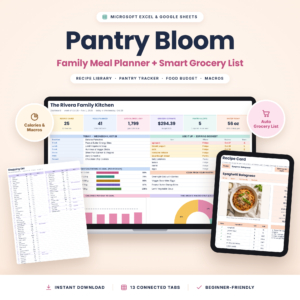
Pantry Bloom Meal Planner Spreadsheet
Price: $18.99 | Best for: busy families planning meals and spending
Pantry Bloom is a meal planner spreadsheet for Excel and Google Sheets with 13 connected tabs. It holds up to 200 recipes with diet tags and nutrition, builds a weekly meal plan with daily calories, macros and food cost, and writes a smart grocery list that already knows your pantry. It also has a food budget tracker, expiry alerts, a printable weekly menu for the fridge and optional weight and hydration trackers for up to eight family members. Open the sample file first to see a family week filled in.
Goal 5: Spending less on food
Sometimes the goal is not your waist but your wallet. A budget meal plan can still be a healthy one, and often is, because the cheapest foods are frequently the plainest and most filling.
What it looks like
- Beans, lentils, eggs, oats, rice, potatoes and frozen vegetables as the backbone.
- Meat as a flavor rather than the whole plate, stretched with beans or vegetables.
- Cook-once, eat-twice dinners for next-day lunches.
- A weekly check of what is already in the fridge before writing the list.
Worked example
Say a household spends $180 a week on groceries and wants to drop to $150. Two meatless bean dinners save one tray of chicken. Packing lunches from leftovers cuts four store-bought sandwiches. Planning around what is already in the freezer stops one duplicate purchase. Those three changes alone can close much of the gap without anyone feeling deprived.
Watch out for
Buying in bulk for meals you never cook. A huge sack of rice is only a bargain if it gets eaten. Buy bulk for the five or six staples you use every week, and buy everything else to the plan.
Goal 6: Eating mostly plants
Plant-forward plans suit people who want more fiber and vegetables, are curious about vegetarian or vegan eating, or simply want to cut back on meat.
What it looks like
- A plant protein at every meal: beans, lentils, tofu, tempeh, chickpeas, edamame, nuts.
- Wholegrains for staying power.
- Big flavor from spices, sauces and herbs so meals never feel bland.
Sample day
Oats with soy milk and peanut butter; chickpea salad wrap; hummus with vegetables; tofu and vegetable curry with rice.
Watch out for
Swapping meat for nothing. A plate of pasta and vegetables without beans or tofu leaves many people hungry an hour later. Put a plant protein back every time you take the meat off.
Start with two or three plant-based dinners a week, then add more once you have a few favorites.
When two goals pull in different directions
Real life rarely hands you one tidy goal. Here are three common clashes and how to settle them.
- Weight loss and a tight budget: These get along well. Lean on beans, eggs, oats, frozen vegetables and chicken thighs, and they serve both goals at once.
- More protein and less spending: Protein can get pricey. Use eggs, canned tuna, lentils, cottage cheese and milk, and save the steak for Saturday.
- Your diet and the family’s tastes: Cook one base meal, then change the plate. You take extra vegetables and a smaller scoop of rice, the kids take the opposite.
If you truly cannot settle it, choose the goal that will make the biggest difference to your week right now, and let the other wait a month.
Choosing the right planner for your goal
Once your goal is clear, the format matters almost as much as the food. Here is a quick guide.
| Goal | Planner style that helps most |
|---|---|
| Weight loss | A planner with meal pages plus weekly weigh-ins |
| More protein | A spreadsheet that totals protein per day |
| Smaller appetite | A meal idea bank with protein noted on each meal |
| Family dinners | A recipe library with a printable weekly menu |
| Lower food bill | A planner with a grocery budget and pantry tracker |
| Plant-based | A recipe bank and aisle-sorted grocery list |
If you are still deciding between formats, our comparison of the best meal planning templates lines up spreadsheets, digital and printable planners side by side.
Tablet planners suit people who want everything in one app they already open daily, especially when budget and meals share the same goal.
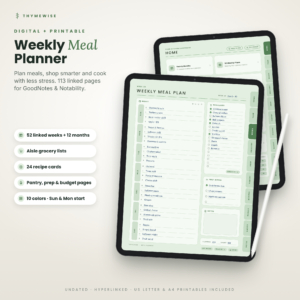
Thymewise Digital Meal Planner
Price: $1.75 | Best for: tablet users juggling meals and budget
Thymewise is an undated, hyperlinked 113-page digital meal planner for GoodNotes, Notability and other PDF apps, with printable US Letter and A4 versions included. It has 52 weekly meal plans, 12 monthly meal calendars, aisle-sorted grocery lists, a meal prep planner, pantry and fridge inventories, 24 recipe cards, a grocery budget tracker and a healthy habits tracker. Write your one-sentence goal on the dashboard page so you see it every time you plan.
Check in after four weeks
A month is long enough to see whether a plan suits you and short enough that you have not wasted much time if it does not. On the last Sunday of the month, look back with three questions.
- Is the goal moving? Weight trending down, protein targets hit most days, the grocery total lower, more plant meals on the calendar. Whatever your goal, look for a trend, not perfection.
- Is the plan easy to keep? If you are dreading Sunday planning or skipping half the meals, simplify. Fewer recipes, more repeats.
- What one thing should change? Just one. Add a snack, swap a dinner, move the shopping day.
That small review is where a good plan becomes your plan, and there is real satisfaction in watching it get easier month by month.
Frequently asked questions
What is the best diet meal plan for beginners?
One built from familiar meals made a little lighter, with protein at each meal, plenty of vegetables and one or two planned snacks. Familiar food is easier to stick with than a long list of new recipes.
How do I choose a diet that fits my goals?
Write your main goal in one sentence, such as losing weight, eating more protein or saving money, then pick a plan whose rules serve that goal and fit your weekly schedule.
Can one meal plan work for weight loss and saving money?
Yes. Beans, lentils, eggs, oats, potatoes and frozen vegetables are cheap and filling, which suits both goals at once.
Is a high-protein meal plan good for weight loss?
Many people find protein-rich meals keep them fuller for longer, which makes eating a little less easier. Keep vegetables and fiber in the plan as well.
How long should I follow a meal plan before changing it?
Give it about four weeks, with a short review each week. Adjust one thing at a time so you can see what is working.
Your next step
Finish the one-sentence goal at the top of this guide and write it somewhere you will see it daily. Then plan next week’s dinners using the section that matches your goal. If you are feeding a household and want meals, pantry and budget in one connected file, open the Pantry Bloom Meal Planner Spreadsheet and add your first five recipes.