One child won’t eat anything green. The other went vegetarian last Tuesday. Your partner works late on Wednesdays, and you have exactly 25 minutes between swimming pickup and the hunger meltdown. Family meal planning isn’t hard because cooking is hard. It’s hard because you’re planning for five different people at once.
The good news: you don’t need five dinners a night. You need a few tricks that let one meal stretch to fit everyone, and a plan that’s written down before the week starts. Here’s what works in real kitchens with real picky eaters.
The family meal planning rules that stop the dinner fights
Serve “build your own” dinners
Tacos, burrito bowls, wraps, baked potatoes, pasta with toppings on the side, rice bowls. You cook one set of components. Everyone builds their own plate. The picky one has plain chicken and rice. The adventurous one adds salsa, beans and pickled onions. Nobody gets a special meal, and you don’t cook twice.
If you only change one thing this month, make it this. Two or three build-your-own nights a week takes most of the stress out of dinner.
Put one “safe” food on every plate
A safe food is something each child will reliably eat: bread, rice, cucumber, plain pasta. When every dinner has one, nobody goes hungry, and kids are calmer about the new thing sitting next to it. Many feeding specialists recommend this approach because it takes the pressure off.
Let each kid choose one dinner a week
Give them a short list of meals you’re happy to cook, and let them pick a night. Write their name next to it on the plan. Kids who chose dinner tend to eat dinner. Bonus: they start asking what’s on the plan instead of what’s for dinner.
Use theme nights
Taco Tuesday exists for a reason. Fixed themes (pasta Monday, stir-fry Thursday, pizza Friday) cut decisions in half. You’re not choosing from every meal in existence, just which pasta.
Plan around the calendar
Activity nights get slow-cooker meals, leftovers or 15-minute dinners. Quiet nights get the recipes that need attention. A plan that ignores the swimming timetable is a plan that ends in takeout.
Introduce new foods in tiny amounts
One new dish a week, served beside familiar ones. A spoonful, not a plate. It often takes many tries before a child accepts a new food, so the goal is exposure, not a clean plate.
Writing it down: a family plan that sticks
Family plans fail when they live in one parent’s head. Put the plan where everyone can see it, and keep the grocery list tied to it so whoever shops buys the right things.
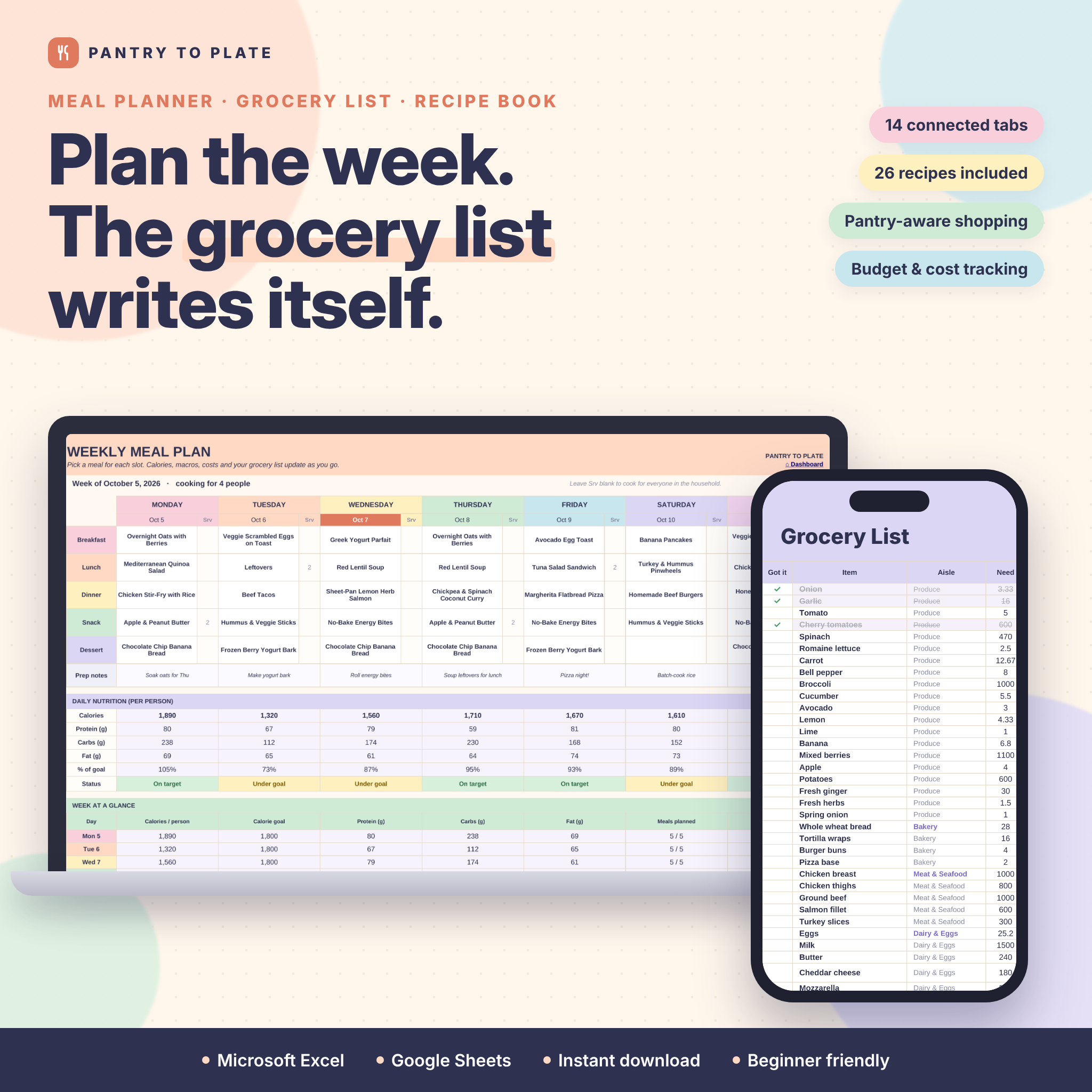
A spreadsheet is the quickest route if you plan at a laptop. The Pantry to Plate Meal Planner has a Weekly Plan with five meal slots across seven days, with servings and prep notes for each. Pick meals and the Grocery List builds itself: it subtracts what’s in the fridge, freezer and cupboards, rounds to whole packs and sorts by aisle. The Recipes tab has star ratings and a favourites marker, which is handy for building a list of dinners everyone agrees on. It comes with 26 starter recipes and a sample week, plus a blank version, and it works in Excel and Google Sheets.
For the fridge door, a printable gets the kids involved. Rainbow Plate has a weekly planner with water droplets to colour in and veg and fruit circles for each day, so kids can mark what they ate. Its Meal Ideas page is made for the dinners your family asks for again and again, and the tear-off shopping list on the side goes straight to the shop.
Build a 15-meal family rotation
Most families eat the same 10 to 20 dinners on repeat. That’s not boring, it’s efficient. Write yours down and plan from that list.
Aim for a mix like this:
- 5 build-your-own meals (tacos, bowls, wraps, jacket potatoes, pasta bar)
- 4 one-pot or traybake meals (chili, curry, sausage traybake, soup)
- 3 quick meals for busy nights (eggs, fried rice, quesadillas)
- 2 “grown-up” meals with a plain version for the kids
- 1 weekend project (homemade pizza, roast)
Rotate through it over three weeks and you’ll rarely repeat a dinner within the same fortnight.
If you’d rather plan the rotation in one go, Plateful plans five weeks at once, with four meal slots a day and a servings number you can change per meal. That last part matters for families: batch cook six servings of chili on Monday, plan the leftovers for Thursday, and the grocery list adjusts. It was built and tested in LibreOffice Calc, so it’s best for families happy using that free app.
A sample week for a family of four with a picky eater
- Monday: Pasta bar. Plain pasta, butter, cheese, bolognese and roasted veg on the side.
- Tuesday: Taco night. Everyone builds their own.
- Wednesday (swimming): Slow-cooker chicken, rice, cucumber sticks.
- Thursday: Leftover chicken in fried rice. Plain rice for the picky one.
- Friday: Kid’s choice: homemade pizzas on flatbread.
- Saturday: Sausage and potato traybake with ketchup on the side.
- Sunday: New dish (a mild chicken curry) with naan as the safe food.
Family meal planning FAQ
How do I meal plan for a picky eater without cooking separate meals?
Serve deconstructed or build-your-own dinners and put one safe food on every plate. The picky eater takes the plain parts, everyone else adds sauces and extras.
How many meals should a family plan per week?
Five dinners is a good start. Leave one night for leftovers and one loose night for takeout or something simple.
Should kids help with meal planning?
Yes, within limits. Let each child pick one dinner a week from a short list. It builds buy-in and makes them more likely to eat it.
What are good family dinners for busy weeknights?
Fried rice, quesadillas, eggs on toast, pasta with a jar sauce plus extra veg, and anything you cooked double earlier in the week.