There is no single best meal plan. There is the best plan for what you want right now and what you can spend doing it. A student trying to eat better on a small food budget needs something completely different from a parent of three, and both need something different from a lifter chasing protein.
This guide sorts meal plans by goal first and budget second. You will see six common plan shapes, what a typical day looks like on each, where the money goes, and which kind of planner suits that goal. Then there is a side-by-side table so you can find your row and get started without reading every section.
Quick picks: planners matched to different goals
| Product | Best for | Price | Link |
|---|---|---|---|
| Glow Goals Weight Loss & Fitness Tracker | Weight loss with calorie targets and a grocery budget | $2.50 | View |
| Daybloom Life Planner Spreadsheet | Tight budgets where meals and money share one file | $2.00 | View |
| Spoonful Digital Meal Planner | Families and no-counting plans on a tablet | $4.99 | View |
| Hearth & Ladle Digital Recipe Book & Meal Planner | Scratch cooks building a recipe collection | $9.99 | View |
Choose in this order: goal, then budget, then time
Most people pick a meal plan the other way around. They see a pretty seven-day menu online, try it, and discover it costs twice their food budget and takes an hour a night. Then they decide meal planning “doesn’t work for them.” It does. They just had the wrong plan.
Ask three questions before choosing anything:
- What is the main goal for the next three months? Weight loss, more protein, feeding the family well, spending less, or simply eating better. Pick one main goal.
- What can you spend on food each week, honestly? Look at your last four weeks of grocery receipts or bank statements, not the number you wish it were.
- How much time do you have on a typical weeknight? Fifteen minutes, thirty, or an hour.
Write those three answers down. Every plan below fits some combinations better than others.
Goal 1: losing weight
Plan shape: a calorie target, protein at every meal, plenty of vegetables, repeated breakfasts and lunches, one planned treat or meal out per week.
A typical day: Greek yogurt with oats and berries; a big salad with chicken and a wholegrain roll; an apple and a boiled egg; chili with rice and a side of greens. Somewhere around 1,600 to 1,900 calories for many adults, depending on their target.
On a tight budget: lean on eggs, canned fish, frozen chicken, lentils, oats, frozen vegetables and seasonal fruit. Bulk out mince with lentils or grated carrot. Skip pre-cut fruit and ready meals labelled as “diet” food, which often cost far more per portion.
With more to spend: fresh fish, ready-washed salads and pre-chopped vegetables save time. They do not make weight loss work any better, but they can make the plan easier to keep on busy weeks.
What helps most here is a tracker that ties calories, meals and the grocery bill together, so you can see whether the plan is working and whether it is affordable at the same time.
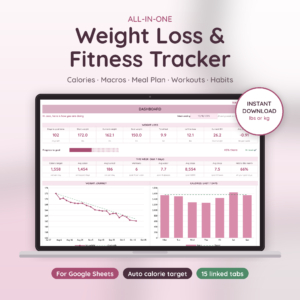
Glow Goals Weight Loss Tracker
Price: $2.50 | Best for: weight loss planners watching food costs
Glow Goals is a Google Sheets weight loss tracker that works out a daily calorie target and macros from your profile, then logs food in a 3,000-row food log with calories, protein, carbs, fat and fiber. Its weekly meal planner covers 7 days and 4 meals with daily totals, and builds a grocery list with quantities, costs, subtotals and a weekly budget. It also has workouts, habits and progress tracking. Fill in your profile first, then plan one week of meals and check both the daily totals and the shopping budget.
For a ready-made four-week example on this goal, see our weight loss meal plan on a budget with grocery lists.
Goal 2: more protein for training or muscle
Plan shape: a protein target split across three or four meals, carbs around training, and batch-cooked proteins so you are not cooking chicken every day.
A typical day: eggs and toast with a glass of milk; chicken, rice and vegetables; cottage cheese with fruit; beef and bean chili with potatoes; Greek yogurt before bed.
On a tight budget: eggs, milk, cottage cheese, canned tuna, dried lentils and beans, whole chickens (cheaper per kilo than breasts), and peanut butter. Buying a whole chicken and roasting it on Sunday gives you dinner plus two lunches.
With more to spend: protein powder, lean steak, salmon and high-protein yogurts. Handy, not essential.
The biggest mistake here is spending on supplements before sorting out ordinary meals. A plan with protein at every meal does more than a tub of powder sitting on a shelf.
Goal 3: feeding a family well on a tight budget
Plan shape: five planned dinners, one leftovers night, one simple night, a rotating list of cheap family favorites, and a strict grocery list.
A typical week of dinners: sausage and vegetable tray bake; spaghetti bolognese with lentils mixed into the mince; bean and cheese quesadillas; chicken drumstick curry with rice; leftovers; homemade pizza on wraps.
Where the money goes: on a tight family budget, protein and convenience foods are the big costs. Cheaper cuts (thighs, drumsticks, mince), canned beans and planned leftovers save the most. So does shopping once a week with a list rather than three top-up trips where extras sneak in.
When money is the main pressure, the meal plan and the household budget really should sit side by side. Then you can see how this week’s food shop fits around rent, bills and everything else.
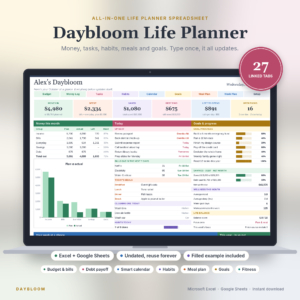
Daybloom Life Planner Spreadsheet
Price: $2.00 | Best for: tight budgets planning meals and money
Daybloom is an undated life planner for Excel and Google Sheets with 27 linked tabs. Alongside a budget, bills, savings and debt tracker, it has a Meal Library with ingredients and shop aisles, a Meal Plan where you pick a week from dropdowns, and a Grocery List built from that plan and sorted by aisle. Fill in Setup with your currency and categories, add ten cheap family meals to the Meal Library, then plan one week and check it against your grocery budget line.
For more family-specific options, our guide to the best meal planner for families compares seven picks in detail.
Goal 4: eating better without counting anything
Plan shape: a simple plate rule (half vegetables, a quarter protein, a quarter carbs), three meals a day, cooking at home most nights, and fruit as the default snack.
A typical day: porridge with banana; soup and a sandwich; an orange; a stir-fry with tofu or chicken and noodles.
On a tight budget: this plan is usually the cheapest of all, because it leans on home cooking, seasonal produce and beans. Frozen vegetables keep the cost down and cut waste.
With more to spend: a weekly vegetable box or a farmers’ market trip can make it more enjoyable. Nice, not needed.
You still need a plan, though. “Eat better” with no written meals turns back into toast and takeaway within a week. A tablet planner with weekly pages, a grocery list and a recipe section is enough.
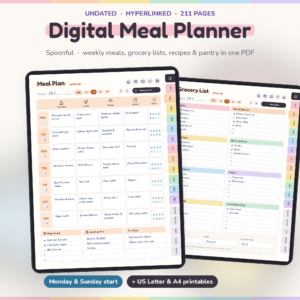
Spoonful Digital Meal Planner
Price: $4.99 | Best for: no-counting planners and busy families
Spoonful is an undated, hyperlinked PDF meal planner with 211 pages. Each week links a meal plan page (breakfast, lunch, dinner, snacks, a water tracker, a prep-ahead checklist and a use-it-up list) to its own grocery list split into eight store sections. It adds a recipe book, a favorites list, 60 dinner ideas, kitchen inventories, Monday and Sunday start editions, and printable US Letter and A4 pages. Fill in the favorites list with meals your household already likes, then plan your first week from it.
Goal 5: cooking for one or two
Plan shape: three or four cooked dinners a week, each designed to give a second portion for lunch or a later dinner, plus a freezer stock of single portions.
A typical week: a pot of chili (eat twice, freeze two); a tray of roasted vegetables and chicken (dinner plus a lunch bowl); a pasta bake (two dinners); an omelet night.
Budget tip: the big cost for small households is waste, not food. Buy loose vegetables in the amount you need. Freeze half a loaf. Plan recipes that share ingredients, so the bunch of coriander bought for Monday’s curry also goes into Wednesday’s rice bowl.
Goal 6: cooking more from scratch
Plan shape: learn one new recipe a week, cook it twice in a fortnight to lock it in, and build a personal recipe collection over a few months.
Budget effect: cooking from scratch is often cheaper per portion than ready meals, especially for sauces, soups, curries and baked goods. The trade-off is time, so plan new recipes for evenings when you are not rushed.
The thing that makes this goal stick is a proper home for the recipes you learn. Once a recipe is written down with your own notes (“less chili next time”, “kids liked this”), it becomes part of the family rotation.
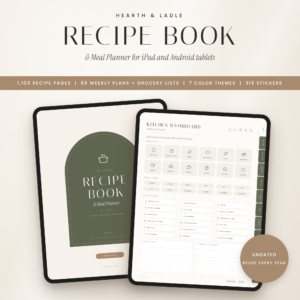
Hearth and Ladle Recipe Book
Price: $9.99 | Best for: cooks building a recipe collection
Hearth & Ladle is a hyperlinked digital recipe book and meal planner for iPad and Android tablets, with 1,100 recipe pages in 12 sections ready for your own recipes, 60 weekly meal plans linked to grocery lists, and printable kitchen pages in US Letter and A4. It works in apps like GoodNotes, Notability, Noteshelf and Xodo. Write in the first recipe you learn this week, with your own notes, and plan it into next week a second time.
How the same goal changes across three budgets
Budget does not decide whether a plan works. It decides which foods carry it. Here is how one goal, a healthy family week with protein at every dinner, shifts as the budget moves.
Tight budget
Protein comes mostly from eggs, beans, lentils, canned fish and chicken thighs or drumsticks. Vegetables are frozen or whatever is cheapest that week. Every dinner is cooked from scratch, and there is a planned leftovers night. Snacks are fruit, toast and popcorn made in a pan. The plan is simple, filling and honest, and it relies on the list being followed exactly.
Middle budget
The same meals, with a bit more meat and fish, a few fresh salads, and one or two convenience items that buy back time, such as a rotisserie chicken on a late night or a bag of pre-chopped stir-fry vegetables. A weekly treat goes on the list on purpose.
Comfortable budget
Fresh fish twice a week, more variety in fruit and vegetables, and maybe a recipe box or ready-prepared sides on the busiest nights. The plan is not healthier in any real sense. It is just faster and has more choice.
The structure barely changes between the three. That is the encouraging part: a tight budget does not mean a worse plan, only different ingredients doing the same job.
Side by side: find your row
| Goal | Plan shape | Biggest budget saver | Planner type |
|---|---|---|---|
| Weight loss | Calorie target, protein each meal, repeats | Eggs, frozen veg, lentils | Tracker spreadsheet |
| More protein | Protein target, batch-cooked proteins | Whole chickens, dairy, beans | Macro spreadsheet |
| Family on a tight budget | 5 dinners, leftovers night, strict list | Cheaper cuts, one weekly shop | Budget plus meal spreadsheet |
| Eat better, no counting | Plate rule, home cooking | Seasonal and frozen produce | Weekly digital or printable planner |
| Cooking for one or two | Cook once, eat twice, freeze | Less waste, shared ingredients | Simple weekly planner |
| More scratch cooking | One new recipe a week | Homemade sauces and soups | Recipe book planner |
If you want to compare formats as well as goals, our roundup of the best meal planning templates covers spreadsheets, digital and printable planners.
Mistakes that make a good plan feel wrong
- Borrowing a plan built for a different goal. A bodybuilder’s menu will blow a family food budget. A family menu will not hit a lifter’s protein target.
- Chasing two goals at full speed. Cutting the food bill in half and overhauling your diet in the same month is a lot. Pick the main one and let the other follow slowly.
- Ignoring time. A plan with five 45-minute dinners will not survive a week of 7 pm finishes.
- Not checking the first receipt. After week one, look at what you actually spent. Adjust before week two, not after week six.
Frequently asked questions
What is the cheapest healthy meal plan?
Usually a home-cooked plan built on beans, lentils, eggs, oats, rice, potatoes, frozen vegetables and seasonal fruit, with meat used in smaller amounts.
Can one meal plan work for weight loss and a family?
Yes. Cook the same base dinner for everyone and change portions and sides on your own plate. A tracker keeps your numbers in check.
How much should I spend on food each week?
It depends on where you live, how many people you feed and your income. Start with what you spent over the last month, then aim to trim it slowly.
Is a spreadsheet or a printable better for meal planning?
Spreadsheets suit people who want automatic totals, costs and grocery lists. Printables and tablet planners suit people who like writing by hand and seeing the week at a glance.
How long should I follow one meal plan before changing it?
Give it at least three to four weeks. The first week is always the clumsiest, and the plan gets easier as meals repeat.
Can I switch goals partway through?
Yes. Finish the current four-week block, note what worked, then change the plan shape. Switching every few days makes it hard to tell what is helping.
Your next step
Write down your one main goal, your honest weekly food spend and your typical weeknight cooking time. Find your row in the table above and plan just the next five dinners using that shape. If money is the main pressure, start with the Daybloom life planner spreadsheet so your meals and your budget sit in the same file.