Eating to lose weight has a reputation for being expensive. Fancy protein powders, pre-cut salad kits, a cart full of “light” this and “high protein” that. It doesn’t have to be. A weight loss meal plan on a budget runs on the same cheap staples people have eaten for generations: oats, eggs, beans, rice, frozen vegetables, a little chicken. What makes it work is the plan. This guide gives you four weeks of meal ideas, a grocery list for each week, and simple ways to keep the bill down without feeling like you’re on a punishment diet.
Quick picks for a weight loss meal plan on a budget
| Product | Best for | Price | Link |
|---|---|---|---|
| Pantry to Plate Meal Planner (Spreadsheet) | Weekly menus with an automatic grocery list | $5.99 | View |
| Pantry to Plate Meal Planner Printable Bundle | A printable meal planner on paper | $2.49 | View |
| Glow Goals Weight Loss & Fitness Tracker | Calorie and macro tracking in Google Sheets | $2.50 | View |
| SlimBloom Weight Loss & Fitness Planner Spreadsheet | Calorie and meal tracking in Excel | $1.19 | View |
The rules behind a weight loss meal plan on a budget
Before the menus, a few ground rules. They save more money than any coupon.
First, cook fewer, bigger things. A pot of chili, a tray of roasted vegetables, a batch of rice. One cooking session on Sunday can feed you for three or four days. You save on energy, time and food waste.
Second, buy ingredients that do double duty. A bag of spinach goes into eggs on Monday and soup on Thursday. A rotisserie-style chicken or a tray of chicken thighs becomes lunch, dinner and a stir-fry. If an item only works in one recipe, think twice.
Third, lean on the cheap and filling stuff. Oats, eggs, lentils, dried beans, canned tomatoes, cabbage, carrots, bananas, frozen vegetables and plain yogurt are all inexpensive and stretch a long way. Frozen veg is just as useful as fresh in most cooking, and it doesn’t rot in the drawer.
Fourth, plan around what’s already in your cupboard. Spend ten minutes looking before you write a list. Half the shopping trips that blow a budget happen because someone bought a third jar of cumin.
A quick note: this is general information, not medical or nutrition advice. If you have a health condition, take medication or are pregnant, ask a doctor or dietitian what suits you before changing how you eat.
Your weight loss meal plan on a budget: weeks 1 and 2
Keep the first two weeks simple. Breakfast is the same most days. Lunch is usually leftovers. Dinners rotate through a short list.
Week 1: the staples week
Breakfast is oatmeal with a sliced banana, or two eggs with toast on busy mornings. Lunch is a big batch of vegetable and bean soup, eaten with a slice of bread. Dinners go like this: chili with rice on Monday, baked chicken thighs with roasted carrots on Tuesday, egg fried rice with frozen peas on Wednesday, leftovers on Thursday, pasta with tomato sauce and a side salad on Friday, then a cleanout-the-fridge omelet on the weekend.
Grocery list for week 1: oats, a dozen eggs, bananas, a loaf of bread, dried or canned beans, canned tomatoes, onions, carrots, a bag of rice, chicken thighs, frozen peas, pasta, lettuce or cabbage, and a bottle of cooking oil if you’ve run out.
Week 2: the swap week
Now you reuse what’s left and add one or two new items. Breakfast changes to plain yogurt with oats and fruit. Lunches become wraps or sandwiches filled with leftover chicken and shredded cabbage. Dinners include a lentil curry with rice, a tray bake of vegetables and potatoes, tuna pasta, and a pan of scrambled eggs with sautéed greens.
Grocery list for week 2: plain yogurt, lentils, potatoes, canned tuna, tortillas or wraps, spinach or other greens, one more bag of frozen vegetables, a block of cheese, and any fruit on sale.
Weeks 3 and 4: keeping a budget meal plan interesting
By week three, the same meals can start to feel dull. That’s when many plans fall apart. The fix is flavor, not expense. Spices, lemon, garlic, vinegar and hot sauce cost very little and change a plain dish completely.
Week 3: the flavor week
Breakfasts rotate between oatmeal, eggs and yogurt. For lunch, try a rice bowl with beans, salsa and whatever vegetables you have. Dinners could be a chicken and vegetable stir-fry with soy sauce and garlic, baked potatoes topped with beans and cheese, a big tomato and lentil soup, shakshuka-style eggs in spiced tomato sauce, and a sheet-pan dinner of chicken and root vegetables.
Grocery list for week 3: garlic, ginger if you like it, soy sauce, a jar of salsa, more eggs, chicken, cabbage, onions, another bag of rice, and a couple of spices you’ll reuse, such as cumin or paprika.
Week 4: the use-it-up week
The last week is a clearing-out week. Shop lightly. Build meals around whatever’s left in the freezer and cupboards. Frittatas, fried rice, soup, bean burritos and pasta bakes are all good ways to finish odds and ends.
Grocery list for week 4: top up on fresh basics only. Milk or yogurt, bread, fresh fruit, and one or two proteins. You’ll probably spend half of what you did in week one, and that saving helps pay for the next round of staples.
How much can a weight loss meal plan on a budget really save?
Savings depend on where you live and what you already own, so I won’t promise a figure. But you can measure your own. Write down what you spend on food for one normal week before you start. Then track what you spend on each week of this plan. Most people find that planning cuts impulse buys, takeout and waste, and those three are the big leaks.
Where the money usually goes wrong
Convenience items. Pre-chopped vegetables, single-serve snacks, flavored yogurts and bottled drinks all cost far more per serving than the plain versions. Buy the whole carrot. Buy the large tub of plain yogurt and add your own fruit. It takes two extra minutes and keeps real money in your pocket.
Tracking your weight loss meal plan on a budget so it sticks
A plan on a sticky note is easy to ignore. A plan in a simple tracker is harder to skip. You don’t need anything complex. You just need to see your week at a glance.
One small habit makes a big difference here: plan your shopping list from your menu, not the other way round. Walking the aisles and tossing things in the cart is how a $40 trip becomes $70.
Write the week’s meals on one page. Next to it, keep your shopping list. During the week, mark off what you cooked and note what you swapped. On Sunday, take two minutes to see what worked, what got wasted, and what you’d change. That tiny review turns into a plan that fits your life after a month or two.
If you like numbers, add calories. A spreadsheet is perfect for this, because it can add up a day’s food for you. If you prefer paper, a printable planner with meal pages does the job and doubles as a record of what you ate.
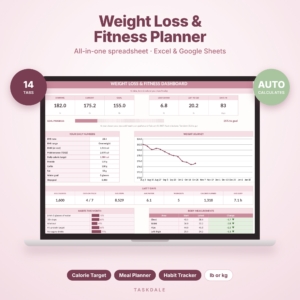
SlimBloom Weight Loss & Fitness Planner Spreadsheet
Price: $1.19 | Best for: logging meals and calories in an Excel template
An Excel template with a calorie, macro, meal, workout and habit tracker. Plan your four weeks in the meal section and see your daily totals without doing the sums yourself. A low-cost option if you like working in a spreadsheet.
Planner tools that build the grocery list for you
The slowest part of a budget meal plan is the grocery list. You copy ingredients from five recipes, cross out what is already in the cupboard, and still forget the onions. A planner with an automatic grocery list and a pantry inventory removes most of that work. Two Pantry to Plate versions suit this plan, one as a spreadsheet and one as a printable bundle, and Glow Goals adds a meal planner and grocery list next to calorie and macro tracking.
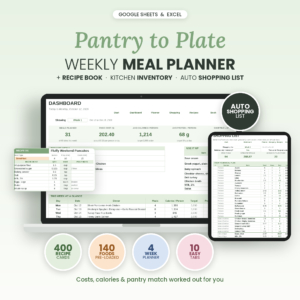
Pantry to Plate Meal Planner (Spreadsheet)
Price: $5.99 | Best for: weekly menus with an automatic grocery list
A weekly meal planner spreadsheet for Excel and Google Sheets with an automatic grocery list, recipe organizer and pantry inventory. It does the list-building for you, which is the dull part of any budget plan, and the pantry inventory helps you shop from what you already own.
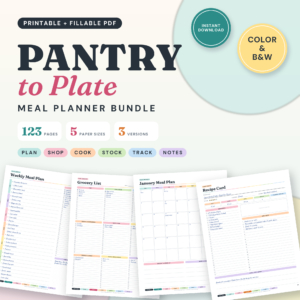
Pantry to Plate Meal Planner Printable Bundle
Price: $2.49 | Best for: a printable meal planner on paper
A 123-page fillable PDF meal planner bundle that comes in 5 sizes. Print the weekly pages you need, write in the menu and the shopping list, and keep the rest for later weeks.
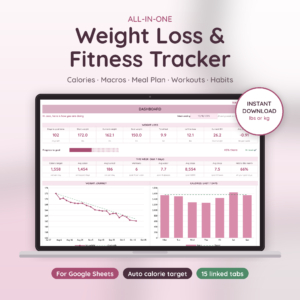
Glow Goals Weight Loss & Fitness Tracker
Price: $2.50 | Best for: calorie and macro tracking in Google Sheets
A weight loss tracker spreadsheet for Google Sheets with a calorie and macro tracker, meal planner, grocery list, workout log and habit tracker. It is the closest match to the topic of this article, since it is made for Google Sheets from the start and covers food, workouts and habits in one file.
Meal planner options compared
| Product | Format | Price | Best for | Link |
|---|---|---|---|---|
| Pantry to Plate Meal Planner (Spreadsheet) | Excel & Google Sheets spreadsheet | $5.99 | Weekly menus with an automatic grocery list | View |
| Pantry to Plate Meal Planner Printable Bundle | 123-page fillable PDF, 5 sizes | $2.49 | A printable meal planner on paper | View |
| Glow Goals Weight Loss & Fitness Tracker | Google Sheets spreadsheet | $2.50 | Calorie and macro tracking in Google Sheets | View |
| SlimBloom Weight Loss & Fitness Planner Spreadsheet | Excel template | $1.19 | Calorie totals and meal logging | View |
Mistakes that make a weight loss meal plan on a budget fail
Most budget plans don’t die from lack of recipes. They die from a few predictable slips.
The first is planning seven brand-new dinners a week. That means seven new shopping lists and seven new ways to fail. Repeat meals on purpose. Familiar food is cheaper, faster and less stressful.
The second is skipping snacks and then raiding the vending machine. Plan one or two cheap snacks, like an apple with peanut butter, popcorn, or boiled eggs. If you’re hungry between meals, it’s a planning problem and not a character flaw.
The third is ignoring portions. Cheap food is still food. Rice, pasta and bread are great, but a big pile of them with little protein or vegetables leaves you hungry again in an hour. Build each plate with something filling, something green and something with flavor.
The fourth is letting one bad day cancel the week. If you eat out on Wednesday, that’s fine. Pick the plan back up with Thursday’s breakfast. Nobody follows a plan perfectly, and you don’t need to.
Frequently asked questions
How can I eat healthy to lose weight on a tight budget?
Build meals around cheap staples like oats, eggs, beans, lentils, rice, frozen vegetables and seasonal produce. Cook in batches, reuse ingredients across meals and plan before you shop. Planning cuts the impulse buys and takeout that usually cost the most.
How much should I spend on groceries each week?
It varies by location, household size and what you already have in the cupboard. Track a normal week now, then track each week of your plan. Compare the two numbers. That’s a better guide than any national average.
Is frozen food okay for weight loss meals?
Yes, frozen vegetables and fruit are useful, affordable and keep for months. They cut waste because you use only what you need. Check labels on frozen ready meals, which can be higher in salt and calories than plain frozen produce.
Do I need to count calories on a budget meal plan?
Not necessarily. Some people do well with portion awareness and a simple plate method. Others prefer numbers. Choose what you’ll actually keep up. A doctor or dietitian can help set personal goals if you want precise targets.
How do I stop food waste when meal planning?
Shop with a list, check the fridge first, and plan a use-it-up meal at the end of the week. Freeze extras like bread, cooked rice or soup portions. Write the week’s menu down so you know what’s meant to be eaten.
Your next step
So, pick week 1, write your list and shop with it. If you’d like a place to plan the whole four weeks, the Pantry to Plate Meal Planner Printable Bundle is $2.49 and gives you 123 fillable pages to plan menus and lists. If you prefer a spreadsheet, the Pantry to Plate spreadsheet is $5.99 and builds the grocery list automatically. The Well Within Fitness & Life Planner at $1.19 also has meal, workout and habit pages. Print it, fill in the first seven dinners, and your weight loss meal plan on a budget is officially underway.