Best Cap Rate Calculator Spreadsheets for Rental Deals
The best cap rate calculator is the one that matches how many deals you analyse and whether you also manage tenants. For quick screening, the free Keystead Deal Analyzer Lite works. For side-by-side comparison, choose the full Keystead. For running a rental portfolio, pick a landlord tracker such as Rooftally, Gableworth, Brick & Ledger or Keyward.
- A cap rate is net operating income divided by the property's purchase price or value, shown as a percentage.
- Keystead Deal Analyzer Lite covers up to 3 deals, while the full Keystead compares up to 10 properties side by side.
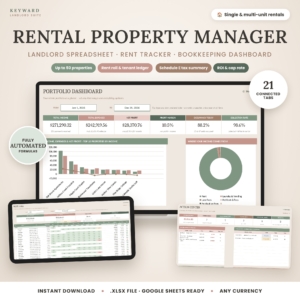
- Gableworth, Brick & Ledger and Keyward each handle up to 50 properties, and Keyward allows up to 250 units.
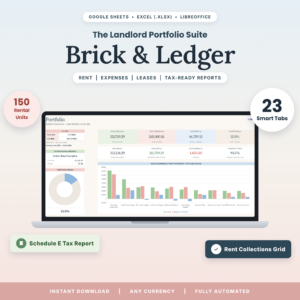
- Brick & Ledger works in Google Sheets and Excel, and does not need Microsoft 365 or a subscription.
- Every option here is a spreadsheet, so you can see and change each formula.
Table of Contents (Toggle)
- What is a cap rate calculator?
- What should you look for in the best cap rate calculator?
- How do the cap rate spreadsheets on this page compare?
- Which cap rate calculator suits which investor?
- How do you work out a cap rate in a spreadsheet?
- What mistakes make a cap rate misleading?
- What affects the price of a cap rate spreadsheet?
- Common questions
- How to choose with confidence
Cap rates can feel like a number everyone else understands. They aren't hard, and a good spreadsheet does the arithmetic so you can concentrate on whether the inputs are honest. We'll walk through what matters, so you can choose with confidence. Browse all 6 options below once you know what you need.
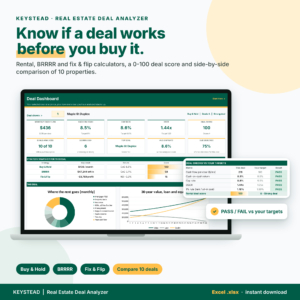 Real Estate Deal Analyzer Spreadsheet | Keystead Rental Property Calculator with BRRRR, Fix & Flip, Cap Rate, Cash on Cash & 10-Deal Comparison (Excel)
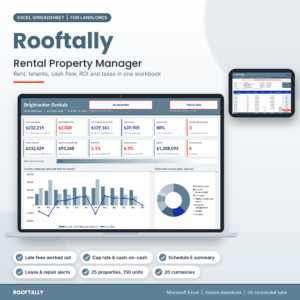 Rental Property Spreadsheet for Landlords (Excel): Rent Tracker, Tenant Ledger, ROI & Schedule E | Rooftally
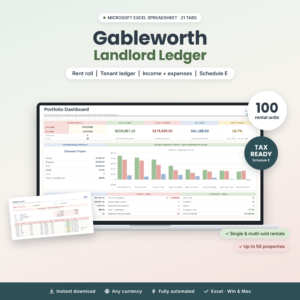 Landlord Spreadsheet for Excel | Gableworth Rental Property Tracker with Rent Roll, Tenant Ledger, Income & Expense Tracker, Schedule E Tax Summary & ROI
What is a cap rate calculator?
A cap rate calculator is a tool that divides a property's yearly net operating income (NOI) by its price to show the return before any mortgage. A property that earns 12,000 a year after operating costs and costs 200,000 has a cap rate of 6%.
The figure ignores your financing on purpose. That makes it a fair way to compare a flat in one town with a house in another, because the loan terms don't distort the answer.
A calculator earns its place by being consistent. If you work out cap rate by hand on five properties, you will probably treat expenses slightly differently each time. A spreadsheet applies the same rules to every deal.
What should you look for in the best cap rate calculator?
The best cap rate calculator takes your rent and costs, calculates NOI correctly, and shows the result next to other measures. The factors below separate a tool you can trust from one that just fills in a box.
It calculates NOI the right way
NOI is rent minus operating costs such as insurance, repairs, management, property tax and vacancy allowance. Mortgage payments are not part of it.
Check that the sheet has a place for vacancy and maintenance, not only rent and tax. A calculator with no vacancy line will flatter every property.
It checks results against your own targets
Several products here compare results with targets you set. Both Keystead versions give PASS / FAIL checks and a 0-100 deal score against your own numbers.
This matters because a good cap rate differs by area and by investor. Your target should drive the verdict, not a figure someone else picked.
It handles the number of deals you actually have
Keystead Deal Analyzer Lite covers up to 3 deals. The full Keystead compares up to 10. Rooftally holds 25 properties and 150 units, while Gableworth, Brick & Ledger and Keyward each go to 50 properties.
Choose by your realistic count over the next couple of years, not today's.
It sits alongside the other measures
Cap rate says nothing about your loan or your cash invested. Look for cash-on-cash return and DSCR (debt service coverage ratio, which shows whether rent covers the mortgage) in the same sheet. All six products on this page include them in some form.
It works in the software you already use
Keystead Deal Analyzer Lite, the full Keystead and Rooftally are Excel workbooks. Gableworth works in Excel 2010 or newer on Windows and Mac. Brick & Ledger works in Google Sheets and Excel. Keyward is an .xlsx file tested in Google Sheets.
If you use Google Sheets, test the file before you rely on it.
It comes with guidance
A sample file shows you what a finished sheet should look like. Gableworth includes a filled sample file and a 21-page illustrated guide. Brick & Ledger includes a filled sample file and a step-by-step guide. Keyward includes an example file and a 19-page guide.
How do the cap rate spreadsheets on this page compare?
The main differences are scope and capacity: two Keystead sheets are deal analysers, and the other four are landlord trackers with cap rate built in.
Which cap rate calculator suits which investor?
Each product suits a different stage. Match the sheet to what you do most often.
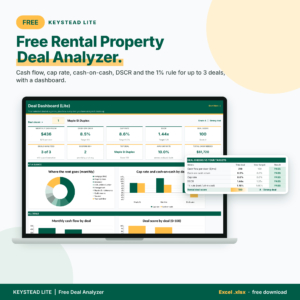
You're new and want to try cap rate for free. Keystead Deal Analyzer Lite analyses up to 3 deals with a dashboard and charts. You need a free Taskdale account, and you can download up to 3 times a day.
You're comparing several properties before offering. The full Keystead handles 10 deals side by side. It also covers BRRRR (buy, rehab, rent, refinance, repeat) and fix and flip maths, including the 70% rule and maximum allowable offer, plus a 30-year equity projection.
You own rentals and want cap rate beside rent tracking. Rooftally shows who has paid, who is late and which leases are ending, and gives cap rate, cash-on-cash and DSCR per property. It also has a dashboard with 12 KPIs and 4 charts.
You prefer Excel and want paperwork output. Gableworth updates cap rate and cash-on-cash as you type. It also produces a monthly rent roll, tenant ledgers and rent receipts you can print.
You use both Google Sheets and Excel, or dislike subscriptions. Brick & Ledger needs no Microsoft 365 and no subscription. Its 23 connected tabs build tenant ledgers, a 12-month rent collections grid and investment returns.
You have many units. Keyward allows up to 250 units. It reports NOI, cap rate, cash-on-cash return and DSCR for each property.
How do you work out a cap rate in a spreadsheet?
You work out a cap rate by finding NOI first, then dividing by price. Any of the sheets here follows the same order.
- Enter the yearly rent the property should collect.
- Subtract an allowance for empty periods, so you start from realistic rent.
- List operating costs: insurance, repairs, management, property tax and any service charges.
- Subtract those costs to get NOI. Leave out mortgage payments.
- Divide NOI by the purchase price and read the percentage.
- Compare it with your target and with similar properties nearby.
Run the sum twice, once with your hopeful numbers and once with cautious ones. If the deal only works on the hopeful set, treat it carefully.
What mistakes make a cap rate misleading?
The commonest mistake is leaving costs out of NOI, which inflates the percentage. Others are easy to avoid once you know them.
- Including the mortgage in NOI. Cap rate is meant to ignore financing.
- Skipping vacancy. Even a well-let property has gaps between tenants.
- Using the asking rent, not the likely rent. Check what comparable homes actually let for.
- Forgetting repairs. New roofs and boilers aren't rare events over a long holding period.
- Treating cap rate as the whole story. A high cap rate can signal higher risk, such as a weaker area or a property in need of work.
- Comparing different property types. A student flat and a family house carry different risks, so the same cap rate doesn't mean the same thing.
What affects the price of a cap rate spreadsheet?
The price of a cap rate spreadsheet depends mostly on scope. A single-purpose deal analyser costs less than a full landlord suite, and the free Keystead Deal Analyzer Lite costs nothing beyond a Taskdale account.
Three things push the cost up: how many properties and units it supports, whether it includes BRRRR and flip tools or tax summaries, and how much documentation and sample data come with it. A sheet with a guide and a filled example takes longer to build, which tends to show in the price.
Because spreadsheets are one-off downloads, compare what you would pay once with what you would otherwise pay for software that charges monthly. Check the live product cards for current prices.
Common questions
What is a good cap rate for a rental property?
There is no single figure. It varies by location, property type and your own targets. Lower cap rates often go with lower perceived risk and stronger areas. Set a target in your spreadsheet, then test each deal against it with realistic costs.
Is cap rate the same as return on investment?
No. Cap rate measures income against the property's price and ignores your loan. Cash-on-cash return measures income against the cash you actually put in. Use cap rate to compare properties and cash-on-cash to judge your own financing.
Can I use these spreadsheets in Google Sheets?
Brick & Ledger is built for Google Sheets and Excel. Keyward is an .xlsx file tested in Google Sheets. The Keystead sheets, Rooftally and Gableworth are described as Excel files, so open them in Excel to be safe.
Do I need a landlord tracker or just a deal analyser?
A deal analyser is enough if you only assess properties before buying. A landlord tracker suits you once you own rentals and want rent, ledgers and tax summaries in one place. Several trackers here also show cap rate per property.
Do these sheets replace advice from an accountant?
No. Several include Schedule E-style summaries, which help you organise records. Tax rules depend on your circumstances, so check your figures with a qualified accountant before filing.
How to choose with confidence
Pick by the job you do most. If you analyse a few deals and own nothing yet, start with Keystead Deal Analyzer Lite. If you compare offers regularly, take the full Keystead. If you own rentals and want everything in one workbook, choose from Rooftally, Gableworth, Brick & Ledger or Keyward, based on your software and unit count.
Then enter cautious numbers on a property you know well. If the result matches your instinct, you've found a sheet you can rely on.