An eat fit meal plan for active people is not a diet. It is a way of making sure the food keeps up with the life. If you walk 15,000 steps on a hospital ward, cycle to work, coach under-10s football on Saturday or spend the day on a building site, you burn through a lot. Skipped lunches and vending machine dinners catch up with you by mid-week.
This guide is for people who move a lot and want steady energy, not a smaller waistline at all costs. You will get a simple plate for active days, a packing list for long shifts, a sample week for a busy household, and three planners that handle different needs: a family spreadsheet, a macro planner for the numbers-minded, and a tablet planner for people who like to write.
There are no forbidden foods here. Just more of the right ones at the right times.
Quick picks: planners for active households
| Product | Best for | Price | Link |
|---|---|---|---|
| Pantry Bloom Meal Planner Spreadsheet | Families with different nutrition goals | $18.99 | View |
| MacroBloom Macro Meal Planner Spreadsheet | Runners and riders who like numbers | $27.95 | View |
| Thymewise Digital Meal Planner | Writing the plan by hand on a tablet | $1.75 | View |
| Larkspoon Meal Planner Spreadsheet | Busy cooks who want an aisle-sorted list | $12.99 | View |
What eating fit means when you are always moving
Most meal plans online are written for people trying to eat less. Active people often have the reverse problem. They undereat by accident because the day is too busy to stop. A paramedic on a 12-hour shift can reach 4 pm on a coffee and a cereal bar, then eat everything in sight at 9 pm.
So the goal of an active meal plan is simple: regular meals, enough carbs to keep going, protein at each meal, plenty of vegetables and fruit, and water you actually drink. That’s the whole brief. The planning part is making sure the food is there when the day gives you five minutes to eat it.
If you have a health condition or targets from a dietitian, use those as your guide and treat the ideas below as practical help with the planning.
A plate for active days
Think in three meals, each with a job.
Breakfast that lasts until lunch
Slow carbs plus protein. Oats with milk and fruit, eggs on wholegrain toast, yogurt with granola and a banana. A breakfast of just a pastry runs out by 10 am; one with eggs or yogurt usually carries you further.
Lunch that travels
It has to survive a bag, a locker or a van dashboard. Wraps, rice bowls, pasta salads and thermos soups all travel well. Make it at least as big as your dinner on a physical day.
Dinner that rebuilds
A palm or two of protein, a fist or two of carbs, half the plate vegetables. On a very active day, add more carbs. On a quiet day, a little less. No scales needed.
Snacks matter more for active people than for anyone else. Two planned snacks stop the 4 pm crash and the 9 pm raid.
The long-shift packing list
Keep a box or bag that gets packed the night before. Here is what goes in it on a 12-hour day.
- A main lunch: rice bowl, wrap or pasta salad
- A second small meal for later: soup in a flask, or a sandwich
- Two pieces of fruit
- A protein snack: yogurt pot, boiled eggs, cheese and crackers
- A carb snack: flapjack, oatcakes, a handful of dried fruit and nuts
- A one-liter water bottle, refilled once
Write this list on the inside cover of your planner. Then the night-before packing takes five minutes, and you never stand in front of the fridge at 6 am wondering what to grab.
Planning by day type
Active people rarely have identical days. A Tuesday on your feet differs from a Sunday on the sofa. Label each day in your weekly plan and adjust portions, not the whole menu.
| Day type | Example | What changes |
|---|---|---|
| Quiet day | Desk work, short walk | Normal portions, two snacks at most |
| Active day | On your feet all shift, or a 45-minute run | Bigger lunch, extra carb snack, more water |
| Big day | A long ride, a match, a moving-house Saturday | Bigger breakfast, food during the activity, a hearty dinner |
Using the same dinners across day types keeps shopping simple. A big day just gets an extra scoop of rice and a second piece of chicken.
A week for an active household
Here is a sample week for two working adults, one who cycles to work and one on hospital shifts, plus a teenager who plays football three times a week.
| Day | Dinner | Packed lunch next day | Notes |
|---|---|---|---|
| Sunday | Roast chicken, potatoes, carrots | Chicken and rice bowls | Cook two chickens |
| Monday | Beef and bean chili with rice | Chili in a flask | Football training, eat at 7:30 |
| Tuesday | Salmon, noodles, stir-fried greens | Noodle salad | Long shift, dinner kept warm |
| Wednesday | Pasta bake with spinach and mince | Pasta bake squares | Freeze two portions |
| Thursday | Chicken fajitas | Wraps | Football match, quick dinner |
| Friday | Homemade pizza night | Leftover pizza | Teen helps cook |
| Saturday | Lentil and vegetable curry | Curry and rice | Long ride in the morning, big breakfast |
Each dinner doubles as the next day’s lunch. That one rule removes most of the daily scramble. It also cuts food spending, which we cover in more detail in our guide to meal planning on a budget.
One kitchen, different needs
A runner, a desk worker and a growing teenager do not need the same amount of food, but nobody wants to cook three dinners. A spreadsheet that tracks nutrition per person lets you cook one meal and simply serve different portions.
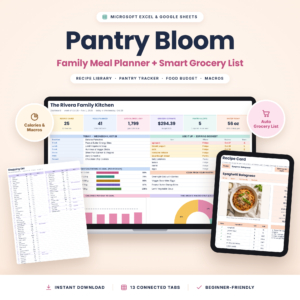
Pantry Bloom Meal Planner Spreadsheet
Price: $18.99 | Best for: households with mixed activity levels
An Excel and Google Sheets workbook with 13 connected tabs, including settings for household size and nutrition goals, a weekly meal plan with 8 meal slots a day, a recipe library, a pantry with expiry alerts and a smart grocery list that subtracts what you already have. Weight, BMI and hydration trackers cover up to 8 family members, and a SAMPLE file shows a filled family week. Set each person’s goals in Settings, then plan one shared dinner per night.
The leftovers tick box is handy for active families. Mark Tuesday’s lunch as leftover chili and it counts toward nutrition but stays off the shopping list.
If you like seeing the numbers
Some active people want to know they are eating enough for their training, especially runners and cyclists building up distance. A macro planner turns your stats and activity into daily targets, then shows how your planned meals compare.
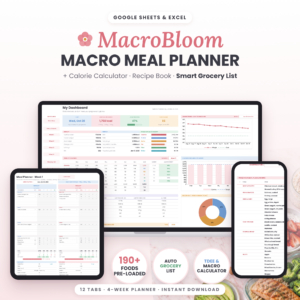
MacroBloom Macro Meal Planner Spreadsheet
Price: $27.95 | Best for: runners and riders who track macros
A Google Sheets and Excel planner that works out BMR and TDEE with five activity levels and seven diet styles, including Endurance and Balanced. It links your targets to a 4-week meal planner, a 40-card recipe book, a 190-food library and a grocery list sorted by aisle, with a dashboard for weekly averages and trends. Enter your stats and pick Endurance or Balanced before planning week one.
Use the numbers as a check, not a cage. If your planned day sits well under target on a long-ride Saturday, add a bigger breakfast and a snack for the road.
Planning with a pen on a tablet
Not everyone wants formulas. If you like writing your week out by hand but want it with you all day, a digital planner on a tablet works well. You can glance at the plan on a break without digging for a sheet of paper.
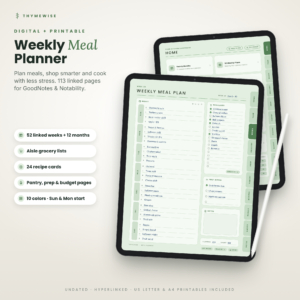
Thymewise Digital Meal Planner
Price: $1.75 | Best for: active people who prefer handwriting
An undated, hyperlinked 113-page planner for GoodNotes, Notability and similar apps, with 52 weekly meal plans covering breakfast, lunch, dinner and snacks, aisle-sorted grocery lists, a meal prep planner, pantry and freezer inventories, 24 recipe cards, a grocery budget tracker and a healthy habits tracker. Printable US Letter and A4 versions come with it. Start with the meal prep planner, then fill week one.
Drinks and the water habit
Active people often think about food and forget fluids. A simple habit fixes it: a marked bottle. Draw lines on a one-liter bottle for 10 am, 1 pm and 4 pm. Refill once. On hot days or big days, refill twice.
Add water to your plan the way you add meals. A habit tracker row with eight boxes a day turns it into a small game. Energy drinks and fizzy drinks are fine now and then, but if they replace water on a long shift, you may notice it in the afternoon.
Coffee counts as a drink but not as lunch. On long days, many people lean on a third and fourth cup to push through the slump that a missed meal caused. Pack the meal and the coffee goes back to being a pleasure instead of a crutch. A warm flask of soup on a cold site does the same job and feeds you at the same time.
A Sunday hour that feeds the week
Busy, active weeks run on food made in advance. One focused hour on Sunday covers most of the sample week above.
- 0 to 10 minutes. Check the week’s shifts, matches and rides. Label each day.
- 10 to 25 minutes. Roast two chickens and a tray of root vegetables.
- 25 to 40 minutes. Cook a big pot of rice and a pot of chili at the same time.
- 40 to 50 minutes. Boil a dozen eggs, wash fruit, portion snacks into small bags.
- 50 to 60 minutes. Pack Monday’s lunches and stack the rest in the fridge, labeled.
That’s it. Monday morning, everyone grabs a box and goes. The first time it works, the calm of that Monday is hard to give up.
Early starts and late finishes
Active jobs rarely run nine to five. A builder may start at 6:30 am. A nurse may finish at 8:30 pm. Plan meals around the clock you actually live on.
Starting before dawn
If breakfast at 5 am feels impossible, split it. Eat something small at home, like a banana or a slice of toast, and pack the main breakfast for your first break. Overnight oats in a jar are ideal.
Finishing late
Eat a proper meal on your last break rather than waiting until you get home. Then keep the home meal light: soup, eggs on toast, a small bowl of leftovers. You will sleep better and wake up hungry for breakfast, which is a good sign.
Rotating shifts
Write the shift pattern in your planner before you write a single meal. Day shifts, nights and days off each get their own meal pattern, and you reuse those patterns every rotation.
Who this plan is not for
If you are an elite athlete with a sports nutritionist, follow their plan; a household planner is only for recording it. And if your activity level is low most of the week, this is more food than you need. A standard weekly plan with smaller portions will suit you better.
Traps busy, active people fall into
- Skipping lunch because the day is full. Pack a lunch you can eat in eight minutes, standing up if needed.
- Making up for it all at night. A huge late dinner after a hungry day often means poor sleep. Spread the food out.
- Planning for an average day. Label days quiet, active or big and adjust portions.
- Forgetting the weekend. Saturday matches and rides need breakfasts too. Plan them like weekdays.
- Buying fresh food you will not have time to cook. Frozen vegetables and pre-cooked grains are your friends on 12-hour weeks.
If a monthly view helps you see shift patterns and match days in advance, our guide to building a monthly meal plan you will actually follow shows how to lay it out.
Frequently asked questions
What should active people eat in a day?
Three regular meals with protein, carbs and vegetables, plus two planned snacks and plenty of water. On very active days, eat a bigger breakfast and lunch rather than saving it all for dinner.
How do I meal plan around shift work?
Plan by shift, not by weekday. Write each shift into your planner first, then give long shifts a packed main meal, a second small meal and two snacks. Make dinners that double as tomorrow’s lunch.
Do I need to count macros if I am active?
No. A balanced plate and regular meals cover most people well. Counting can help endurance athletes check they are eating enough on big training days.
What are good snacks for active days?
Fruit, yogurt, boiled eggs, cheese and crackers, oatcakes, flapjacks and a small handful of nuts and dried fruit. Pack one protein snack and one carb snack.
Can one meal plan work for a whole active family?
Yes. Cook one dinner and change the portions. A spreadsheet that tracks goals per person makes it easy to see who needs more on which days.
Your next step
Tonight, label each day of next week as quiet, active or big, and pack tomorrow’s lunch from tonight’s dinner. If your household has mixed needs, set up the Pantry Bloom Meal Planner Spreadsheet with each person’s goals and plan one shared dinner for every night.