The fridge door is the best spot in the house for a meal plan. Everyone walks past it ten times a day. The question is what goes on it: a magnetic dry-erase meal planner you wipe clean each week, or a printed sheet you fill in and swap every Sunday.
Both work. Both fail in their own ways. This guide compares them honestly, covers the hybrid trick that gives you the best of each, and shows three Taskdale printables and spreadsheets that make good fridge sheets. If you have been staring at a magnetic board in a store aisle wondering if it is worth it, read this first.
Quick picks: fridge-ready meal planners
| Product | Best for | Price | Link |
|---|---|---|---|
| Plate & Pantry Weekly Meal Planner Printable | Small fridge sheets in A5 or Half Letter | $1.69 | View |
| Blush & Sage Meal Planner Kit | Dinner calendar plus ink-saver pages | $1.49 | View |
| Prep & Plenty Family Meal Planner Spreadsheet | Printing a color-coded menu from a spreadsheet | $31.99 | View |
What a magnetic meal planner is good at
A magnetic meal planner is usually a dry-erase board or a thick magnetic pad with the days of the week printed on it. You write the week’s dinners in marker, wipe it on Sunday and start again.
- Zero printing. No ink, no paper, no hunting for the printer cable.
- Always there. It never falls behind the fridge or ends up under the fruit bowl.
- Fast changes. Swap Tuesday and Thursday with a fingertip and a marker.
- Kid-friendly. Children love writing “pizza” in big letters on Friday. That small bit of ownership can make dinner less of a battle.
For a household that eats a fairly steady rotation and just needs a reminder of which night is which, a board is quick and tidy.
Where magnetic boards let you down
The trouble starts once you want more than seven words on the fridge.
- Little room for a grocery list. Some boards have a narrow list strip, but writing 25 items in marker is slow, and you cannot take the board to the store. You end up copying it onto your phone.
- No memory. Wipe it and last month’s plan is gone. You cannot look back to see which dinners went down well or what you cooked three weeks ago.
- One fixed layout. If you want breakfast and lunch rows, or two dinners for two shift patterns, a seven-line board will not stretch.
- Smudges and ghosting. Markers dry out, writing smears when someone brushes past, and old ink can leave a grey shadow.
- Little hands. A wiped-off Wednesday is a classic toddler move.
None of that makes a board bad. It just means it works best as a dinner reminder, not as a full planning system.
What printable fridge sheets are good at
A printable sheet is a PDF you print each week or month, fill in by hand or on screen, and pin to the fridge with a magnet or clip.
- Room to plan properly. Breakfast, lunch, dinner, snacks, notes, and a grocery list right beside the meals.
- A record you can keep. File old sheets in a folder. After two months you have a list of 30 dinners your family actually ate, which is gold on a tired Sunday.
- Choose the layout. A classic grid one week, a week-at-a-glance the next. Monthly dinner calendars for people who like to see further ahead.
- Take the list with you. Tear off or fold the grocery section and take it to the shop.
- Size to your fridge. A5 or Half Letter fits a narrow fridge door; Letter or A4 suits a side panel.
Where printable sheets let you down
- Printing is a weekly job. Small, but it is one more thing. Printing four weeks at once solves most of it.
- Ink use. Colorful pages use more ink. Ink-saver versions fix this.
- Paper clutter. Old sheets pile up unless you have a folder for them.
- Changes look messy. Cross out Tuesday twice and the sheet looks scruffy, though it still works.
Side-by-side comparison
| Feature | Magnetic dry-erase board | Printable fridge sheet |
|---|---|---|
| Ongoing effort | Wipe and rewrite | Print and write |
| Space for meals | Usually dinner only | All meals if you want |
| Grocery list | Small strip, stays home | Full list, goes to the store |
| Keeps a history | No | Yes, in a folder |
| Layout options | One | As many as the file includes |
| Changes mid-week | Very easy | Cross out and rewrite |
| Best for | Steady dinner rotations | Families who plan meals, lists and budget together |
The hybrid trick: a printed sheet you can wipe
Here is the option most people miss. Print your favorite weekly page once, slide it into a clear plastic sheet protector or a magnetic dry-erase pocket, and stick it on the fridge. Write on the plastic with a dry-erase marker. Wipe it on Sunday.
You get the layout of a printable, with breakfast rows, notes and a grocery box, plus the reusability of a board. When you want a record, snap a photo of the filled sheet before wiping it. When the family gets bored of the layout, print a different page and swap it in.
Two practical tips. Fine-tip dry-erase markers work much better than chunky ones on small boxes. And keep a second sheet protector with the grocery list page, so you can unclip it and take it shopping.
Printable pages sized for a fridge door
If you go the printable or hybrid route, the size matters. A full Letter page can cover half a narrow fridge door and hide the kids’ drawings. A5 or Half Letter is often the sweet spot.
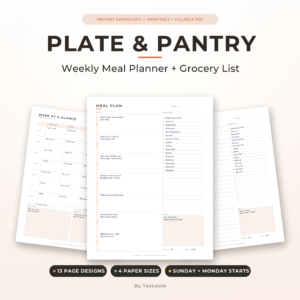
Plate & Pantry Weekly Meal Planner Printable
Price: $1.69 | Best for: families who want a fridge-sized weekly sheet
13 planning pages in US Letter, A4, A5 and Half Letter, with Sunday and Monday start versions and fillable PDFs in US Letter and A4. You get five weekly layouts, including classic and week-at-a-glance, plus a grocery list by aisle, pantry and freezer inventories, a meal prep plan and a grocery budget log. Print the classic weekly page in A5 and pin it to the fridge door.
The color dots for breakfast, lunch, dinner and snacks are a nice touch on a fridge sheet. Anyone glancing past can spot where the gaps are without reading every line.
A dinner calendar that saves ink
Some households only need dinners on the fridge, but want to see a whole month at once. A dinner calendar does that, and ink-saver pages keep printing cheap if you replace them often.
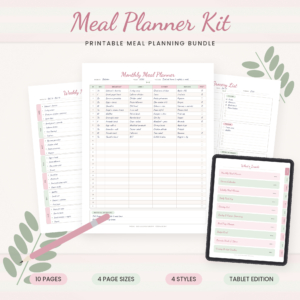
Blush & Sage Meal Planner Kit
Price: $1.49 | Best for: dinner calendars and low-ink printing
Ten planner pages, including a monthly meal planner, a 7-day dinner calendar with theme night boxes, a weekly meal planner with a grocery list beside it, a grocery list in 8 store sections, a pantry and freezer inventory and a meal prep planner. It comes in US Letter, A4, A5 and Half Letter, each in Color or Ink-Saver and lined or dot grid, plus a hyperlinked tablet edition. Print the dinner calendar in Ink-Saver for the fridge.
Theme nights work especially well on a fridge. “Taco Tuesday” and “Soup Sunday” written in the boxes do half the planning for you every week.
Print a fridge menu from a spreadsheet
If you plan on a laptop, you do not have to choose between screen and fridge. A spreadsheet that prints a clean weekly menu lets you plan with formulas and grocery lists, then pin a tidy page to the door for everyone else.
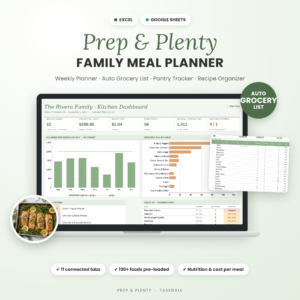
Prep & Plenty Family Meal Planner Spreadsheet
Price: $31.99 | Best for: laptop planners who want a printed menu
An Excel and Google Sheets workbook with 11 connected tabs: a weekly planner for breakfast, lunch, dinner and snacks, an automatic shopping list sorted by aisle, a printable color-coded weekly menu for the fridge, room for 400 recipe cards, and a fridge, freezer and pantry inventory with use-by dates. A user guide comes in Word and PDF. Plan the week, then print the Weekly Menu tab.
That way the shopping list stays on your phone or laptop while the fridge shows only what the family needs: what is for dinner tonight.
One family, one month with each
Picture a family of five: two adults, a nine-year-old, a six-year-old and a toddler. They try a magnetic board for four weeks, then printed sheets for four weeks.
With the board, dinners go up on Sunday night in about three minutes. The kids enjoy writing on it. But the grocery list lives on a phone, so twice the milk gets forgotten because nobody can add to the list without finding the phone. By week three, the toddler has wiped Thursday twice, and nobody can remember what was planned.
With printed sheets, planning takes about ten minutes because there are more boxes to fill. The grocery list sits right beside the meals, and the nine-year-old adds “cereal” when the box runs out. At the end of the month there is a little stack of four sheets in a folder, which becomes next month’s ideas list. The printer runs out of ink once, so they switch to the ink-saver pages.
Neither result is a disaster. They end up with the hybrid: a printed weekly page in a sheet protector, a fine marker on a string, and a photo of the sheet each Sunday before they wipe it. The milk stops being forgotten, and that feels like a real win.
Running costs over a year
A magnetic board is a one-off purchase, plus markers that dry out every few months. If the surface ghosts badly after a year, you replace it.
A printable is also a one-off purchase. The ongoing cost is paper and ink: about 52 sheets a year for a weekly plan, or 12 for a monthly dinner calendar. Ink-saver layouts and A5 pages printed two to a sheet bring that down further. The hybrid sits in between: one printed page, a sheet protector and markers.
So the cost difference is small either way. Pick based on how you plan, not on the price of a sheet of paper.
Fridge planner mistakes to avoid
- Planning seven new recipes. The fridge plan should list meals you can cook on autopilot most nights, with one new dish at most.
- Writing too small. If it cannot be read from two steps away, it will not be read.
- Leaving last week up. A stale plan teaches everyone to ignore the fridge.
- Hiding the grocery list. If items get added in three places, things get missed. One list, one spot.
Which one should you choose?
Choose a magnetic board if
You plan dinners only, rotate the same 10 or 12 meals, and keep your grocery list on your phone anyway. A board is quick and clean, and you will not miss the history.
Choose printable sheets if
You plan more than dinner, want a grocery list next to the meals, or like looking back at what worked. Families with children who help plan often prefer paper too; our guide to a meal planner for kids shows how to get them involved.
Choose the hybrid if
You like the wipe-clean idea but find boards too cramped. A sheet protector costs very little and turns any printable into a reusable fridge page.
Getting the fridge setup right
- Eye level wins. Put the plan at adult eye level, or lower if kids are meant to read it.
- One plan only. Do not put a board and a sheet up at once. People will check one and ignore the other.
- Strong magnets. A sheet that slides down every time the door shuts gets ignored. Use two magnets or a magnetic clip.
- Same day, same time. Update the fridge plan at the same point each week, such as Sunday after dinner, so it never goes stale.
- A pen on a string. If the pen is in a drawer, nobody adds “out of milk” to the list.
For more layout ideas, our round-up of printable meal planner kits for the fridge compares several designs side by side.
Frequently asked questions
Are magnetic meal planners worth it?
They are worth it for simple dinner plans in a household with a steady rotation. If you also want a grocery list, breakfasts and lunches, or a record of past weeks, printable sheets do more.
How do I make a reusable meal planner for the fridge?
Print a weekly meal planner page, slide it into a clear sheet protector or magnetic dry-erase pocket, and write on it with a fine-tip dry-erase marker. Wipe it clean each week.
What size meal planner fits on a fridge?
A5 or Half Letter suits most fridge doors without covering everything. Letter and A4 work on a wide door or the side of the fridge.
Can I print a meal plan from Excel or Google Sheets?
Yes. Some meal planner spreadsheets include a printable weekly menu tab built for the fridge. Set the print area to that tab and print it on one page.
How do I stop dry-erase writing from smudging?
Use fine-tip markers, let the ink dry for a few seconds, and place the board where people do not brush past it. Clean with a proper whiteboard spray now and then to stop ghosting.
Your next step
This Sunday, decide what your fridge plan needs to hold: dinners only, or meals plus a shopping list. If it is more than dinners, print the classic weekly page from the Plate & Pantry Weekly Meal Planner Printable in A5, slip it in a sheet protector, and stick it up tonight.