The kindest ways to save money on a tight budget without misery start with a simple idea. When there is very little slack, saving isn’t about big cuts. It is about plugging the leaks that punish small balances, building a tiny cushion, and keeping enough joy in the week that you don’t snap and spend it all on a bad Friday.
This guide is for anyone whose paycheck is mostly gone before it lands. Maybe rent takes half. Maybe there is a card balance that never seems to shrink. You will find a priority order for bills, the fees worth fighting hardest, ways to save in amounts as small as $5, and how to handle the heavy feelings that come with money stress. We also share a few Taskdale planners and workbooks that can help.
Quick picks: support for saving on a small income
| Product | Best for | Price | Link |
|---|---|---|---|
| Quiet Money Budget Planner | Planning one paycheck at a time | $1.95 | View |
| Money, Unscripted Money Mindset Workbook | Understanding your money patterns | $6.49 | View |
| The Money Exhale Financial Anxiety Workbook | When money stress feels heavy | $17.99 | View |
| The Calm Money Method | Mindset plus budget and debt trackers | $11.99 | View |
Why saving on a small income feels so hard
When money is tight, every purchase is a decision. Can I buy the brand-name cereal? Should I get the bus or walk 40 minutes? Is the kid’s school trip a yes this time? By the end of the day you have made fifty tiny money choices, and you are exhausted. That tiredness is real, and it is why so many people give up on saving and spend what is left just to stop thinking about it.
So the goal here is fewer decisions, not more willpower. Set things up once so the right choice happens without a fight. Automatic transfers, a weekly cash amount, a short list of what comes first. The less you have to think in the moment, the less miserable the whole thing feels.
And one more thing. Being short on money is not a character flaw. Plenty of careful, sensible people are stretched thin because rent went up, hours were cut or a car died at the worst time. Treat yourself the way you would treat a friend in the same spot.
Protect the essentials first
When there isn’t enough to go round, order matters. Pay these first, in roughly this order:
- Housing: rent or mortgage. Losing your home costs far more than anything else on this list.
- Utilities: power, heat and water. Reconnection fees hurt.
- Food: basic groceries for the household.
- Getting to work: fuel, bus pass, car insurance. No transport often means no income.
- Minimum debt payments: to avoid late fees and damage to your credit.
Everything else comes after. Streaming, gym, new clothes, extra card payments. That doesn’t mean they are bad. It just means they wait until the first five are safe.
If a bill on that list looks impossible this month, call the company before the due date, not after. Many utilities, landlords and lenders have hardship plans or can move a due date by a week to line up with your payday. A two-minute call can save a $40 late fee and a lot of worry.
Stop the fees that punish small balances
Fees are the cruelest part of a tight budget. A $4 coffee that tips your account into overdraft can cost $35 in fees. A rent payment three days late might add $50. These charges hit hardest exactly when you can least afford them, and stopping them is one of the fastest ways to free up money.
- Overdraft: ask your bank to turn off overdraft coverage for card purchases. A declined card is embarrassing for ten seconds. A $35 fee lasts all month.
- Low-balance alerts: set a text alert for when your balance drops under $50.
- Late fees: move due dates so they fall just after payday. Most companies will do this if you ask.
- ATM fees: use your own bank’s machines or get cash back at the grocery store.
- Account fees: if your account charges a monthly fee, look for one that doesn’t.
One person who did all of this found she had been losing about $60 a month to fees she barely noticed. Stopping them was like getting a small raise.
Save in amounts that seem too small to matter
They aren’t too small. $5 a week is $260 a year. $10 a paycheck, if you are paid every two weeks, is $260 too. That is enough to cover a car battery, a dentist visit or a month of groceries in a pinch. And it means the next surprise doesn’t go on a card.
Build a $100 starter cushion
Forget the big emergency fund for now. The first target is $100, then $300, then $500. A small cushion stops the overdraft-and-fee spiral, and that alone makes life calmer. Keep it in a separate account so it isn’t sitting in plain view every time you check your balance.
Use found money
Any money you didn’t plan for goes to the cushion first. A $20 birthday card. A $12 refund. Cash back from a store. These small bits add up faster than you might think, and they don’t come out of the budget you already rely on.
A paycheck-by-paycheck planner is a big help here, because it lets you see that the $10 transfer fits before the money arrives.
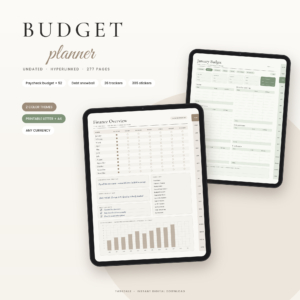
Quiet Money Budget Planner
Price: $1.95 | Best for: anyone paid one check at a time
Quiet Money is an undated digital budget planner for GoodNotes and other tablet apps, with US Letter and A4 printable versions. Across 277 linked pages you plan each paycheck before you spend it, log what really happens and watch debt and savings move. It has bill trackers, sinking funds, savings challenges and debt snowball or avalanche pages, and it works in any currency. Fill in the Budget Blueprint page first, then plan your next paycheck.
Put the leaky categories on a weekly cash limit
On a tight budget, rent and bills are fixed. The money disappears in groceries, gas, household bits and small treats. These are the leaky categories, and a weekly limit works better than a monthly one, because a month is too long to judge on the 9th.
Try this: take your monthly grocery amount, divide by four and a bit, and set that as a weekly limit. If groceries are $380 a month, that is about $88 a week. Pay for groceries from that amount only. If you have $12 left on Saturday, you know exactly what dinner tomorrow looks like.
Some people do this with real cash in envelopes. Others use a separate debit card or just a note on their phone. The method matters less than the weekly reset. If you like the cash approach, our guide to cash stuffing for beginners walks through it step by step.
Keep the free joys, they are part of the plan
The fastest way to break a tight budget is to make life feel grim. You need things to look forward to, and plenty of good things cost little or nothing.
- The library: books, films, audiobooks, often free events and sometimes museum passes.
- Potluck instead of restaurant: everyone brings one dish. A full evening with friends for the cost of a pot of chili.
- Parks, trails and free festivals: check your town’s event listings every Monday.
- Swaps: clothes, toys or books with friends or a local group.
- One small paid treat a week: a $4 coffee, a $3 magazine. Planned and enjoyed, not snuck.
That last one matters. A planned treat is part of the budget, so there is no guilt. And because you chose it, it actually feels like a treat.
Food without waste
On a small budget, throwing food out stings twice. Plan meals around what you already have, freeze bread and leftovers, and cook a big pot of something cheap on Sunday. Our list of ways to reduce food waste at home has more ideas that save real money every week.
Look at the feelings behind the spending
Tight budgets come with heavy feelings. Shame about being behind. Guilt about saying no to the kids. Fear every time the phone shows an unknown number. And sometimes those feelings drive spending. A $30 online order at midnight is often about feeling better, not about needing the thing.
You don’t have to fix all of that to save money. But noticing it helps. Many people carry money habits from childhood without realizing. If money was always short and spent the moment it arrived, saving can feel strange or even pointless. If money was a source of fights, you may avoid looking at it at all. Seeing the pattern is the first step to changing it.
A guided workbook can make that exploring easier, especially if you would rather work through it on paper than talk about it out loud.
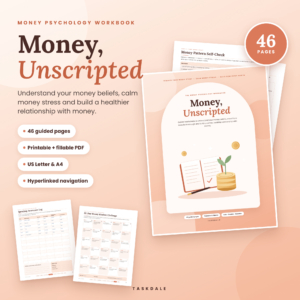
Money, Unscripted Money Mindset Workbook
Price: $6.49 | Best for: anyone stuck in old money habits
Money, Unscripted is a 46-page money mindset workbook in printable and fillable PDF, US Letter and A4. It opens with a check-in score out of 100, then helps you trace where your money beliefs came from, find your main money pattern from four types, and swap scarcity thoughts for balanced ones. It ends with trackers and a 30-day challenge. Start with the check-in and the money story pages.
Find a little extra without a second job
Saving is one side. Bringing in a bit more is the other. These are small, but on a tight budget small is a lot.
- Sell five things. A spare bike, a pram the kids outgrew, a jacket you never wear. One weekend of listing can raise $100 or more.
- Check what help you qualify for. Tax credits, utility assistance programs, school meal programs and local food banks exist for exactly this. Using them is sensible, not shameful.
- Ask about payment plans. Medical bills and some utilities can often be paid in smaller monthly amounts.
- Review your tax withholding. If you get a big refund every year, you may be able to take a little more each paycheck instead.
For a sense of how different budget rules hold up on lower incomes, our look at whether the 50/30/20 budget works on a real income is worth a read.
When money stress feels like too much
Some months, nothing on this page will feel possible. The car needs $600, the rent went up and the card is maxed. If that is where you are, take one small step. Open one envelope. Make one call. Write down one number. That counts.
If debt is out of control, a free nonprofit credit counseling service can help you look at options. And if the worry is affecting your sleep or your days, a workbook that deals with the stress itself, not just the numbers, can make the next step feel lighter.
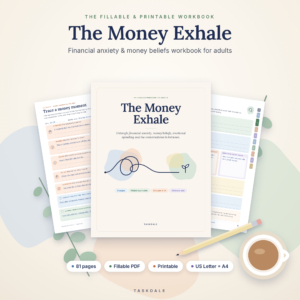
The Money Exhale Financial Anxiety Workbook
Price: $17.99 | Best for: people who feel anxious about money
The Money Exhale is an 81-page financial anxiety workbook you can fill in on screen or print, in US Letter and A4. It helps you separate facts from fears, notice emotional spending and prepare for money conversations, and it openly acknowledges real limits like uneven income and caregiving instead of pretending positive thinking fixes a shortfall. Begin with the facts-versus-fears pages on a calm evening.
Frequently asked questions
How do I start saving when I have almost nothing left?
Start with $5 a week in a separate account and send any found money there too. Stop fees first, since overdraft and late fees often cost more than you can save.
Which bills should I pay first when money is short?
Housing, utilities, food, transport to work and minimum debt payments, in roughly that order. Call any company you can’t pay in full before the due date to ask about options.
How can I save money without feeling deprived?
Keep one small planned treat each week and use free activities like the library and parks. Cut fees and forgotten subscriptions instead of the small things you enjoy.
Is a weekly budget better than a monthly one on a low income?
For groceries and other variable spending, often yes. A weekly limit resets quickly, so one bad week doesn’t wreck the whole month.
How much emergency savings do I need on a tight budget?
Start with $100, then build to $300 and $500. Even a small cushion stops many surprises from turning into fees or debt.
Your next step
Today, call your bank and ask them to turn off overdraft coverage on card purchases, then set a low-balance alert. Next payday, move $5 or $10 into a separate account and name it Cushion. If you want a calm place to plan each paycheck from here, try the Quiet Money Budget Planner.