Real healthy eating looks a lot less pretty than the photos. It is frozen broccoli steamed in the microwave. It is the same chicken and rice three times in one week because it was on sale. It is pizza on Friday and nobody feeling bad about it. The perfect rainbow bowl with twelve toppings is lovely, but almost nobody eats like that on a Tuesday with homework, a late meeting and a dog that needs walking.
This guide is for anyone who has tried to copy a polished meal prep feed and quit by Thursday. You will get a healthy eating meal plan built for real life, not Instagram: a “good enough” plate rule, a real week with leftovers and takeout baked in, a backup list for the nights that go wrong, and three Taskdale planners that do the dull bits for you.
Quick picks: planners for everyday healthy eating
| Product | Best for | Price | Link |
|---|---|---|---|
| Larkspoon Meal Planner Spreadsheet | A weekly plan that writes the grocery list and prices it | $12.99 | View |
| Thymewise Digital Meal Planner | Planning on a tablet in GoodNotes, with printables too | $1.75 | View |
| Linden Life Organizer | Meals, budget, habits and the calendar in one spreadsheet | $20.00 | View |
| Pantry Bloom Meal Planner Spreadsheet | Cooking from what is already in the cupboard | $18.99 | View |
Why the picture-perfect plan falls apart
Social media meal plans are made to be looked at. Ten matching glass boxes, each with a different grain, two kinds of roasted vegetables and a sauce in a tiny jar. They take a whole Sunday afternoon and a grocery bill that would make most families wince.
Then Wednesday happens. The kale salad is soggy. One child refuses quinoa. You are tired, and the takeout app is right there.
The problem is not willpower. It is a plan that ignores how your week actually runs. Real plans have four things the photo plans skip:
- Repeat meals. Eating the same lunch four days running is normal, cheap and fine.
- Shortcuts. Frozen veg, canned beans, a rotisserie chicken, bagged salad.
- An easy night. Eggs, beans on toast, a freezer soup.
- A treat night. Pizza, fish and chips, the local Thai place. Planned, so it does not feel like failure.
The “good enough” plate
Forget perfect macros for a moment. A plate that hits three marks most of the time is a healthy plate for most people:
- Something green or colorful. Frozen peas count. So do a handful of cherry tomatoes and a sliced cucumber.
- A protein you like. Eggs, beans, chicken, fish, tofu, Greek yogurt, cheese.
- Something filling. Rice, pasta, potatoes, bread, oats.
If a meal has all three, it is a win. If it has two, it is still dinner. Macaroni and cheese with a side of frozen broccoli is a perfectly decent Tuesday. Nobody needs a photo of it.
This takes the pressure off. You stop asking “is this healthy enough?” and start asking “does this have a vegetable?” Much easier question. Much easier answer.
Portions follow the same relaxed idea. Fill about half the plate with the vegetable part, a quarter with protein and a quarter with the filling part, then let hunger decide on seconds. A teenager after football will eat more than an adult who sat at a desk all day, and that is fine. The plate rule is a guide for building the meal, not a rule for how much anyone is allowed to eat.
A real-life week, leftovers and takeout included
Here is a week for a household of three, two working adults and a teenager, where Tuesday has a late meeting and Thursday has sport practice until 7.
| Day | Dinner | Real-life note |
|---|---|---|
| Monday | Sheet pan sausages, peppers and potatoes | One tray, 10 minutes of chopping |
| Tuesday | Leftover sausages sliced into pasta with spinach | Whoever gets home first cooks |
| Wednesday | Slow cooker chicken and black bean chili | Started at 7:30 am, eaten at 6:30 pm |
| Thursday | Chili on baked potatoes, cheese on top | Practice night, reheated in 8 minutes |
| Friday | Takeout pizza, bagged salad on the side | Planned treat, no guilt |
| Saturday | Salmon, rice and frozen green beans | Fast and simple |
| Sunday | Roast chicken, carrots and potatoes | Leftover chicken goes into Monday’s wraps |
Breakfasts are oats or eggs on toast. Lunches are leftovers, wraps or a sandwich with fruit. That is the whole plan. It would never go viral. It will, however, still be standing on Friday.
A spreadsheet that remembers your meals and writes the shopping list from them is a big help here. You plan a week like this once, save it, and use it again three weeks later with a couple of swaps.
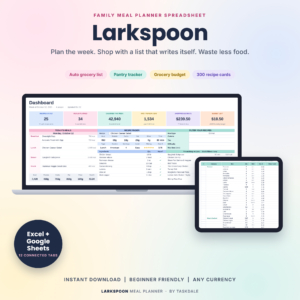
Larkspoon Meal Planner Spreadsheet
Price: $12.99 | Best for: households wanting the list done for them
Larkspoon is a single Excel and Google Sheets file with twelve connected tabs. You plan any seven days with breakfast, lunch, dinner and snacks (three slots each), and it scales quantities to your servings, subtracts what is in your pantry and writes a grocery list sorted by aisle. It shows cost per serving, per day and per week against your budget, and nutrition tracking is there if you want it. Add the five dinners your family already likes first.
Your backup list for nights that go sideways
Every real week has at least one night where the plan breaks. The meat is still frozen. Someone is sick. You get home at 8. A backup list stops that night turning into a takeout habit.
Write six emergency meals on a sticky note inside a cupboard door. Keep the ingredients stocked. For example:
- Scrambled eggs on toast with a sliced tomato
- Canned soup topped with grated cheese and a chunk of bread
- Quesadillas with canned beans and frozen corn
- Pasta with jarred sauce and a bag of frozen spinach stirred in
- Fried rice from frozen rice, frozen peas and two eggs
- Baked potato in the microwave with tuna and sweetcorn
Each of those takes 15 minutes or less and still passes the good enough plate test. That’s the quiet power of a backup list. It turns a bad night into an ordinary one.
Shortcuts that are not cheating
Real-life healthy eating leans on shortcuts. Here are the ones worth using without a second thought:
- Frozen vegetables and fruit. Already chopped, last for months, no wilting.
- Canned beans and lentils. Rinse and add to anything.
- A rotisserie chicken. Dinner one night, wraps and soup after.
- Microwave rice pouches on the busiest nights.
- Pre-washed salad bags if they mean you eat salad rather than skip it.
- Jarred curry or pasta sauce, with extra vegetables added.
The aim is food that gets eaten. A bag of fresh kale that rots in the drawer is less healthy than a bag of frozen spinach that goes into three dinners. Our tips on how to reduce food waste at home pair nicely with this list.
Plan on a tablet if paper keeps getting lost
Some people love a printed plan on the fridge. Others lose it under school letters by Tuesday. If you already carry an iPad for notes or work, planning there can be easier, because the plan travels to the store with you.
A good digital planner lets you tap from the week’s meals to that week’s grocery list and back, with a pantry list one tap away. You can copy last month’s best week by just looking at it again.
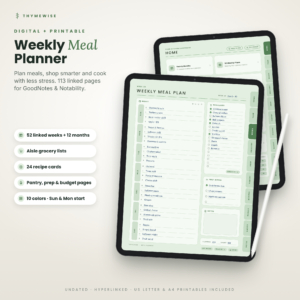
Thymewise Digital Meal Planner
Price: $1.75 | Best for: iPad planners who also like printing
Thymewise is an undated 113-page hyperlinked planner for GoodNotes, Notability and other PDF note apps, with printable US Letter and A4 versions. It has 52 linked weekly meal plans for breakfast, lunch, dinner and snacks, 12 monthly calendars, aisle-sorted grocery lists, pantry and fridge inventories, 24 recipe cards, a meal prep planner, a grocery budget tracker and a healthy habits tracker. Write your backup meals onto a recipe card first so they are always one tap away.
Mistakes that make healthy eating feel impossible
These trip up a lot of well-meaning people. Spot one and drop it.
- Cooking seven different dinners a week. Plan four or five and lean on leftovers.
- Banning foods outright. A ban makes the food more tempting. Plan it in instead.
- Copying someone else’s grocery list. Their family does not eat like yours. Start from meals your household already likes.
- Treating one off-plan meal as a ruined week. Friday’s burger does not undo Monday to Thursday.
- Weekend-long prep sessions. An hour is enough. Cook one protein, one grain, wash some veg. Stop.
- No room for kids’ tastes. If one person hates mushrooms, serve them on the side. If you are cooking for picky eaters, our guide to family meal planning when half the table is picky has more ideas.
Fitting food into the rest of your life
Food does not sit apart from everything else. A week with three late meetings and a birthday party needs a different plan from a quiet week. Money matters too. A month when the car needs new tires is a month of more bean chili and fewer salmon fillets.
That is why some people like keeping meals in the same place as their budget, calendar and habits. You see that Thursday is a late night, so you plan the slow cooker for Thursday. You see the grocery spend creeping up, so next week leans on pantry meals. One glance, one decision.
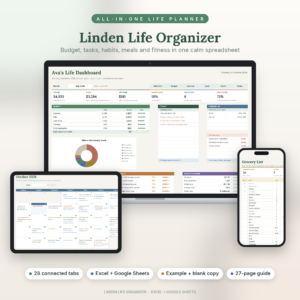
Linden Life Organizer
Price: $20.00 | Best for: busy people running a whole household
Linden is a 28-tab life planner spreadsheet for Excel and Google Sheets. It has a meal planner that feeds a grocery list and checks the pantry, plus a budget with bills and savings, a smart calendar and week ahead view, tasks, a 12-month habit tracker, a cleaning schedule, a wellness log and workout tabs. Set up your budget and calendar first, then plan meals around the busy nights the calendar shows.
A 30-minute weekly reset
Real-life plans need a short check-in, not a big ceremony. Pick one slot each week. Saturday morning with a coffee works for plenty of people, because the shop can happen the same day.
Look back for five minutes
Which meals got eaten? Which ones got skipped or binned? If the lentil curry sat untouched two weeks running, it comes off the list. No drama. You learned something about your household.
Look ahead for five minutes
Open the calendar. Mark the late nights, the practice nights and any evening out. Those become slow cooker, leftover or backup nights before you plan anything else.
Plan for ten minutes
Fill the remaining nights from your list of favorites. Add one new recipe if you feel like it. Write breakfast and lunch as “same as usual” unless something has changed.
List and check for ten minutes
Write the grocery list from the plan, then check the fridge, freezer and cupboard and cross off what you already have. Top up the backup shelf: eggs, canned beans, frozen veg, pasta, a jar of sauce.
That is all. Thirty minutes, and the week mostly runs itself. Once weekly planning feels easy, you can stretch it to a month. Our guide on how to make a monthly meal plan you will actually follow shows how to rotate your favorites over four weeks without it getting dull.
The nice part is how quickly this gets lighter. By the fourth or fifth week you are mostly copying and adjusting, and the “what’s for dinner” question has an answer before anyone asks it.
Who this approach is not for
This plan is for everyday eating. It is not a plan for a specific medical diet, an athlete cutting weight for a competition or someone working with a dietitian on a set program. If that is you, follow the guidance you have been given and use a planner to organize it.
It also will not suit you if you genuinely love the long Sunday prep and the matching containers. If that brings you joy, keep going. The point is to find a way of eating well that you can keep up on a normal Wednesday.
Frequently asked questions
What does a realistic healthy meal plan look like?
Four or five planned dinners, one leftover night, one easy or takeout night, simple repeat breakfasts and leftover lunches. Each meal has a vegetable, a protein and something filling most of the time.
Is it OK to eat the same meals every week?
Yes. Many healthy households rotate 10 to 15 favorite dinners. Swap one or two each week for variety and you will rarely get bored.
Are frozen vegetables as good as fresh?
For everyday cooking they are a very good option. They are picked and frozen quickly, they last for months and they cut waste, which makes them easier to actually eat.
How do I eat healthy when I am too tired to cook?
Keep a backup list of six 15-minute meals and stock the ingredients. Eggs on toast with tomato, bean quesadillas or pasta with frozen spinach all count as a decent dinner.
Can a takeout night fit into a healthy eating plan?
It can. Plan it in, add a side salad or some vegetables at home, and move on. A planned treat is much easier to live with than a surprise one.
Your next step
Before you plan anything new, write down the six dinners your household already eats happily and the six backup meals for bad nights. That list is the start of your real-life plan. Then drop them into the Larkspoon Meal Planner Spreadsheet and let it build next week’s grocery list for you.
