Building muscle does not require a cupboard full of tubs and bars. It needs enough protein, enough total food and a training plan you follow for months. Eggs, oats, rice, lentils, milk, chicken thighs and frozen vegetables can carry most of that on a modest grocery budget, as long as you plan the week instead of buying lunch near the gym.
This guide is for lifters on a tight budget: students, young workers, parents feeding a teenager who just discovered the weights room. You will learn how to compare protein foods by cost, get a budget grocery list sorted by aisle, see a full sample week, and pick a planner that prices your meals and tracks your lifts.
Prices change from store to store, so the numbers below are examples to show the method. Plug in your own and the maths still works.
Quick picks: planners for lifting on a budget
| Product | Best for | Price | Link |
|---|---|---|---|
| Larkspoon Meal Planner Spreadsheet | Cost per serving and protein per meal | $12.99 | View |
| Ironwood Workout Planner | Lifts, PRs and a meal planner in one sheet | $5.49 | View |
| Thymewise Digital Meal Planner | Grocery budget tracking on a tablet | $1.75 | View |
| Pantry Bloom Meal Planner Spreadsheet | Households sharing one food budget | $18.99 | View |
What a muscle-building meal plan actually needs
Strip away the marketing and three things matter.
- Protein at each meal. Spread across three meals and a snack or two rather than crammed into dinner.
- Enough total food. Muscle is hard to build while under-eating. If your weight has not moved in a month and your lifts are stuck, you probably need more food, and cheap carbs like rice, oats and potatoes are the easiest way to add it.
- Consistency. A decent plan you follow for 12 weeks beats a perfect plan you drop after 10 days.
Specific protein and calorie numbers vary by body size and goal. If you have targets from a coach or dietitian, use those. If not, a planner that tracks protein per meal will at least show you whether breakfast is pulling its weight.
Find your cheapest protein: the cost per 20 g test
The trick budget lifters use is simple. Instead of comparing pack prices, compare what you pay for the same amount of protein. Read the protein figure on the label, then work out the cost of about 20 g.
Here is a worked example with sample prices. Yours will differ, so treat this as a template.
| Food | Example pack price | Protein in pack | Cost per 20 g protein |
|---|---|---|---|
| Dried lentils, 1 kg | $2.50 | About 240 g | About $0.21 |
| Eggs, 12 | $3.60 | About 72 g | About $1.00 |
| Chicken thighs, 1 kg | $6.00 | About 180 g | About $0.67 |
| Milk, 2 liters | $2.40 | About 66 g | About $0.73 |
| Canned tuna, 1 can | $1.50 | About 25 g | About $1.20 |
| Protein bar, 1 bar | $2.50 | About 20 g | About $2.50 |
Do this once with your own store’s prices and keep the table in your planner. Most people are surprised by two things: how cheap dried beans and lentils are, and how expensive convenience protein becomes when you buy it daily.
A budget muscle grocery list by aisle
Write these as a standing list and only adjust quantities each week.
Produce
Bananas, onions, carrots, cabbage, potatoes, whatever fruit is on offer.
Meat, fish and eggs
Chicken thighs or drumsticks, minced beef or turkey when reduced, two dozen eggs.
Dairy
Milk, plain yogurt in a big tub, cottage cheese if the price is right.
Dry goods
Oats, rice, pasta, dried lentils, canned beans, canned tomatoes, peanut butter, canned tuna or sardines.
Frozen
Mixed vegetables, peas, spinach. Frozen vegetables are picked ripe, last for months and go straight into a stir-fry with no waste.
For more ways to cut the bill without coupons, our guide on how to lower your grocery bill covers store habits that save money every week.
A sample week of cheap, high-protein meals
| Day | Breakfast | Lunch | Dinner | Snack |
|---|---|---|---|---|
| Mon | Oats made with milk, banana, peanut butter | Chicken and rice from Sunday | Lentil bolognese with pasta | Yogurt |
| Tue | Three eggs on toast | Lentil bolognese leftovers | Chicken thigh stir-fry with frozen veg and rice | Glass of milk, banana |
| Wed | Overnight oats with yogurt | Tuna and bean salad | Egg fried rice with peas | Peanut butter toast |
| Thu | Oats with milk | Stir-fry leftovers | Chili with beans and mince, rice | Cottage cheese |
| Fri | Eggs and potatoes | Chili leftovers | Homemade pizza on flatbread with chicken | Yogurt |
| Sat | Pancakes made with oats, eggs and milk | Chili in a wrap | Baked drumsticks, potatoes, cabbage | Milk |
| Sun | Big egg scramble | Lentil soup | Roast chicken thighs and rice (cook extra) | Banana and peanut butter |
Look at how often lunch is last night’s dinner. That one habit removes the most expensive meal of the week for many lifters: the sandwich and drink bought near work or the gym.
Batch cooking that stretches the money
Cheap food only stays cheap if you cook it. A two-hour Sunday session covers about half of the week above.
- Roast 2 kg of chicken thighs on two trays.
- Cook a big pot of rice, enough for six portions.
- Make a double pot of lentil bolognese and freeze half for next week.
- Boil eight eggs for snacks.
- Portion everything into boxes.
The freezer is the budget lifter’s best friend. A freezer half full of portioned bolognese and chili means a cheap dinner on the night you would otherwise order takeout after a hard session.
The same cook-once habits drive our weight loss meal plan on a budget. The goal there is different, but the grocery tricks carry straight over: shared ingredients, planned leftovers and one shop a week.
Price every meal before you shop
Guessing what a week costs is how budgets slip. A meal planner spreadsheet that prices each recipe tells you before you leave the house, and lets you swap a pricey dinner for a cheaper one while you still can.
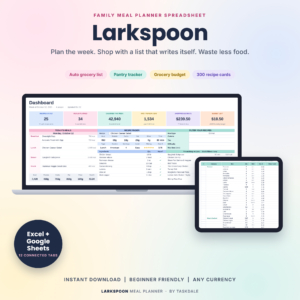
Larkspoon Meal Planner Spreadsheet
Price: $12.99 | Best for: lifters watching both protein and cost
A 12-tab workbook for Excel and Google Sheets with a weekly meal plan, a 300-card recipe book, a pantry tracker and a shopping list grouped by category. It shows cost per serving, cost per day and a weekly total against your budget, and tracks calories, protein, carbs, fat and fiber per meal and per day. Add your eight cheapest high-protein meals first, then build the week from them.
The ingredient library comes with 165 common ingredients loaded, so you only type your own prices. Do that once, and every future week prices itself.
Track lifts and meals in the same file
Progress on the bar is the real test of whether your eating is working. If your squat climbs and your weight creeps up slowly, the plan is doing its job. If both stall for four weeks, eat a bit more. You can only see that if both sets of numbers live somewhere.
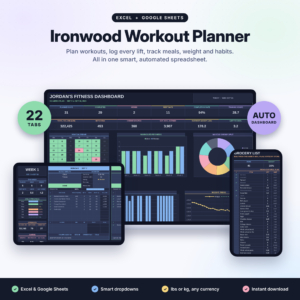
Ironwood Workout Planner
Price: $5.49 | Best for: lifters who want PRs and meals in one sheet
A 22-tab workout planner spreadsheet for Excel and Google Sheets with six weekly workout planners, smart exercise dropdowns, four starter programs, a personal record tracker with estimated one-rep max, and a dashboard with charts. It also includes a weight tracker, body measurements, a habit tracker, a meal planner and a grocery list that builds itself. Pick a starter program, then plan meals around your training days.
Seeing your bench press line rise on the chart while your grocery spend stays flat is a quiet, satisfying kind of proof.
Keeping a grocery budget on a tablet
If you prefer writing to spreadsheets, a digital planner with a budget tracker keeps the spending honest without formulas.
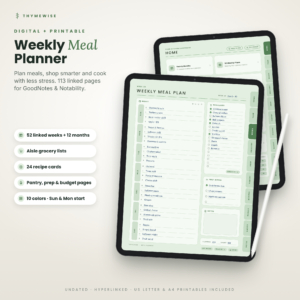
Thymewise Digital Meal Planner
Price: $1.75 | Best for: tablet users tracking grocery spending
A 113-page undated hyperlinked planner for GoodNotes, Notability and other PDF apps, with 52 weekly meal plans, aisle-sorted grocery lists, a meal prep planner, pantry and freezer inventories, 24 recipe cards and a grocery budget tracker for planned and actual spending. Printable US Letter and A4 versions are included. Log this week’s planned spend before you shop, then the actual total after.
When you struggle to eat enough
Some lifters have the opposite problem from dieters. They are simply not hungry enough to eat the food that building muscle asks for. Cramming in a fourth plate of rice feels like a chore. A few cheap tricks help.
- Drink some of it. A glass of milk with each meal adds food without much effort. A homemade shake of milk, oats, banana and peanut butter costs far less than a ready-made one.
- Add, don’t replace. A spoon of peanut butter on the morning oats, a handful of grated cheese on the pasta, an extra egg in the fried rice.
- Eat on a clock. If you wait until you feel hungry, you may wait all afternoon. Plan a snack at 10:30 and 3:30 and write it into the plan.
- Keep portions in sight. Pre-filled boxes in the fridge get eaten. Ingredients that still need cooking often do not.
Watch your weekly weigh-in. If it climbs a little each month and your lifts keep moving, the extra food is doing its job.
Cooking for one on a lifting budget
Recipes for four feel wasteful when it is just you. But for a lifter living alone, four portions is perfect: dinner tonight, lunch tomorrow, and two boxes in the freezer. That’s it. Cook a big pot twice a week and you only need two or three recipes on rotation.
A single person might run a week on just three cooks: Sunday chicken and rice, Tuesday lentil bolognese, Thursday chili. Breakfasts are oats or eggs. Snacks are yogurt, milk and bananas. The grocery list barely changes, which makes it easy to watch for price drops and stock up when chicken or mince is reduced.
A 30-minute weekly money check
Once a week, before the big shop, run through this.
- Check the freezer and the pantry. Note what needs eating first.
- Plan dinners around what you already own, then fill the gaps.
- Price the list. If it runs over your limit, swap one meat dinner for a lentil or egg dinner.
- After shopping, write the real total next to the plan.
After four weeks you will know your true average, which is far more useful than a guess. And you will probably find one or two items that quietly eat a big share of the budget.
Who this approach is not for
If you are preparing for a bodybuilding show or working with a coach on exact numbers, you will need tighter tracking than plate habits and a price list. Follow your coach’s targets and use a planner to log them. The same goes for anyone with a medical condition that affects diet. For everyday lifters who want to get stronger without overspending, this is plenty.
Where gym-goers leak money
- Daily protein bars and ready shakes. Handy, but often the most expensive protein you buy. Keep them for days you truly cannot eat a meal.
- Post-gym takeout. Tired and hungry at 8 pm is when the budget breaks. A frozen portion of chili fixes it.
- Buying chicken breasts only. Thighs and drumsticks usually cost less and stay juicier when reheated.
- Letting food spoil. A bag of spinach thrown away is money in the bin. Buy frozen.
- Shopping hungry after training. Eat first, then shop with the list.
Frequently asked questions
What is the cheapest way to get protein for muscle gain?
Dried lentils and beans, eggs, milk and chicken thighs are usually among the cheapest. Compare by cost per 20 g of protein using your store’s prices to find your own best options.
Can I build muscle without protein powder?
Yes. Powder is a convenience, not a requirement. Regular meals with eggs, dairy, meat, fish, beans or lentils at each one can cover your protein.
How much should a muscle-building meal plan cost per week?
It depends on your country, store and appetite. The useful step is setting your own weekly limit and pricing meals before you shop, so you can swap expensive dinners for cheaper ones.
Is rice and chicken enough to build muscle?
It can be part of a good plan, but eating only that gets boring fast, and boredom ends diets. Rotate in eggs, lentils, dairy and vegetables to keep it varied and cheap.
What is a cheap pre-workout meal?
Toast with peanut butter and a banana, a bowl of oats, or leftover rice with an egg an hour or two before training. All cost very little and give you something to train on without feeling heavy.
Are frozen vegetables as good as fresh for a gym diet?
For a budget plan they are often better. They are frozen soon after picking, keep for months and cut waste, so you are not throwing away wilted spinach on Friday.
Your next step
Take your last grocery receipt, work out the cost per 20 g of protein for five foods you bought, and circle the two cheapest. Then build next week’s meals around them in the Larkspoon Meal Planner Spreadsheet and see the weekly total before you shop.