Crash diets have a familiar shape. A dramatic start, a few exciting pounds in the first week, a grim second week of hunger and headaches, and then a return to old habits that often wipes out the progress. If you have ridden that rollercoaster before, you already know the ending.
A healthy meal plan for weight loss works the other way around. It starts small, feels almost too easy, and keeps going for months. The changes are quiet: a smaller pour of cereal, a second vegetable at dinner, a planned afternoon snack. Stacked up over weeks, they add up to real results you can keep.
This guide walks you through that slower approach. You will see how to choose a pace you can live with, a four-week ramp of small swaps, a sample healthy day, a 7-day menu, how to use numbers without obsessing, and what to do when the scale stalls. It is for adults who want lasting change, not a quick fix that fades by spring.
Quick picks: planners for steady weight loss
| Product | Best for | Price | Link |
|---|---|---|---|
| Bloom & Balance Weight Loss Planner | Setting a realistic goal and timeline on paper | $2.49 | View |
| Glow Goals Weight Loss & Fitness Tracker | A gentle calorie target and a goal date in Google Sheets | $2.50 | View |
| Milestone Digital Weight Loss Planner | Planning the maintenance phase too | $4.49 | View |
| Rosewater Printable Weight Loss Planner | A short paper planner for daily logs | $2.19 | View |
How to tell if a plan is a crash diet
Crash diets do not always call themselves that. Many hide behind words like detox, reset, cleanse or challenge. Here are the signs to look for before you start any plan.
- It cuts out whole food groups with no clear reason, such as all fruit, all carbs or all fats.
- It promises a big number in a short time, like 10 pounds in 7 days.
- It replaces most meals with juices, soups or special products.
- It leaves you hungry most of the day and tells you that is normal.
- It has an end date and no plan for after. Day 21 arrives and then what?
If a plan ticks two or more of these boxes, it is probably built for a fast start rather than a lasting change. That does not make you weak for having tried one. Those plans are designed to sound exciting. They just are not designed to last.
Why crash diets tend to backfire
The trouble with a crash diet is rarely the first week. It is everything after.
Hunger wins eventually
Eating far less than you need is hard to keep up. Most people can grit their teeth for a few days. Very few can do it for three months. When the plan breaks, it tends to break with a big meal or a weekend of eating everything that was banned.
No new habits are built
Drinking green juice for ten days does not teach you how to make a lighter dinner on a Tuesday. When the juice stops, the old Tuesday dinner comes back, and so does the weight.
Life does not pause
Birthdays, work lunches, holidays and tired evenings keep happening. A strict plan has no room for them, so each one feels like a failure. A steady plan expects them and makes space.
Energy drops
Many people on very low intake feel flat, short-tempered and tired. That makes it harder to cook, move, and make good choices, which pushes the plan further off track.
Choose a pace you can live with
A healthy pace feels slow on paper and surprisingly fast in real life. Many people aim for something like half a pound to two pounds a week, with the faster end more common early on and the slower end more common later. Pick a pace that still lets you enjoy dinner with your family.
Here is a worked example. Say Maria wants to lose 30 pounds. At an average of one pound a week, that is about 30 weeks, or roughly seven months. That sounds long until she remembers she tried three crash diets in the past two years and ended up where she started each time. Seven months of steady progress beats two years of starting over.
Writing the goal down, along with a rough timeline and a few milestones on the way, makes the long road feel shorter. Every five pounds becomes a small celebration rather than waiting for the final number.
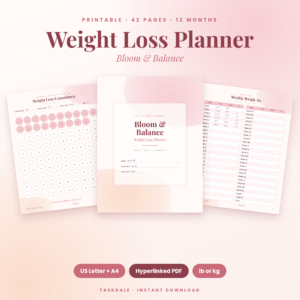
Bloom and Balance Weight Loss Planner
Price: $2.49 | Best for: anyone setting a realistic first goal
Bloom and Balance is a 42-page printable weight loss planner in US Letter and A4 with a goal calculator that works out weeks to goal and a daily calorie estimate step by step. It also includes a starting-point page, goals and motivation, a 100-circle countdown, milestone badges every five pounds or kilos, 52 weekly weigh-ins, meal plans, grocery lists and habit trackers. Fill in the goal calculator first and pencil in your milestone dates.
The four-week ramp: small swaps, one at a time
Instead of changing everything on Monday, change one area of eating each week. By the end of the month you have rebuilt your diet without ever feeling deprived.
Week 1: Drinks
Drinks are often the easiest calories to cut because you do not miss them much. Swap one sugary drink a day for water, sparkling water or plain tea. If you take two sugars in your coffee, drop to one. A daily large latte becomes a medium. That is it for week one.
Week 2: Breakfast
Build breakfast around protein so the morning lasts until lunch. Eggs on toast, Greek yogurt with fruit, or oats made with milk and topped with a spoon of nut butter. Skipping breakfast only to raid the office snacks at 11 is a common pattern worth breaking.
Week 3: Dinner portions
Keep your usual dinners but change the plate. Half vegetables, a quarter protein, a quarter starch. Serve from the stove instead of putting the pot on the table, so seconds are a choice rather than a reflex.
Week 4: Snacks
Plan one or two snacks a day that include protein or fiber: an apple with peanut butter, cheese and crackers, hummus with carrots. A planned snack at 3:30 is what stops the evening free-for-all.
Four small swaps, four weeks. None of them feel like a diet. Together they often make a real difference, and they are habits you can keep for years.
What a healthy weight loss day looks like
There is no single perfect day. Here are two examples for different lives, both built on the same plate pattern.
The office worker
- 7:00: Overnight oats with milk, berries and a spoon of chia seeds
- 10:30: A banana and a small handful of nuts
- 12:30: Leftover chicken and vegetable stir-fry with a little rice
- 3:30: Greek yogurt
- 7:00: Grilled fish, a big salad, a baked potato with a spoon of sour cream
The parent at home with small kids
- 7:30: Scrambled eggs with spinach and toast, eaten sitting down
- 10:00: Carrot sticks and hummus shared with the kids
- 12:30: Lentil soup and a cheese sandwich on wholegrain bread
- 3:30: Apple slices with peanut butter
- 6:00: Family meal of turkey meatballs, pasta and green beans, with an extra scoop of beans and a smaller scoop of pasta
Neither day involves special food. Both include treats in small portions if you want them. A square of chocolate after dinner is not a crash diet’s enemy, it is part of a plan that lasts.
A 7-day healthy menu
Use this as a template. Swap in your own favorites as long as they follow the plate pattern.
| Day | Breakfast | Lunch | Dinner |
|---|---|---|---|
| Monday | Overnight oats | Tuna and white bean salad | Chicken stir-fry with plenty of vegetables |
| Tuesday | Eggs and toast | Leftover stir-fry | Turkey chili with a side salad |
| Wednesday | Greek yogurt and fruit | Chili over a baked potato | Baked cod, roasted vegetables, couscous |
| Thursday | Oats with milk and nut butter | Chicken and hummus wrap | Vegetable omelet and a slice of toast |
| Friday | Eggs and spinach | Lentil soup | Homemade pizza with a thin base and lots of veg |
| Saturday | Pancakes with berries and yogurt | Lunch out: pick a protein and a salad side | Grilled steak, green beans, sweet potato |
| Sunday | Veggie scramble | Roast chicken and vegetables | Light bowl from leftovers |
Notice Saturday’s pancakes and Friday’s pizza. They are on purpose. A plan that includes food you enjoy is a plan you will still be following in June. For a full month of planned meals with grocery lists on a tight budget, read our weight loss meal plan on a budget.
Using numbers without obsessing
Numbers can help or hurt. Used gently, they show you whether a plan is working and stop you guessing. Used harshly, they turn every meal into a test.
A good middle path is to know roughly how much you eat, check in weekly, and let a simple tool do the math. Set a moderate daily target, not a punishing one. Log a few typical days to see where you are. Then adjust portions, not your whole life.
A spreadsheet is useful here because it can turn your weigh-ins into a trend line and a projected finish date, so one bad day does not feel like the end.
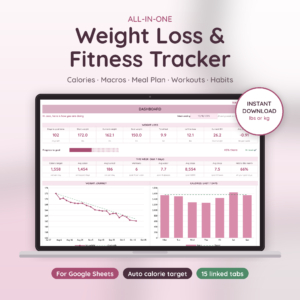
Glow Goals Weight Loss Tracker
Price: $2.50 | Best for: people who want a steady target and trend
Glow Goals is a Google Sheets tracker that estimates your maintenance calories and gives you a daily calorie target with protein, carb and fat goals from your height, age, weight and activity level. Weigh-ins are drawn against a steady goal path line, and it shows the date you will reach your goal at your current pace. It also includes 164 common foods, a meal planner with grocery list, workout logs and monthly habit calendars. Enter your profile and two weeks of weigh-ins before you change your target.
When the scale stalls
Every steady plan hits slow weeks. Water, salt, hormones, a hard workout or a late restaurant meal can all hide fat loss for a week or two. A stall is not a sign to slash food. It is a sign to look more closely.
- Check the trend, not the day. Compare this week’s average with the average three weeks ago.
- Take measurements. Your waist may be shrinking while the scale stays put.
- Review portions. Oils, sauces and snacks tend to creep up quietly over a month.
- Look at sleep and stress. Short nights often lead to bigger snacking the next day.
- Move a little more. An extra 15-minute walk after dinner is gentle and helps many people.
If you have never measured yourself before, our guide to using a body measurement tracker when the scale stalls shows where and how to measure.
Plan for after the goal, not just the goal
Crash diets end on day 21. A healthy plan does not really end. When you reach your goal weight, you slowly add a little more food back until your weight holds steady. You keep the same habits, the same plate pattern, the same weekly check-in. Only the portions shift.
That maintenance stretch is where many people slip, because they think the work is done. Planning it in advance, with a set number of weeks for adjusting and a weight range rather than one exact number, makes it far easier to stay where you landed.
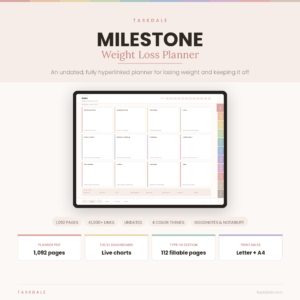
Milestone Digital Weight Loss Planner
Price: $4.49 | Best for: people who want maintenance planned too
Milestone is an undated digital weight loss planner with 1,092 hyperlinked pages in four color themes, built for the whole journey including plateaus and the maintenance phase after you reach your goal. It has monthly, weekly and daily pages for weight, meals, sleep, water, workouts and non-scale wins, plus a live Excel dashboard that projects your finish date. Open the monthly setup page and write your goal range and your plan for the first maintenance month.
Frequently asked questions
How do I lose weight without a crash diet?
Make one small change at a time: drinks, then breakfast, then dinner portions, then snacks. Build meals on protein and vegetables, plan your snacks, and check your progress once a week.
What is a realistic rate of weight loss?
Many people aim for roughly half a pound to two pounds a week. Faster loss is more common in the first few weeks, and then it usually settles into a slower, steadier pace.
Can I still eat treats on a healthy weight loss plan?
Yes. Small, planned treats like a square of chocolate or a Friday pizza make a plan easier to keep. The pattern across the week matters more than any single food.
Why do I gain weight back after dieting?
Very strict plans often end without new habits in place, so old meals and portions return. Building habits slowly, and planning a maintenance phase, makes it easier to hold onto results.
How long should a healthy weight loss meal plan last?
As long as you need to reach your goal, then it shifts into a maintenance plan with slightly larger portions. The habits themselves are meant to stay.
Your next step
Start the four-week ramp this Monday with drinks only. Swap one sugary drink a day for water or tea, and write down how it goes. Next Monday, move on to breakfast. If you want a single printable place for your goal, milestones and weekly weigh-ins, the Bloom and Balance Weight Loss Planner is a calm way to map out the months ahead.