The hardest part of starting keto is not giving up bread. It is standing in the kitchen at 6pm with no idea what to cook that has almost no carbs in it. A keto meal plan for beginners fixes that by deciding the next four weeks for you: what to eat, what to buy and what to prep on Sunday, so the first month runs on a plan instead of willpower.
This guide is for anyone trying keto for the first time, whether you are cooking for one or feeding a household where only some people are low-carb. You will learn how net carbs work, what goes in the cart, a four-week structure that builds week by week, a sample day with carbs worked out, and the planners that do the counting for you.
Quick picks: keto and low-carb meal planners
| Product | Best for | Price | Link |
|---|---|---|---|
| Sear & Sprig Keto Meal Planner & 4-Week Low-Carb Plan | A ready-made first month of keto | $8.99 | View |
| Larkspoon Meal Planner Spreadsheet | Planning your own keto weeks with carb totals | $12.99 | View |
| Pantry Bloom Meal Planner Spreadsheet | Households tracking carbs per person | $18.99 | View |
| Even Keel Kitchen Meal Planner & Carb Log | Carb logging with a plate-method focus | $7.99 | View |
Keto in plain words: what you eat and what you skip
Keto is a very low-carb way of eating. Most of your food comes from protein, fat and low-carb vegetables, while bread, pasta, rice, potatoes, sugar and most fruit come off the plate. Many beginner plans aim for somewhere around 20 to 30 grams of net carbs a day, which is far lower than a typical day of eating.
To picture the difference, a single medium banana or one regular bagel can carry more carbs than a whole keto day. That is why planning matters so much. Without a plan, carbs sneak in through sauces, snacks and “just one” slice of toast.
What goes on a keto plate
- Protein: eggs, chicken thighs, beef, pork, salmon, tuna, shrimp, bacon, sausages without fillers.
- Low-carb vegetables: spinach, lettuce, zucchini, cauliflower, broccoli, asparagus, green beans, mushrooms, peppers in small amounts.
- Fats: butter, olive oil, avocado, cheese, cream, nuts and seeds.
- Small extras: berries in modest portions, plain Greek yogurt, dark chocolate in a small square.
What usually comes off
Bread, pasta, rice, cereal, potatoes, corn, beans, most fruit, sugar, honey, juice, regular soda, beer and most packaged snacks. Plenty of sauces and dressings also carry hidden sugar, so read labels on ketchup, barbecue sauce and salad dressing.
Net carbs: the one number to understand
Keto plans usually count net carbs rather than total carbs. The idea is simple: net carbs are total carbohydrates minus fiber. Fiber is a carbohydrate your body does not digest in the same way, so many low-carb plans leave it out of the daily count.
Here is a quick example. A medium avocado has around 12 grams of total carbs, but about 9 or 10 of those are fiber. So its net carbs come to roughly 2 or 3 grams. A slice of regular white bread, on the other hand, has around 13 grams of carbs and only about 1 gram of fiber, so nearly all of it counts.
On a packaged food, look at “Total Carbohydrate”, subtract “Dietary Fiber”, and multiply by the number of servings you will actually eat. Write the result in your planner. After a couple of weeks you will know your regular foods by heart.
Your four-week keto plan, week by week
A good beginner plan does not throw everything at you on day one. Each week builds a little on the last, so by week four you are cooking confidently without checking every label.
Week 1: keep it simple
Pick five easy dinners and repeat breakfasts. Eggs every morning in different styles. Dinners like roast chicken thighs with green beans, burgers without buns and a big salad, or salmon with buttered asparagus. The goal this week is not variety. It is getting used to the shape of a keto plate and cooking once to eat twice.
Week 2: comfort food swaps
Now bring back the meals you miss, with low-carb versions. Cauliflower mash instead of potato. Zucchini noodles instead of spaghetti under a meat sauce. A crustless quiche. Chicken in a creamy mushroom sauce. This is the week that convinces most people they can actually keep going.
Week 3: more flavor
Add spice and variety. Taco bowls on shredded lettuce with sour cream and guacamole. Thai-style curry made with coconut milk served over cauliflower rice. Greek chicken with tzatziki and a cucumber salad. Herbs, spices and citrus carry almost no carbs and make meals feel new.
Week 4: family favorites and batch cooking
By now you know the rules. This week is about meals the whole household will eat, with carbs on the side for anyone who wants them. Sheet-pan sausages and vegetables. Chili with no beans. Roast pork with roasted cabbage. Cook bigger batches and freeze portions so week five starts with a head start.
If you would rather not build all four weeks yourself, a ready-made plan saves hours of planning in the first month.
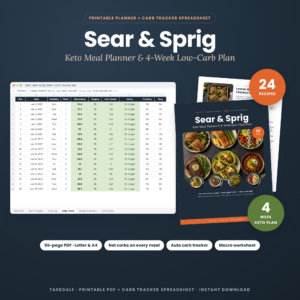
Sear and Sprig Keto Meal Planner
Price: $8.99 | Best for: keto beginners who want a set first month
A printable keto planner in US Letter and A4 with a four-week starter menu covering breakfast, lunch, dinner and a snack every day, with net carbs counted for every meal and each day at about 25 grams or less. It has 24 written dinner recipes that make four servings for dinner plus next-day lunch, weekly grocery lists sorted by aisle, a macro worksheet and a carb tracker spreadsheet. Start by reading Week 1 and shopping from its list.
A sample keto day with net carbs
Here is what one ordinary day can look like. Brands and portions vary, so treat the numbers as rough guides and check your own labels.
| Meal | What you eat | Approx. net carbs |
|---|---|---|
| Breakfast | Three-egg omelet with spinach, mushrooms and cheddar, cooked in butter | About 3 g |
| Lunch | Leftover chicken thighs on romaine with Caesar dressing and parmesan, no croutons | About 4 g |
| Snack | 1 oz almonds | About 3 g |
| Dinner | Pan-seared salmon with lemon butter, roasted asparagus and a side salad with olive oil | About 6 g |
| Day total | About 16 g |
That leaves room for a handful of raspberries, a square of dark chocolate or a creamy sauce, and the day still lands under 25 grams. It also shows how filling keto meals can be. There is nothing small or sad on that table.
Shopping for your first keto week
The first shop is the one that sets you up. Fill the cart with these basics and you can cook almost anything in the first week:
- Proteins: 2 dozen eggs, chicken thighs, ground beef, salmon fillets, bacon, a rotisserie chicken for quick lunches.
- Vegetables: spinach, romaine, zucchini, a head of cauliflower or bags of cauliflower rice, broccoli, asparagus, mushrooms, cucumbers.
- Dairy: butter, heavy cream, cheddar, parmesan, cream cheese, plain full-fat Greek yogurt.
- Fats and pantry: olive oil, avocados, almonds, sugar-free mayonnaise, mustard, herbs and spices.
- Small treats: berries and a bar of dark chocolate with a high cocoa percentage.
Then clear the kitchen of what tempts you. Not forever, and not for the rest of the household, but at least move the crackers and cereal out of your eyeline. It helps more than you would think. If you are watching the grocery bill too, our guide to a weight loss meal plan on a budget has tips that work just as well for keto shopping.
Sunday prep that makes the week easy
Ninety minutes on Sunday saves you from deciding anything on Wednesday night. Here is a simple prep list for a keto week:
- Hard-boil 8 to 10 eggs for quick breakfasts and snacks.
- Roast a big tray of vegetables: broccoli, cauliflower, zucchini and peppers with olive oil and salt.
- Cook a batch of protein: a tray of chicken thighs or a pan of taco-seasoned ground beef.
- Make cauliflower rice or open the frozen bags so they are ready to heat.
- Portion snacks: almonds and cheese cubes into small containers.
- Mix one sauce: a jar of garlic herb butter or a lemon tahini dressing to lift everything.
Lunches are where the prep really pays back. Cook four servings at dinner, eat two, and box the other two for tomorrow. A Monday roast chicken becomes Tuesday’s chicken Caesar. Wednesday’s taco beef becomes Thursday’s lettuce-wrap lunch. You only cook five or six times a week, and you are never more than one container away from a keto meal.
The first time you open a fridge full of ready food on a tired Tuesday, you will feel very pleased with past-you.
Building your own keto weeks after month one
A starter plan gets you through the first month. After that, most people want to plan their own weeks around the meals they liked best. A meal planner spreadsheet makes that much faster, because you save each recipe once with its carbs and every week’s totals add up on their own.
Try this: list your ten favorite keto dinners from the first month, rate them, and rotate the top seven. Swap in one new recipe a week to keep things interesting. If you plan in Google Sheets, our guide on how to plan a week of meals in a Google Sheets meal planner shows the setup.

Larkspoon Meal Planner Spreadsheet
Price: $12.99 | Best for: people who plan their own weekly menus
A 12-tab meal planner for Excel and Google Sheets. Pick meals for any seven days and it totals calories, protein, carbs, fat and fiber per meal, per day and per person, so you can see your carbs before you cook. It writes a grocery list sorted by aisle with pantry items subtracted, tracks what is about to expire, and prints a menu for the fridge. Add your favorite keto recipes with their carbs and fiber first.
Keto in a mixed household
Most beginners do not live with other keto eaters. Cooking two dinners every night burns people out fast. The fix is one base meal with a side that differs.
Taco night works well: everyone gets seasoned beef, lettuce, cheese, salsa and sour cream, and the non-keto eaters add tortillas or rice. Roast chicken with vegetables works the same way, with potatoes on the side for whoever wants them. Burgers come with or without buns. One pan, one meal, two versions.
A planner that tracks nutrition per person helps here, so you can see your own carbs while the family’s meals stay flexible.
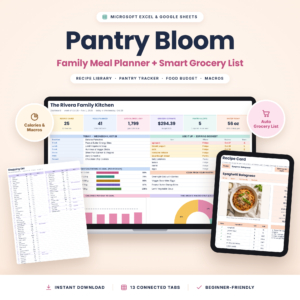
Pantry Bloom Meal Planner Spreadsheet
Price: $18.99 | Best for: families with different eating goals
A 13-tab meal planner for Excel and Google Sheets with seven day cards and eight meal slots each, a recipe library for up to 200 recipes with diet tags, and daily calories, protein, carbs, fat and fiber per person compared with goals you set. The grocery list adds up the week’s ingredients, scales them to servings and checks them against your pantry. A filled sample file and an 18-page user guide are included.
Beginner mistakes that derail the first month
- No plan for snacks. Hunger at 3pm plus a vending machine is how many keto days end early.
- Hidden carbs in sauces. Ketchup, barbecue sauce and sweet dressings add up fast.
- Too few vegetables. Keto is not just meat and cheese. Low-carb vegetables fill the plate and add fiber.
- Relying on “keto” packaged snacks. Labels vary. Check the net carbs and the serving size.
- Not drinking enough water. Keep a bottle nearby and refill it through the day.
- Giving up after one off-plan meal. Get back on plan at the next meal and keep going.
Frequently asked questions
How many carbs a day is keto for beginners?
Many beginner plans aim for around 20 to 30 grams of net carbs a day. Some go a little higher. Pick a target and use a planner to keep each day near it.
What should I eat on my first day of keto?
Keep it simple: eggs for breakfast, leftover chicken or tuna salad for lunch, and a protein with low-carb vegetables and butter or olive oil for dinner. Almonds or cheese make an easy snack.
Can I eat fruit on keto?
Small portions of berries usually fit. Most other fruit, like bananas, apples and grapes, carries too many carbs for a typical keto day.
Do I count total carbs or net carbs on keto?
Most keto plans count net carbs, which are total carbohydrates minus fiber. Pick one method and stick with it so your numbers stay consistent.
Can I do keto on a tight budget?
Yes. Eggs, chicken thighs, ground beef, canned tuna, cabbage, frozen broccoli and cauliflower are all low-cost keto staples. Planning the week and cooking once to eat twice keeps waste and takeout spending down.
Is a four-week keto meal plan enough to get started?
Four weeks is a good length to learn the foods, the shopping and the cooking. By the end, most people can plan their own keto weeks with a simple template.
Your next step
Choose your start date, then spend the Sunday before it shopping and doing the 90-minute prep. Plan week one on paper or in a spreadsheet before you begin, so day one has no decisions in it. For a full first month already planned with net carbs counted, grab the Sear and Sprig Keto Meal Planner.