Meal replacement shakes promise simplicity: one bottle, no cooking, done. For some people that works for a while. For many others, it ends the first time they sit at a family dinner table holding a plastic shaker while everyone else eats lasagna.
A real-food plan takes a little more thought, but it teaches you something a shake never will: how to build a lighter plate from the food you buy every week. That skill stays with you after the diet ends. This guide shows you how to swap each shake moment for real food that is almost as quick, with a 5-day plan, a grocery list, grab-and-go ideas and a way to track progress that goes beyond the number on the scale.
It is for adults who want to lose weight on ordinary meals, cook for a household at the same time, and avoid spending money on powders they will stop drinking in a month.
Quick picks: trackers for a real-food plan
| Product | Best for | Price | Link |
|---|---|---|---|
| Milestone Digital Weight Loss Planner | Daily food logs and a full year on a tablet | $4.49 | View |
| Step On Weigh-In Journal | Seeing progress the scale misses | $1.29 | View |
| Rosewater Printable Weight Loss Planner | Paper meal and water logs | $2.19 | View |
| Bloom & Balance Weight Loss Planner | A printable binder with meal plans and grocery lists | $2.49 | View |
Shakes or real food: an honest look
Shakes are not evil. They are convenient, they are portion-controlled, and on a chaotic morning they beat a pastry from the gas station. The trouble is what happens around them.
| Shake-based plan | Real-food plan | |
|---|---|---|
| Prep time | Almost none | A few minutes per meal, plus a weekly prep |
| Fits family meals | Often not | Yes, you eat the same dinner, plated differently |
| Ongoing cost | A regular powder or bottle purchase | Part of your normal grocery bill |
| What you learn | How to drink a shake | How to build a lighter plate for life |
| What happens when you stop | Back to old meals with no new habits | Nothing changes, you keep cooking the same way |
That last row is the big one. When a shake plan ends, you return to the meals you ate before, with no new skills. When a real-food plan ends, it does not really end. You just keep cooking.
The real-food plate, in one picture
Forget complicated rules. Every main meal on this plan follows the same simple pattern, and you can build it from almost any kitchen.
- A palm of protein: eggs, chicken, turkey, fish, lean beef, Greek yogurt, cottage cheese, tofu, beans or lentils.
- Two fists of vegetables: fresh, frozen or canned, roasted, steamed or raw.
- A cupped hand of carbs: potatoes, rice, oats, wholegrain bread, pasta, fruit.
- A thumb of fat: olive oil, butter, cheese, nuts, avocado.
Hands make it portable. You do not need a food scale at a restaurant or a friend’s barbecue. Your hand comes with you, and bigger people tend to have bigger hands, so the portions scale a little on their own.
Replacing the breakfast shake
Breakfast is where most people use shakes, because mornings are rushed. So the real-food swaps here all take five minutes or less, or are made the night before.
Five-minute breakfasts
- Greek yogurt bowl: a cup of plain Greek yogurt, a handful of berries, a spoon of oats or chopped nuts.
- Egg wrap: two eggs scrambled in a pan, folded into a small wholegrain tortilla with salsa and spinach.
- Cottage cheese toast: wholegrain toast topped with cottage cheese, sliced tomato, salt and pepper.
Make-ahead breakfasts
- Overnight oats: half a cup of oats, half a cup of milk, a scoop of yogurt and some fruit in a jar. Ready in the morning.
- Egg muffins: whisk eight eggs with chopped peppers, onion and a little cheese, bake in a muffin tin at 350°F for about 20 minutes. Breakfast for four days.
If you truly love a morning drink, blend your own: milk, a banana, a spoon of peanut butter and a scoop of oats. It is still real food, just in a glass.
A 5-day real-food plan
This plan covers a working week. The weekend is yours to repeat favorites or cook something new.
| Day | Breakfast | Lunch | Dinner | Snack |
|---|---|---|---|---|
| Mon | Egg muffins (2) | Chicken, quinoa and roasted veg box | Baked salmon, green beans, small potatoes | Apple and string cheese |
| Tue | Greek yogurt bowl | Leftover salmon over salad | Turkey meatballs in tomato sauce with zucchini and a little pasta | Carrots and hummus |
| Wed | Overnight oats | Meatball and veg soup | Sheet-pan chicken thighs with peppers and onions | Handful of almonds |
| Thu | Egg muffins (2) | Chicken and bean wrap | Beef and broccoli stir-fry with rice | Greek yogurt |
| Fri | Cottage cheese toast | Stir-fry leftovers | Homemade fish tacos with cabbage slaw | Pear and a few walnuts |
Look at how lunch usually comes from the night before. That is the trick that makes real food nearly as quick as a shake: you cook once and eat twice.
Many people find it helps to log each day’s meals for the first few weeks. Not to judge them, just to notice. Was Wednesday’s lunch enough? Did the snack hold you until dinner? Those notes shape a better plan for next week.
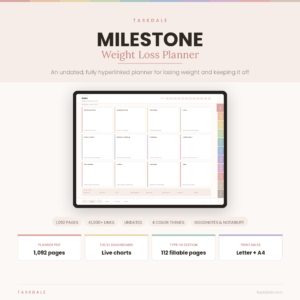
Milestone Digital Weight Loss Planner
Price: $4.49 | Best for: tablet users planning a long journey
Milestone is an undated digital weight loss planner of 1,092 hyperlinked pages, in four color themes, with 372 daily pages that log food with a calorie column, movement, sleep, water, hunger and mood. Weekly pages cover meal plans, grocery lists and a week review, and monthly pages hold weight charts, measurements and non-scale wins. It also comes with a live Excel dashboard, a 112-page type-in edition and printable packs. Start with this week’s meal plan page and copy in the 5-day menu above.
The grab-and-go gap, and how to close it
The best thing about a shake is that you can drink it in a car. Real food needs a little help to match that. Keep these on hand and you will rarely reach for a drive-through.
- Hard-boiled eggs: boil a dozen on Sunday, peel as needed.
- Pre-portioned yogurt pots with a small bag of berries.
- Cheese sticks and fruit that travel well: apples, bananas, clementines.
- Roasted chickpeas in a jar for a crunchy snack.
- A packed lunch box filled the night before from dinner leftovers.
- Tuna or salmon pouches and wholegrain crackers in your desk drawer.
Picture a nurse on a 12-hour shift. A shake fits in her locker. So do two eggs, a cheese stick, an apple and a box of last night’s chili. It just takes five minutes the evening before.
One Sunday hour for a week of real food
A single hour of prep on Sunday is what makes a real-food plan feel easy on Wednesday. Here is a simple order of work.
- Oven on. Put a tray of chicken thighs and a tray of mixed vegetables in to roast.
- While they roast, cook a pot of quinoa or rice and boil a dozen eggs.
- Mix and bake the egg muffins once the chicken comes out.
- Portion the lunches into boxes for Monday and Tuesday.
- Wash and chop carrots, peppers and cucumber for snacks.
By the end of the hour, you have breakfasts for four days, lunches for two, snacks for the week and half of Wednesday’s dinner done. There is a real sense of calm in opening a full fridge on a Monday morning. If prepping is new to you, our walkthrough of meal prep for beginners takes you through a first Sunday step by step.
Measuring progress beyond the scale
When you eat real food, especially with more protein and vegetables, your body can change shape before the scale moves much. Clothes fit better, energy picks up, sleep improves. If the only thing you track is weight, you miss most of that, and a flat week can make you want to give up.
So track three things, once a week:
- Weight, same day, same time, same clothes.
- Measurements, waist, hips and one other spot, with a soft tape.
- One non-scale win, like walking up two flights of stairs without stopping, or a belt notch.
A paper journal is ideal for this, because you can see weeks of progress laid out on one page.
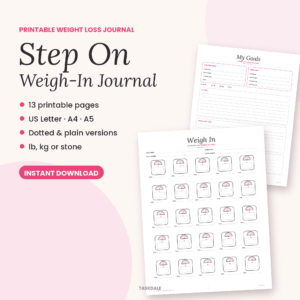
Step On Weigh-In Journal
Price: $1.29 | Best for: pen and paper people tracking progress
Step On is a 13-page printable weigh-in journal with a 25-scale weigh-in sheet, a 52-week log, a progress graph, body measurements, habit and workout pages, and space for wins the scale does not show. It comes as print-ready PDFs in US Letter, A4 and A5, each with a dotted or plain background, and works with any way of eating. Print the measurements page first and take your starting numbers this weekend.
Eating out on a real-food plan
A big advantage of real food is that restaurants serve it too. You do not need to bring a shaker to a birthday dinner. Use the same plate rule.
- Choose a grilled, baked or roasted protein.
- Ask for an extra side of vegetables or a salad instead of fries.
- Have the bread or the dessert, not both.
- Drink water between drinks if you are having alcohol.
- Box half of a huge portion before you start.
A steak, salad and baked potato at a family restaurant fits the plan perfectly well. So does a chicken burrito bowl with extra salsa. What matters is the pattern across the week, not one plate.
Keeping it affordable
Real food does not have to cost more than shakes. Eggs, oats, beans, lentils, frozen vegetables, canned fish, chicken thighs and potatoes are among the cheapest foods in any store, and they make up most of this plan. Buy proteins in family packs and freeze them in portions. Use frozen berries for breakfast instead of fresh ones out of season. Plan two meatless dinners a week with beans or lentils.
For four full weeks of cheap meals with grocery lists, see our weight loss meal plan on a budget.
Writing it all down in one planner, from the meal plan to the grocery list to the weekly weigh-in, keeps spending and progress in the same place.
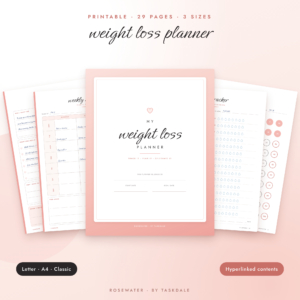
Rosewater Weight Loss Planner
Price: $2.19 | Best for: anyone who likes logging on paper
Rosewater is a 29-page undated printable weight loss planner in US Letter, A4 and Classic sizes, with goal pages, weekly weigh-ins, meal, water and workout logs, habit trackers, a journal and a 100-circle pounds lost chart. It suits people who tried calorie apps and found them tiring, and works alongside any eating plan you follow. Use the meal log for the 5-day plan and the journal page for your weekly non-scale win.
Real-food mistakes that stall progress
Switching from shakes to meals brings a few new traps. None of them are hard to fix once you know they are there.
Healthy food, huge portions
Nuts, granola, olive oil, avocado and cheese are all real food, and all easy to overdo. A “handful” of almonds can quietly become three. Use the thumb rule for fats and keep the bag in the cupboard, not on the desk.
Forgetting the vegetables
When people drop shakes, they often fill the gap with bread and pasta. Keep two fists of vegetables on every lunch and dinner plate. Frozen broccoli, bagged salad and a tray of roasted carrots make that easy on busy days.
Grazing instead of eating
A bite of a child’s sandwich, a cookie in the break room, a spoon of sauce while cooking. Each one is tiny. Together they can add up to a small meal by bedtime. Sit down to eat, and give snacks a set time.
Expecting a straight line
Weight goes down in steps, not a smooth slope. A week of no change followed by a sudden drop is common. Look at the trend over four weeks before deciding the plan is not working.
Frequently asked questions
Can you lose weight eating normal food instead of shakes?
Many people do. A plan built on lean protein, plenty of vegetables, sensible carb portions and a little fat can create the same calorie gap a shake plan does, with meals you can share with your household.
What can I eat instead of a meal replacement shake for breakfast?
Greek yogurt with berries, an egg wrap, cottage cheese on toast, overnight oats or egg muffins made ahead. All take five minutes or less on the day.
Is a real-food diet more expensive than shakes?
Not usually. Eggs, oats, beans, frozen vegetables, chicken thighs and potatoes are cheap, and they come out of your regular grocery budget rather than a separate purchase.
How do I eat real food on a busy schedule?
Cook once and eat twice, prep for an hour on Sunday, and keep grab-and-go foods like hard-boiled eggs, yogurt, fruit and cheese sticks within reach.
Do I need to count calories on a real-food plan?
Not necessarily. The hand-portion plate works for many people. If progress stalls for several weeks, logging food for a while can show where portions have crept up.
Your next step
This Sunday, make one batch of egg muffins and one tray of roasted chicken and vegetables. That covers your first four breakfasts and two lunches, and it proves to yourself that real food can be just as quick as a shake. When you are ready to plan and log the weeks ahead, the Milestone Digital Weight Loss Planner keeps meals, weigh-ins and wins in one place.