Every January, millions of people start Genesis with real intentions. By mid February, a lot of them are stuck somewhere in Leviticus, feeling a bit guilty and wondering what went wrong. Nothing went wrong with you. The plan was probably too big, too rigid, or too easy to lose track of. A good bible reading plan fixes all three. This guide shows you how to pick one, set it up, recover when you miss days, and keep going for a full year. We will also look at three Taskdale printables that make the habit easier to see and easier to keep.
Quick picks
| Product | Best for | Price | Link |
|---|---|---|---|
| Scripture Pathway Bible Reading Planner | A dedicated reading planner you can start this week | $7.99 | View |
| Lamp & Path Bible Study Companion | Reading plus book summaries and study questions | $5.99 | View |
| Still Waters Prayer Planner | Tracking every chapter and praying as you go | $1.19 | View |
Why Most Bible Reading Plans Stall in February
Picture the usual scene. It is January 2, you print a plan, and day one asks for four chapters. Day two, four more. By day nine you have missed a Tuesday, and the plan has a Tuesday square sitting there empty. Now you are behind, and being behind feels like failing. So you stop opening it.
That pattern is common enough that you can plan around it. The trouble is rarely a lack of faith or willpower. It is design. Plans that tie each reading to a specific calendar date punish a missed day. Plans that load Leviticus and Numbers into the first six weeks test your patience before you have built the habit. And plans with no visible progress give you nothing to feel good about.
A workable bible reading plan does the opposite. It is light enough for a bad week, flexible about dates, and visible enough that you can see the streak growing. Keep those three ideas in mind as you choose.
How to Choose a Bible Reading Plan for Beginners
There are four common shapes, and each suits a different kind of reader.
Straight through, cover to cover
You start in Genesis and finish in Revelation. It is simple and it respects the story as written. The downside is the slow middle. If you have never read the whole Bible, this is a fine goal, but go in knowing that some weeks will feel dry.
Chronological order
Events are arranged in the order they happened, so the prophets sit next to the kings they spoke to. Some readers love how this clears up confusing timelines. Others find the constant jumping around hard to follow. Try a week of it before you commit.
A mix of older books, newer books and Psalms
Each day mixes a short piece from each section. You never spend a month in one genre, which keeps things fresh. It also means you finish the year having touched everything. For many beginners this is the friendliest option.
Book by book
You pick one book, read it slowly, and then pick another. It is not a one year plan in the strict sense, but it works for people who learn better with depth than with speed. A short Gospel can be a lovely place to start.
My honest advice: pick the shape that matches how you already read. If you binge novels, go straight through. If you like variety, mix the sections. The best plan is the one you will still be using in April.
Setting Up Your One Year Plan So It Actually Fits Your Life
A full read of the Bible in a year works out to roughly three to four chapters a day. That is about fifteen minutes for most people. Fifteen minutes sounds easy until you meet a morning with a sick toddler and a dead car battery.
So build in slack. Here is how.
- Choose a fixed anchor, such as your first coffee or the ride on the bus. Habits stick to existing routines better than to clock times.
- Decide your minimum. Maybe it is one chapter. On bad days, you read one chapter and you still count the day.
- Pick a catch-up day. Many people use Saturday for finishing whatever they missed. It turns a gap into a normal part of the week.
- Choose where you will record progress. A tracker you can see beats a plan you only remember.
That last point is where a printed or fillable planner earns its place. Checking off a box is a tiny, real reward, and it adds up. A page that fills in over months is hard to walk away from.
Three Taskdale Planners That Support a Bible Reading Plan
Taskdale sells printable Bible study tools, and three of them fit a reading habit well. Here is what each one is, using only what is listed on the product pages.
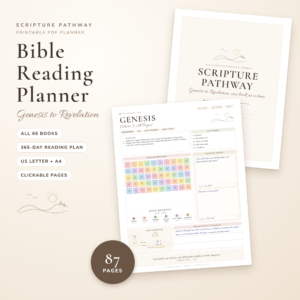
Scripture Pathway Bible Reading Planner
Price: $7.99 | Best for: Readers who want a planner built around reading the Bible
This is a Bible reading planner, made for people who want one place to organize what they read. If your biggest problem is not knowing where you left off, a dedicated planner like this takes that worry away. It is the most reading focused of the three.
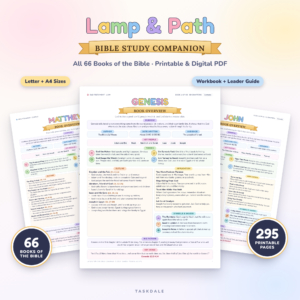
Lamp & Path Bible Study Companion
Price: $5.99 | Best for: Beginners who want to understand what they read
A printable Bible study guide that includes summaries of all 66 books, a 396-question workbook, a leader guide and a one-year reading plan. It comes as a US Letter and A4 PDF. If you want the plan and some help making sense of each book, this covers both in one download.
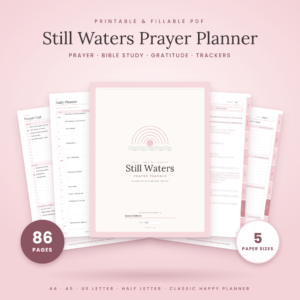
Still Waters Prayer Planner
Price: $1.19 | Best for: Tracking chapters and praying through what you read
A printable and fillable prayer journal and Bible study planner with SOAP and ACTS pages, sermon notes, prayer trackers and a 1,189-chapter Bible reading tracker. Page sizes include A4, A5, US Letter, Half Letter and Classic HP, in PDF. At $1.19 it is a cheap way to see your whole year on paper.
Comparing the Three Side by Side
| Product | Format | Price | Best for | Link |
|---|---|---|---|---|
| Scripture Pathway Bible Reading Planner | Reading planner | $7.99 | A planner built for reading | View |
| Lamp & Path Bible Study Companion | Printable PDF, US Letter and A4 | $5.99 | Book summaries, questions and a one-year plan | View |
| Still Waters Prayer Planner | Printable and fillable PDF, five page sizes | $1.19 | A 1,189-chapter tracker plus prayer pages | View |
If you only want one, think about your sticking point. Lose your place a lot? Go with the chapter tracker. Understand little of what you read? Choose the study companion. Want a straight reading planner? Scripture Pathway is the one.
What to Do When You Fall Behind on Your Bible Reading Plan
You will fall behind. Everyone does. What matters is the next move.
First, do not try to make up a week in one sitting. Reading twenty chapters on a Sunday afternoon turns Scripture into homework, and you will remember none of it. Second, give yourself permission to skip. If you missed Tuesday through Thursday, pick up on Friday. A tracker that records chapters read, rather than dates, makes this painless, because there is no empty square waiting to accuse you.
Third, shorten the plan if you need to. Dropping to one chapter a day still gets you through the Gospels and the letters in under a year. That is not failure. That is a plan that fits.
And one more thing. If you have missed a month, start fresh without announcing it. No restart ceremony, no apology page. Open to where you are and read.
Making a Bible Reading Plan Stick Past the First Month
The first two weeks run on enthusiasm. After that you need something sturdier.
Pair reading with a response
Reading alone can slide past you. Add one small response: a single sentence about what stood out, or one line of prayer. The SOAP method, which stands for Scripture, Observation, Application and Prayer, is a popular way to do exactly this, and Still Waters includes SOAP pages for it.
Read with another person
A friend, a spouse, a small group. Even a weekly text saying “Where are you up to?” changes the odds. People finish things they have told someone about.
Mark milestones
Finishing Genesis is a real win. So is the Gospels, or the Psalms. Notice them. A coloured box on a tracker, a coffee out, a note in the margin. Small celebrations keep long projects alive.
Keep the setting the same
Same chair, same mug, same time. The routine does the remembering for you so your willpower can rest.
Common Mistakes With a Bible Reading Plan
A few traps catch nearly everyone, so watch for them.
The first is starting too ambitiously. Beginners often choose the most intense plan because it looks impressive. A lighter plan you finish beats a heavy one you drop. The second is treating the plan as a test. It is a path, and you are allowed to slow down on a passage that hits you hard. The third is reading with no help at all. Some books, like Leviticus or Revelation, can leave a new reader lost. A short summary of each book beforehand makes a huge difference, which is exactly why the Lamp & Path companion has them.
One more is skipping the boring parts without a plan. Lists of names and long rules are real parts of the story, and they do matter, but you do not have to power through them in one sitting. Read them in short bursts, or pair them with a Psalm on the same day so the week still feels balanced. Most people find the slow stretches last only a few days, and then the story picks up again.
The last mistake is hiding your progress. If your plan lives only in your head, a missed day feels invisible and a streak feels invisible too. Put it on paper where you can see it.
Bible Reading Plan FAQ
How long does it take to read the Bible in a year?
Most one year plans ask for about three to four chapters a day, which usually takes around fifteen minutes. Some days are longer, like the Psalms or genealogies, and some are shorter. Using a weekly catch-up day gives you breathing room without throwing off the schedule.
What is the best bible reading plan for beginners?
A plan that mixes the older books, the newer books and the Psalms each day is a friendly starting point, because you never spend too long in a hard section. If that feels like too much, begin with one Gospel and build up from there.
What if I miss a day or a week?
Pick up where you stopped. Do not read double to catch up, and do not wait for January to restart. A chapter tracker helps because it records what you have read, not what the calendar says you should have read.
Should I read the Bible in order or chronologically?
Both work. In order is simpler, and chronological helps with the timeline of events. If you have never finished the Bible, straight through is easier to follow. You can always try chronological on a second pass.
Do I need a planner to follow a plan?
No, but it helps. A visible tracker shows your progress and makes missed days easier to handle. Many readers find that ticking off a chapter is the little reward that keeps them coming back.
Your Next Step
So, the short version: choose a plan shape that suits you, set a minimum, add a catch-up day, and put your progress where you can see it. If you want one download to start with, the Lamp & Path Bible Study Companion gives you a one-year plan, summaries of all 66 books and a study workbook for $5.99. And if tracking every chapter is your biggest need, the Still Waters Prayer Planner costs just $1.19. Print it today and mark your first chapter tonight.