Monthly money planning is not about tracking every coffee. It is about one sit-down before the month begins where you decide what each dollar is for, then a few small check-ins to keep the plan honest. A budget planner gives that sit-down a shape, so you are filling in boxes rather than staring at a blank page wondering where to start.
This guide is for anyone who has tried budgeting, drifted off by the third week, and wants a routine that actually lasts. You will get a simple three-part monthly cycle, a planning session you can finish in 45 minutes, a worked example for a $3,400 take-home income, help choosing between paper, fillable PDF and spreadsheet planners, and a plan for the months that do not go to plan.
Quick picks: budget planners for monthly planning
| Product | Best for | Price | Link |
|---|---|---|---|
| Gildwise Budget Planner Fillable PDF | A planner that adds itself up on screen | $7.99 | View |
| Ultimate Annual Budget Spreadsheet | Full-year planning with dashboards | $6.00 | View |
| The Calm Money Method | People who feel anxious about money | $11.99 | View |
| Soft Ledger Budget Planner | Printable pages plus an Excel file | Original price was: $12.99.$8.99Current price is: $8.99. | View |
Every month has three parts
Budget planners that work all share the same rhythm, whatever they look like. Plan, check, review. Miss one and the system wobbles.
Plan (before the month starts)
List your expected income. Give every dollar a job: bills, food, debt, savings, fun. This is the big session, and it sets the tone for the next four weeks.
Check (once a week)
Five to ten minutes. Note what you spent in the categories that move, like groceries, fuel and eating out. Compare with the plan. Adjust if one category is running hot.
Review (the last day or two)
Fill in what actually happened. Note what went well, what slipped, and one change for next month. Then the review flows straight into the next plan.
That is the whole loop. Twelve times a year. People who keep it going for three months often say money stops feeling like weather that happens to them and starts feeling like something they steer.
The 45-minute planning session
Pick a date a few days before the month begins, like the 28th. Make a drink, open your planner and your banking app, and work through these steps in order.
- Write next month’s income. Only money you are sure of. If a freelance invoice might be paid late, leave it out and treat it as a bonus if it arrives.
- Fill in fixed bills. Rent, utilities, phone, insurance, subscriptions, loan payments. Check due dates and note any that land before payday.
- Add the yearly and occasional costs due this month. Car registration, a wedding gift, back-to-school shoes. Check your calendar for birthdays.
- Set amounts for the flexible categories. Groceries, fuel, household, personal care, eating out, fun money. Use last month’s real totals as a starting point.
- Pay your future self. Savings goals, sinking funds and extra debt payments.
- Check the bottom line. Income minus everything above should be zero. If it is positive, give the extra a job. If it is negative, trim the flexible categories until it balances.
That last step is the heart of zero-based budgeting. It does not mean spending everything. It means every dollar has a purpose before the month starts, including the dollars going to savings. Our guide to the zero based budget explains the method in more depth.
A worked month on a $3,400 income
Jordan is single, rents a one-bed apartment and takes home $3,400 a month. Here is the plan from the session on October 28 for November.
| Category | Planned |
|---|---|
| Rent | $1,250 |
| Utilities and internet | $165 |
| Phone | $45 |
| Car payment and insurance | $390 |
| Fuel | $140 |
| Groceries | $360 |
| Eating out and coffee | $140 |
| Subscriptions | $38 |
| Personal care and household | $70 |
| Student loan | $210 |
| Holiday gifts sinking fund | $100 |
| Car repairs sinking fund | $60 |
| Emergency fund | $232 |
| Fun money | $200 |
| Left to budget | $0 |
A few choices are worth pointing out. The $200 of fun money is guilt-free; when it is gone, it is gone, but while it lasts Jordan does not have to justify a concert ticket. The $100 for holiday gifts started in September, so December will not mean a credit card. And the emergency fund gets whatever balances the plan, which this month is $232.
At the end of November, the review showed groceries at $395 and eating out at $112. Over on one, under on the other. Net effect: about $7 over. Jordan nudged groceries up to $380 for December and took the extra $20 from eating out. Small, realistic changes like that are how a plan gets more accurate each month.
Sinking funds: the line that rescues December
Most budgets do not fail because of the monthly bills. They fail because of the costs that only show up once or twice a year. The car insurance renewal. The dentist. Four birthdays in March. A wedding in June. Each one feels like a surprise, even though it was on the calendar all along.
A sinking fund turns those surprises into small monthly payments. Add up what a cost will be, divide by the months until it is due, and set that amount aside every month. A $540 car insurance renewal due in nine months needs $60 a month. Holiday gifts of $600 planned from February need about $55 a month.
Start with three sinking funds: gifts, car, and one called Annual Stuff for subscriptions and memberships that renew yearly. Keep the money in a separate savings account or pot, and track each balance on its own line in your planner. When the bill arrives, you pay it from the pot, and the monthly plan does not even notice. That first time it happens feels wonderful.
Planning when your pay is not monthly
Monthly planners assume one payday a month. Plenty of people get paid every week or every two weeks, and some freelancers get paid whenever a client feels like it. The planning session still works with small changes.
- Biweekly pay: plan each month using two paychecks. Twice a year a third paycheck arrives. Leave it out of the regular plan and give it one big job, like topping up the emergency fund or clearing a small debt.
- Weekly pay: plan using four paychecks. The few months with a fifth get a bonus job in the same way.
- Irregular income: plan on your lowest typical month. Any extra goes first to a buffer that pays you a steady amount next month.
Write which paycheck covers which bills. Rent might come from the first check, utilities and groceries from the second. Seeing that split ends the anxious week where the rent has gone out and payday still feels far away.
Choosing a budget planner format
The best format is the one you will open. That sounds obvious, yet people often buy the one that looks most impressive and then avoid it. Think about where you are when you have five spare minutes, and choose something that lives there.
Fillable PDF
Type on a laptop or tablet, and the totals calculate themselves. Tidy, portable and nothing to install. A good fit if you like the look of a planner page but hate doing sums.
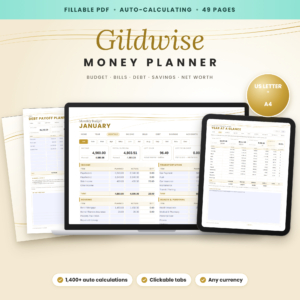
Gildwise Budget Planner Fillable PDF
Price: $7.99 | Best for: planners who want pages that do the math
An undated fillable PDF in US Letter and A4 with more than 1,400 automatic calculations. Twelve monthly budget pages show planned against actual with a difference on every line, a zero-based Left to Budget figure and your savings rate. Spending logs total by category from dropdowns, and there are debt payoff, savings, sinking fund, subscription and net worth pages. Open it in a PDF app that supports forms, fill in your first month’s income and bills, then let the totals appear.
Spreadsheet
Best for people who want to see a whole year at once, compare months and get charts without effort. Spreadsheets also handle a large number of transactions comfortably, which matters if you prefer to log everything rather than just check categories.
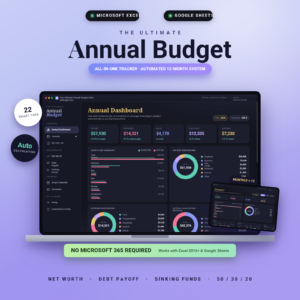
Ultimate Annual Budget Spreadsheet
Price: $6.00 | Best for: year-long planners who love dashboards
A 22-tab budget spreadsheet for Excel 2016 or newer, Google Sheets and LibreOffice. It includes an annual dashboard, 12 monthly dashboards with expected against actual, a 50/30/20 dashboard, net worth, a snowball and avalanche debt payoff calculator, sinking funds and an accounts calendar. It comes in three color themes with sample data and a step-by-step guide. Run through Setup first, then enter November’s plan on its monthly dashboard.
Printable pages
Some people need a pen. Writing a number slows you down enough to notice it. Printed pages also sit on a fridge or desk where everyone in the house can see the plan, which helps couples stay on the same page, literally. Tablet users who like the handwritten feel can get the same effect with a digital planner in a note-taking app.
Not sure yet? Our comparison of printable vs spreadsheet vs app budget planners walks through who each one suits.
The midmonth check-in
The weekly check takes five minutes. Around the 15th, give it fifteen instead. This is where most months are saved or lost.
- Compare spending to the halfway mark. If groceries are at $260 of $360 on the 15th, the rest of the month needs $100 to stretch over two weeks.
- Look ahead at bills. Anything still to come out before month end? Is the money there?
- Move money, do not ignore it. If eating out is overspent, take the difference from fun money or another category now. Write the change down.
- Plan the next week’s meals. Food is the category most people overspend. A quick meal plan for the next seven days often brings it back in line. Our guide to meal planning on a budget has eight habits that help.
When a month goes sideways
It will happen. A car repair, a vet bill, a week off sick, a friend’s last-minute wedding. The plan is not broken. It just needs to bend.
First, check your sinking funds and emergency fund. That is what they are for, and using them is a win, not a failure. Then, if needed, rebuild the rest of the month: write a new plan for the remaining days with whatever money is left, cutting the flexible categories first. Finally, at the review, note what happened and whether a new sinking fund would have covered it.
The feelings matter as much as the numbers here. A bad month can make people quit entirely, which is the costliest move of all. If money brings up guilt or dread, it can help to work on that side too.
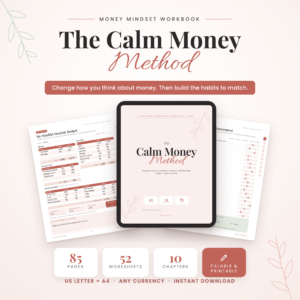
The Calm Money Method
Price: $11.99 | Best for: people who feel stressed or guilty about money
An 85-page money mindset workbook and financial planner in fillable and printable PDF, US Letter and A4, in any currency. The first chapters look at where money habits come from and what triggers spending. Later chapters cover goals, a monthly budget, saving, debt trackers and a plain-language intro to investing, then weekly money dates, monthly check-ins and a 30-day challenge to make it stick. Start with the first chapter’s worksheets before you fill in the budget pages.
Common planning mistakes
- Planning with gross pay. Use take-home pay only.
- Forgetting non-monthly costs. Annual subscriptions, car tax, birthdays and holidays need a monthly sinking fund line.
- Setting impossible grocery targets. Start with what you really spent last month and cut gradually, $20 at a time.
- No fun money. A budget with zero room for enjoyment usually lasts about three weeks.
- Skipping the review. Without it, next month’s plan is a guess. With it, the plan gets sharper every month.
Frequently asked questions
What is the best budget planner for beginners?
One with a clear monthly budget page, a simple spending log and totals that calculate for you. A fillable PDF or a beginner-friendly spreadsheet removes the math, which is where many beginners give up.
When should I do my monthly budget?
A few days before the month starts, so you can plan before the first bills leave. If you are paid on a fixed date, some people plan the day before payday instead.
How long does monthly budgeting take?
About 45 minutes for the first plan, then 5 to 10 minutes a week and 15 to 20 minutes for the end-of-month review. It gets faster as categories settle.
What categories should a monthly budget planner include?
Income, housing, utilities, transport, food, debt, savings, sinking funds, personal care, subscriptions and fun money. Add or merge to suit your life.
Should couples use one budget planner or two?
One shared plan for household costs works well for most couples, with personal fun money for each person so nobody has to explain small purchases.
Your next step
Put a 45-minute appointment in your calendar for three days before next month starts, and label it Money Plan. Bring last month’s bank statement and your pay date. Then fill in your first month in the Gildwise Budget Planner Fillable PDF and watch it come to zero.