Most couples spend a year planning the wedding and about three evenings planning the honeymoon. Then they land somewhere beautiful and realise the hotel charges $40 for the airport transfer, the “all-inclusive” excludes the good restaurant, and the credit card is already sore from the wedding.
A honeymoon planner won’t make the trip cheaper by itself. What it does is make you set a number, pick a place that fits it, and see where the money’s going before you’re on the beach checking your banking app.
Here’s how I’d plan a honeymoon so it feels generous without wrecking the first year of marriage.
Step 1: Set the honeymoon budget separately from the wedding
If the honeymoon is just “whatever’s left after the wedding”, there won’t be much left. Give it its own number early, ideally when you set the wedding budget.
Then split that number before choosing a destination. A simple starting split for a 10-day trip:
- Flights: 25 to 35%
- Accommodation: 30 to 40%
- Food and drink: 15 to 20%
- Activities and excursions: 10 to 15%
- Transfers, tips and small stuff: 5%
- Buffer: 5 to 10%
Say your budget is $6,000. If flights alone come to $2,800 for two, you’ve already blown the flights share and you’re borrowing from the hotel. That’s useful information before you book, not after.
Step 2: Compare destinations on total cost, not just the hotel
The cheapest hotel isn’t always the cheapest trip. A $150-a-night villa somewhere you need a car, eat out three times a day and pay for every activity can cost more than a $250 resort that includes breakfast and transfers.
Shortlist two or three places, then write down for each: flights, a realistic nightly rate, daily food spend, the two or three activities you’d definitely do, and transfers. Add it up. The answer often surprises people.
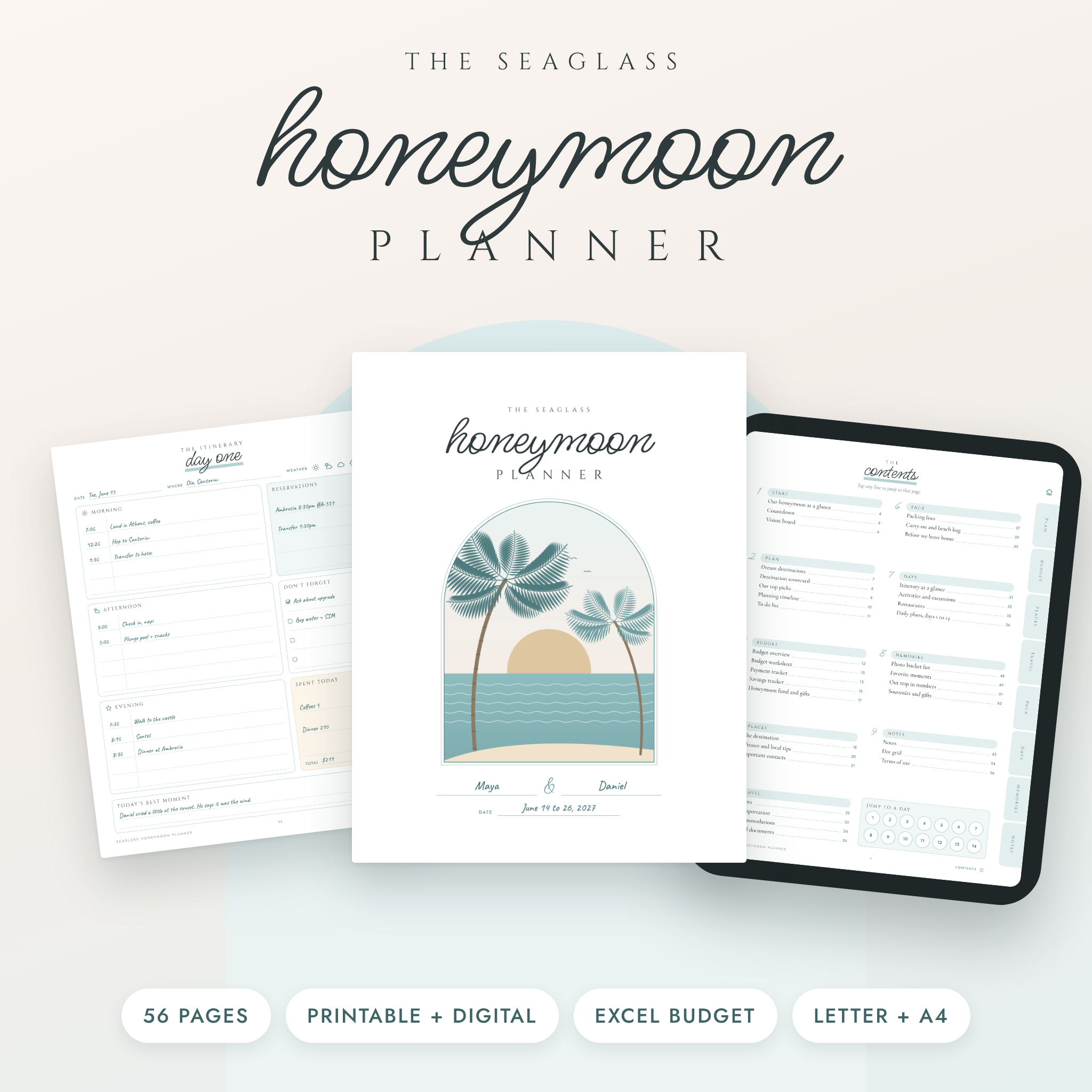
The Seaglass Honeymoon Planner has a side-by-side comparison for up to three destinations, plus a weighted scorecard. Score each place on what matters to you (price, weather, flight time, things to do) and let the numbers settle it when you can’t agree. Handy when one of you wants a beach and the other wants a city.
Step 3: Book in the right order
Flights usually move the most on price, so watch them first and book when you see a fare that fits your share. Then accommodation, then anything that sells out (popular tours, restaurants with long waitlists). Leave flexible activities until you’re there.
Write down every deposit and balance due date as you book. Some resorts take 30% upfront and the rest 60 days before arrival, which can land right in the middle of your final wedding payments. Seeing both on one calendar helps you avoid a painful month.
Step 4: Plan the days loosely
You don’t need a schedule for every hour. You’ve just had a wedding with one. But having a rough plan per day stops you spending three mornings deciding what to do.
A good rhythm: one planned thing a day, one free half-day, and at least two days with nothing booked at all. Note restaurant reservations and any timed activities so you don’t double book.
Seaglass has 14 daily plan pages with space for morning, afternoon and evening, reservations, what you spent and the best moment of each day. That last box turns the planner into a keepsake.
Step 5: Track spending while you’re away
This is where honeymoon budgets slip. Not in the big bookings, but in the $18 cocktails and the boat trip someone suggests at dinner. A quick note each evening of what you spent keeps it honest.
If you’re travelling somewhere with a different currency, convert as you go. “Only 2,000” of the local currency can be a lot more than it sounds.
The Excel workbook that comes with Seaglass tracks this. You set a planned amount for 12 categories, log bookings with what’s paid and when balances are due, and log trip spending as you go. It has a currency converter and a dashboard that shows days to go, money spent and left, savings progress and the next payment due. Payments turn amber two weeks before they’re due and red once they’re late. It even counts how many thank-you notes you still owe for honeymoon fund gifts.
Step 6: The admin that ruins trips when forgotten
- Passports valid for at least six months after you return
- Visas or entry forms
- Travel insurance that covers cancellations
- Telling your bank you’re travelling
- Booking airport transfers both ways
- Bookings in the name on your passport, not your new married name if you haven’t changed it yet
That last one catches a lot of couples. Book under the names on your current passports.
Seaglass’s planning timeline lists 36 jobs like these, from six months out to the night before you fly, with a documents checklist that has a column for each of you. The packing lists already include things like plug adapters, reef-safe sunscreen and the rings.
A honeymoon planner if you’re still planning the wedding
If you’d rather keep the honeymoon in the same file as the wedding, the Ever After Wedding Planner Bundle combines a 19-tab wedding workbook with a separate trip budget and packing list, plus a 12-page A4 honeymoon planner as a PDF and an editable Word file. It covers vision, destinations, budget, bookings, travel, daily itineraries and memories. One file for the wedding, a few pages for the trip.
Which to choose? If the honeymoon is a big trip in its own right, Seaglass gives it the attention it deserves. If it’s a shorter minimoon and you want everything together, Ever After is enough.
Honeymoon planning FAQ
How much should a honeymoon cost?
There’s no standard figure. A long-haul trip for two can easily run $5,000 to $10,000, while a week’s road trip closer to home might be under $2,000. Pick the number you can pay without debt, then choose a destination that fits it.
When should we book the honeymoon?
Six to nine months ahead for long-haul trips and popular resorts. Closer in is fine for a short minimoon or somewhere you can drive to.
Can we use a honeymoon fund instead of a gift registry?
Many couples do. Keep a list of who gave what so thank-you notes are easy, and mention what the gift paid for in the note.
Is it OK to delay the honeymoon?
Yes. Lots of couples take a short minimoon after the wedding and the big trip a few months later, when prices drop and the wedding bills are paid.