A pregnancy planner for appointments and to-dos is the one place where the scan dates, the questions you keep forgetting to ask, the car seat research and the maternity leave paperwork all live together. Pregnancy comes with a surprising amount of admin. Nine months of it, landing on top of everything else in your life. A simple planner turns that pile into a calm list you can work through a week at a time.
This guide is for expecting moms, partners and anyone helping out. You will learn how to set up an appointment log that makes each visit more useful, how to split the big to-do list across three trimesters, how to share jobs fairly with a partner, and how to plan the last few weeks so you are not packing a hospital bag in a panic. There are also three Taskdale planners to keep it all in one place.
Your midwife or doctor sets the medical schedule. This planner just makes sure you turn up with your questions written down.
Quick picks
| Product | Best for | Price | Link |
|---|---|---|---|
| Petal & Bump Pregnancy Journal and Planner | Appointments, plans and a week-by-week keepsake in one | $3.99 | View |
| Clearday Task Tracker Spreadsheet | Sharing baby to-dos with a partner | $5.00 | View |
| Little Nest Baby Shower Planner | Whoever is hosting the baby shower | $17.00 | View |
| Smart Monthly Scheduler | A shared calendar of visits, classes and leave dates | $2.00 | View |
Why a planner helps during pregnancy
Pregnancy brain is a running joke, but the real problem is simpler: there is a lot to hold. Appointment dates. Which vitamins. When to tell work. Which pram fits in the car boot. What the midwife said about the second scan. Trying to keep it all in your head, in your phone notes and on the back of an envelope at the same time is exhausting.
A planner gives each of those things one home. Take Aisha, pregnant with her first baby while working full-time as a pharmacy technician. In week 14 she had three sets of notes in three places and could not find the date of her next scan. She moved everything into one planner that evening. It took 40 minutes. By the next appointment she had a written list of four questions and walked out with four answers. A small thing. It felt like a big relief.
Set up your appointment log
Appointments are the backbone of a pregnancy planner. Give them two pages.
The appointment schedule
One table for every visit: date, time, place, who it is with and what it is for. Fill it in as soon as appointments are booked, and copy the dates into your phone calendar with an alert the day before. Include scans, midwife or doctor visits, blood tests, antenatal classes and any hospital tours.
A page per visit
For each appointment, keep a short page with three parts:
- Before: questions you want to ask. Write them as they come up during the week, not in the waiting room.
- During: key notes, such as anything the midwife wants you to do or watch for, and the date of the next visit.
- After: any to-dos that came out of it, such as booking a test or picking up a prescription.
The question list is the part people thank themselves for. It is very easy to forget a question once you are on the examination couch. Reading from a list feels a bit formal the first time. By the third visit it is just normal.
A pregnancy planner with appointment pages already laid out makes this easy.
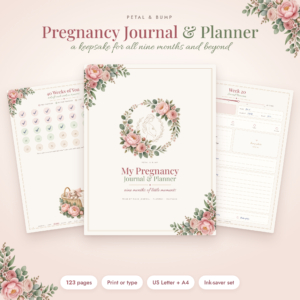
Petal and Bump Pregnancy Planner
Price: $3.99 | Best for: moms-to-be who want plans and memories
Petal & Bump is a 123-page fillable PDF in US Letter and A4, in full color and an Ink-Saver version. Its Health and Appointments section has an appointment schedule, notes for 10 visits, a questions-to-ask page, wellness trackers and a kick counter. Plans and Preparations covers a baby budget, registry, nursery, maternity leave and postpartum prep, and there are 40 weekly journal pages plus birth and newborn pages. Fill in the appointment schedule and important contacts first.
The to-do list, split by trimester
A single list of everything you need to do before the baby arrives can run to 80 items. Seen all at once, it is overwhelming. Split across three trimesters, it becomes manageable. Here is a practical way to spread it out. Adjust it to your own situation and to what your care team tells you.
First trimester (weeks 1 to 13)
- Book your first appointment and write down the schedule you are given.
- Start an important contacts page: midwife or doctor, hospital or birth center, the line to call with concerns.
- Look up your employer’s maternity leave policy, quietly.
- Start a rough baby budget.
- Decide who you will tell, and when.
Second trimester (weeks 14 to 27)
- Tell your employer and agree on leave dates in writing.
- Book antenatal or birth classes if you want them.
- Research and list the big items: car seat, stroller, cot or crib, changing setup.
- Start a registry or wish list if you plan to have one.
- Plan the nursery or baby corner.
- Pass the baby shower date to whoever is hosting.
Third trimester (weeks 28 to birth)
- Write your birth preferences and talk them through at an appointment.
- Pack the hospital bag by around week 35 or 36.
- Install and check the car seat.
- Fill the freezer with easy meals.
- Hand over work and set your out-of-office.
- Make a list of who to call when the baby arrives.
Each week, pick three tasks from the current trimester and put them on your weekly page. Three is plenty. You are growing a person.
Sharing the to-dos with a partner
Pregnancy admin has a habit of landing on one person. Usually the pregnant one. A shared list fixes that, because the jobs are visible and each one has a name beside it.
Go through the trimester list together on a Sunday and split it. One of you researches car seats. The other books the classes. One handles the leave paperwork. The other builds the cot, and swears at the instructions, and that is fine. Put each task’s owner and a rough due date beside it.
A shared spreadsheet works well for couples because you can both see and tick things off from your own phones or laptops. Filter by person and each of you sees just your own list. Recurring jobs, like weekly bump photos or taking vitamins, can repeat on their own.
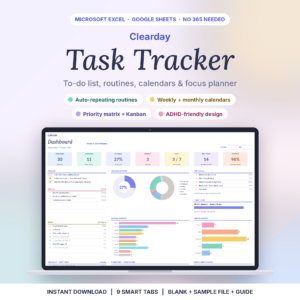
Clearday Task Tracker Spreadsheet
Price: $5.00 | Best for: couples sharing baby prep
Clearday is a nine-tab workbook for Excel and Google Sheets that holds up to 1,000 one-time tasks and 40 repeating routines, with a person column for up to 10 people. The dashboard shows Overdue, Today and Coming Up for the next seven days and can be filtered by person, and there are weekly and monthly calendars. Add each of you as a person, then type in this trimester’s tasks with an owner and due date.
If the baby budget is the part that worries you most, this guide to a family budget planner covers habits that keep household money on track as costs change.
A weekly routine that takes ten minutes
A pregnancy planner works best with a small weekly habit. Sunday evening suits most people.
- Check the week’s appointments and add any questions that came up.
- Pick three to-dos from the current trimester list.
- Write one line for the week in a journal or weekly page: how you felt, a craving, a first kick. These lines become a lovely record later.
- Glance ahead two weeks for anything that needs booking now, like a class or a scan.
Ten minutes. That is all. And on the weeks when you are too tired even for that, skip it without guilt and pick it up next Sunday.
The baby shower: hand it off
If friends or family are throwing you a shower, the kindest thing you can do for yourself is let them plan it. Give the host three things: your preferred dates, a rough guest list, and a link to your registry or wish list. Then step back.
Hosts, especially two or three friends splitting the cost, need their own planner for guests, RSVPs, food, games and who paid for what. A shared workbook keeps everyone on the same page and stops the group chat from turning into a spreadsheet of its own.
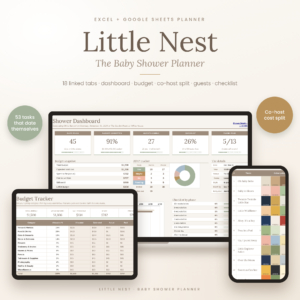
Little Nest Baby Shower Planner
Price: $17.00 | Best for: friends or family hosting a shower
Little Nest is an Excel and Google Sheets workbook for planning a baby shower. Type the shower date once and 53 checklist tasks date themselves. It tracks the budget, guests and RSVPs, gifts and thank-you notes, and includes a co-host cost split for teams of two to six people. Send it to your host with your preferred dates and guest list, or use the gift and thank-you log yourself after the day.
For a step-by-step look at planning the day itself, this baby shower planner guide breaks it into eight calm steps.
The last month: bags, plans and phone numbers
The final weeks are where a planner earns its keep. Things can move quickly, and you want the important lists done and easy to find.
- Hospital bag checklist. One list for you, one for the baby, one for your partner. Tick items as they go in the bag.
- Labor day plan. Who drives, who looks after older children or pets, where the car seat is, what number to call.
- Contacts page. Birth unit, midwife, partner’s work number, the neighbor with a spare key. Write them on paper as well as in your phone.
- Announcement list. Who gets a call, who gets a message, who hears it in the group chat.
- First-week meals. A list of freezer meals and friends who offered to bring food.
Keep these pages at the front of the planner, or print a copy for the hospital bag. When the day comes, nobody has to remember anything. They just read the page.
Paper or digital?
A printed pregnancy planner in a binder is easy to take to appointments, write on in the waiting room and keep as a keepsake afterwards. A fillable PDF lets you type into the same pages on a computer or tablet, which is handy for long lists like the registry. Many people do both: type the lists, then print the pages and add ultrasound photos and handwritten notes.
For shared jobs, a spreadsheet or a shared calendar beats paper, because both partners can see the same thing. If you have not typed into a PDF before, this guide to a fillable PDF planner shows how on any device.
A shared calendar spreadsheet like the Smart Monthly Scheduler in the quick picks is another option for couples who want visits, classes and leave dates on one calendar they can both open.
Mistakes to avoid
Trying to do everything in the first trimester
Many people feel at their most tired early on. Most of the to-do list can wait until the second trimester.
Keeping questions in your head
Write every question down the moment it occurs to you. The waiting room is not the place to try to remember.
One person carrying all the admin
Split the list. Put names on tasks. Check in each Sunday.
Leaving the hospital bag too late
Pack it a few weeks early. If it sits in the hallway for a month, that is a good problem to have.
Frequently asked questions
What should be in a pregnancy planner?
An appointment schedule, notes and questions for each visit, a trimester-by-trimester to-do list, a baby budget, a registry or shopping list, birth preferences, a hospital bag checklist and important contacts.
How do I keep track of pregnancy appointments?
Write every appointment in one schedule table as soon as it is booked, add it to your phone calendar with an alert, and keep a short page per visit for questions and notes.
When should I start planning for the baby?
Many people start the practical planning in the second trimester, when energy often returns. Start an appointment log and contacts page straight away.
Can my partner use the same pregnancy planner?
Yes. A shared spreadsheet or calendar lets you both see and tick off tasks. A printed planner works too if it lives somewhere you both see, like the kitchen.
Is a pregnancy journal different from a pregnancy planner?
A journal records memories and feelings week by week. A planner organizes appointments and to-dos. Some, like Petal & Bump, combine both in one book.
Your next step
Tonight, write down every appointment you already know about in one table, then start a list of questions for the next visit. On Sunday, split the current trimester’s to-dos with your partner and pick three for the week. If you want the appointment pages, plans and weekly keepsake pages ready to go, start with the Petal & Bump Pregnancy Journal and Planner.