Reading the Bible and feeling nothing is more common than people admit. You get to the end of a chapter and realize you can’t remember a single line. The SOAP Bible study method is a simple fix. It gives your reading four small jobs, so your mind has something to do besides drift. Below, you’ll see each step, three worked examples, a few mistakes to dodge, and two Taskdale journals with SOAP pages already laid out.
Quick picks
| Product | Best for | Price | Link |
|---|---|---|---|
| Still Waters Prayer Planner | Ready-made SOAP and ACTS pages at a very low price | $1.19 | View product |
| Harvest of Grace 30-Day Bible Study Journal | A guided 30 days of devotional, prayer and gratitude pages | $5.49 | View product |
What Is the SOAP Bible Study Method?
SOAP is an acronym. Scripture. Observation. Application. Prayer. You do the four steps in order, and you write each one down. That’s it.
It’s popular because it’s small. You don’t need a commentary, a seminary class or an hour. A single verse, a pen and ten minutes will do. Beginners like it because the steps tell you what to do next. Long-time readers like it because it slows them down and brings them back to the text.
The writing part is the secret. When you only read, thoughts slide past. When you have to write a sentence about what you noticed, you have to think the thought all the way through. It feels slower. It sticks better.
A short note on tradition: people in many churches use this method, and styles differ a little. Some add a fifth step, like a title or a summary. Feel free to adjust. The goal is time with the text, not a perfect formula.
The SOAP Bible Study Method, Step by Step
S is for Scripture
Choose a short passage. One to five verses is plenty. If you’re reading through a book, take the next few verses in order. If you need a starting place, a Psalm or a section of one of the Gospels works well.
Read it twice, once silently and once out loud. Then copy the verse or the key lines into your journal by hand. Yes, copying feels old-fashioned. It also forces you to notice words you’d have skipped.
O is for Observation
Now ask: what does this actually say? Not what it means for you yet. Just what’s on the page.
Look for who is speaking, who they’re speaking to, and what’s happening. Notice repeated words, commands, promises, and contrasts. Write two or three plain sentences. “Paul tells the church not to worry, and says to bring requests to God with thanks.” That’s an observation. It sounds basic because it is. And it’s where most people skip ahead too fast.
A is for Application
This is where it gets personal. How does this passage touch your week? What is it asking you to do, stop doing or believe?
Keep it specific. “Trust God more” is hard to act on. “When I feel anxious about Thursday’s meeting, I’ll stop and pray before I check my email” is something you can actually do. One concrete step is worth more than five vague good intentions.
P is for Prayer
Finish by turning what you’ve written into a prayer. It can be two sentences. Thank God for something in the passage, ask for help with your application, or pray for someone the verse brings to mind.
Writing the prayer out helps if your mind wanders when you pray silently. And you’ll have a record to look back on, which can be encouraging months later.
SOAP Bible Study Method Examples You Can Copy
Seeing a finished entry helps more than any explanation. These three are short on purpose. They use well-known passages, paraphrased in plain words.
Example one: Philippians 4:6 to 7
Scripture: Don’t be anxious about anything. In every situation, bring your requests to God with thanks, and his peace will guard your heart and mind.
Observation: The instruction has three parts: don’t worry, pray, and give thanks. The result is peace that guards the heart and mind. The peace comes after the praying, not before.
Application: I’ve been lying awake over the car repair bill. Tonight I’ll write down the worry, pray about it, and add two things I’m thankful for before bed.
Prayer: God, I hand you the bill and the worry. Give me the peace this verse talks about, and help me sleep.
Example two: Proverbs 3:5 to 6
Scripture: Trust in the Lord with all your heart and don’t lean on your own understanding. Acknowledge him in all your ways, and he will make your paths straight.
Observation: It sets trust against leaning on my own understanding. It also says to acknowledge him in “all” my ways, not just the big ones.
Application: I tend to figure things out first and pray after. This week I’ll pray before I decide anything on my to-do list that has two options.
Prayer: Lord, help me ask before I act. Show me where I’m leaning on myself.
Example three: Psalm 23:1 to 3
Scripture: The Lord is my shepherd, I lack nothing. He makes me lie down in green pastures and leads me beside quiet waters. He restores my soul.
Observation: The shepherd does the leading and the lying down. The sheep don’t have to push. Rest and quiet water are part of the picture.
Application: I’ve been proud of being busy. I’ll protect one evening this week with no tasks, and call it rest, not laziness.
Prayer: Thank you for leading me. Teach me to rest without guilt.
Common Mistakes With the SOAP Bible Study Method
The method is easy. Doing it well takes a few small corrections.
Rushing observation is number one. Many people jump from Scripture straight to Application because that’s the part that feels useful. But a good application grows out of a careful look at what the verse says. Give observation a full two minutes.
Number two is picking passages that are too long. A whole chapter makes you skim. Choose a few verses and go deep.
Third, writing a sermon. Your entry doesn’t need to be polished. Three rough sentences are fine, and nobody is grading them.
Fourth, stopping at “I should.” If your application says “I should be kinder,” ask: kinder to whom, when, how? Turn it into one action you can finish by Friday.
And fifth, treating a missed day as a failure. Skip a day and pick up the next. The method works when it’s a rhythm, not a streak you’re afraid to break.
Where to Do Your SOAP Bible Study
A plain notebook works fine. Draw four headings, S, O, A, P, and fill them in. Some people prefer to have the layout done for them, so they spend their ten minutes on the Bible and not on drawing lines.
That’s where a printable journal helps. Two Taskdale options are worth a look, and they work in different ways.
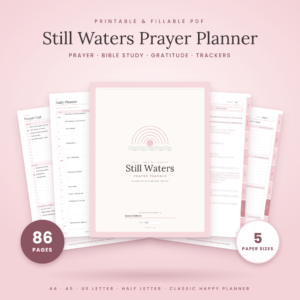
Still Waters Prayer Planner
Price: $1.19 | Best for: Ready-made SOAP pages and ACTS prayer pages in one printable
Still Waters is a printable and fillable prayer journal and Bible study planner. It includes SOAP and ACTS pages, sermon notes, prayer trackers and a 1,189-chapter Bible reading tracker, in A4, A5, US Letter, Half Letter and Classic HP PDF sizes. It’s a strong choice if you want SOAP and a place to log what you’ve read.
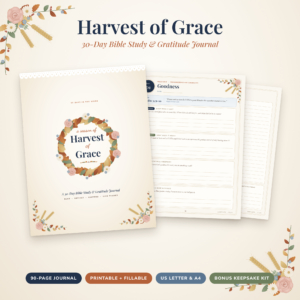
Harvest of Grace 30-Day Bible Study Journal
Price: $5.49 | Best for: A guided month of Bible study with prayer and gratitude pages
Harvest of Grace is a printable and fillable devotional, prayer and gratitude journal with a reading plan tracker and a keepsake kit, in US Letter and A4 PDF. It runs for 30 days, which makes it a tidy way to practice a method like SOAP and see whether the habit takes hold.
Still Waters vs Harvest of Grace
| Product | Format | Price | Best for | Link |
|---|---|---|---|---|
| Still Waters Prayer Planner | Printable and fillable PDF in five sizes | $1.19 | SOAP and ACTS pages with a Bible reading tracker | View product |
| Harvest of Grace 30-Day Journal | Printable and fillable PDF, US Letter and A4 | $5.49 | A 30-day guided start with gratitude pages | View product |
If you already know you want SOAP, Still Waters is the more direct match, since SOAP is named right in its title. If you want a structured month and a bit of keepsake charm, Harvest of Grace is the friendlier pick. Many readers would be happy with either.
How the SOAP Bible Study Method Fits a Busy Week
People worry the SOAP Bible study method needs a quiet hour. It doesn’t. Here is how it can look on three kinds of days.
On a calm morning, do the full four steps and write a few sentences for each. On a rushed day, read one verse and write a single line for each letter. Even four short lines count. On a night when you’re wiped out, just do S and P: copy the verse and write one sentence of prayer.
The point is to keep the thread, not to hit a word count. A short entry on a bad day does more for the habit than a long entry you never get around to.
Make the SOAP Bible Study Method a Daily Habit
Knowing the method is the easy part. Doing it on a tired Wednesday is harder.
Anchor it to something you already do. Right after coffee. Right after the school drop-off. Right before you open your phone at night. A habit with an anchor survives a messy week far better than one that floats.
Keep the setup near you. Journal, pen and Bible in one spot. Every step you remove from the start of the habit makes it a little more likely to happen.
Start with three days a week. Many people try for daily and quit in ten days. Three days feels like a win, and you can add a fourth when it feels easy.
Use a set order for reading. Work through a Gospel, then a short letter, then a few Psalms. A plan removes the daily question of what to read, and that question alone stops a lot of people.
And look back. Once a month, flip through your entries. You’ll spot prayers that were answered and applications you’ve followed through on. That’s often what keeps people going.
Frequently Asked Questions
What does SOAP stand for in Bible study?
SOAP stands for Scripture, Observation, Application and Prayer. You write out a passage, note what it says, decide how it applies to your life, and finish with a prayer. It takes about ten minutes once you’re used to it.
How long should a SOAP Bible study take?
Most people finish in ten to fifteen minutes. Beginners may take longer on the first few entries, which is normal. Choose a short passage of one to five verses so you can go deeper without feeling rushed or running out of time.
Do I need a special journal for the SOAP method?
No. A plain notebook with four headings works fine. A prepared journal just saves setup time. Still Waters includes SOAP pages, and Harvest of Grace gives you 30 days of guided pages if you like structure.
Can I use SOAP for any part of the Bible?
Yes. It works with the Gospels, letters, Psalms and the older story books. Some passages are harder than others, so if a section feels confusing, start with an easier book and come back later.
What is the difference between SOAP and ACTS?
SOAP is a Bible study method that starts with Scripture. ACTS is a prayer pattern: Adoration, Confession, Thanksgiving and Supplication. Many people use SOAP for reading days and ACTS for prayer days, and Still Waters includes pages for both.
Your Next Step
So, here’s the plan. Pick one short passage tonight, write the four letters down the side of a page, and fill in each one in plain words. If you want the layout done for you, Still Waters is $1.19 and has SOAP pages ready to print. Try it for a week and see how it feels.