After someone you love dies, the world expects you to be back at your desk by Monday. Your head isn’t. You stand in the kitchen holding a mug, forgetting why. You find their handwriting on a shopping list and have to sit down. People say “let me know if you need anything,” and you don’t know what you need. Writing can help with that. Not to fix anything, because grief isn’t a problem with a fix, but to give the swirl somewhere to land. This guide offers grief journal prompts you can use today, gentle ways to start, and a few printable tools for the days when a blank page feels like too much.
A note before we begin: this is general information and self-help, not professional advice. A journal can sit beside support from a counselor, doctor or grief group. It doesn’t replace them.
Quick picks for grief journal prompts and worksheets
| Product | Best for | Price | Link |
|---|---|---|---|
| Carrying Love Grief Workbook | Guided grief and loss worksheets with letters and trackers | $3.67 | View product |
| Bloom & Breathe Printable Self-Care Journal | Daily mood tracking and gratitude pages | $3.59 | View product |
| Steady Ground ACT Therapy Worksheets Bundle | Coping skills and values work in a large set | $19.99 | View product |
Why writing helps when you’re grieving
Grief doesn’t arrive in tidy stages. It comes in waves, and some mornings it shows up for no reason at all. You might feel numb on Tuesday, furious on Wednesday, and laugh at a memory on Thursday, then feel guilty about the laugh.
Writing doesn’t make the waves smaller. What it does is give them a place to go. A thought that spins in your head for hours can often be written in a few lines and set down. Many people say they sleep a little easier after putting the day on paper. That’s not a promise, just a common experience.
And there’s no audience. You don’t have to be wise or brave or even fair to the person you lost. You can write the angry things, the guilty things, the things you’d never say at the funeral. Paper takes it all.
How to start grief journal prompts without pressure
Don’t aim for an hour. Aim for five minutes. Set a timer if it helps, and tell yourself you can stop when it rings.
Pick a spot that feels safe. A kitchen table, a bed, a car parked outside the house. Keep tissues nearby. Some people light a candle. Others put on the person’s favorite song, and others need silence.
Write by hand if you can, though typing is fine. Don’t fix spelling. Don’t worry about order. If you only manage one sentence, that counts.
Go gently with the heavy prompts. If a question brings up more than you can handle that day, stop. Close the book, drink some water, step outside, call a friend. You can come back to it next week, or never.
Grief journal prompts for the first weeks
In the early days your mind is crowded and your energy is low. These prompts are small on purpose.
- Right now I feel… (write the first words that come, even if they contradict each other).
- The thing I miss most about them today is…
- Something people have said to me that didn’t help was…
- Something that did help, even a little, was…
- Today my body feels…
- One small thing I managed to do today was…
The last one matters more than it looks. When everything feels impossible, “I drank water and answered one text” is a real entry. Keep a running list. On bad days, read it back.
Grief journal prompts for memories and connection
Later, you may want to hold on to the person, not push the pain away. These prompts help you keep their story close.
- Describe their laugh. Where were they when you heard it most?
- What did they always say, and in what tone?
- Write about a very ordinary day with them, like a Sunday breakfast or a drive to the shops.
- What did they teach you without meaning to?
- Which of their habits have you caught yourself doing?
- What would they say if they saw you today?
Pick the ordinary-day prompt if you’re not sure where to begin. Big milestones are easy to remember. The small things, the way they stirred their tea or hummed while cooking, are the ones that slip, and they’re often what you’ll want most later.
One more thing about grief journal prompts: you don’t need to answer them in order, or finish a list. Pick the one that catches you and ignore the rest. Tomorrow a different one may fit better.
Grief journal prompts for the hard feelings
Guilt, anger and regret are normal parts of loss, and they’re often the ones people hide. Writing them down can loosen their grip.
- I wish I had said…
- I’m angry that…
- I feel guilty about… and what I’d tell a friend who felt the same is…
- The part I can’t stop replaying is…
- What I’d like to forgive myself for is…
The friend question is worth a second look. We often judge ourselves far harder than we’d judge anyone else. Write what you’d say to a friend in your exact spot. Then read it as if someone wrote it to you.
If these prompts bring up thoughts of harming yourself, please stop writing and reach out to a crisis line, a doctor, or someone you trust right away. A journal isn’t the right tool for that moment.

Carrying Love Grief Workbook
Price: $3.67 | Best for: Teens and adults who want grief journal prompts organized into a guided workbook
A printable and fillable grief and loss journal with 71 bereavement worksheets, including coping skills, trackers and letters. It is built for teens and adults who find a blank notebook too open-ended. It is a self-help tool, not a replacement for a therapist or grief counselor.
Writing a letter to the person you lost
One of the most useful grief exercises is also one of the simplest: write them a letter. You can start with “Dear Mom” or “Hi Tom” or whatever name you used. Tell them what’s happened since they’ve been gone. Tell them about the garden, the news, the kids. Tell them what you’re struggling with.
You don’t have to send it anywhere. Some people keep the letters in a drawer. Others read them aloud at the grave or burn them safely and watch the paper curl. There’s no right ending.
If you feel stuck, try an unsent letter on a special date, like a birthday or the anniversary. Those days can hit hard, and having a plan for them can ease the dread. Even a short note, three lines, can make the day feel a bit less lonely.
A workbook that includes letter pages can help here, because the structure gives you a place to start. You aren’t facing a blank sheet. You’re answering a gentle prompt.
Tracking the waves with a simple mood check
It’s tempting to think you’re getting worse when a heavy day follows a lighter one. A short daily check-in can show a wider picture. Rate your mood from one to five, jot one line about what happened, and move on. After a few weeks, look back. You may see that the hard days are spread out more than they felt in the moment, or that certain triggers keep showing up, like Sunday evenings or the drive home.
That kind of pattern helps you plan. If Sunday evenings are rough, you can invite a friend over or schedule a walk. It’s a small way to look after yourself without having to explain anything.
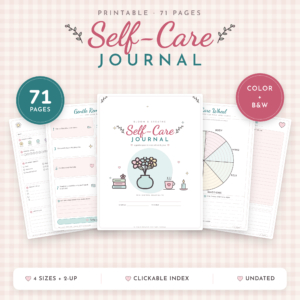
Bloom & Breathe Printable Self-Care Journal
Price: $3.59 | Best for: A light daily check-in alongside heavier grief writing
A 71-page wellness planner with a mood tracker, gratitude pages and affirmation cards. It’s not a grief workbook, so think of it as the daily companion. Use it for a two-minute mood check and keep the deeper writing for another notebook or workbook.
What to do on the hard days
Some days you won’t want to write at all. That’s allowed. On those days, try something smaller. Write one word. Draw a shape. Paste in a photo and add a date. Or simply write “Not today” and close the book. The page will be there tomorrow.
Lean on people too. A journal is a good tool, but it can’t hug you or sit with you in a hospital corridor. Tell one person how you’re really doing. If you’re finding it hard to eat, sleep or function for a long stretch, talk to a doctor or a grief counselor. Seeking help is not a failure. It’s one of the kindest things you can do.
And be patient about time. People often expect to feel better by a certain date. Grief doesn’t follow the calendar. Some months feel lighter, then an old song brings it all back. Both are normal.

Steady Ground ACT Therapy Worksheets Bundle
Price: $19.99 | Best for: People who want a larger toolkit of coping skills, values and mindfulness worksheets
A bundle of 320 fillable Acceptance and Commitment Therapy pages, made up of 10 workbooks and 48 ACT metaphor cards. It covers values, defusion, mindfulness and coping skills, in US Letter and A4 PDF. It’s a bigger purchase and not specific to grief, so it suits those who want a wider set of tools. These are self-help worksheets, not therapy.
Comparing your options
| Product | Format | Price | Best for | Link |
|---|---|---|---|---|
| Carrying Love Grief Workbook | Printable and fillable, 71 worksheets | $3.67 | Guided grief and loss writing | View product |
| Bloom & Breathe Printable Self-Care Journal | 71-page printable wellness planner | $3.59 | Daily mood and gratitude check-in | View product |
| Steady Ground ACT Therapy Worksheets Bundle | 320 fillable pages, US Letter and A4 PDF | $19.99 | Broad coping skills toolkit | View product |
If you only pick one, the Carrying Love Grief Workbook is the one built for this topic. The other two work as companions, one light and one broad.
Frequently asked questions
What should I write in a grief journal?
Write whatever is true that day. It might be memories, anger, guilt, questions or a list of what you got through. Short entries are fine. Prompts help when you freeze, such as “Today I miss…” or “Something they taught me was…” There are no wrong answers.
How often should I write grief journal entries?
Whenever you can, but there’s no schedule you must keep. Some people write daily for five minutes, others once a week or only on hard days. Choose a rhythm that feels gentle. If a week slips by, just pick the pen up again.
Is journaling a replacement for grief counseling?
No. Journaling is a self-help tool and general information. It can sit alongside counseling, a support group or help from a doctor, but it doesn’t replace them. If grief feels overwhelming or lasts in a way that stops you functioning, please reach out to a professional.
Can teenagers use grief journal prompts?
Yes. Many teens find writing easier than talking. A guided workbook can feel less daunting than a blank notebook. It’s still wise for a trusted adult to check in, and a counselor or doctor is a good option if a teen is struggling.
What if writing makes me feel worse?
Stop for the day. Heavy feelings can rise when you write, and that’s not a sign you’re doing it wrong. Take a break, drink water, go outside or call someone. Try a lighter prompt later, and if the distress lingers, speak to a professional.
Your next step
So, the short version: set a five-minute timer, pick one prompt from the lists above, and write until it rings. That’s enough for today. If you’d like the structure done for you, the Carrying Love Grief Workbook gives you 71 worksheets with coping skills, trackers and letters in one printable file. Take it slowly. You’re doing something hard, and you’re doing it carefully.