You’ve seen the pictures. A cozy nook, soft pillow, a jar of glitter, everything in matching beige. Then you try one at home, and your four year old uses the beanbag as a trampoline and the glitter jar as a weapon. Sound familiar? A calm down corner is simple, but it’s easy to get wrong. This guide shows you how to set one up for ages 3 to 12, what to put in it, how to use it without it feeling like a punishment, and which printable cards and books can do some of the teaching for you.
Quick picks
| Product | Best for | Price | Link |
|---|---|---|---|
| Calm Compass Kids Self-Regulation Bundle | Kids ages 7 to 12 | $11.95 | View |
| Little Lighthouse Self-Regulation Book for Kids 3-7 | Kids ages 3 to 7 | $9.99 | View |
What a calm down corner is (and what it isn’t)
A calm down corner is a small, quiet place in your home or classroom where a child can go to settle a big feeling. It holds a few tools, it’s safe, and nobody gets in trouble for being there.
That last part is the whole thing. A calm down corner is not time out. It isn’t a place you send a child to think about what they did. Time out says “you’re bad, go away.” The corner says “your feelings are big, here’s a spot to handle them.” Kids can feel the difference immediately, and so can you, once you start using it the right way.
Think of it as a first aid kit for feelings. You hope you won’t need it every hour, but when someone’s hurting, you’re glad it’s within reach.
Where to put the corner
Location decides whether it gets used. Pick a spot that is quiet but not isolated. A corner of the living room or a bedroom nook works better than a closet at the end of the hall. Your child should feel they can still be near you if they need to, or alone if they ask for it.
A few tests to try:
- Can the child sit there without being bumped by siblings or pets?
- Can you see them from where you cook or work?
- Is it away from the television and the loudest part of the house?
- Can they reach every item without asking?
In a classroom, put it near the teacher’s desk but away from the door. Kids who need it shouldn’t have to walk through a crowd of classmates to get there. A simple shelf and a rug are enough.
Renting a small place with no spare corner? Use a calm down box instead. A shoebox or a tote bag with the same tools can move from room to room. It works just as well.
What goes in a calm down corner
Resist the urge to buy everything. Five to seven items is plenty, and fewer is better for young kids. Mix three types: things to feel, things to do and things to learn from.
Things to feel
A soft cushion, a small blanket, a stuffed animal. Maybe a stress ball or a squishy toy. Kids who crave pressure may like a weighted lap pad, though check with your pediatrician before using anything weighted with a small child.
Things to do
A pinwheel for slow breathing, a glitter jar, a sketchbook with a few crayons, or a piece of playdough. Choose items that don’t make a mess you have to clean up in a hurry. A child in the corner who has to ask for a wipe has already lost the calm.
Things to learn from
This is the one most parents skip, and it matters most. Calm down cards, a feelings chart, a short book. A child who has a picture of “breathe in for four” in front of them knows what to do when their head is full of noise. Without it, the corner is just a place to sulk.
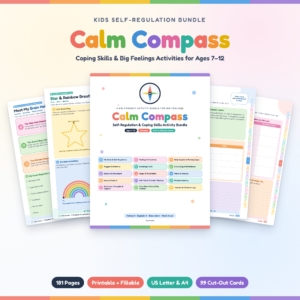
Calm Compass Kids Self-Regulation Bundle
Price: $11.95 | Best for: Kids ages 7 to 12
A 181-page bundle of coping skills and emotional regulation worksheets, calm down cards and trackers, made for ages 7 to 12. It comes as a printable and fillable PDF in US Letter and A4, so you print what you need and keep the rest.
How to introduce it to your child
Don’t spring the corner on your child in the middle of a meltdown. Set it up together on a calm afternoon. Let them pick the pillow color. Let them name the corner. Names like “the cloud nest” or “base camp” work well, and some kids name it after a favorite stuffed animal.
Then practice. Show them how to sit, how to hold the pinwheel, what a slow breath looks like. Act out a small frustration, like a tower that falls, and walk to the corner together. Keep it playful. Ten minutes is plenty.
Next, make a simple plan with three steps they can say aloud. For example: “Notice my body. Go to the corner. Pick one tool.” Put the steps on a card at their eye level. Younger kids can use pictures. Older ones may prefer a short list they write themselves.
And model it. When you feel frustrated, say, “I’m going to use my corner for a minute.” If you don’t have a corner of your own, stand in the hallway and breathe. Kids pay more attention to what we do than to what we say.
Calm down corner ideas by age
A setup for a three year old looks different from one for a ten year old. Here’s how I’d adjust it.
Ages 3 to 5
Keep it tiny and visual. A basket with a soft toy, a pinwheel and two picture cards. Use big, simple faces for feelings. Stay close, because many small children can’t use the corner alone yet. You may sit with them at first and breathe together.
Ages 6 to 8
Add a feelings chart and a drawing pad. This age loves routine, so a visual checklist with three steps works well. Let them decorate their own sign. Kids this age also like being the boss of something, so give them charge of restocking the corner each week.
Ages 9 to 12
Older kids may refuse anything that looks babyish. Offer a grown up version: a journal, headphones, a playlist, a stress ball, a short set of cards. Call it a “reset spot” if “corner” sounds too young. They’ll often use it more if they get privacy, so respect a closed door or a curtain.
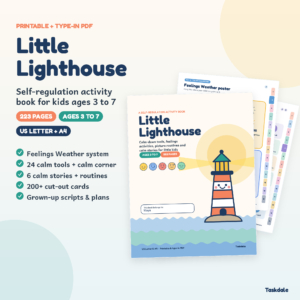
Little Lighthouse Self-Regulation Book for Kids 3-7
Price: $9.99 | Best for: Kids ages 3 to 7
A 223-page self-regulation book written for kids 3 to 7. It suits parents and teachers of little ones who want one big resource for feelings and calming skills in place of a pile of loose pages.
Printables that make the calm down corner work
Here’s where a good printable earns its keep. Cards are compact, they can be laminated, and they hold the instructions your child can’t recall in the heat of a feeling. Think about:
- Breathing cards with a simple picture for each step.
- Feelings cards so your child can point when words fail.
- A choice card with three calming moves to pick from.
- A tracker for noticing how often the corner is used and what helped.
Many families make these by hand and then lose them by Thursday. A ready made set saves time and keeps the look consistent, which helps kids recognize the pieces. If your child is 7 to 12, the Calm Compass bundle includes calm down cards plus worksheets and trackers in one printable file. For the 3 to 7 crowd, the Little Lighthouse book gives you one thing to read and revisit together, so the ideas you practice in the corner come from a single source.
Print only what you need. A set of cards on sturdy paper, a tracker for the fridge, maybe a worksheet for after the storm passes. You don’t have to use all 181 pages of anything at once.
Common mistakes to avoid
Most failures come from a short list of habits. Watch for these.
Using it as punishment. If the corner is where a child goes when they’ve been bad, they will dread it. Invite them, don’t send them. Say, “Would the corner help right now?”
Making it too fancy. A child who feels pressure to keep a picture perfect corner will skip it. Messy is fine. Pillows can be flat.
Stuffing it. Fifteen toys equal stimulation, not calm. Pick a handful and rotate.
Skipping the talk afterward. When your child comes out, check in with a quiet question. “What helped?” That’s how the lesson sticks. Don’t lecture. Just listen.
Expecting instant results. The first few visits might look like nothing. Some kids will use the corner as a hiding spot for a week. That’s normal. Stay patient and keep the door open.
Compare your options at a glance
One more thing before the table. You don’t need to buy anything to start. A cushion, a few cards you draw yourself and a quiet corner are enough for week one. Printables earn their place when you’re tired of drawing faces at 9pm, or when your child asks for “the real ones” like the ones at school.
If you want printable support for the space, here’s how the two Taskdale picks line up.
| Product | Format | Price | Best for | Link |
|---|---|---|---|---|
| Calm Compass Kids Self-Regulation Bundle | Printable & fillable PDF, 181 pages | $11.95 | Kids ages 7 to 12 | View |
| Little Lighthouse Self-Regulation Book for Kids 3-7 | 223-page book | $9.99 | Kids ages 3 to 7 | View |
These are self-help tools for families and classrooms. This article is general information, not professional advice, and a printable doesn’t replace a therapist or counselor. If your child’s distress is frequent or severe, please talk to a qualified professional.
Questions about setting one up
How big should a calm down corner be?
Big enough for one child to sit comfortably, usually about the size of a small rug or a large cushion. A shelf or basket nearby holds the tools. In tight spaces, a calm down box that moves from room to room does the same job.
What age is a calm down corner for?
It can work from about age three through the preteen years. Younger children need an adult nearby and picture based cards. Older kids may want privacy and a more grown up setup, such as a journal and headphones. Adjust the items and the name as your child grows.
Is a calm down corner the same as time out?
No. Time out is a consequence that removes a child from the group. The corner is a tool the child chooses or is invited to use, with no blame attached. The goal is to practice regulating feelings, not to punish behavior.
What should I do if my child won’t use it?
Go back to practice during calm times and make the space more inviting. Let your child choose items and a name. Sit in it with them for a few minutes. Avoid forcing it during a meltdown. Many kids need weeks before they trust it.
Can I set up a calm down corner in a classroom?
Yes. Pick a quiet spot away from the door, add a few tools and visual cards, and teach the whole class how and when to use it. Set simple rules, such as one child at a time and a timer if needed. Keep it positive.
Your next step
Pick a spot, choose five items, and build your calm down corner together this weekend. Keep the first version small and cheap, and let your child’s feedback shape the second one. Add cards that show your child what to do once they get there. If your child is 7 to 12, start with the Calm Compass Kids Self-Regulation Bundle. If you’re setting up for a younger child, take a look at the Little Lighthouse Self-Regulation Book. Then watch what happens the next time a storm rolls in.