It’s 5:40 on a Tuesday. Dinner isn’t ready, shoes are missing, and your six year old has just flung a cup across the kitchen because the cup was blue. You say “calm down.” That never once worked, did it? Kids can’t calm down on command because nobody ever showed them how. The good news is that these skills are teachable, and you can teach them at the kitchen table. This guide covers self regulation activities for kids that parents actually use, plus a few printable tools that make them stick.
Quick picks
| Product | Best for | Price | Link |
|---|---|---|---|
| Calm Compass Kids Self-Regulation Bundle | Kids ages 7 to 12 | $11.95 | View |
| Little Lighthouse Self-Regulation Book for Kids 3-7 | Kids ages 3 to 7 | $9.99 | View |
What self regulation actually means (in plain words)
Self regulation is a child’s ability to notice a big feeling and steer it, instead of being steered by it. That’s all. A toddler who screams on the floor of the supermarket has not learned it yet. A nine year old who says “I need a minute” and walks to her room has.
Here’s the part parents often miss. Kids learn this by borrowing calm from us first. When you stay steady during a meltdown, their nervous system gets a template. Over months, they start running the template on their own. So the goal of good self regulation activities for kids is not a quiet child. It’s a child who has a few moves in their pocket.
And yes, you need those moves too. Plenty of parents lose their own cool while demanding a calm one. Pick two or three activities below and practice them yourself first. It feels silly for about a day.
Teach calm when nobody is upset
This is the single biggest shift. A child in the middle of a meltdown cannot learn anything. The thinking part of the brain is basically offline. So you practice when things are quiet, like you’d practice a fire drill before there’s a fire.
The best self regulation activities for kids are the ones you repeat. Pick a regular slot. Ten minutes after breakfast, or while the bath runs. Keep it light. Call it “calm practice” or give it a silly name your child picks. Call it “robot reboot” if that makes your child grin. The name doesn’t matter. The repetition does.
Start with one skill for a full week. Just one. Kids don’t need a menu of twelve breathing exercises. They need to do the same one so many times it becomes automatic. By day five, you’ll see your child take a breath without being asked, usually at the worst possible moment, and it’s wonderful.
Five body based self regulation activities for kids
Young children feel emotions in their bodies long before they can name them. So start there. Move, squeeze, breathe, cool down.
Belly breathing with a toy
Lie your child down with a small stuffed animal on their tummy. Ask them to make the toy rise like a boat on slow waves. Breathe in through the nose for four, out through the mouth for four. Two minutes is plenty. The toy gives their hands and eyes a job, which is why it works with wigglers.
Wall push-ups and heavy work
Pushing hard against a wall, carrying a laundry basket or squeezing a pillow gives the muscles strong feedback, and many kids settle after it. Ten wall pushes. Count them out loud together. It’s also a good trade for a child who “can’t sit still” during homework.
Cold water reset
A splash of cool water on the face or a cold drink slows things down for a lot of kids. Keep a small water bottle in the calm spot so it’s always there.
Shake it out
Thirty seconds of shaking arms, legs and head like a wet dog. Then freeze like a statue. The freeze matters because it teaches the stop after the burst. Kids find it funny, and funny is a good doorway into calm.
Five finger breathing
Trace one hand with the other finger. Breathe in as you go up a finger, out as you go down. It needs no equipment, so it works in the car, at the dentist or in a school corridor.
Words come next: build a feelings vocabulary
Once a child can calm their body a little, give them words. “Mad” and “sad” are the two boxes most kids start with, and everything gets shoved into them. A child who can say “frustrated” or “left out” or “nervous” has already done half the work of regulating, because naming a feeling shrinks it.
Make it a game. Of all the self regulation activities for kids, this one tends to get the most laughs. At dinner, each person shares one feeling from the day and a number from one to five for how big it was. A five means rocket. A one means a tiny flicker. This is called a feelings scale, and it gives kids a way to say “I’m at a four and climbing” before they hit ten.
Try reading picture books and pausing on faces. “How do you think she feels right now? What tells you that?” You’re teaching them to read bodies, theirs and other people’s. Keep it to a few minutes. If they groan, stop and try again tomorrow.
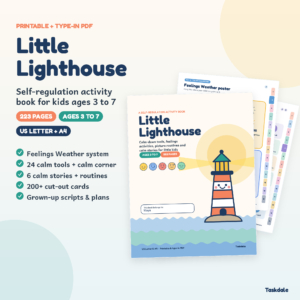
Little Lighthouse Self-Regulation Book for Kids 3-7
Price: $9.99 | Best for: Kids ages 3 to 7
A 223-page self-regulation book written for kids 3 to 7. It suits parents and teachers of little ones who want one big resource for feelings and calming skills in place of a pile of loose pages.
Self regulation activities for kids by age
A four year old and an eleven year old need very different tools. Here’s a rough guide, based on what tends to hold their attention.
Ages 3 to 7: keep it physical and short
Little ones learn through play, pictures and repetition. Think one minute, not ten. Use a stuffed animal, bubbles (blowing slowly makes a long breath), or a pinwheel. Draw a face for each feeling on paper plates and let your child hold up the one that matches. Praise the attempt, not the result. “You squeezed the pillow instead of the dog, nice choice.”
Ages 7 to 12: add thinking and tracking
Older kids can handle worksheets, a feelings log and a plan. They also care about privacy and about not being treated like babies. Offer choices. Let them design their own calm kit. A nine year old might pick headphones, a fidget and a drawing pad. A twelve year old might want a short playlist and ten minutes alone with the door shut. Respect that.
This is where printables help. A child who fills in a worksheet about what happened, what they felt in their body and what they tried is doing real reflective work, and they get a small hit of pride when the page is finished. A tracker shows them progress, which matters a lot to this age group.
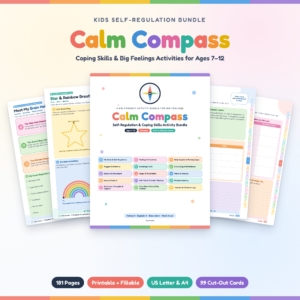
Calm Compass Kids Self-Regulation Bundle
Price: $11.95 | Best for: Kids ages 7 to 12
A 181-page bundle of coping skills and emotional regulation worksheets, calm down cards and trackers, made for ages 7 to 12. It comes as a printable and fillable PDF in US Letter and A4, so you print what you need and keep the rest.
Mistakes that quietly undo your self regulation activities for kids
The same few slips come up again and again. None of them make you a bad parent. They’re just worth catching.
First, using calm tools as punishment. If “go to your calm corner” sounds like “go to your room and think about what you did,” your child will avoid it. The spot should feel like a refuge. Offer, don’t order, whenever you can.
Second, teaching in the heat of it. We covered this, but it’s the most common slip. If your child is screaming, your job is safety and a quiet presence. Save the lesson for later.
Third, expecting speed. A child might need weeks of practice before a skill shows up on its own. A relapse after a good week is normal. It doesn’t mean it stopped working.
Fourth, too many tools. A shelf crammed with twenty gadgets overwhelms a child who is already overloaded. Choose three. Rotate them if boredom sets in.
Finally, forgetting to model. Say your own feelings out loud. “I’m frustrated that the traffic is bad. I’m going to take three slow breaths.” Kids hear that and copy it, often word for word.
A simple daily rhythm you can start tonight
Don’t overbuild this. Here’s a version that fits into a normal, messy family life.
- Morning: one feelings check at breakfast, number from one to five.
- After school: five minutes of movement or heavy work before homework.
- Evening: one calm practice, like belly breathing at bedtime.
- Weekly: a short chat about what worked, and a sticker or tick on a tracker.
That’s about fifteen minutes of self regulation activities for kids, spread across your day. If you can only manage the bedtime breathing, do that and be proud of it. A small habit that happens beats a perfect plan that doesn’t.
When you want structure, a ready-made resource saves you from inventing worksheets at 10pm. The Calm Compass bundle suits older kids who like to write and track, while the Little Lighthouse book suits the little ones you’ll guide by hand. Choose by age, not by price.
Which tool fits your child?
Here’s the side by side, so you can pick in two minutes.
| Product | Format | Price | Best for | Link |
|---|---|---|---|---|
| Calm Compass Kids Self-Regulation Bundle | Printable & fillable PDF, 181 pages | $11.95 | Kids ages 7 to 12 | View |
| Little Lighthouse Self-Regulation Book for Kids 3-7 | 223-page book | $9.99 | Kids ages 3 to 7 | View |
These are self-help and parenting tools, and this article is general information, not professional advice. If your child’s outbursts are frequent, very intense or dangerous, or if you’re worried about their mood, talk to your doctor, school counselor or a child therapist. A printable can support that work. It can’t replace it.
Questions parents ask about self regulation
At what age can kids start learning self regulation?
Basic skills start in the toddler years, with a caregiver doing most of the work. Around age three, children can follow simple breathing games and point to a feelings face. By school age, they can use tools on their own with reminders. Every child moves at their own pace.
How long should a calm practice session last?
For ages 3 to 7, one to three minutes is plenty. For ages 7 to 12, five to ten minutes works, especially if a worksheet is involved. Short and regular beats long and rare. Stop while your child still has some interest left.
What if my child refuses to try the activities?
Don’t push. Try again when everyone is relaxed, and give them a choice between two options. Do the activity yourself and let them watch. Many kids join once they see it’s low pressure. A game or a toy often lowers resistance.
Do printable worksheets really help with big feelings?
They help most when you use them in calm moments, not during a meltdown. Worksheets give a child words, a step by step plan and a record of what worked. Pair them with real practice, like breathing and movement, so the ideas turn into habits.
Can teachers use these activities in a classroom?
Yes. Most self regulation activities for kids work in a group. Breathing, movement breaks and feelings check-ins all work with groups. Keep them short, repeat them at the same times each day, and let children opt for a quiet seat if they need one. Consistency matters more than variety.
Where to go from here
So, the short version: practice calm when things are quiet, start with the body, add words, and pick tools that match your child’s age. Start with one skill this week. If your child is 7 to 12, grab the Calm Compass Kids Self-Regulation Bundle and print the first few pages tonight. For a younger child, the Little Lighthouse book is the better start.