The first week after getting engaged is lovely. The second week is when someone asks “so have you booked the venue yet?” and you realise there’s a wedding to organise.
A wedding planning checklist turns that vague pressure into a list of small jobs with dates on them. You don’t need to do everything now. You need to do the right three things this month, and know the rest are written down somewhere.
Below is a 12-month timeline that works for most weddings. If you have less time, squash the early stages together. The order matters more than the exact month.
12 or more months out: the big three decisions
Everything else depends on three numbers: the budget, the rough guest count and the date (or at least the season). Settle those first, together.
- Agree on a total budget and who’s contributing
- Draft a rough guest list and a ceiling number
- Pick a season and two or three possible dates
- Tour venues and book one
- Book your officiant if your ceremony venue doesn’t supply one
Popular venues book a year or more ahead, especially for Saturdays in peak season. If you’re flexible on day of the week, you’ll have far more choice (and often lower prices).
10 to 11 months: book the vendors who sell out
Photographers, videographers, bands and good caterers take one wedding per day. The best ones go first.
- Book the photographer and videographer
- Book the caterer if the venue doesn’t provide one
- Book the band or DJ
- Choose your wedding party and ask them
- Start a wedding website if you want one
8 to 9 months: the look of the day
- Shop for wedding attire (allow 6 to 8 months for ordering plus alterations)
- Book the florist
- Book hair and makeup, and schedule a trial for later
- Send save-the-dates, especially for travel or holiday-weekend weddings
- Reserve hotel room blocks for out-of-town guests
6 to 7 months: logistics nobody posts about
- Book transport for the day
- Order rentals: chairs, linens, tableware, lighting
- Book the honeymoon, check passports
- Set up your gift registry
- Choose the cake baker and book a tasting
This is a good month to check the budget hard. Most big contracts are signed by now, so you can see what’s committed and what’s left for everything else.
4 to 5 months: the paperwork month
- Order invitations and stationery
- Finalise the menu with your caterer
- Buy wedding rings
- Plan the ceremony order and readings
- Book the rehearsal dinner venue
2 to 3 months: invitations and fittings
- Mail invitations about 8 weeks out (10 to 12 for destination weddings)
- First dress or suit fitting
- Hair and makeup trial
- Write a shot list for the photographer
- Choose your ceremony and first dance songs
- Check marriage licence rules where you’re marrying, since some are only valid for a set number of days
4 to 6 weeks: numbers and plans
- RSVP deadline. Chase anyone who hasn’t replied
- Give the caterer final numbers and meal choices
- Do the seating plan
- Write the day-of timeline and send it to every vendor
- Final fitting
- Write vows if you’re writing your own
The final 2 weeks
- Confirm every vendor’s arrival time and contact number
- Pay final balances that are due before the day
- Put cash tips in labelled envelopes
- Pack an emergency kit and the honeymoon bags
- Hand one person (not you) the timeline and vendor list for the day
After the wedding
- Return rentals and suits
- Send thank-you cards, ideally within three months
- Get the dress cleaned
- Change your name on documents if you’re doing that
- Write vendor reviews while you remember the details
Split the list so one person isn’t doing it all
Here’s the quiet problem with most checklists: one person ends up owning all of it. Usually whoever opened the spreadsheet first.
Go through the list together one evening and put a name next to every task. Play to strengths. The one who likes phone calls takes vendors. The one who likes spreadsheets takes the budget and RSVPs. Parents or the maid of honour can own a handful of jobs too, like hotel blocks or the rehearsal dinner. Then agree a weekly check-in, 15 minutes, where you each say what you finished and what’s stuck. It sounds formal. It stops a lot of “I thought you were doing that” moments.
How to keep a wedding planning checklist from going stale
A printed list is great for week one. By month four it’s covered in crossings out and coffee rings, and the dates no longer line up because the wedding moved by a fortnight.
The fix is a checklist where every task’s due date is worked out from your wedding date. Move the date and every task moves with it. Add an owner column so it’s clear who’s doing what, and check it once a week.
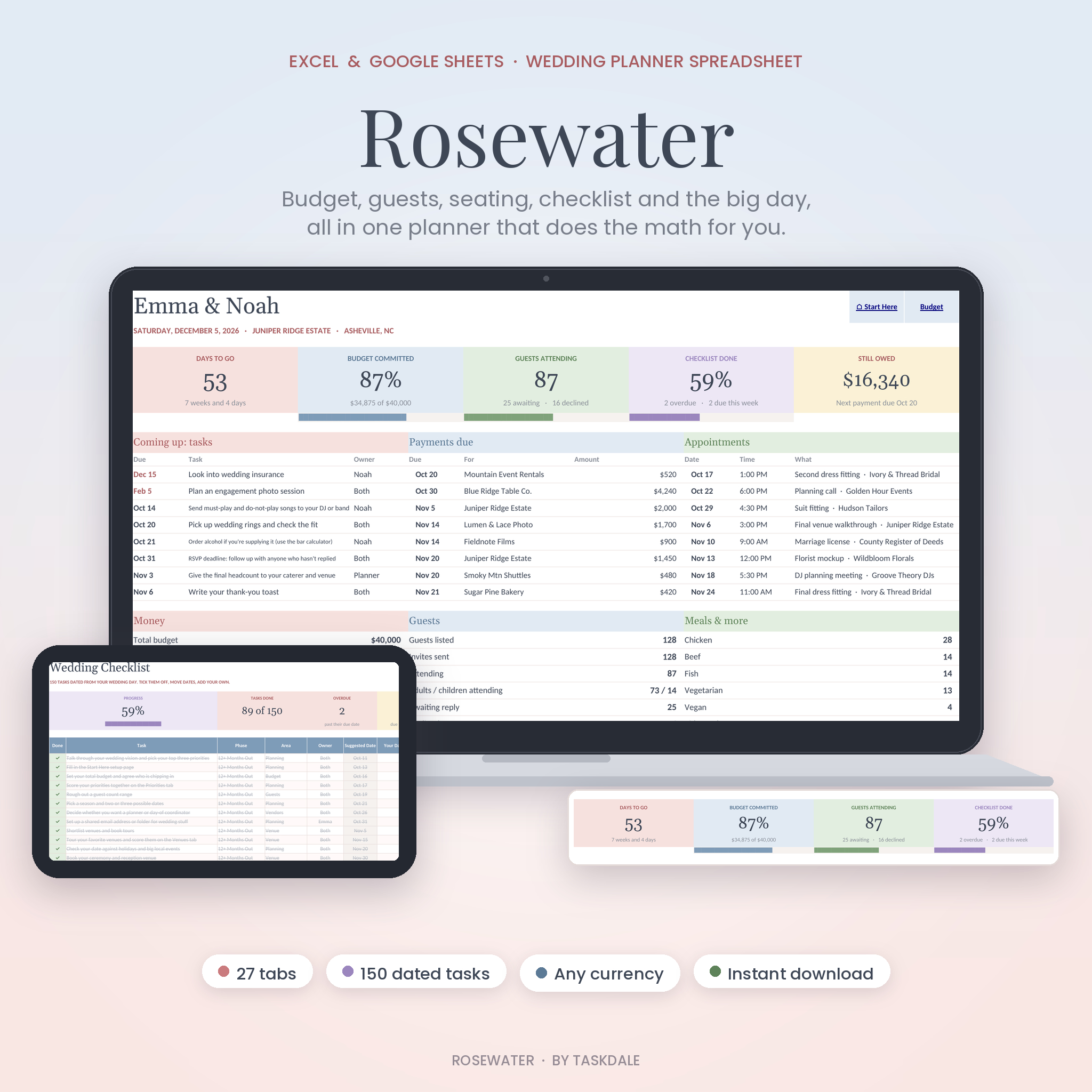
Rosewater takes this the furthest. It dates 150 tasks from 12 months out to after the wedding, all counted back from your wedding day. You can override any date, add your own tasks and track progress by phase. A Smart Calendar shows tasks, appointments and payments month by month, and the dashboard lists the next 8 tasks, so you open the file and see what needs you today.
If 150 tasks sounds like a lot, there are lighter options. Sage & Vow has 81 ready-made tasks in 11 phases, from a year out to thank-you cards, all auto-dated. Something Blue has 70 dated tasks across 12 months, with owners, statuses and progress bars by phase. Both open in Excel and Google Sheets, like Rosewater.
Which one? If you like detail and hate surprises, Rosewater. If a long list stresses you out, Something Blue’s 70 tasks cover the essentials without the noise.
Wedding planning checklist FAQ
Can I plan a wedding in less than 12 months?
Yes. Six months is very doable if you’re flexible on date or venue. Do the 12 to 8 month tasks in the first month, then follow the rest of the timeline from there.
What should I do first after getting engaged?
Agree on a budget and a rough guest count before you look at venues. Both decide which venues are even worth touring.
When should invitations go out?
About 8 weeks before the wedding for most weddings, and 10 to 12 weeks for destination weddings. Save-the-dates go six to eight months ahead.
How many tasks are on a typical wedding checklist?
Anywhere from 50 to 150, depending on how much detail you want. The count matters less than whether each task has a date and an owner.