The puppy is asleep in the car seat, one ear flipped inside out, and you have just realised you own a lead but no bowl. We have all been there. A good new puppy checklist saves you from the 8 pm dash to the pet shop, and from the quiet panic of wondering what you forgot.
This guide covers what to buy before pickup, what to do in week one, and how to plan the whole first month. It also shows two printable planners that keep the paperwork and the training in order.
Quick picks
| Product | Best for | Price | Link |
|---|---|---|---|
| Good Dog Training & Care Planner | Planning puppy training and care in the first months | $15.00 | View product |
| PawNest Pet Care Planner | Vaccine, medication, vet and weight records | $1.19 | View product |
The new puppy checklist: what to buy first
Shopping for a puppy is dangerous. The shelves are full of things you don’t need and you’ll want half of them. Stick to the basics and add extras once you know your dog.
Feeding
Two bowls, one for food and one for water. Stainless steel or ceramic is easy to clean. Ask the breeder or rescue what food the puppy is eating now, and buy a small bag of exactly that. Switching food on day one often upsets a tiny stomach, so change it slowly later if you want to.
Sleeping
A crate or a pen with a bed that fits, not one she will need in a year. Add a blanket that you can wash. A warm, snug space makes the first nights easier for everyone. Some people tuck in a cloth that smells like the litter, if the breeder offers one.
Walking and ID
A soft collar, a light lead, and an ID tag with your phone number. Puppies grow fast, so pick adjustable gear. Check the fit with two fingers under the collar.
Chewing and play
A few chew toys of different textures, plus something safe to gnaw while teething. Rotate them so each one feels new. It saves your shoes, honestly.
Cleaning
Poo bags, an enzyme cleaner for accidents, old towels, and a roll of kitchen paper. You’ll use all of it by Tuesday.
Grooming
A soft brush and puppy-safe nail clippers. Handle her paws and ears gently from the first week and she will tolerate grooming for life.
That is the whole starter set of any sensible new puppy checklist. Resist buying a coat, a bandana and a fancy bed in week one. You can add fun things when you know her size and temperament.
Before pickup day: your new puppy checklist for the house
Walk through each room on your hands and knees. Seriously. You will see the world at puppy height and spot trouble fast.
Move electrical cables out of reach or cover them. Put shoes, socks and kids’ toys in closed cupboards. Check that houseplants are safe, or move them; if you’re unsure about a plant, ask your vet. Block off stairs and any room you want to keep dog-free. Pick one door for toilet trips and use it every time, because puppies learn routes.
Next, choose the sleeping spot. Somewhere quiet but close enough that you can hear her. Many owners put the crate in the bedroom for the first few nights, which helps when she cries and needs a quick toilet break.
And book the vet. Call a clinic before pickup day to ask about a first check. It gives you a person to ring when something odd happens, and odd things happen. Remember, this article is general information and not veterinary advice.
Week one: what to do first
The first week is mostly about two things: keeping her safe and teaching her where to toilet. Everything else can wait.
Take her straight to the toilet spot when you arrive, even if she only sniffs. Praise any success. After that, go out after every meal, every nap and every play session. A young puppy may need to go very often, so keep a loose clock in your head.
Every good new puppy checklist should include rest. Keep the day gentle. A bit of play, a lot of sleeping, short meet-and-greets with household members. Too many visitors overwhelm her. She has just left her mother and siblings, and she is working out what a house is.
Use her name often and pair it with something nice. Start tiny training moments: a treat for looking at you, a treat for sitting. Thirty seconds is plenty. Puppies learn fast but tire faster.
At night, expect some crying. Stay calm, take her out for a toilet break if it has been a few hours, and put her back without a big fuss. It usually eases within a week or two.
Weeks two to four: building the routine
Now the good bit. By week two you will know her sleep pattern, her feeding times and the squeaky noise she makes before she needs to go out. Use that knowledge to build a daily rhythm.
Here is a simple shape for the day:
- Morning: toilet, breakfast, toilet, short play, nap
- Midday: toilet, lunch if she still has three meals, a gentle training moment, nap
- Afternoon: toilet, play or a short walk if your vet has cleared it, nap
- Evening: dinner, toilet, quiet cuddle, last toilet trip before bed
Check with your vet about when she can go outside in public places. It depends on her vaccine schedule, and this is exactly why writing the dates down matters.
Socialization comes next. Meet calm, friendly people. Hear new sounds at low volume: the vacuum, a pan lid, a doorbell. Walk on different surfaces. Keep each experience short and happy. If she looks worried, make it easier and try again tomorrow.
Start the basics around week three: sit, name recognition, coming when called indoors. Keep sessions to a few minutes. End on a win, always.
If you’d like a longer view, our puppy training schedule covers the first eight weeks in more detail.
Keep the paperwork in one place
Here’s what nobody tells you about a puppy: the admin is huge. Vaccine dates, worming, flea treatment, microchip details, vet notes, insurance papers. In the first month alone you will collect a small pile.
The cure is a single binder, started on day one. It also pays off years later when a kennel asks for dates and you can answer in thirty seconds.
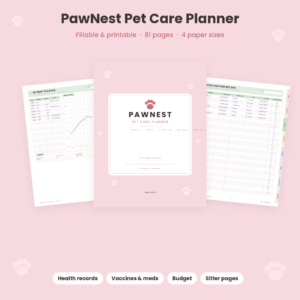
PawNest Pet Care Planner
Price: $1.19 | Best for: puppy owners who want vaccine, medication, vet and weight records in one place
PawNest is a printable and fillable pet health record binder with vaccine, medication, vet and weight trackers. It comes in US Letter, A4, A5 and Half Letter sizes. For a puppy, the weight tracker alone is handy, since she will change shape every few weeks.
The price is $1.19, which is less than a single chew toy. If you only add one thing to your new puppy checklist, make it this kind of record.
Plan the training, not just the shopping
A new puppy checklist gets you through day one. A plan gets you through month one. Without it, training turns into a series of random attempts, and you end up repeating the same mistakes.

Good Dog Training & Care Planner
Price: $15.00 | Best for: puppy owners who want a printable dog training planner
A printable dog training planner supplied as a US Letter and A4 PDF. The title says training and care, which fits what a new owner needs: one place to plan what to teach and what to look after. It is the pricier of the two products here, so it suits owners who want a structured plan.
Even without a planner, write down three goals each week. Week one: toilet spot and name. Week two: settling in the crate. Week three: sit and a gentle lead. Having goals on paper makes you more consistent, and puppies thrive on consistency.
Mistakes a new puppy checklist should help you avoid
A list is only useful if it stops real mistakes. Here are the usual ones.
Giving too much freedom too early is number one. A puppy with the run of the house will find trouble. Use a pen or a gate and widen her space slowly.
Next, skipping sleep. Young puppies need loads of it. An overtired puppy bites, whines and acts wild. If she seems manic, she probably needs a nap.
Third, punishing accidents. She doesn’t connect a telling-off with a puddle from an hour ago. Clean quietly, then take her out more often.
Fourth, ignoring the vet side. Skipped vaccine dates and forgotten worming are easy to fix at the start and awkward later.
Fifth, comparing your puppy to someone else’s. Your friend’s puppy slept through the night at week two? Lovely. Yours may take six. That is normal.
Which tools do you actually need?
| Product | Format | Price | Best for | Link |
|---|---|---|---|---|
| PawNest Pet Care Planner | Printable and fillable, US Letter, A4, A5, Half Letter | $1.19 | Health records: vaccines, medication, vet visits, weight | View product |
| Good Dog Training & Care Planner | Printable PDF, US Letter and A4 | $15.00 | Planning puppy training and care | View product |
My view: PawNest is the no-brainer because it is so cheap and covers the part you cannot skip. The Good Dog planner is worth it if you like having a structured plan to follow.
Money, insurance and the small print
A puppy costs more than the sticker price. Food, vet visits, vaccines, worming, flea treatment, a crate, toys, and later on, classes. Add it up before you commit and then add a cushion, because something unexpected always turns up. A chewed phone charger counts.
Think about pet insurance early. Some policies exclude conditions that show up before cover starts, so ask questions and read the terms. Your vet’s reception team can often point you to what other owners choose. Nobody can promise what you will or won’t need, so treat this as one more item on the list to look into, not a must.
Keep every receipt in a folder behind your health record. At the end of the first month, total it up. It is not a fun number, but knowing it helps you budget for the months ahead.
Frequently asked questions
What do I need to buy before bringing a puppy home?
You need bowls, the food she is already eating, a crate or pen with bedding, a collar with ID tag, a light lead, chew toys, cleaning supplies and a brush. Start simple and add extras later once you know her size and personality.
How long does a puppy need a crate?
It varies. Many owners use a crate for the first months, then give more freedom as toilet habits and chewing settle. The crate should feel like a cosy den, never a punishment. Widen her space a little at a time.
When should a puppy first see the vet?
Book a first check soon after bringing her home, and ask the clinic about the vaccine schedule. Bring any paperwork from the breeder or rescue. Your vet will tell you when she can safely go out in public places.
How often does a new puppy need to go out?
Very often. Take her out after meals, naps and play, and first thing in the morning and last thing at night. As she grows, the gaps stretch. Keep a note of her pattern so you can predict the next trip.
Should I start training right away?
Yes, but keep it small. Use her name, reward calm behaviour and teach the toilet spot in week one. Short sessions of a few minutes work best, and formal cues like sit can follow once she has settled in.
Your next step
So, the short version. Buy the basics, puppy-proof the house at knee height, and book the vet before pickup day. Then start your records on day one. If you only do one thing today, pick up PawNest for $1.19 and print your first page before she even arrives.