Mood trackers are small, but they have a strange pull. You color one square a day, and a few months later you’re staring at a page of color that tells a story you didn’t know you were writing. Gray patches in February. A run of yellow in June. It’s oddly moving. This guide gathers mood tracker ideas you can start in five minutes, from simple grids to a full year in pixels.
Along the way, you’ll see three Taskdale products that already include mood tracking, so you don’t have to draw the grid yourself. A quick note first: mood tracking is a self-reflection habit. It’s general information, not professional advice, and it is no replacement for a doctor or therapist.
Quick picks: products with mood tracker ideas built in
| Product | Best for | Price | Link |
|---|---|---|---|
| 2027 Cozy Doodle Journal | Mood trackers and year in pixels on paper or digital | $21.99 | View |
| Joyful Days 2027 Journal Bundle | Habit and mood trackers plus coloring pages | $19.99 | View |
| Bloom Habit Tracker Spreadsheet | A year in pixels dashboard in Excel or Google Sheets | $1.17 | View |
Why mood tracker ideas work better than a diary
A diary asks you to find words at the end of a long day. A mood tracker asks you to pick a color. That’s a much lower bar, and low bars are how habits survive. You can do it half asleep.
The payoff comes later. A single day tells you little. Thirty days start to show a shape. Maybe you feel low after late nights. Maybe the weekends you spend outside are brighter. You can’t see those patterns in your head, but you can see them on a page.
Start with a simple mood key
Before any layout, choose your colors. Keep the key short. Five moods are plenty, and four is fine. Here’s a sample set you can copy:
- Yellow for happy or bright
- Green for calm or steady
- Blue for tired or low
- Purple for anxious or stressed
- Red for angry or frustrated
Write the key on the first page, or tape it where you’ll see it. And be honest. If a day was gray, color it gray. The tracker isn’t there to impress anyone. It’s there so you can look back and see what was real.
Mood tracker ideas that take under a minute
These are the formats that keep working when life gets busy.
The year in pixels
One grid, 365 small squares, one color per day. It’s the classic. By December you have a stained-glass picture of your year. It works well because it asks so little of you. There’s no space for essays, only a single square.
The monthly circle
Draw a circle, split it into the days of the month, and color each slice. It looks like a little flower or a pie chart. It’s pretty enough to put in a journal spread.
The weekly strip
Seven boxes in a row at the top of your weekly page. Color one each evening. If a year feels too long, a week is a friendly place to start.
The emoji line
Skip colors and use faces. Draw a smile, a flat mouth or a frown. It’s faster than finding a pen, and kids love it.
Mood tracker ideas with a little more detail
Once the basic habit sticks, you can add a layer. Pair your mood color with one small detail, like sleep, weather, exercise or a single word. A tiny note beside the square is enough: “slept badly,” “rain,” “long walk.” After a month, scan the notes next to your bluest days. Patterns tend to appear without you hunting for them.
Don’t add everything at once. One extra detail is plenty. If you track mood, sleep, water, steps and weather every day, you’ll quit by the second week. Pick the one that matters to you and ignore the rest.
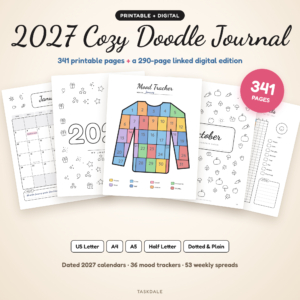
2027 Cozy Doodle Journal
Price: $21.99 | Best for: a full-year mood tracker with a year in pixels page
The title lists 341 printable journal pages plus a hyperlinked digital journal, with mood trackers, a year in pixels, dated 2027 calendars and weekly spreads. It comes in US Letter, A4, A5 and Half Letter. If you want a ready-made year in pixels with weekly pages around it, this one covers it.
Pairing mood tracker ideas with habits
A mood tracker gets more useful next to a habit tracker. You color the day’s mood, then tick off a couple of habits like a walk or an early bedtime. After a few weeks, look for overlap. Do your brighter days line up with the days you moved? Or with the days you got to bed early?
Don’t treat it as a test. Treat it as a curiosity project. You’re collecting clues about yourself, not building a case against yourself.
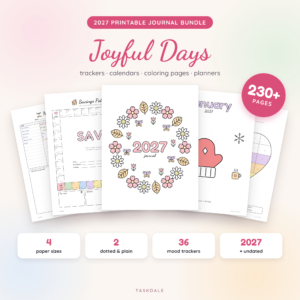
Joyful Days 2027 Journal Bundle
Price: $19.99 | Best for: habit and mood trackers in one printable set
The title promises 230+ printable journal pages with habit, mood and savings trackers, 2027 calendars and coloring pages. It’s offered in US Letter, A4, Half Letter and A5. Having habit and mood trackers in the same bundle makes it easy to compare them side by side.
A spreadsheet version of your mood tracker
Some people would rather click than color. A spreadsheet is great for that. You can fill cells with a color or a number, then scan the sheet at a glance. It also keeps your data neat, so you can look back over many months without flipping through pages.
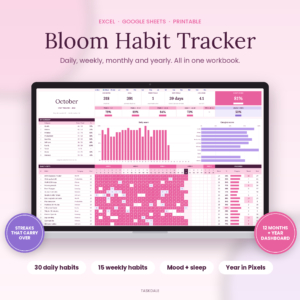
Bloom Habit Tracker Spreadsheet
Price: $1.17 | Best for: a year in pixels dashboard in Excel or Google Sheets
The title describes a spreadsheet for Excel and Google Sheets with a 12-month daily, weekly and monthly habit tracker, streaks, mood and sleep trackers, a year in pixels dashboard and a printable version. At about a dollar, it’s a low-risk way to try mood tracking on a screen.
Creative mood tracker ideas for doodlers
If a plain grid bores you, make the tracker itself the art. Color the leaves of a tree, one leaf per day. Fill the windows of a drawn apartment block. Add a stripe to a scarf, a row of knitting, or a bead on a necklace. Draw a mountain range and shade each peak by mood. Each of these is still one color per day, so the habit stays the same. Only the picture changes.
A word of caution: don’t spend an hour designing the layout and then run out of energy to use it. Draw something you can finish in ten minutes. You can always make the next month fancier. A page of slightly wonky squares that you filled in every night is worth far more than a masterpiece you abandoned on day four.
Mood tracking for kids and families
Children often find it easier to point at a color than to say how they feel. A family mood chart on the fridge can help. Each person gets a row, and each evening everyone colors one square. It starts good conversations without anyone being put on the spot. “I see you picked blue today. Want to tell me about it?” goes down much better than “What’s wrong?”
Keep the key simple, with three or four faces, and let kids pick the colors. If they enjoy coloring, the coloring pages in a bundle can make journal time something they look forward to. Make it playful. The moment it feels like homework, it stops working.
Mistakes that make people quit
Most people don’t quit because they lost interest. They quit because the system was too heavy. The usual culprits are a key with ten or more colors, a layout that takes ages to draw, and a habit of guilt-tripping yourself over missed days. Fix those three and you’re most of the way there.
Another one: tracking at a random time. If you only remember when you happen to see the page, you’ll miss weeks. Pin it to a daily moment. Last of all, don’t compare your grid to a stranger’s online. Their year isn’t yours. Your gray patches are as useful as anyone’s sunny ones.
Choosing the right layout for you
If you like drawing, go with a circle, a tree or a skyline. If you like tidy rows, pick a grid. If you work on a screen all day, a spreadsheet will feel natural. There’s no wrong answer. The best layout is the one you’ll still be filling in next month, so be honest about your habits and choose accordingly. You can always switch partway through the year without losing anything.
Comparing the three options
| Product | Format | Price | Best for | Link |
|---|---|---|---|---|
| 2027 Cozy Doodle Journal | 341 printable pages plus hyperlinked digital journal | $21.99 | Mood trackers, year in pixels, weekly spreads | View |
| Joyful Days 2027 Journal Bundle | 230+ printable pages | $19.99 | Habit, mood and savings trackers, coloring pages | View |
| Bloom Habit Tracker Spreadsheet | Excel and Google Sheets, plus printable | $1.17 | Year in pixels dashboard with mood and sleep trackers | View |
Ways to keep a mood tracker going all year
The hard part isn’t the first week. It’s the third month, when the novelty is gone. A few habits help.
Tie it to something you already do. Color the square while the kettle boils or right after brushing your teeth. Leave the tracker where you can see it, not in a drawer. Keep a pen with it. Give yourself permission to catch up. If you forget three days, fill in what you remember and move on. A rough record beats an empty one.
And don’t judge the colors. A red day isn’t a bad grade. It’s information. The more honestly you record, the more useful the whole picture becomes.
What to do with your mood tracker at the end of a month
Set aside ten minutes on the last day of the month. Look at the colors. Which color showed up most? Which stretch looked different from the rest? What was going on in those days? Write two or three lines at the bottom of the page. That’s your monthly review, and it takes less time than scrolling a feed.
If you notice a pattern that worries you, or your low days keep stacking up, that’s a good moment to talk to someone you trust or a health professional. A tracker can start a conversation. It can’t replace one.
Frequently asked questions
What are easy mood tracker ideas for beginners?
Start with a five-color key and a weekly strip of seven boxes. Color one box each evening. It takes under a minute, so it’s easy to repeat. Once that feels natural, move up to a monthly circle or a full year in pixels.
What is a year in pixels?
A year in pixels is a grid of 365 small squares, one for each day. You color each square with a mood color, so by the end of the year you have one picture of how your days felt. It’s simple, and it’s satisfying to look back on.
How many moods should I track?
Four or five is enough. A short list keeps the choice quick, and you’ll actually use it. Too many shades make it hard to decide each night. You can always add detail with a tiny note next to the square.
Should I use paper or a spreadsheet?
Choose what you’ll open. Paper is satisfying and lets you color by hand. A spreadsheet is quick to scan and keeps months of data neat. Some people use both, with paper for daily coloring and a sheet for the yearly view.
Can a mood tracker replace therapy?
No. A mood tracker is a self-reflection tool and general information only. It can help you notice patterns, but it isn’t a substitute for professional care. If you’re struggling, talk to a doctor, counselor or therapist you trust.
Your next step
So, the short version: choose a five-color key, pick one layout, and color tonight’s square. If you want a ready-made year in pixels with weekly pages, open the 2027 Cozy Doodle Journal. If you’d rather start cheap and on a screen, the Bloom Habit Tracker Spreadsheet is about a dollar.